

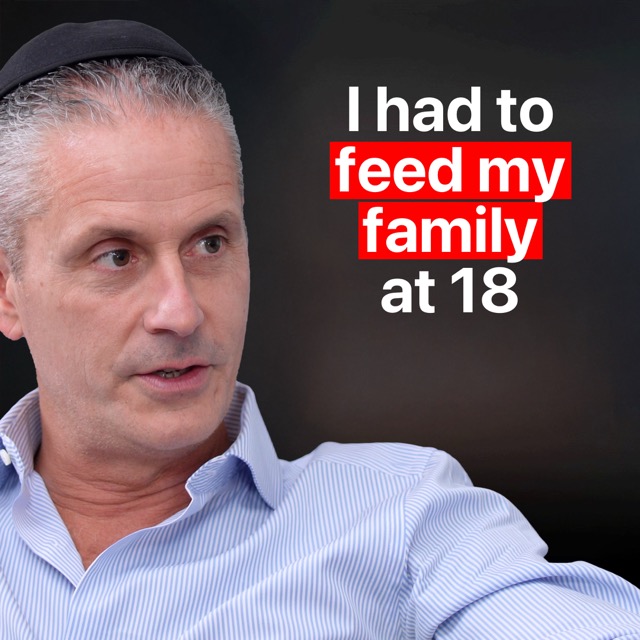


Chaby Orfali is the founder of Merkury Innovations, a consumer electronics company that has spent more than 20 years supplying products to some of the largest retailers in America.
In this episode, Chaby shares how losing both of his parents by the age of 18 forced him into the workforce, the lessons he learned building a business from scratch, winning Walmart as a customer, and why gratitude, integrity, and faith have guided every step of his journey.
Enjoy!
Transcript
Victor M. Braca: What struck me the most about Chaby Orfali is his perspective. Today, Chaby is the founder of Merkury Innovations, a consumer electronics company that has spent more than 20 years supplying products to some of the largest retailers in America. But that’s only the tip of the iceberg. At 18 years old, Chaby lost his father. Seven months later, he lost his mother. Overnight, he went from being an ordinary high school student to putting food on the table for his family. Guys, we spoke about resilience, friendship, business, leadership, raising a family, building a company from scratch, and what you need to be successful in today’s world. I’m Victor Braca, and Momentum is where we dive deep into the stories behind business success. And guys, before we begin, YouTube and Spotify are telling me that 80% of you who watch Momentum on a consistent basis are not subscribed. So, do me a favor. Wherever you’re watching or listening, click that subscribe or follow button. It shows me that you like what we’re doing and would really mean the world to me. With that said, let’s get into it.
Victor M. Braca: Chaby Orfali, welcome to Momentum.
Chaby Orfali: Thank you. Thank you for having me.
Victor M. Braca: Thank you for being here. There’s a lot to unpack with your story. We were even talking before the camera started about there’s business for you, but there’s everything beyond business. You know what I mean? And the list is so long. Let’s start for anybody who doesn’t know you. How do you sum up your life up until this point and who you are?
Chaby Orfali: Very briefly, I would say that I’m a dedicated community member, loving husband, father, and recently grandfather.
Victor M. Braca: Big milestone.
Chaby Orfali: Yeah, very big. And God willing, one on the way. Passionate business person, honest, ethical, live by a certain code, and I try to apply that across all facets of my life.
Victor M. Braca: Amazing. And in the business sense, tell me what you do, what does your company do, and then we’ll get to how you started.
Chaby Orfali: So, we’re a manufacturer and importer of consumer electronic accessories, which extends a little bit outside of that scope of product as the company has grown. We started the company in 2003, so going on 23 years almost. We originally started as a manufacturer of computer and digital camera accessories, which, I mean, today there’s really no digital cameras anymore. So the company, thank God, over time has evolved as technology has evolved, and we’ve always expanded into what’s trending, what’s happening. And that really started when the iPhone first came out back in 2007 and has evolved ever since.
Victor M. Braca: A lot of people that I talk to, really everyone that I talk to, their childhood, how they grew up, is foundational to where they are today, to the person that they are today. Did you grow up with money? What was it like growing up, and tell me about that.
Chaby Orfali: No, didn’t grow up with money. I lived in a small apartment with my family. We didn’t have, both of my parents worked six, seven days a week. Really didn’t go on vacations. Couldn’t afford camp. I think I went to camp once in 8th grade. And it was just a very simple childhood, playing ball in the street and just making it work as we went. But definitely did not grow up with money.
Victor M. Braca: If we look back at your childhood, if I asked young Chaby, maybe 8, 10, 12 years old, what did he want to be when he grew up, what would you tell me?
Chaby Orfali: So first of all, I came here, I wasn’t born here. I was born in Venezuela. I came here when I was about two. Actually, I came here for a medical procedure along with my family. I ended up having a brain tumor, which I have a scar on the side of my head. Every time I cut my hair short, you could see it. It’s a nice big scar. Thank God everything’s okay. But I wanted to be a ball player. I used to play sports a lot. I love sports. I played baseball, I played football, and that’s what I wanted to be. And then as you get older, you realize that’s not realistic. But I was always a pretty good ball player.
Victor M. Braca: You’re a pretty good ball player. I think there’s a funny line, whatever age it is, when Jewish boys realize they’re more likely to own a team than to play on one.
Chaby Orfali: Well, I’m not going to own a team, but actually there was an interesting opportunity when I was in my early 20s. I was working at retail at the time and we were working in New Jersey and it was a huge store, huge parking lot. We got there early that day and pulled a football out of the car and started having a catch in the parking lot from one end to the other. And one guy got out of the car. He was actually a coach for Montclair State University in New Jersey. And he asked me, he goes, “Did you ever play ball before?” I’m like, “No.” He goes, “You want to come for a tryout?” And I was like, “No, thank you.”
Victor M. Braca: Why’d you decline?
Chaby Orfali: Because it wasn’t realistic. But it was just one of those things that I was like, “That’s my moment.” Like I had a shot, but that you were asked, you were pursued.
Victor M. Braca: How did you do in school in, I guess, like elementary and high school days?
Chaby Orfali: So, I was an average student. I was probably about an 80 average student. I went to Hillel Elementary and then Sephardic High School. Sephardic High School, there were two kinds of classes, like an X and a Y class. So, it was like the smart and the not so smart. I guess that’s how they divided it back then. I was in the X class, which was the smarter one. So, I would say I was pretty average. After high school, I had a little bit of a detour.
Victor M. Braca: Losing both his parents at 18 years old.
Chaby Orfali: It was in May of 1991, May 2nd, 1991. My father passed away at a very young age of 49 years old. It was actually three days shy of my 18th birthday. So I was actually sitting Shiva on my birthday. It was the 33rd day of the Omer, no less. So the next day I was going to go cut my hair and do whatever I had to do. And all of a sudden, I had this afro for like the next two months. And so basically I had to leave school. I had to go run his store. He had a ladies’ clothing store. They let me come back to take my finals and graduate. But basically, from that point, my life plans had changed. I did want to go to college. I always thought I could be a lawyer. They told me I debated like a lawyer, so that was probably in the cards. But Hashem had a different plan, and I went to work. I had to provide. Seven months later, my mother passed away at age 46 of a just a massive heart attack. So, seven months and seven days apart. They passed, and I was 18 years old. So, at that point, I really had to start to work, because I really had to help provide for my two sisters. I had an older sister and a younger one. And life took a turn at that point, and I got into the workplace on a full-time basis.
Victor M. Braca: Wow. That’s really a difficult way to start working. You mentioned the work repercussions, but what was that like emotionally?
Chaby Orfali: So, thank God, I had probably the best friends that a person could ask for that are still with me till today. We’re still extremely close-knit, tight. I had them to lean on. I had their families; they would invite me over for Friday nights and things like that. After at one point my sister got married, my younger sister went to go live with her. So I was living by myself, which was strange because I was living in the same apartment where my whole family had lived and now I was the only one left in there. So I had amazing friends that stood by me. Even when I had to go take finals in school, they would come and cover the store for the couple of hours that I went to school, and they were always there for me. We’ve always been there for each other, and that really helped. And also when you’re young, you don’t really feel it as much as if you were older. When you’re young, you’re a little bit more elastic, I guess. Things just bounce off a little bit easier. But still, it was difficult at that age, but thank God, got through it.
Victor M. Braca: Wow. Crazy. So you had to drop out of high school essentially, go to work because your father passed away, your mother passed away only a couple months later when you were still 18 years old. How has going through that experience changed who you are? If you had to guess, it’s going to be hard to pinpoint something because it was such a foundational and fundamental thing for you having happened so early in your life, but how do you think the fact that you lost both your parents at a young age comes out nowadays?
Chaby Orfali: So, I think I’ve learned to appreciate things a lot more. I’ve become a lot more sensitive. I literally tell my kids every day I love them, and they tell me back the same thing. Being involved in other things, other organizations, you are able to apply the trials and challenges that you went through to help other people. But it’s taught me to appreciate life. I think losing parents before the age of 50 and now I’m over 50, you know, is a bit surreal. Because when both me and my sister turned 50, we looked at each other and we said, “We made it.” So that’s kind of like sometimes the perspective you have to take. It’s the cards that you’re dealt. I say that everybody has their own roller coaster, everybody has their own ups and downs and challenges, and it’s a matter of how you deal with it. I’ve seen people that have had the same type of thing happen to some extent and they’ve gone off the deep end, and I just refused to let that happen. I have a lot to offer, and thank God, with Hashem’s help, I was able to overcome, and I’m here today.
Victor M. Braca: I want to hear, as well as you can recall, the day after your father passes away, what’s that like? Did you start working immediately? Did you drop out of school right then and there? Obviously, you’re still coping with all this. It’s a crazy emotional pain.
Chaby Orfali: So I went to work in the store after I finished sitting Shiva because the store had to run. It was a disaster. The store really never made money. I don’t even know how he survived it for so long. I tried to make a go of it, and ultimately it got to the point during the riots of Crown Heights, which was in 1991, which was a complete and utter disaster where they basically burned down and looted every store because of an accident. I came to my senses and said, “Okay, I’m done.”
Victor M. Braca: How old were you?
Chaby Orfali: Still same year, 18. This was four or five months later.
Victor M. Braca: And I ended up going to work. I was probably there for about two weeks, three weeks maybe, by Rainbow. I got a job. I don’t even know from who. They said that he was in the ladies’ clothing business and he had a store. I went to one of the stores, I think on Myrtle Avenue somewhere, and they wanted me to help them merchandise and do things like that. And then all of a sudden, my mother passed away. So I was like, “All right, now I need a job that was a high-paying job.” So now I needed to get a real job that would pay me well.
Victor M. Braca: Thrown into the deep end at a major electronics retailer.
Chaby Orfali: And 11 days, I remember the day, December 28th, 1991, I started working in the electronics business. I was thrown into literally the deep end of the pool, without floaties, at this very large electronics retailer in the heart of Christmas. And I didn’t know a thing. They put me in the Game Boy and radar detector section, if you even know what that is today. And the store was huge. It was massive. They carried everything. And I was there and I was like, “Oh my god. What am I going to do? I don’t know anything.” They gave me a chance, and I’ve been forever grateful. They actually taught me work ethic. They taught me how to work. We worked hard. We worked weekends, we worked Sundays, we worked every American holiday. It was retail, so there was no time off. We were closed Shabbat, but they would open up Saturday nights between let’s say Thanksgiving and New Year’s. So you’d have to go to New Jersey or Connecticut or wherever the store was and work for two and a half hours in complete chaos. And I was there for almost 10 years. And while I was there, I said to myself, “I’m going to learn the business.” And as time went on, I went from department to department. I learned how to sell every single product or category that they carried, from computers to cameras to camcorders. So whenever they needed help or they were short somebody, I would do that. And then eventually they moved me into the corporate buying office and I was doing a lot of the buying and the advertising. I became a minor partner at some point. And then I realized after about 10 years, my son was born and I’m like, “Look, I can’t do this retail business forever.” It was not easy. And I left. But I was forever grateful. I tell them to today. They taught me how to work.
Victor M. Braca: Yeah. What was it like at age 18 and 19 in work, you have to provide for your family all of a sudden? I mean, from zero to 100, right? First, you’re a partial provider when your father passed away, but your mother’s still around, and very soon after, you were the main breadwinner and provider of the family. What was it like coming home after work, and take me into the emotions, what’s going through your head? I think for most people watching, at least for myself, I could say that work might be a good distraction during the day, but the trauma you experience is something that’s totally consuming at night.
Chaby Orfali: True. I mean, my older sister did work, so we were kind of like, like today you need dual income if you want to survive. So she worked, and I worked. The thing of being 18 or 19 years old and having a strong network of friends around you is that you were always busy. We would go out, we would get together, go to the city, we would go to dinner, we would go out. At the time, we went out often, and I think that was from my perspective kind of like the way to cope with it, because I just didn’t sit and sulk on a couch or sit and watch TV night in and night out. If I was older, it would be different, and so that’s where I’m grateful in a sense that it happened to me at a younger age where you cope differently than if I was older. And because of the strong network of friends, and I’m talking about friends from elementary school, I’m talking about till today, friends that are 40-45 years like this, like brothers, having them by my side definitely helped. And also, you always wonder, “What did you miss out on?” The kids, my kids, they don’t have grandparents, and who’s going to march me down the aisle? And there’s all these things that went through my head over the years before I got married and obviously after I got married. And sure there’s regret and you wish they were around to see what you’ve become or what your kids are. But something crazy, my grandson who has my name, thank God, was born on the exact same day that my father passed away.
Victor M. Braca: Wow.
Chaby Orfali: So, Hashem has his ways, very mysterious ways of how to make the world work. It’s not our job to understand it; it’s our job to accept. Sometimes it’s not so easy. But at the end of the day, try to figure it out.
Victor M. Braca: You spent 10 years at Nationwide Electronics. You were in the retail business from what, 19 to 29?
Chaby Orfali: I would say yeah, from 19 to about 29. Yeah.
Victor M. Braca: You ended up leaving because you had your first kid. What was the growth that you didn’t see, or what was the lack of growth that you saw staying at Nationwide, and what pushed you to leave? Especially you had one kid at home. No, that was your first one, your son. So that’s definitely a time to quit your job. That’s a crazy time. So take me into that decision. What was going through your mind and what enabled you to end up making that jump?
Chaby Orfali: So, the hours were brutal. You were almost never home. You were getting home late at night. You work retail, so you work from opening to closing. Even if you were working in the corporate office, which I was, it was still very long hours. And then on the weekends, you would have to go into the store to help out. That was the job and we did it, and thank God we all did very well, we made a lot of money. But you also want to be around your family. You want to support your wife, you want to be around your child, and I made the decision at that time. Not that what I’m in today is really any better, but you do have the ability to kind of dictate your hours better in a sense. Like you don’t have to go open a store and close a store. Especially today, now you could work from home and all these different things that happen. But you also have to deal with the traveling and the overseas traveling and things like that that are very different from retail. But I just felt it was time for a change. The business did shift a little bit, and I said to myself, you have to know when to hold them and you have to know when to fold them. I gave it 10 years, I gave it my best, and till today I’m very close with all of my former bosses. I have gratitude, hakarat, but it was time to move on.
Victor M. Braca: And you were making a good living working there. Very hard to quit, very hard to leave that job behind.
Chaby Orfali: She had faith in me. We had the support of her parents, and her father also worked in retail, so he understood the grind. But I think there was definitely support there, and sooner or later we figured it out and made it work.
Victor M. Braca: In starting your own business, following your resignation, did you have a master plan? Did you have a 5-year, 10-year plan for your life? Did you sort of throw yourself into it? What did things look like for you day one after quitting that job?
Chaby Orfali: There was a little bit of a gap in between. I didn’t go straight into my own business. I was working at one point with my uncle, he was in the tile or stone business. I would say probably not making a very good living at the time, just trying to figure out what I was going to do. And then I ended up going to work for another company for a couple of years and realized that it was time for me to go out on my own. So in 2003 is when we founded our company, myself and my partner, Steven, who was my first cousin, and we’re still running.
Victor M. Braca: You’re still getting by.
Chaby Orfali: I would say thank God we’re getting by.
Victor M. Braca: In the couple of years leading up to 2003 when you launched the business with Stephen, were you still in the retail business, or was that job immediately before that?
Chaby Orfali: No, I went into the wholesale business. You know, they say that the best wholesaler is the former retailer, because you know what the customer wants. So I went into the wholesale business, tried it for a couple of years, and then decided to branch out on my own.
Victor M. Braca: Take me into opening up a company. You were maybe 33? How old were you?
Chaby Orfali: 31, maybe.
Victor M. Braca: So you’re a young guy opening up a business for the first time. Did you consider yourself an entrepreneur from beforehand? Was this like something totally new to you?
Chaby Orfali: I didn’t consider myself an entrepreneur. I basically turned the clock back again because where I was working I was doing well, and then to start your own company you basically go back down to zero. So at the time people are going to think I’m nuts. My wife was pregnant with my daughter, my second child, and then I decided to start again. It’s interesting how like the milestones sort of line up with the children. But we had a lot of confidence that we could make it work. And it was very different back in 2003. Email was just really starting, but you were still faxing orders to factories in Japan. We traveled overseas.
Victor M. Braca: You’re speaking Chinese, I don’t even know what you’re talking about. Remember I remember our first trip and we went to Japan. We were going to buy lenses or something for digital cameras. That’s how we started our business in digital cameras, which—there’s no digital camera business today. It’s gone. And we go to the factory. And what’s a digital camera, sorry to interrupt, in comparison to a Sony mirrorless camera?
Chaby Orfali: So digital camera was the small handheld cameras that people—it’s like a very trendy thing. It’s back now. Actually, my daughter bought a digital, like a film style. Like a film style, but with the memory card. And so that category was huge. Point and shoot, they would call it, with a little bit of zoom and so on. And it was a huge category back then. So we went into the business. We started making accessories for it. We traveled overseas, we go to Japan. And the guy tells us to take off our shoes. We were like, “What?” So he goes, “Yeah, no, you can’t walk in with the shoes.” So we’re like, “Uh, okay.” We took off our shoes and the guy gives us a slipper that’s like size six. Now I’m an 11, 11 and a half, and so is my partner. So we’re walking around in this guy’s place with our feet hanging out of the back of slippers and we’re like, “Oh my god.” So that was one of our first experiences. We went to Japan, we went to Taiwan, we went to China wasn’t even that big back then, because everything was—there was still obviously business. There was huge business in Hong Kong and that’s just evolved over the last 20 years where there’s really nobody doing business in some of those places, and everything became China. And now everything is outside of China because of all the fun tariffs and stuff that we have to deal with.
Victor M. Braca: Sounds like definitely exciting, never a dull moment.
Chaby Orfali: Never, ever.
Victor M. Braca: I think when people think of starting a business—and I’ve heard this from so many people—you left retail because the hours were terrible. You were sort of forced into these crazy hours working on the weekends and working at nights and keeping the store open. How did starting your own business compare to that?
Chaby Orfali: So, you didn’t have to deal with a lot of the stuff that you had to deal with at retail. But when you’re getting on a plane and you’re traveling literally a day, 18, 20 hours to get to your destination, and at the time sitting in coach, which is not so comfortable. Imagine going to Israel and then another seven hours, six hours. It’s a challenge going into China in the dead of summer when it’s 100 degrees and it’s 100% humidity. It’s not fun, but you have to do it. That’s part of the job. There were different aspects to it. The fact that you can be off on the weekends, for example, when that would never happen at retail—every Sunday I would have to work, every holiday—so it was a new world. And it was something that took some getting used to, but it was still a lot of work. Especially when you’re getting started and you’re traveling overseas and you’re nobody and you’re trying to do business, it’s a hard thing. But if you figure it out, take it step-by-step, eventually things start to click. And then it doesn’t become easier; it becomes different. You start to do things differently, you start to gain experience, you start to become a little bit smarter. You know how to handle things differently. But retail is very different from wholesale, though there’s similarities in them as well.
Victor M. Braca: I’ve spoken to a lot of people who worked in the import-export or wholesale business in the 80s or 90s and leading up to like everything that changed in the 2000s with e-commerce and with online starting to become a thing. But you really started at that time in the wholesale business. What did it look like? Did you have to adapt with the times? Were you guys already shifting? Did accounts start to close down at that point, or not yet?
Chaby Orfali: I mean, we used to do business with accounts that no longer exist. Our best accounts are no longer in business. So that’s the thing about this wholesale business: every January 1st, you start from zero. So whatever you did the previous year is irrelevant. And whatever business you did with a particular customer doesn’t necessarily matter. In theory, you’ve got to start over. And some of the retailers that we’ve worked with in the past are no longer around. So one year you could do x amount of dollars with one customer, and then all of a sudden the next year they’re gone. You have to figure out how to make that up and then some with a new customer. So it becomes a constant battle. It’s like a constant rat race. You’re always running because you want to maintain it and you want to grow it. But then all of a sudden you deal with all these pitfalls along the way that are throwing you a curveball. You’re expecting a fastball and all of a sudden the curveball comes and catches you off guard. You have to pivot, and you have to just kind of maneuver and make it work, figure it out.
Victor M. Braca: How common is what you just mentioned, which is like you can have x amount of business from an account or a client or a customer one year and the next year it can halve, one-third, go to zero? How common was that?
Chaby Orfali: Extremely common. It’s happened to me in 22 years of business.
Victor M. Braca: How do you run a business like that? How do you sustain a business like that?
Chaby Orfali: First of all, you have to have a lot of faith. You have to have a lot of faith in Hashem that He knows what He’s doing and everything He does happens for the best. And that’s not just a cliché. You have to live and abide by it. You could do business with a customer one day and not the next day, but then all of a sudden you pick up business with a different customer that you didn’t have the previous year. And that’s kind of been the cycle for 20-plus years, not just in my company. I bet you in almost any import company, they’ve had to deal with that. You have a program today, you don’t have a program tomorrow. The business that we’re in, it’s not everlasting. You win a program and then you have to fight for that program the next year, but there’s other people fighting for that program as well, and you just might not get it. You have to put your best foot forward, you have to do your part, but at the end of the day, there’s no guarantees, and that comes with the territory.
Victor M. Braca: So in the merchant business, how do you set yourself apart? Is the only factor price? Is it relationship? Talk to me about that, especially in the beginning.
Chaby Orfali: In the beginning, we started out very small with smaller types of accounts, which basically give you that kind of foundation financially.
Victor M. Braca: What does small mean? How many stores?
Chaby Orfali: We were really doing business with like small online retailers even back then. And that’s how we were able to slowly build up our volume and build up our product assortment because at that time those guys were friends with a lot of them, but a lot of people were in that business. They would really buy anything. They used to go through tons and tons of product. So it helped us getting our foot in the door with our first retailer. It was challenging, it was hard, but we were posed with one challenge with one customer. They wanted to make this bundle—we’re going back probably 20, 21 years ago—they wanted to make a bundle for a digital camera and that it had six, seven different items in it and they couldn’t find anybody to do it. And they brought it to us and I was like, “Yeah, we could do it.” Now, at the time, we kind of could do it, but we said, “You know what? We’ll figure it out.” And we did. And we got our first order. And so the key, I believe, especially in business, you have to be true to your word. So if you say that you’re going to do something or if you say that you’re going to deliver something, you better make sure that you do. Now, obviously there’s extenuating circumstances along the way, but if you can control it to some extent, you must, because your word is gold. So when you say that you can make something happen and then you don’t, you really lose out that chance. You lose that credibility factor, and that sometimes is one of the overriding things that make you successful. If you could be credible and if you could be true to your word, it goes a long way in a lot of circles.
Victor M. Braca: How common is that, like somebody asking you if you can put a sort of package together or deliver on something, and at the moment that you say yes, you can’t, until you obviously say yes and figure out how to do it?
Chaby Orfali: So there’s the term “shoot and ask questions later,” right? That term applies because as a Syrian businessman, we don’t want to turn away any business. If there’s a will, there’s a way. We’re very crafty when it comes to business. And if there’s a way to figure something out, we’ll figure it out. And there’s many instances along the way in my company and in many other companies that we’ve been challenged to either hit a specific price, a specific cost, a delivery date—something that seems really not realistic—and make it happen. And then when you make that happen, it elevates you over the competition. And then all of a sudden you have that it-factor where they’ll come back to you and they’ll ask you, “Well, can you do this or are you able to do that?” Just because you were able to deliver on what you promised. And that helps.
Victor M. Braca: Can you tell me about one of those shoot-and-ask-questions-later times where maybe you weren’t able to totally deliver on something after making a promise, and what’d you learn from that?
Chaby Orfali: So we had a situation where this is one of my favorite stories. It was I think the second year that we were exhibiting at the Consumer Electronics Show, which is happening now as we speak. Last day of the show, it’s dead. We’re in the booth. At the time, we were wearing jeans. We used to get dressed up for the shows in suits and ties, and today, forget it. So it’s the last day, everybody goes home, nothing’s happening. We’re in the back of the booth. The boys are selling the stuff because we don’t want to pack it. Like it was just chaos. All of a sudden, I see two people walk into the booth. I get up, I go to the other end of the booth, I say, “Hi, can I help you?” And I look at their badge and I see it’s Walmart. I’m like, “Oh my god.” Now, at the time, we don’t do business with them. It was only like our second, maybe our third year of business. So now I have all the boys in the back trying to like, literally like a flea market, to sell the stuff. And I’m like, “Oh my god.” I said, “Could you just excuse me one second?” So I go to the back, I said, “Guys, Walmart’s here. Please.” They don’t believe me. I said, “Guys, please, let’s just one second.” I went back, exchanged business cards, showed them all the stuff. They loved it. They asked me questions, and they left. It’s like five, six hours before the show ends. Two hours before the show ends, we’re like, “All right, listen, we got to pack. We got to catch our flight, we got to get out of here.” All of a sudden, they come back with somebody else. And now the stuff is all packed. So now I’m opening up these big black coffins with samples that were all hanging on these nice displays. And I’m taking the stuff out like I’m in the flea market. I’m like, “Oh, we have this one and we have this one and we have this one.” And I guess they brought back their boss, or whoever it was at the time, just to show them. It was a very creative case that we made for an iPod that had a mirror in it. And we left it at that. We followed up after the show. They asked us to make this display, which they call a little sidekick—a small display with the product—to send to them as a layout center. They were entertaining doing these products on a promotion or like a little end cap or something like that. So we made a small display for them and sent it to them. We were all excited, like, “Wow, this is crazy, Walmart!” And then we got back feedback that they’re not going to move forward with it. We were like, “Why?” And they tell us, “Because you’re too small.”
Victor M. Braca: They were afraid of giving us the program, and if the program wasn’t successful they could potentially hurt the company or bankrupt the company because it was a larger order and we were a small company. So they walked away. They were afraid that their order could potentially bankrupt you guys.
Chaby Orfali: Well, as a small company, I’m sure there was concerns on whether or not we could deliver, if you guys are too reliant on that one account. We’re not a vendor yet. There’s a lot of steps involved along the way. But if the program was not successful at the end, they would have had to come back to us for markdown or money or whatever it be, and we wouldn’t have been able to do it as a small company. So they walked away.
Victor M. Braca: Was there anything you guys changed in your strategy afterward to prevent against something like that in the future?
Chaby Orfali: No, because there was really nothing that we could do. I mean, we are who we are.
Victor M. Braca: Was there anything you could do to appear larger or to sort of stand behind a bigger shadow or something like that?
Chaby Orfali: So, as we say, Hashem works in mysterious ways. Four or five months later, maybe less, we were there for a line review meeting with another buyer. And I think this buyer took over the previous buyer’s role. So he was kind of new. So we’re sitting with him—another buyer from Walmart. Now we went to Walmart, we went to Bentonville for a meeting, an actual meeting in their offices. And all of a sudden, the buyer says, “Oh, I saw your display in the layout center, which is where they keep the stuff.” She goes, “It looked great.” Like, “Oh, thank you.” Right? So, right away we were like, “Oh, maybe there was a reason why we got rejected, because this buyer saw it and that led us to become a vendor, and that’s how we started doing business.”
Victor M. Braca: Oh, wow. So you actually ended up closing the deal at that time.
Chaby Orfali: Correct.
Victor M. Braca: And the relationship with Walmart continued for years after that.
Chaby Orfali: Correct.
Victor M. Braca: Wow. Thank God. And Walmart is usually like people’s biggest account often.
Chaby Orfali: Biggest account. That’s right. Thank God.
Victor M. Braca: How is it like working with Walmart? I’ve heard that when Walmart crawls, you know, you’re pricing at a dollar twenty, you’re pricing at 70 cents if they ask. How does it work?
Chaby Orfali: They’re challenging. They’re demanding. They have a right to be. I mean, they’re the largest retailer in the world. And but they have the biggest pen, so to speak. So in terms of who’s going to move more product than them, nobody. So they really have a lot of power behind them because you’re talking about 4,000 stores, a store within 10 miles of every home in the country, which is crazy when you think about it.
Victor M. Braca: Is that true? Wow. 10 miles.
Chaby Orfali: Every home in the country. Unbelievable. Or it could be less even. But yeah, that’s like a crazy stat. They have—so they really at the end of the day, they kind of—I learned something from them. I was at a meeting once and I was dealing with one of our buyers and I’m like, “Okay, this is the cost and this is the retail,” or I said, “Maybe suggested retail.” And she was like, “If you’re going to dictate my retail, I’m going to dictate your cost.” Which, if I’m telling her what to sell the product for, she’s going to tell me what she wants to pay. I’m like, “Sell it for whatever you want.” That was the first and last time I ever did that. But you definitely learn a lot.
Victor M. Braca: How has your strategy shifted in the past 10-15 years? Amazon, e-commerce. You guys really started out with e-commerce from the beginning, but the consolidation of accounts is unbelievable. Huge retailers closing down overnight. How does that look for you guys?
Chaby Orfali: So we’re still more reliant on retail. I think that the e-commerce concept is challenging from a profit perspective. There’s so much that goes into doing business online, from advertising, marketing, keywords, buy box, all these crazy things that you have to get in order to be able to sell that product. And that becomes a drain on profitability. So even there’s people who say, “Oh, I do $200 million on Amazon.” What are you really making at the end of the day? What’s the bottom line? That’s really at the end of the day what you have left. You’re not going to pay the bills with saying, “I do $200 million on Amazon.” So that becomes a challenge for people that are strictly like e-com. So that’s why I said you need balance. You need to have both. Because the challenges today on Amazon, for example, didn’t exist really 10 years ago, because you weren’t competing with Chinese sellers. You see things selling on Amazon for prices that you can’t even land it, so how are they selling it for that price? So it becomes a little bit of a challenge with the e-com play. Still obviously it’s great for exposure, branding and things of that nature, but you can’t strictly be e-com as well.
Victor M. Braca: And I guess through the years, every year is it more e-com and less retail? Is it maintaining a steady balance of 50-50? Like what do you guys see for that?
Chaby Orfali: So I think our balance has been steady pretty much. I mean, there’s years where you have a little bit of up and down depending on the geopolitical things that might be happening, recession, tariffs, everything along the way. But it’s been pretty steady. I don’t think it really varies much. So stability is good. This we can’t predict what’s going to be in the next year. Two years ago, you couldn’t predict that container prices were going to be $20,000, but they were. Who could plan for that? There’s things that happen, but from a business standpoint, I think that you need a steady balance. It can’t just be heavily weighted with one account or with one type of e-com or just retail because it’s not a healthy way to run a business.
Victor M. Braca: Throughout the past 20 years of starting and growing the business for you guys, what has the sacrifice looked like? I think it’s important for people to hear because a lot of people will look at a successful person and mentally skip everything they did to get there. You look at a billionaire, for example, and, “Oh, they’re a billionaire,” but you don’t see what happens behind the curtain. So in your case, what does it look like for you, and take me into some of the sacrifice, the late nights, working on holidays, whatever it is.
Chaby Orfali: You know, it’s sometimes missing milestones. It’s missing weddings, birthdays, anniversaries because you have to travel overseas. I was in Hong Kong for the holidays. I wasn’t with my family. I was there with a bunch of guys, we had a great time, but still you want to be with your family. So those are the things I think really are like the biggest sacrifice. Working late at night—obviously, the challenge today is a lot easier than it was back in the day because there’s so many different ways to communicate. But you still could be on the phone 11:00, 12:00 at night with a supplier because it’s 11:00, 12:00 in the morning for them. And if you wait to deal with it in your morning, which is their nighttime, you just lost the whole day. And when you have time-sensitive things, that’s really where it becomes a struggle. At the end of the day, you have to look at your priorities and say, “Okay, this is my business, I need to put food on the table, I need to provide,” and you have to do what you have to do. So if you have to travel overseas, which we’ve been, I don’t know, I can’t tell you how many times over the last 20 years, you do miss those events. You do miss the birthday parties of sometimes your own kids. You just got to do what you got to do.
Victor M. Braca: If you had to look back at the time that you spent growing your business, what would you call the toughest period?
Chaby Orfali: Interesting. I mean, the good thing about our business, thank God, is we have amazing people, have a great partner. We actually share an office, believe it or not. We share a nice-sized room, but we share an office. 20-plus years we’re sharing an office. Sometimes we want to kill each other, but it’s the most productive thing you could think of. And people would say, “How do you share an office?” But we do. And the reason why is because we’re always bouncing ideas off each other, we’re always, “Oh, what do you think?” He’ll be on a call with a Zoom and I’ll be in the background listening and the other way around. And a lot of our employees that we have are still, we have people that are working for us for 15, 20 years. So that’s the good part. I guess the challenging parts—nothing really catastrophic, I would say—but there’s always these things that happen. For example, imagine you run a business a certain way for 20 years and then all of a sudden you have to pivot and you have to start going and doing business in a totally different country that you have absolutely no establishment. We have offices overseas in China, now we have to go start doing business in Vietnam or Indonesia or Thailand. Like, where do you start? I feel like I’m going back 20 years ago when we started our business where we had absolutely nothing there and we were like on our own. So it’s like you’re kind of restarting, which makes the process a little bit harder. When we had all these tariffs recently, this past year, which was a challenging year, every day we were doing the same thing over and over and over because you would quote a customer and then all of a sudden there would be new tariffs announced. So you’d have to requote the customer, and then the tariffs were taken away and then they were added. It was like you were a dog chasing your tail. That was a really challenging, frustrating thing. And then along with that, there’s so many little things that happen. Now you found your source overseas, you’re working with this particular supplier in Vietnam, now you’ve got to ship the goods out of Vietnam. Your contracts with your ocean carriers are out of China. So now you have to try to get contracts to ship out of Vietnam. There’s so many little pieces that have to come together.
Victor M. Braca: What do you love about what you do? Is it the product? Is it the salesmanship and the relationships that you get to build? Is it playing the game of business and trying to grow something?
Chaby Orfali: I mean, we love selling. We love bringing a product to market. In some cases, first-to-market, and selling. A lot of times, when you bring a product to market that a buyer was not intending to buy and you kind of convince them to buy it and then it’s a home run, you’re golden. They look at you like, “Okay, what else you got?” That really gives you a good feeling. And it’s also building a long-lasting company. We’ve been around 20-some years. We have great people. I’ve always believed that in order to be successful, you have to surround yourself with honest, hardworking, reliable people—in some cases that are smarter than you—in order for you to be successful. And I think that we’ve done that. We continue to do it, but we work very hard. So you could ask a sales guy, he’ll tell you “selling the product.” You could ask a product guy, he’ll tell you “developing a product.” I do both. So I love to develop a product, but then I also love to sell it. Depends who you ask.
Victor M. Braca: How do you go about hiring great people and motivating them to do the best work that they can?
Chaby Orfali: Today it’s hard. Today it’s hard specifically to find a lot of loyal talent. You look at people’s resumes and you’ll see that they’ve had three jobs in the last four years, for example. I’m not hiring that guy. I’m not going to hire that person, because in order to hire somebody, there’s so much work that’s involved in onboarding them and having them understand how you work, the culture, how you go about doing things, and then all of a sudden they’re going to pick up and leave. You can’t do it. So it becomes challenging in today’s environment, but you also have to get lucky. I don’t know how many years ago it was, we hired a CFO in Connecticut. He came in, buttoned-up guy, like he was a square peg trying to fit into a round hole. And we’re like, “This guy’s never going to work.” He ended up being the best guy ever because he adapted to what we needed, but we adapted to what he needed. So we were square pegs in his round hole, and he wanted things done a certain way, and we wanted things done a certain way, and you find a way to work. So you got to get lucky along the way. When you get lucky and you find that person who cares for the company as if it’s their own, you hold on to them.
Victor M. Braca: How do you as a business owner know when you have to adapt to somebody that you’re hiring, and when the person should adapt to your systems and to what you’re used to, and when it’s somewhere in between?
Chaby Orfali: I guess it depends on the role that they’re hired for. You become used to routine. We’ve been around for a long time, and you’re used to doing things a certain way. Doesn’t mean we’re doing it the right way. So somebody may come in in a particular role. It could be finance, it could be product development. And they’re used to doing things a certain way from where they came from. You have to be smart enough to listen. You hired them, they work for you, so obviously the person’s talented, they’re good. Be able to realize that you don’t know everything and to take advice, give people the respect that they deserve when they’re giving you their expertise. And then there’s people that you hire that you know are wet behind the ears, that don’t have the experience, that you train and help them to see things the way you see them, in order for them to be successful.
Victor M. Braca: You mentioned the resume and seeing if somebody rotated jobs a bunch of times within a short time span; that’s a red flag for you. What are some other red flags or green flags that you know, with a quick resume scan, you’ll pick up on?
Chaby Orfali: One thing we don’t do is we look at every resume to make sure that they don’t work at competitors of ours. If they’re actively working at a competitor, we won’t even interview them, out of respect. And it happens to be in our industry a lot of people have that same approach. We’re kind of all friendly in that regard. But if there was somebody who worked at a competitor that is no longer there, that intrigues me, because at the same time they understand the business. Our business is crazy at times. Sometimes the retailer says, “Jump,” and you say, “How high?” You have to get things done in a minute. You have to send out a mockup that has to go out the next day. Somebody who comes from that world understands it. Some people who don’t, look at you like you have two heads. So when you look at a resume, it’s important where they worked. You look at, for example, also their experience and efficiency in certain programs and things like that. And then obviously you ask the certain questions along the way during the interview, and you can kind of feel your way through it. After hiring as many people as we have over the years, you know whether or not you feel in your gut that that type of person is a fit.
Victor M. Braca: I love the respect that you guys have in the industry of not hiring somebody who’s actively working for a competitor. What other examples are there that you have of ethical business? Because when I asked you who you were in the beginning, you mentioned “I’m an ethical businessman,” and it seems to be something that’s very important to you. I think a lot of people, myself included at times, I catch myself thinking, “Business is a tough game, can’t always be the nice guy.” Where do you draw the line? Where do you stand over there, and how do you make sure you’re always doing the right thing while being as successful as you could be?
Chaby Orfali: Look, in order to be successful, you have to be honest. One of the first questions they ask you when you go up to Shamayim is, “Were you honest in business?” And you have to be honest because sooner or later it’s going to catch up to you. And in working with our suppliers overseas—and thank God we have a lot of suppliers—we treat them the way they treat us. There’s a lot of suppliers that we work with for a long, long time, 10, 12, 15 years, that I would say are family friends and would give donations to a shul if we asked them for. I raised money for a shul in Hong Kong, they gave. My partner raised money for his shul, they gave him. That’s how you know they are. And there’s instances where these same suppliers have had issues with other importers that they called me to help. They’re like, “We’re owed money, can you please call so-and-so and see if you can get us money?” Because we believe—especially as a Jewish company, and as Jews, we always get a bad rap—we have to make sure to keep the respect for our people and our community. We are always by the book.
Victor M. Braca: How does that philosophy carry over to people that you work with? If you observe another company, maybe a supplier, maybe a buyer, acting in an immoral or unethical or wrong way, maybe doing a little bit of cheating somewhere—not cheating you, because if they were cheating you, obviously you’re no longer working with them—but say a big account of yours, you hear something not so good on the street, how do you deal with that? Do you close off the account completely?
Chaby Orfali: I don’t think you really see that more with buyers; I see you see that more with competitors. The one thing that we’ve learned over the years is never put down the competition. You don’t go into a meeting ever putting down either what they’re carrying in the store or who they’re buying from, because it’s only going to hurt you. One thing we learned also is never burn a bridge. We’ve been in many instances where we’ve had a bad experience with a buyer and you want to strangle them because they either cancelled a program or didn’t renew a program, and then all of a sudden they become the buyer in a different department that you’re also in. And if you would have done something while they were there, you would have ruined your opportunity there. So, never burn the bridge, because we’ve seen it happen even going from a Walmart to a Home Depot or Lowe’s or Target. Buyers sometimes jump around. So you have to make sure you always maintain an even keel, be respectful, and hopefully things work in your favor.
Victor M. Braca: What part of your work fulfills you?
Chaby Orfali: The fulfilling part about what we do is when we see what it takes to get a product on a shelf of a store from its inception to the whole process. It’s a journey. And when you get to see that, or when my kids go shopping at a store and they say, “Oh dad, we saw your stuff,” you realize what it takes. You traveled 8,000 miles, you met with the supplier, you did tooling, production, you created the packaging, shipped it; it’s such a process to get a finished product here. That when you end up seeing it live and in the store, that’s a very fulfilling thing. I don’t think that gets tired. In the beginning, you’re just blown away. I think over time it goes down a little bit, but still at the end of the day, it tells you that the whole effort, the grunt, the digging in the trenches was worth it. Because in the end, you have the product that’s in the store. It’s cool.
Victor M. Braca: Chaby, should people follow their passion?
Chaby Orfali: I think so. You have to love what you do. I think that today’s youth, the level of patience is very thin. They also want instant gratification. They want everything to happen now—like Uber Eats at your door, Netflix on-demand. It doesn’t work that way. It’s a process. If the person is willing to put in the effort, ultimately the reward will come, but they just have to be patient. But definitely you should try to love what you do.
Victor M. Braca: If you look at your life, would you call what you did following your passion, or was it something that you were more thrown into? How do you think young people should enter the workforce today?
Chaby Orfali: Nothing’s easy. No matter what you do, I don’t care what business you’re in. You become a lawyer, you have to go to law school. You become a doctor, you got to go to medical school. I was kind of thrust into my situation, but the path still led me to where I am today. So I didn’t start in the wholesale business, but I ended up in the wholesale business. You have to find that passion of what it is that you like to do. If there’s people who like to volunteer or if there’s people who like to party plan, you have to go for it and just see it through and be patient. And finding a mentor is very important today. I think that today’s youth look up to older people that have been successful. And I think that’s important for anybody that’s in a decision-making mode. There are avenues that you could go after. If there’s certain things that you like, there’s ways to go about it and get it. Will it yield immediate results? Probably not. But at the end of the day, I started as a stock boy at 16 years old in a sporting goods store on Kings Highway. You got to start somewhere. You just have to have the patience and the fortitude to see it through.
Victor M. Braca: I love it. Something I’ve been doing on Momentum lately is I’ve been asking successful people to share a couple of principles of success that they learned, but it can’t be “work hard, be determined, be perseverant,” because I think everyone’s heard that time and time again. Is there anything beyond that that you’ve learned over the years, a principle that you’ve picked up, a character trait, a way you deal with people?
Chaby Orfali: You have to involve Hashem in everything that you do. And I think that is in itself a big deal. Once you do that, you start to do things differently. Whether it’s smiling at every person and treating people with respect—all day I’m saying “please” and “thank you” to my employees, to the guy, the UPS driver—you have to treat people with respect. You have to be courteous, you have to be kind, you have to not be so critical. Be complimentary. There’s so many things that can brighten a person’s day or make them feel like a person, and that in itself I think is success on its own. But if you include Hashem in what you do, more often than not you’re going to have that success in various areas. It may not necessarily be strictly in business. It could be in business and philanthropy, it could be in whatever it is.
Victor M. Braca: How has faith guided your life, not just in your career?
Chaby Orfali: I went through what I went through, and I’m still here. I’ve learned to appreciate everything, not just because of what happened to me, but just also because what I see being involved in a lot of different organizations gives you a bird’s-eye view as to what some of the things people deal with. You look at yourself and you’re saying, “I don’t have that problem.” Like putting food on the table for Shabbat—thank God I don’t have that problem, but there’s people who can’t put food on the table because they have no income. When you start to peel away the layers of the onion and just realize what you have—I have an amazing wife, I have great kids, I have a great son-in-law, a great daughter-in-law, I have a delicious grandson—what else is there? Thank God I have my health. I’m happy. You can’t ask for better.
Victor M. Braca: You mentioned some of the organizations you’re involved in. If you had to give me the high level—try to suppress being humble for a second—tell me what you’re involved in because I think it’s very important for people to hear that you’re successful in business and that’s only the tip of the iceberg for you.
Chaby Orfali: I’m involved in Sephardic Bikur Holim (SBH), I’m on the board of directors there. Actively involved in a division within SBH called Levikva, which is specifically for orphans, widows, and single mothers. It’s a new division; it’s eventually going to be announced and launched soon, but we’ve been running it behind the scenes. All of our cases are specifically catered to that. Besides some other things that I’ve done for them and helped along the way, I mentioned earlier we did a men’s health round table with four doctors in the community, which was widely received and very successful, and ultimately saved the life of somebody who watched that video, who went to one of our doctors and found out that they had cancer. They didn’t even know they had cancer. But if they wouldn’t have watched it, they wouldn’t have gone.
Victor M. Braca: So a video you had a part in creating saved somebody’s life.
Chaby Orfali: Correct. Not just me, but the four doctors and SBH. It was not something that we advertise or publicize. I can’t say who it is, I don’t even know who it is. But the person had cancer and he didn’t even know. When he went to the doctor just because he watched the video, he approached him at an event in the summer, he said, “Come.” And they cured him. They operated on him on the spot. You see those things happen in front of your eyes; it’s like a drug. You want more. You just want to be able to do more, help more. I’m on the board of directors with Magen David Yeshiva. We’re talking about 2,100 students in the community. You see some of the challenges associated with not just running a school, but dealing with parent bodies, tuition, all the things that come with it. And then we founded a shul in the neighborhood that I live in, in the 20s, a little less than two years ago, and we need a new place now. We have almost 200 people every Shabbat.
Victor M. Braca: That’s great.
Chaby Orfali: It’s mind-blowing. When you start to see those things before your eyes, you want to be able to do more, get involved more. People say, “How do you have the time? When do you do it?” You find the time. They say, “You want to get something done, give it to a busy person.” When you work with these organizations, you have the best people. The volunteers, the presidents, the social workers, they’re the best people. Giving up their time to help somebody. You’re sitting in an SBH office till 11:00 at night allocating funds for people you don’t even know. You’re helping this random family who lost a job and they need help with tuition assistance. It’s just mind-blowing. It’s the secret sauce.
Victor M. Braca: How is that the secret sauce for your life?
Chaby Orfali: The impact it has on me is you really just take a step back and see what’s going on out there and you have a bird’s-eye view of what’s happening and all the challenges that we have in this community. And nobody is immune from these challenges. We deal with everything. When you really see the inner depth of just some of the things that people struggle with, and you don’t have that, you’re just so much more appreciative. You’re much more sensitive to the person that is going through that. You’re much more giving in terms of not just charity but your time. I think time is the most undervalued asset. Anybody could write a check—come to the office, write a check, here’s a check, thank you. But it’s not just writing the check, it’s getting involved and taking that help to the next level. Those people are heroes, and everybody that’s involved in all the different things in this community. There’s so many good organizations that their lives are better because of it. They get blessed by Hashem, they make lifelong friends from people who they work with and who they help. What could you ask for?
Victor M. Braca: You mentioned mentorship and Magen David Yeshiva and speaking at their career day. How has that played a role in your life and how do you pay it forward today?
Chaby Orfali: I think it’s important if you have experience and knowledge to give that over to those that are either seeking it or wanting it. If I’m able to sit in a room with six, eight, ten guys, tell them my story, ask certain questions, or let them ask me certain questions that might inspire them or give them my number to follow up with me in case they have anything else—it happened at career day. Once we were done, I went down into the lobby and a few of them came over to me and started asking me a bunch of different questions. It was very impressive. So I think that as somebody who’s in my position, if you’re able to convey and share and provide to the younger generation anything that will inspire them, help them, or guide them, it’s our duty and our obligation to do so. If we don’t, we’re doing our future generations a disservice. They’re going to lead the next generation of the community, so why not equip them with what they need to be successful?
Victor M. Braca: We named the podcast Momentum because I think momentum is such a powerful force in the life of a successful person. Entrepreneurship and success in general is a very extreme-high, extreme-low type of life to live. If you had to pinpoint one momentum moment from your life, a moment when really you gained momentum, what would that be?
Chaby Orfali: I would say that it’s just the challenges that I had to deal with at an early age that I believe put me in the position that I’m in today. Not just financially—that’s at the bottom of the list—I’m just talking more as a person, as a father, as a human being, as a community member. Being able to overcome and thrive. I believe that if that might have happened later in life, it might have had an adverse effect on me. I do believe that. For that alone, I’m grateful that it happened when it did and I was able to make—they say lemons into lemonade—that’s important, and I think for me that was the turning point. Rotten lemons into a pretty good lemonade. That’s really what catapulted me to just kind of be tenacious.
Victor M. Braca: To have the wisdom to look back at something that’s crazy, there’s no other word to describe it, but crazy and painful, and to realize the effects it had on your life in a positive way in some sort of sense.
Chaby Orfali: People would think I’m nuts when you describe that type of chain of events. But I’ll tell you a story. During COVID, we were home, we were trapped. So we started going through stuff in the house and we started looking at old photos and old papers. I ended up finding my bar mitzvah VHS tape, went to Israel. My kids told me, “Oh, we know this guy in the community that converts it from VHS to a thumb drive.” So I contacted him and he came into the house. I opened the door and I looked at him and I said, “Let me explain something to you. Both of my parents are not alive. This is the only thing that I have of them.” He tells me, “Don’t worry.” A couple days later he comes back, brings me a thumb drive. I plugged it into my TV, and for the first time in 30-plus years I actually heard my parents’ voices. I’m grateful to be able to have something that I can go to. In today, when God forbid someone passes away and they’re 90 years old and you have all of these pictures and videos and parties, be grateful because there’s people who don’t have that. I have one thing and only one and that’s it, and I’m grateful for that. So you should be grateful for what you have.
Victor M. Braca: I think that’s the takeaway message from the podcast, I think is gratitude. Yes, gratitude, Chaby. Thank you.
Chaby Orfali: Thank you. Thank you.
Victor M. Braca: Thanks so much for watching or listening. As always, let’s go through three key takeaways from this episode. Number one, shoot first, ask questions later, but only if you can deliver. Saying yes before you know how to do something isn’t reckless if you’re committed to delivering. Saying yes gets you in the room; delivering keeps you there. Number two, to build a great company, you need people who don’t think like you. Chaby is a scrappy, shoot-first merchant who shares an office with his cousin, but his best hire was a buttoned-up corporate CFO who looked completely out of place on day one. That tension is exactly why it worked. If you surround yourself only with people who operate like you, you’ll have a great culture with a giant blind spot. And number three, learn the whole game, not just your position. At Nationwide, Chaby deliberately rotated through every department—cameras, computers, camcorders, advertising, buying—and that’s what made him super effective when he started his own company. Whatever stage you’re at, learn more than your job description requires. If you enjoyed this episode, you’re gonna love my conversation with Avi H. Avi is the CEO of IBY, one of the largest electronic distributors in the world. And in that episode, he shares how he lost tens of millions of dollars on a single deal, why he refused to file for bankruptcy even when his banker told him to, and the mindset that helped him navigate the sudden loss of his wife while raising six children. It’s one of the most raw conversations I’ve ever had. To check it out, click the link in the description. And guys, with all that said, please share this episode with a friend, subscribe wherever you’re watching or listening, and I’ll see you next time.



Leave a Reply