

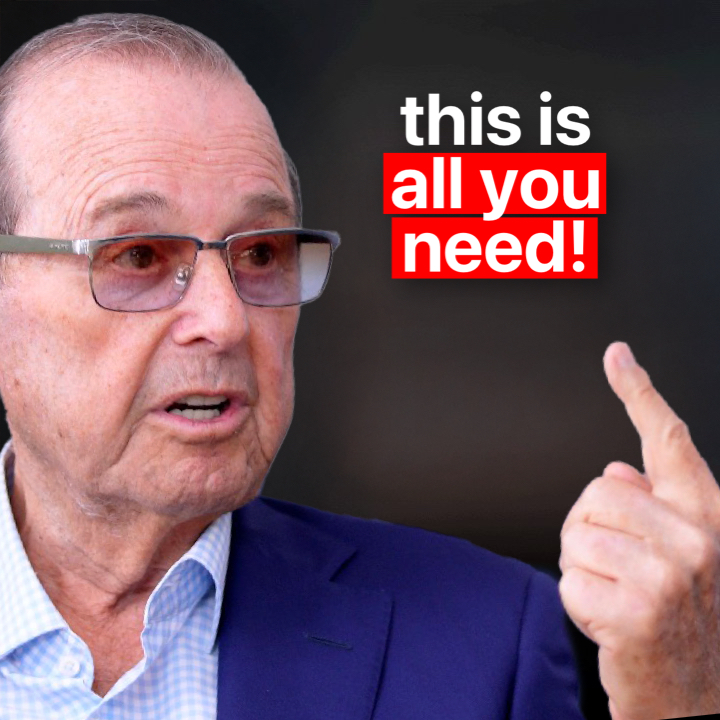


Joe Cayre went from selling handkerchiefs door-to-door to help feed his family to building multi-billion-dollar businesses across music, film, home video, and real estate.
In this episode, Joe shares the stories behind his biggest deals, including signing the World Trade Center lease weeks before 9/11, building an empire with exclusive Walmart distribution rights, negotiating million-dollar licensing deals, and the lessons that shaped him along the way.
Enjoy!
Sponsors
- Yazdi Entertainment: New York’s Premiere Event Production Company. yazdientertainment@gmail.com or (646) 765-5643
- The Hedaya Capital Group: Your Trusted Financial Services Partner. Visit HedayaCapital.com or info@hedayacapital.com
- Jeff Sitt Consulting: Book Your Free Pivot and Prosper Strategy Call Today! Visit https://JeffSitt.com
- Real Property Captive: Own Your Insurance. Recapture Your Premiums. Visit https://RealPropertyCaptive.com
Transcript
Victor M. Braca: Joe Cayre, welcome to the table.
Joe Cayre: Thank you. What a table.
Victor M. Braca: What a table over here, right? It’s going to be very hard to not consume the whole thing.
Joe Cayre: I already consumed way too much of things that I have once a year. Wow, they were delicious.
Victor M. Braca: Great. We should advertise who you got it from. Salt Steakhouse. Thank you, David. Unbelievable.
Joe Cayre: Incredible. David, thank you.
Victor M. Braca: Yeah, this is really great. When I first interviewed you, it was my sixth episode. I was 17 years old. I had no clue what I was doing, and you took a chance on me. So, thank you.
Joe Cayre: No, I took a chance on you because you promised me that when you graduate college, you’re going to run for public office. So, you have to run for public office. Look what Joey Saban is doing. It’s great. And Sam also, unbelievable things. We have to—our community has to get involved in politics because one day one of our boys or girls will be mayor of New York City and then president. Hyam and Marshall, they did such a great job of getting everybody to go out and vote and to understand who voted and who didn’t so people couldn’t lie to them and tell them they voted when they didn’t, because they had everything.
Victor M. Braca: Well, we had a great first episode. Thank you for taking a chance on me and thank you for coming back. I want to go back to when you were a child. When you were eight, nine years old. You were living in Kansas City, and I heard that’s when I left Kansas City. Eight, nine, I got there at one year old and we lived in a tiny house and we were very, very poor and my brother Stanley and I wanted to have a wagon. I don’t know what a little wagon would cost in those days, but we couldn’t afford it. So, my brother Stanley said, “Come on, let’s go to a junkyard about two blocks down the street. It was a steep hill.” We went down there and we found an old carriage. We took the wheels off the carriage. We put them onto an old wagon and then we had our own wagon. My parents wondered, “How did you get that?” We said, “Well, we went down and my brother Stanley was very clever.”
Victor M. Braca: Wow. You were so poor that you had to make your own wagon. Wow.
Joe Cayre: We had no money.
Victor M. Braca: Unbelievable. Tell me the story of when you convinced the milkman to take you on his route.
Joe Cayre: Oh, boy. Well, I was about seven years old. And I got friendly with the milkman that used to come to our house. You know, in those days, people would get milk three days a week. And he told me once, I said, “You know, I’d like a ride on your truck.” He says, “We’re not allowed.” I said, “I really would like a ride.” He says, “Well, I come here at 6:30 in the morning and then I come back at 9:00, so if you want, you’ll come with me from 6:30 to 9:00.” I said, “Great, great, great.” I didn’t tell my mother, didn’t tell my father. My father was away in Miami. We were in Kansas City, Missouri. And the milkman picked me up at 6:30 and I was holding on to a refrigerator in the truck. He was driving over here and after he went to a few stops, he went up and he made a fast U-turn. The refrigerator flew up and I flew out of the truck and the truck’s right rear wheels went over my legs. So they called the ambulance and everything. I don’t remember too much about it except it didn’t hurt and I was like shocked that it didn’t hurt. The truck went over my legs. Later on, a doctor mentioned that when you’re so young it sometimes just doesn’t affect anything. But the problem with that was the police came. It was a little chilly out. I was cold. They put a blanket over me and they put it over my head. And so the police called my mother and they said, “You know, we have your son. He’s in an accident.” My mother says, “You’re crazy. My son’s sleeping.” He said, “No, no, no, no. Your son is here.” So she ran into the bedroom, saw that I wasn’t there. Police car took her over there. She thought I was dead because the blanket was covering my face and everything. And she started to cry. I popped up. I said, “Mom, what’s the matter?” That was a crazy time.
Victor M. Braca: Why did you want to go on the milkman’s route?
Joe Cayre: I don’t know. I wanted to take a ride on a milk truck. I thought it was curious.
Victor M. Braca: You were curious. It’s six, seven years old. You’re curious. Tell me about your baby elephant.
Joe Cayre: Oh, boy. I was a pretty good storyteller. And in the class, I think maybe my third-grade class, the teacher was asking all the kids about what’s special in your life. And I said, “Well, I have a blue elephant in my garage. It’s a baby one though.” And I made a whole big story about the elephant, how I feed it in the morning and I come back and pet it. So the teacher called my mother. She said, “Could we bring the class to see your elephant?” My mother said, “What are you talking about?” And that night I went home, my mother said, “Don’t tell stories like that.”
Victor M. Braca: You fooled everyone. It was fun. What else do you remember about that time in Kansas City?
Joe Cayre: Kansas City, Missouri. I was—I think I went to kindergarten, first and second, and maybe just third grade. And we went to a school there, JC Nichols Grade School, which I think is still there, and they had a shop across the street. And all these kids were playing with something called the Duncan yo-yo. And I really wanted one, but we didn’t have the money to buy it. And I told my father, I said, “Dad, you know, this is something I really, really want. Could you help me get it?” He said, “Well, we’ll see what we can do.” And for my birthday, he got it for me, and it was great. Kids used to have a lot of fun with those in those days. We did all kinds of tricks with them.
Victor M. Braca: To go from not being able to afford a yo-yo or from barely being able to afford a yo-yo to making, you know, multi-million dollar, multi-billion dollar real estate deals is unbelievable. Can you take us into your time in Miami Beach? What prompted the move, your family’s move from Kansas City to Miami Beach?
Joe Cayre: In Kansas City, my father had a shop, a retail store, and the building was coming down. So, they canceled his lease. My dad, my mom both worked in the store. They sold baby wear and they sold handkerchiefs. So, when he closed the store, I think he sold all the baby wear, but he brought a lot of handkerchiefs to our basement in the house we lived in in Kansas City. And then my father got ill and there was no money coming in and my mother didn’t have money for food. So my brother Stanley and I, Kenny was too young at the time, my brother Stanley and I went door-to-door selling handkerchiefs to our neighbors for a dollar a piece. In fact, I remember it very well because one week we weren’t selling anything and my mother didn’t have any food. So I said, “Stan, let’s go out and just sell for any price we can get.” And I went to a neighbor, “No, I don’t want any.” I started crying. They said, “What are you crying about?” I said, “My mommy doesn’t have any money for food. Take them all. Just give us some money.” And they were very nice. They paid me a dollar a piece for each one and they said, “Hope that you’re—you can buy enough food with this.” It was a rough time.
Victor M. Braca: We’re here with our sponsor, Yazdi Entertainment. Ellie, I was trying to commit to memory everything that you guys offer in the party space, but I just couldn’t do it. It was too much to memorize. Tell me what you guys offer.
Other: DJs, lighting, staging, audio, photo booth, MCs, musicians. That’s a lot of stuff. CO2, the list goes on. But custom projections, monograms, female DJs, and all types of music, every single kind. I’ve done music for Syrian background, Moroccan background, Russian background, Persian background, even Indian.
Victor M. Braca: A Syrian Jewish kid DJed an Indian wedding. Yeah. How does that work? How do you even learn all the music?
Other: For about a month, I did a ton of research. I went to Indian bars, Spotify playlist, and Soundcloud, and we pulled through.
Victor M. Braca: That’s crazy. That’s crazy. Wow, guys. Yazdi Entertainment really pulls through for a month for every event. That’s awesome. That’s a great story. YazdiEntertainment@gmail.com. Right. Correct. We’re going to put that on the screen. Your one-stop shop for all your party and entertainment needs. I’m looking forward to partying with you guys.
Joe Cayre: And I remember sitting at the table. We were six kids and my parents not eating until we were all finished. It was pretty rough. Rough time. But you know what? We learned from it. I think a lot of people that had a very rough time are very, very successful today because they’re thankful for what changed and, you know, Hashem is great. I thank God every day 10 times for everything that’s happened because it’s incredible. One summer I went to work as a bellhop in the National Hotel there which is still there and the superintendent of service, which is the bell captain manager, was a very nice fellow named Charlie Biano, very sharp Italian man. And he taught me a lot of things. He said, “Look, give the customer whatever they want as long as it’s legitimate. If the customer wants a blue elephant, go buy an elephant, buy a can of blue paint, paint it, but make sure you charge them for it. Charge a lot of money and make a lot of money on all those requests.” I was not making much money at all, maybe $5 a day. And then I noticed there was a card game in the bar and the men would ask me every day to go get them drinks. And after a couple of weeks of that, I said, “You know what? I’ll just buy my own whiskey and give them the drinks myself.” And I started making $100 a day. So I found that that was a very interesting business. Kept me going for that summer.
Joe Cayre: When I was about 14 years old and my mother was telling me the dad was acting funny, he was getting very jittery for any little thing that happened. So she took him up to the doctor there and the doctor said, “Mr. Cayre, your blood pressure is over 300. We have to get you into a hospital. I believe you had a blood clot in one of your eyes.” My mother called me and I ran over to the doctor’s office which was right upstairs from our store. I asked the doctor, I said, “Look, well, something could be done. Is there anything that could be done?” He says, “Well, there’s only one place in the United States, that’s the Mayo Clinic, and you know, if you don’t get him there within 24 hours, he’s going to lose his eyesight in both eyes.” I said, “Well, how do you do that?” He said, “Well, you probably have to charter a plane.” We didn’t have much money and we certainly couldn’t charter a plane. But I called up Eastern Airlines and I told them, “Look, it’s an emergency. We have a patient. We have to take him to Rochester, Minnesota.” And they said, “Okay, it’ll be about 35,000.” I said, “No problem. I’ll write you a check.” Cuz in those days, they had blank checks. You just fill in who you’re paying, how much, and you sign it. So I made out the check and my mother took him up to Mayo Clinic and they were able to fix him somewhat that he didn’t go blind but his vision was limited in one eye and everybody said, “You know, how you going to pay this?” I said, “I don’t know, I’ll do the best I can.” So after about two months I got a call from Eastern Airlines that my check bounced and can I give them any information about it and I said, “Yes, can I come over and see?” So I took a ride out to Miami International Airport and I go up to this office and there’s this fellow there and he says, “You know, we have your check here and it bounced. How do you expect to pay us for this? And why did it bounce?” So, I told him the entire story. I started to cry and he says, “No problem. I’ll put it on the bottom of the pile.” He must have buried it in the waste basket because we never heard from them again.
Victor M. Braca: Tell me about the time when you took inventory of your father’s retail store. And what’d you find out?
Joe Cayre: I think I was 16 years old. We had a little retail shop on Lincoln Road. For those who come, Lincoln Road is a fabulous shopping center, chic and cosmopolitan, elegant and extravagant. We sold glassware from Italy, ivory, jade, paintings, pearls, and my father was always friendly with all the wholesalers from New York. Whenever they’d come down, they’d sit in the store and chat with him for hours. And I said, “Dad, how do they give us credit for so long? You don’t pay him for six months or eight months or nine months?” He said, “They’re all my friends, so they give me anything I want.” One Sunday, I told my brother Stan, I said, “Let’s go to the store and take inventory and let’s see what position our company is in.” And we went down and I think we had about 50,000 in inventory and we owed out about 70 cuz my father gave me his ledger of all the people we owed money to. So I looked at my brother and I said, “I think we’re bankrupt.” I said, “Daddy has 50,000 inventory. If you had to sell it, you probably could only get 30 or 40 for it, but we owe out 70.” So, we went back to our dad and we said, “Daddy, you know, we took the inventory and it seems that we don’t have as much merchandise as we owe out.” He said, “That’s okay. We do it all the time. Nobody’s in a rush for their money and they’re all my friends, so don’t worry about it.” So, I started to think about it and I looked and I saw after checking with the other stores that we’re paying 20 to 25% more for all the merchandise that we bought. And so, when I asked one of the people that came down to visit my dad, why do you charge us 25% more than you do the store down the street? In a very nice way, I didn’t want to embarrass them because they were friendly with my dad. They said, “Because your dad takes sometimes a year or two to pay, so we have to factor that into the price.” I says, “No, I understand. Thank you very much.” And that’s when we decided that we better start doing other things and we started importing directly ourselves a lot of the products and made a lot more money.
Victor M. Braca: Wow. 16 years old.
Joe Cayre: One day while I was in school, a friend of mine, Bert Dubbin, said, “Hey, Joe, we’re opening up a cruise ship that’s going to go from Miami to Bimini every day. Would you like to have the Freeport shop?” I said, “Sure.” I said, “What does the Freeport shop do?” He says, “Well, we sell whiskey and cigarettes and perfume at prices without duty once we get three miles outside of the limits of the United States.” I mentioned to my dad and he says, “Look, my best friend or a good friend of mine that I go to the Arabic movies with, he owns all the Freeport shops at the airport. I’m going to call up Ed and he’ll help you out. He’ll put all the merchandise in for you.” So, he called him up and he says, “Jack, it’s so funny. I wouldn’t take the boat because it was too small, but please tell your son to come over and I’ll help him.” So, I went over. I think I went with my brother Stanley. I don’t recall exactly. And he put in about $10,000 worth of merchandise on consignment because we really didn’t have any money to pay him. He put whiskey, cigarettes, and perfume. And I think on the first day out, we sold $5,000 worth. And we were overjoyed because we made, I think, $2,500 profit on it. We made double. And one thing led to another that became a real business for us.
Victor M. Braca: Should we dig in?
Joe Cayre: No.
Victor M. Braca: I’m going to have to dig in. Go ahead. Enjoy it. What we have?
Joe Cayre: This is a lamb. Looks great.
Victor M. Braca: Lamb flatbread. My god, it’s falling apart. Any good? Wow. If it’s that good, I’ll taste it. You have to try some. Wow. That means no dinner tonight or what?
Joe Cayre: Think we might have to eat a little later tonight, you know. Very good. Salt Steakhouse. They know what they’re doing. It’s great.
Victor M. Braca: You know, all the butchers know what they’re doing today. Prime sends these things to the houses, too. They’re fabulous. We’re really blessed in Brooklyn to have great food available to us whenever we want it. Tell us a little bit about Aruba. You guys bought the Hyatt Hotel over there, you and your sons.
Joe Cayre: Listen, we bought it and we had been going there for 35 years and we loved it and we always stayed at the Hyatt because we thought it was the best hotel there. And a couple of years ago, the manager who we knew very well said, “You know, this hotel is for sale.” I told the kids, “Let’s try and buy it. I’m sure we can improve it.” So, we were fortunate enough to buy it and we thought we would really lose a lot of money. We didn’t lose a penny. And we’re the number one hotel on the island, so it’s something people would like to go to. That’s amazing. And the food is unbelievable.
Victor M. Braca: That’s amazing. It’s amazing. Joe, I want to ask you about your kids a little bit because they’ve been extremely successful in their own right. When you build up a successful business, how do you give your children everything they need from a parenting standpoint while also motivating them and making them want more?
Joe Cayre: First, you don’t give them everything they need, or you give what they need, not what they want. And you know, up till 18 years, 17 years old, I took the kids all over the world, got them the best of everything. And then after high school, they would come to me for money. I said, “There’s no more money. Go to work.” Well, where am I going to work? I said, “Wherever you want, go to work.” But what about allowance? No more allowance. If you go to college, I’ll support you and if you don’t, go to work. So Jack was my first son. He went to Wharton for the first year. He came worked in the office that summer. He loved the record business and he was starting to—he made his own record label to take what they call sampling, where they take a piece of a record and they do another record with it. You ever hear of that?
Victor M. Braca: I have not.
Joe Cayre: Okay. So a hit record, people will take little parts of that and put it into their own record and they’d pay you for that either a royalty or a flat fee. And Jack was very successful doing that. So he didn’t want to go back to school in September. I said, “Jack, your mother killed me. You don’t go back.” “Dad, I’m not going back. I want to stay in our business.” And that’s what Jack did. Michael didn’t want to go to college, so he came into the office and he got the College of Hard Knocks. I told him for the first year, “Sit in my office, listen to everything that goes on every meeting. When people are here, please don’t ask any questions. Wait till they leave.” And that’s how I kind of educated my kids the way I thought they needed. Besides a college education, they really, really needed a street education.
Victor M. Braca: Do me a favor. Think about your daily business for a minute. No matter what industry, your business thrives on cash. You need working capital to meet payroll, to purchase inventory, to pay vendors, ship products, on and on it goes. But when your customers pay on 30, 60, or even 90-day terms, you fall into a cash flow gap. Your business starts to look something like this. Ups and downs. You grow a little bit, but then you flatten, plateau, or worse, your business begins to deteriorate because your cash is tied up in receivables. But this is what your business could look like after partnering with Hedaya Capital Group. Hedaya Capital Group is a financing partner that can help explode the growth of your business. They provide accounts receivable factoring, purchase order financing, and they lend against inventory, providing you capital so you don’t have to wait to get paid. They also handle collections and help ensure receivables, reducing both risk and administrative time so you can focus on what you do best. Hedaya Capital is a family-owned specialty finance company, and you work directly with the owners, not committees or junior sales representatives, so they can respond quickly. Whether you’re experiencing rapid growth or going through a transition, the Hedayas are at the top of their game. Plus, they’re entrepreneurs with long histories in the wholesale and consumer products industries, so they understand the pressures of running a cash-constrained business. Go to hedayacapital.com or email info@hedayacapital.com to see if it’s a fit. Even a short conversation with David, Alfred, Ezra, or Jack Hedaya can help you bridge your cash flow gap. With that, let’s get back to the episode.
Victor M. Braca: So, I happened to be friendly with a gentleman by the name of Harvey Shine that was president of CBS Records International. And I told him, “Look, I don’t have anything anymore. I’m not working with these people.” He says, “How would you like to have the right to do our records in Spanish in the United States?” The sales were very small, maybe $2 or $3 million a year, and the profits were hardly anything. I said, “Yeah, it sounds interesting.” I found out right away that the reason they did so poorly in that business was distributors only purchased records that they already imported a year before from Mexico and by the time the United States put out that same Spanish record it was a year old. So, I flew down to Mexico and I convinced the people from Columbia Records in Mexico to allow me to get the masters just at the same time they get them and put the record out in the United States even one week before they put it out in Mexico to ensure against any trans-shipping. And the business went from two or three million to $15 million.
Victor M. Braca: Tell me about the time when the FBI raided your studio because you guys had too many songs in the top 10.
Joe Cayre: The first part of the record business I was in was a Spanish record business. Most of the Spanish people in America at that time were from Mexico. There were some from Spain and some from Cuba. That was the bulk of the Spanish population in the United States. I was fortunate in that I had a license with RCA Records Mexico, RCA Records Cuba. RCA had left Cuba, but they took all their masters with them. So when I got a license for all their Spanish product, it included the Cuban product. And CBS Records had the biggest catalog in Mexico, Spanish catalog. And the reason CBS Records did so well in Mexico was they were able to hire the best artists by telling them, “You come to CBS or Colombia Records and we’ll put your music out in the United States,” which was a very big item for those artists in Mexico. They wanted to sell their records here as well. And then the biggest company in Spain, Areola, was the last of the catalogs of great Spanish music. I had all three of them. So I had a total lock on the Spanish market. And we would give out singles. You know what a single record is in an album. We would give out singles free to all the radio stations, which every record company does because radio stations want music to play. So in my case, the top 10 in the Spanish or the top 100 of the Spanish record hit parade, I usually had 80 of the top 100 and I had all of the top 20 or 30.
Victor M. Braca: That’s crazy.
Joe Cayre: It was crazy. So my secretary rings back and says, “Mr. Cayre, the FBI is here.” He says, “Send them in.” Yes. What can I do for you? They said, “Uh, you know, we looking at the payola scandals in America. Do you ever give any disk jockeys money to play your records?” I said, “No, I never do.” Why would I have to? They said, “What do you mean?” I says, “I have a monopoly on all the Spanish music in the country. I don’t have to give anybody anything. They have to play my music and there’s no other music to play.” They looked at me. They thought I was nuts. Then I told them the whole story of which catalogs I owned. I told them, “Go do your homework and come back.” I never heard from them again.
Victor M. Braca: That’s unbelievable. It was crazy. You’re doing so well that radio studio.
Joe Cayre: Yeah. We started Katronics to distribute CBS’s Latin label as well as other Latin labels and we also managed their artists. My brother Stanley was the chief financial officer. I kind of worked with the artist and my brother Kenny also worked with the artist and got to be very successful in that business. There was a fellow from Brazil, Roberto Carlos, who has sold more records than any artist I think in the world up to that time. And then Julio Iglesias in Spain who became a huge success in the American music market. They both recorded for CBS records. So I had an idea to bring them both together for a concert. We sold out two concerts, 40,000 people in one day, which is unheard of in those years in Madison Square Garden. It was recorded. It was shown around the world. And it was just a lot of fun. It was very lucrative for me. It was probably one of the highlights of my life as a promoter and distributor of Spanish music. It was fantastic. We decided to open up our own Spanish label called Americana Records. And we started recording Spanish artists to compete with our own Katronics label because Katronics was a distributed line and Americana was our own line. The most fun was Celia Cruz and I only did one album with her in Mexico City. She was the most fantastic artist I’ve ever heard. Her voice to this day, she’s well known. I think I even mentioned that before. She’s well known as one of the greatest voices in the Latin music industry. She was my first recording in a studio. And she was fabulous. During all of those years, my most fun was recording albums. Recording in a studio, you get a real different feeling. It’s a real high. I mean, I never did any drugs, but I would assume that you couldn’t feel any better than you feel in a studio when you make a great record. James Brown and I would go into his studio and jam. Not that I could sing or anything, but I had the most fun with him.
Victor M. Braca: Wow. Joe, you have a great story about working with Nina Simone. Tell me about that.
Joe Cayre: Do you ever listen to Nina Simone’s music?
Victor M. Braca: I have not.
Joe Cayre: Okay. Most people today haven’t. Well, I bought a catalog called the Bethlehem Jazz Catalog. I think I paid a half a million dollars for it. And I sold the rights to CBS Records International for three years for $10 million six months after I bought the label. I just gave them the right to use it for three years. That’s how valuable it was that nobody even looked at or understood. They had the greatest jazz artists in the history of the world under that label. One of them was Nina Simone who’s a black pianist and her songs were fabulous and she moved to France to live because she didn’t like the fact that black people weren’t equal in the United States during those years. And I had a lot of friends in France that licensed my music and knew what we had. And I got a call from a lawyer saying that Chanel would like to license one of Nina Simone’s songs and we’d like to pay you $100,000. We’re thinking of using the song for one of our products. I said, “Let me think about it and call me tomorrow.” And I called a friend of mine in France who was my licensee for Spanish music. And I asked him, did he know anything about Chanel? He says, “Oh my god, they made the most beautiful advertisement you’ve ever seen. They use that Nina Simone song and I think they spent $10 million on the ad. That’s how nice it is.” I said, “Really?” So then that lawyer from France called me the next day. He says, “Did you make a decision?” I said, “Yes, I did. You lied to me. You told me that Chanel might want to use my song. I understand they’ve spent a fortune. They used my song. So, people have already seen the ad, not on TV, but they’ve heard about it. So, they’ve seen it, must have been to the studio. So, I want a million dollars. And for every day that you decide, it’s another million. So, it’s a million today, it’s 2 million tomorrow, it’s 3 million in three days. Do whatever you want.” He said, “We’ll take it now.” And I got a million dollars for it.
Victor M. Braca: Wow. A million a day.
Joe Cayre: No, it only took him one day.
Victor M. Braca: Wow. Well, that’s the only way I thought I’d get him to move. That’s unbelievable.
Joe Cayre: It was fun.
Victor M. Braca: My brothers and I sat around and decided, what will we do next? To take a chance. My brother Kenny said, “Let’s make a disco record.” We made an album called The Salsoul Orchestra. I took the album to my friend who now was the president of Columbia Records, Walter Yetnikov. I said, “Walter, this is a great record. I was with my brother the other night in the Garage, which was a big disco in New York City at the time.” And as soon as they played this record, everybody got up to dance. Why don’t you license it from me? He said, “No problem. I’ll give you a $100,000 advance.” We were very excited, but they never put out the record. So, I went back. I said, “You know, Walter, what’s going on?” And he said, “Well, you know, we gave you 100,000 cuz I like you, but we think the record stinks.” I said, “Look, I don’t. With all due respect, let me give you back your 100,000 and give me back my record.” Which he was delighted to do. WBLS FM, the biggest beat in the biggest city. So, we went to all the radio stations in New York. I think WBLS had Frankie Crocker, which was the highest radio station in New York at the time. Often imitated but never quite duplicated. When Frankie Crocker isn’t on your radio, your radio isn’t really on. And he loved the album. And one of the songs called Salsoul Hustle, I think he played every hour of the day, became far and away the number one record in New York. And then it started to spread across the country. At that time, I said, “Look, let’s open up a label. Let’s call it Salsoul Records. We’ll mix salsa and soul.” My brother Kenny was very active in Philadelphia and he knew all the good singers and producers. And we had about five or six acetates, which are sample records from five or six different artists that we were going to record. And there was a show in France and Cannes called MIDEM where they buy and sell rights to records, music all over the world. So, I was very friendly with the fellow that ran Billboard magazine. I said, “Look, we’re number 20 with a bullet. I’m going to MIDEM next week. It seems that our sales are spectacular. It’d be really great if you could make us number one. Why don’t you help out a little independent company?” And he did. And he made the number one record album when we were in MIDEM. So, I took my attorney with me. I said, “Arthur, prepare contracts. I want to make deals while we’re here. I want it to be binding and so on and so forth.” Well, I was very, very fortunate that week. I sold the rights to our catalog, which only consisted of one album, for $10 million in advances. It was incredible. We couldn’t believe it. We came back and we started recording a lot of artists. And before too much time went by, we were the number one independent disco company in the United States. So my brother Ken, who was really great at getting the artists, went to Philadelphia and was able to sign Loleatta Holloway and many other artists. One thing led to another and we had a label. And I’ll tell you, Loleatta Holloway’s voice was probably one of the best voices I ever heard, almost as good as Celia Cruz was in the Spanish record market. And First Choice had a song called Dr. Love that was a number one hit almost instantly and Instant Funk came out with something called I Got My Mind Made Up and that also became a hit and you know we were going from hit to hit and it was spectacular.
Victor M. Braca: All right guys, the best performers in the world from Michael Jordan to Warren Buffett have coaches. So if something in your business or life isn’t working, Jeff Sitt starts with the simple question, what’s actually going on beneath the surface? Jeff is a business and life strategist and former chief people officer. He works with founders, executives, and entire companies to understand the people behind the performance. Guys, a company by definition is just a group of people. When the people improve, the business follows. I think what I love most about Jeff is that he’s direct. He’ll tell it like it is. If he can’t help you, he’ll say so. He also doesn’t bill by the hour, guys. Sessions last as long as they need to, and he’ll hold you accountable. If you’re ready to supercharge your business and your life, book your free discovery call at jeffsitt.com. That’s jeffsitt.com. Tell Jeff I sent you. And back to the episode. Joe, tell me about your friendship with Edmond Safra. I know that he was a close friend of yours. What did you learn from him?
Joe Cayre: Edmund was a very, very charitable man. Quietly. I went to see him once. I said, “Edmund, there’s a guy that needs a heart transplant. It’s $350,000. I’m looking to get 10 people for $35,000 each. I’m going to be one of them. I hope you’ll be one. And then I’m going to go out and look for eight more.” He says, “You don’t have to. I’ll do it all.” I said, “Really?” I said, “Let me go out.” He said, “No, no, no. This man can’t wait till you go out.” And he gave me the money. Very charitable guy, very honest man, straight as an arrow. I never would send him any customers, but there was a group of people, I won’t mention their names, that were very successful and went to see him. I got them an appointment and after the appointment, I spoke to Edmund. I says, “I hope I sent you some good customers.” He says, “They’re very nice people, but I have no interest in lending them a dollar.” I said, “Really? Why?” He said, “Because they’re two partners and they started to argue in front of me.” He said, “I don’t like customers like that.” So he was a banker and what he looked at, other bankers never would look at. He looked at two people fighting, he wouldn’t lend the money. Any other bank would lend them because they have a good statement, they’d lend them. But he was very special in that way.
Victor M. Braca: Can you tell me the story of trading gold and winning and losing certain amounts of money according to Edmond’s advice?
Joe Cayre: I think the year was 1981 or 1988. I’m not sure. It was a Sunday. He and I were taking our wives to a wedding that night of a friend of ours, mutual friend. I think it was in the Pierre. And he was living in the Pierre at that time. And I get a call like at about noon. He says, “Are you watching television?” I said, “No.” He says, “Well, they just went on. The Group of Five decided that the German mark is too valuable and they’re going to make it lower against all the currencies, the dollar.” He said, “So, meet me at the bank at 5:30. We’re going to start shorting the mark in Singapore and then we’re going to start shorting it in Hong Kong.” I said, “Edmond, we have this big wedding tonight.” He said, “Forget the wedding. Business comes first. Meet me at the bank at 5:30.” I can’t give you the amounts of money that I made or that he made, but between 5:30 at night and midnight, I had enough. I told him, “Sell me out.” He stayed till 8:00 in the morning himself and he made a hundred times more than I made and I made a lot of money that night. He was genius.
Victor M. Braca: That’s a remarkable story. I mean, he understood how markets moved, which most people wouldn’t because he had banks all over the world. If you had to pinpoint a couple things that Edmond Safra understood about money that most successful people don’t?
Joe Cayre: He understood about being a banker. Most bankers work for a company and do things to get into a better position at the company. None of that worked at his bank. He made all the decisions. He was really a total controlled banker. If he didn’t know you, he wouldn’t lend you money. If you didn’t personally guarantee every loan, he wouldn’t do it. In fact, after we were successful, I went to him for a major loan of something we were doing. He says, “Joe, you have to sign personally.” I said, “Edmond, the other banks all give me the money without signing personally, and I have to go to them. It’s not fair to my children. If I sign personally with you,” he says, “Joe, if you want money from me, you have to sign personally.” And we were best of friends. He was a banker all the way and I salute him for that.
Victor M. Braca: When you and your brother sensed that the music industry was going downhill in a way and video was starting to pop up and become popular with the technology at the time, you just picked up and changed industries. How did you do that? What deals needed to be made in order to shift into the video industry?
Joe Cayre: There was a big company that we hired, starts with an M, consulting company. Yeah, McKinsey. McKinsey. I think I gave a million dollars. They studied what we should go into. I asked them, “My past is the record business and first Spanish records, then disco, and we sold all our companies and now I’d like to do something. What do you suggest I do?” So they did a lot of studying and in the meantime I had nothing to do. So I would go to see my kids in school and in fact it got to the point where my kids said, “Daddy, don’t come to school anymore. You know, fathers don’t come to school all the time like you do.” So I was kind of anti—I wanted to go into business and so McKinsey came back and they said you either go into the cell phone business which hadn’t started at that time, just starting, didn’t take off, or you go into the video business and we suggest you go into the video business because it’s similar to the music business where you could go to shows around the world and license videos and this way you don’t have to film them yourself and if you film any good ones here, you could license them outside. And so that’s what we did. We went into the video business. And the way I went into the video business is I decided to go to a big video show. I remember it was in Las Vegas and at that time people were renting videos from Blockbuster, I think at $2 a day or something like that. And if you wanted to buy one, because very few people would buy them, but they wanted to own them in their house, have a library, if they’re really wealthy, I guess. They were $89.95. So, I go to this show and I see Columbia Pictures has a huge booth. MGM has a huge booth, Paramount, a huge booth. Then I see and they’re showing all the videos that they have. Rent them at Blockbuster or buy them from us for $89.95. Then I see a little booth with a sign $29.95. I go in, I see some great movies there. I asked the people, I said, “Could you tell me how you could sell this for $29.95 when everybody else is $89.95?” “Oh, these are public domain.” I said, “Well, what does that mean?” They said, “In 1953, the studios were losing money and they didn’t want to spend the fortune to re-copyright all their films. So, they all went into the public domain.” I said, “What does that mean?” “That means anybody could make them and sell them.” I said, “You mean you made that movie?” “Yeah, we bought a copy and we make them and that’s why you don’t see them at any of the studios. They don’t sell these because we sell them much cheaper.” I went to a pay phone at that time because in these shows there was only payphones. There was no cell phones. I called my lawyer. I said, “What is a public domain movie?” He said, “Well, all the studios, a lot of them didn’t copyright their films, and there’s some great films there, and there’s some great TV shows there.” I said, “Really?” He says, “Incidentally, there’s a lawyer in California that is a genius on this. Why don’t you call him?” I said, “Why don’t you call him for me and call me back? I’ll be at the hotel in an hour.” I went back to the hotel. He called me. He says, “The lawyer said, for $10,000, he’ll send you a list of every public domain movie and every public domain TV show. He’ll tell you where to pay $150 to rent from collectors the movie so you could copy it and you have to send it back and you’ll be in the video business.” I couldn’t believe it. I sat in my office. I wondered how the studios were able to package their videos to Blockbuster and for sale in such beautiful packaging. And I found out that they used the “now playing” or “now coming” things that they put in a box outside the theaters. They use that as a cover for their videos.
Victor M. Braca: Oh. So what were the covers beforehand? They weren’t—some were plain. Got it. Just a piece of white or black paper or what?
Joe Cayre: So they made them what they are—what they made, what it was. So I called up this lawyer. I said, “You know, I’ll give you the money, but I want to know all those people that have the videos that rent them to the movies that’ll rent them to you so I can manufacture them. And I want to know if they also have other things like the lightbox coming attraction so I could use that for my covers.” He says, “I believe they do.” We sent them the money. We got a list of maybe 4,000 movies. Of the 4,000, 400 were nice. Of the 400, 100 were big hits. So I sat down and I picked out 25 movies myself. Some comedies, some westerns, some thrillers, John Wayne movies, westerns, and I made what I call a pre-pack for all the stores, a package of 25 videos that were some comedies, some westerns, some thrillers.
Victor M. Braca: And I called my brother-in-law who’s passed away, Joe Bada. I said, “Joe, I know you sell placemats to Kmart, and would you take me there?” He says, “Yes, but I have an appointment coming up with Walmart, who’s a real up-and-coming store. Maybe you’ll come there with me.” Okay. He gets me an appointment and he can’t make it. He’s changed his date. I said, “Okay, what time is my appointment?” It’s 3:30 in Bentonville, Arkansas. I have to take two different planes to get to Bentonville. I think I have to leave the night before, then take another plane from Atlanta to go into Bentonville. I get there, I drive out to the Walmart buying area. And they have these plastic chairs that people sit on and they’re full of people. Lady gets on a microphone and she said, “2:00 appointments. Mr. So and so, Miss So and So, come in.” 3:30 came. She didn’t mention my name. I went there. I said, “Hi, my name’s Joe Cayre. I have a 3:30 appointment.” “Yes, we see you. They’re not ready yet. Just sit down. When they come out, they’ll come get you.” I’m sitting. I’m sitting. I’m sitting. Now it’s 5:30. A bell rings and everybody starts to leave. There’s no more lady at the desk to ask anything to. I go to the pay phone. I call Joe Bada. I said, “Are you crazy? You made me travel all day long and they don’t even see me.” He says, “I never heard of such a thing. I’m ready to leave.” Out walks this guy. He tells me, “Who are you?” I said, “Well, who are you?” He said, “I’m Sam Walton. I own Walmart.” I said, “Really?” I said, “Well, you don’t—you really don’t have a nice company. I traveled for a day and a half to get here. I had a 3:30 appointment and nobody came out to get me. 5:30 the bell rang. And you’re the only one I’ve seen in the last 15 minutes. Everybody left.” He says, “What do you do? What do you sell?” I says, “I sell videos.” He said, “Do you own your company?” I said, “I do.” He says, “Come with me. Jump in the truck.” He had two dogs. And I said, “I can’t go in the truck.” He goes, “What’s the matter?” I said, “I’m afraid of those dogs.” He goes, “No problem.” He puts the dogs in the back of the truck and I got in the truck. The store was about one mile away, their store 100. That was one of the big Walmart stores there in Bentonville. He says, “Come with me, son.” Takes me to where he has videos. And they’re sitting up there. You can’t even tell they’re videos. They look like paperback books. They’re spine out. Instead of having the front of the video like this, it was this way. He says, “What do you think of our video department?” I said, “You want to know the truth?” He says, “Yeah.” I said, “I think it stinks like shit.” He said, “What?” He said, “Why?” I said, “Why? Because you can’t see what it is. If you asked me, I would have thought that was a paperback book.” He said, “Okay, come with me.” I go back with him. Instead of going to that office with the $1 chairs, he goes around the other way. We go into a big boardroom. Gorgeous huge wooden table. Beautiful chairs. Sit down, son. Within five minutes, he had 12, 15 people sitting there. He says, “Mr. Cayre, would you like a donut and coffee?” I said, “Yes.” He says, “Well, you have to put 10 cents in.” And all the men that were there, they wanted a donut. They had to put in 10 cents. I thought he was kidding. I just shut up. I put 10 cents in. I got a donut. That’s wild. So, he said, “Gentlemen, this is Mr. Cayre. He’s from New York and he sells videos and he went to the store 100 with me and he told me how he thinks we should be selling our videos and I agreed with them. So, Mr. Cayre, would you tell them what you told me?” And before I had told him, I said, “Yes, if I was selling videos, I would put a four-way swirling unit. And I’d put your choice 9.95 on this side, your choice 14.95 on this side, your choice 19.95 on this side, and your choice 29.95 on the fourth side. And I’d have that spin around and I’d have everyone face out so the people could see it.” “Okay, Mr. Cayre. And how much profit could we make?” He had told me that they averaged 22% before when we were walking around the store. I said, “You get 30% and no risk. Whatever you don’t sell, I’ll take back.” He said, “Boy, that sounds like something good to me. Don’t you all think that way?” Naturally, they said yes. He was the owner. And then he brought his person that was in charge of the displays and he said, “Mr. Cayre, would you show him how you make these displays?” I said, “Well, basically, I’ll draw it. It’s very simple. It’s a box and you have four of them and they spin and you probably have eight across and six high. So you have 48 on each side and you have approximately 200 videos on this whole spinning rack.” He says, “Okay.” He asked the fellow, he says, “How long will it take us to get one in every single store?” He says, “Mr. Sam, we don’t ever start anything one in every store. We test 50 stores.” He said, “I want one in every store. How long will it take?” Guy says, “Six months. I’ll have them in every store.” He says, “You have six weeks. I want one in every store in the next 6 weeks. Mr. Cayre, can you fill these up in 6 weeks?” I said, “Mr. Sam, this is like spaghetti. Press a button, you get all you want.” I didn’t even know how to make one. I get a big order, go back to New York, and I call the two big companies that are making videos for all the big movie studios. None of them want to sell me anything. Why? “No, we can’t sell you. We’re busy. We’re full with all the studios. We don’t take any new customers.” So, I planned to buy 3,000 video machines and put them in a factory I rented in Bayonne, New Jersey. In fact, we bought it. Eddie had a guy help me do that. And it would take time to do that and I’d never filled the order in six weeks. So, I panicked and I said, “How can I find out?” And I said, “Who is the biggest manufacturer of videos besides these people?” And they say, “This one guy in California. He’s got a big factory making videos.” I said, “Get me an appointment with them.” I get an appointment. I fly out to see him. Very nice man. Tall guy, had overalls, beautiful office, pinball machines, bar, everything. He said, “What can I do for you, Joe?” I said, “Tell me, do you run your factory 7 days a week, 24 hours a day?” He says, “No, I run my factory 5 days a week, 8 hours a day.” I said, “How about if I give you an order to run some stuff for me and you run seven days a week, 24 hours when you’re not making your stuff, okay? But you have to pay me in advance.” So I said, “I can’t pay in advance, but I’ll give you a bank letter of credit. So the minute you finish it and you put it on the dock, we’ll pay you.” And he did that. And he made me all the stuff I needed for my first order. And you have to understand that videos at that time, I paid him a dollar to make them. And I had no cost of filming because it was public domain. The only cost I had was $150 to buy the master and give it to him and we get it back and they would make them. So I was selling a dollar for seven, a dollar for 11, a dollar for 15, and a dollar for 20. At the three, four different sides. They said, “Thank you, Hashem. I can’t believe it.” Then everybody got into the business. And I panicked. I said, “Everybody learned the game. They see what we’re doing. What am I going to do?” I go out to California. I go to see all the studios. I said, “I’d like to license the videos that you have put out with Blockbuster because after they put them out six months, they take them off for 10 years.” I said, “You’re taking them off for 10 years. Let me have a five-year license and then you put, you know, you take them off for another five years, then you put them out again if that’s your strategy.” And that was all of their strategies. Everybody said no except one guy from Columbia Pictures. So I said, “Would you give me 200 of your worst films for a license? Just give me a chance. You’ll see I’ll do well for you and you’ll give me some better ones.” He said, “I’ll give you 200 for a million dollars and they’re going to be real terrible movies.” I said, “I’ll take it.” I said, “Also, you had a movie called Close Encounters of the Third Kind that was a smash hit and you just pulled it out.” He says, “Yeah, you can’t have that.” I said, “There must be a price.” He says, “Yeah, a million dollars.” I said, “A million dollars for one and it was a million dollars for 200?” He said, “That’s right, cuz this one’s worth more than those 200.” I said, “I’ll take it.” I wrote him a check for $2 million. “Don’t you want a contract?” I said, “I’m sure you guys will make a contract. I just want to show you I have the money. Here’s the check.” Well, with that Close Encounters of the Third Kind, which was a hit movie and I put it out at $9.99, killed all the competition. And then I wanted to meet Cindy Crawford because she was a top model at the time. And we got the idea, look, we make videos of this girl. We called up her agency and we finally arranged a meeting at the Beverly Hills Hotel, I think of the Oak Bar. Hello. Hello. We’re very nice talking to each other. She said, “You know, Joe, I really don’t want to talk too much unless I get a million-dollar advance.” I said, “Cindy, I’d be delighted to give you a million-dollar advance, but you’ll be screwing yourself out of a lot of money.” She says, “What do you mean?” I said, “I mean that we could probably sell 10 million or more videos. I’ll give you a dollar for each one we sell, which is a lot more than a million dollars.” She says, “That sounds interesting.” I said, “Yes, but you have to promote it.” It’s Cindy Crawford, the next challenge workout. Ladies and gentlemen, here she is. Cindy Crawford. Cindy, I got her to go to Walmart during their convention when they have all the Walmart employees from all over the country. They go to this place in Arkansas. Cindy Crawford was very famous for doing a Pepsi commercial in jean shorts. Well, Walmart just had come out with Sam’s Club cola. And so I convinced her to put on those same shorts and walk up to the Sam’s Club cola thing and press the button. The place went wild. Because of that, I convinced the president of Walmart, Bill, to put an endcap, meaning when you walk in the store, the first thing you see all Cindy Crawford videos. And we just sold tons of them. And one day I was sitting having lunch with Bill Fields. He says, “Joe, I want you to handle computer software and games for us.” And I said, “Okay, but I don’t know anything about computers, so I really rather not do it.” He says, “Well, if you don’t do it, then you can’t sell us videos anymore.” So I said, “I guess we’re going to do it.” He says, “Joe, I’m going to do something for you that I’ve never done, and Walmart’s never done in the history. I’m going to give you a letter that you can show everybody. As of January 1st, Walmart will only buy its software from Good Times Software.” So, everybody said yes except Microsoft. So, Bill Fields calls me up. He says, “Look, Steve Ballmer, the president of Microsoft, wants to come and see your factory, and if he likes what he sees, he’ll probably let you handle his products.” I said, “Bill, he’s going to come down. He’s going to steal all my people, and he’s going to do it himself. You know, we have to have ground rules. Tell him if he comes down, he can’t speak to anybody in the plant. It’s a 5-minute fast tour. He can’t ask any questions and he’s got to sign a paper saying that for 5 years he won’t hire any of my employees under any conditions whether they quit or not.” And finally, after a lot of bickering, he signed it and he came down to see the place and he walked through for five minutes and it was incredible. He walked out, he shakes my hand, he says, “We could never do what you do. We’re happy to sell you Microsoft products.” As that really got successful, I said, “You know, why don’t we do our own software?” And there was two or three games that were selling like mad. One of them was called Doom. And so I said, “Find out who makes this game Doom.” And it was three or four young men from Texas. And I said, “Guys, how you doing with your business?” “Good.” I said, “You still selling a lot of Doom?” They said, “Usually we sell a couple of million pieces for $100 each when they first come out and that’s it.” I said, “Well, how would you like to sell it to me now to use and I’ll sell it at a low price through Walmart?” “Only if you give us a million dollars. Only if you give me a million dollars will I continue talking to you.” So we gave them a million dollars which they were very shortsighted. It cost us about a dollar to manufacture and I think we sold a few million pieces and we didn’t pay them any royalties because that was our deal. And from that we decided to go into the video game business ourselves and we opened our company with the same name. We called it Good Times Software and it was going along very successful. Walmart said, “We’re going to take everything you make.” I said, “It’s okay with me, but I can make a lot.” And they did. And it was just a fabulous relationship.
Victor M. Braca: What was it like for somebody who grew up the way you did?
Joe Cayre: Well, first of all, I have to tell you, I’m not a religious guy, but I thank God every day. I couldn’t believe what was happening to us. We took care of family. We took care of friends. We took care of the community. We did a lot of great things at that time and we still do.
Victor M. Braca: Amazing. I’m supportive of everything for our community. Do you own a real estate portfolio? Rarely file claims yet see your premiums go up every single year? That’s just how the commercial insurance market works. And honestly, it’s broken. What most midsize owners don’t realize is that the largest real estate companies in the world and 90% of the Fortune 500 have owned captive insurance programs for decades to keep that profit for themselves. Real Property Captive was founded by a real estate investor who got tired of this and decided to do something about it. Real Property Captive allows owners to come together in the first ever captive insurance company designed for midsize owners and get access to captive insurance at wholesale pricing just like the big boys. If you’re a real estate owner spending 350K or more on property insurance per year, check them out at rpcaptive.com. And if you’re a business owner in another industry, their sister company, Captive Insurance Partners, has access to over 100 group Captive Programs at captiv.com. They’re also hiring. So, younger listeners, please feel free to reach out and I can connect you with their team. Thank you, Real Property Captive, for sponsoring this episode. And back to the episode. I want to ask you about negotiation because you’re a dealmaker and what’s incredible is that there’s so much back and forth when you’re putting a deal together. There’s so many ways to creatively structure something so that both sides are happy. You’ve done that so many times. What’s your secret to negotiation?
Joe Cayre: Look, the first secret of business, you have to buy right. If you buy right, you’re going to make a lot of money. I don’t know anything about the stock market, but I know that Warren Buffett buys when everybody’s selling. So, I guess he buys right. But I try to buy things. And people say, “If you say that you like to buy right, why do you always pay the most for the best buildings?” I said, “Because I only want to buy the best buildings, and I think buying right is paying whatever price they were.” They ask. I try to negotiate the best price I can. Everybody tells me how foolish I am and how dumb I am, but three years later, I’ve looked like a genius. Five years later, like a double genius, and 10 years later, wow. I said, we’ve had stuff in our family for 50 years of real estate we’ve owned. Maybe it’s gone up a hundred times. So I would say to young people today, the business as the way that I understand it is go into the real estate business because it’s a great shelter of taxes. It’s a great way to keep your money and it’s a great way to grow your money.
Victor M. Braca: And so some young person came up to me a couple of years ago and they said, “How should we do this? We don’t have any money. We only have $20,000.” I said, “Go buy a two-story house that’s in dilapidated condition. Put $10,000 down and borrow the rest if you can. And take that $10,000 that you have, the extra 10,000, and fix it up and sell it. You’ll see that you’ll do well.” He said, “But you said to hold it for…” I said, “You can’t hold. You’re starting. You need to sell it, get more money to do it again and again and again.” That young person has now been doing it for three years. And I think the 20,000 is now worth 150,000 in three years. And they’re still going. Wow. And they will continue that for the next 10 years because it’s a good formula, I think. And I don’t believe in buying anything that is that you build and sell like a condo. I think the best thing to do is buy rental real estate or build it because even inflation—and inflation happens. I think the dollar and every currency around the world depreciates 10% a year at least. And the reason it does is because they keep printing money without anything behind it. So, if you build or buy rental apartments, you can always raise the price as the inflation hits. So, if you’re renting an apartment from me today for $2,000 a month, five years from now, it might be 5,000 a month. And I could keep raising it because whenever your lease is up and that’s why we bought the hotel in Aruba, inflation comes, you raise your rates. But if you have a tenant in a store and you gave a 10-year lease, you can’t raise your rates.
Victor M. Braca: Can you tell me about the story of signing a 99-year lease for the World Trade Center with Larry Silverstein?
Joe Cayre: Oh, boy. Larry Silverstein came into my life reference to the World Trade Center. First, the Port Authority owns the two twin towers that were there before. And I used to have lunch every month with the guy that ran the Port Authority. So I would have lunch with Lou Eisenberg who used to be, I think with Goldman Sachs, and then he became the director of the Port Authority. Lou said, “Joe, how would you like to buy a 99-year lease on the Twin Towers?” I said, “It’s really a little bit out of my league.” He says, “No, we’ll give you a good deal.” He says, “It’s a 99-year lease, and it’s a real home run. If the tenants all stay, you’ll make 7% the first four years, but after that, you’ll make 21% on your money.” I said, “No, it’s too much for me.” And then I thought about it and I said, “You know, I think I want it.” I called Lou three weeks later.
Victor M. Braca: What made you change your mind?
Joe Cayre: Very lucrative deal. I called Lou 3 weeks later. I said, “Lou, I think I want it.” He says, “Joe, you’re a day late. We put it up for auction and there’s four bidders. The first one is going to be Steve Roth. The second one will be Silverstein Properties. I think the third one, the fourth one, two other big real estate firms.” So Stanley Chera, God bless his soul, and I were pretty friendly and we spoke about it. He says, “Look, I’ll get Jane Goldman and Lloyd Goldman and you and I and we’ll buy it.” I said, “Okay.” I said, but you know, it’s first going to Steve Roth. So then the next one was Larry Silverstein. I spoke to Larry. I said, “In the event that you do get the bid, if the first person doesn’t take it, would you like a partner?” And he said, “Yes.” And so we made a deal and we were blessed because we got the deal. The first person didn’t take it and we were able to get it. It probably was one of the best investments we ever made.
Victor M. Braca: It was six weeks before 9/11. In fact, we were in the summer, we were going to New York by helicopter and I would take the kids. I say, “Aren’t you proud of our twins?” The twin tower time we passed them. And then I had a big deal in Japan. Went to Japan. It was dinner time there. Somebody said the Twin Towers, one of them was attacked. They said, “Really?” They said, “Yeah, there was a plane that had a problem and went into one of them.” I left the dinner table. I jumped upstairs. I put on the TV. When I put on the TV, the second plane hit the second tower. I said, “Oh boy, this is not a plane making an accident. This was a thing.” And then we’re watching and watching and watching. A couple hours later, they both fell down. I couldn’t believe it. I said, “I have to get back to New York.” All planes were grounded except I got a plane from Japan to London. I took the flight from Japan to London. I get to London. Before I got on the plane to Japan, I called my office. I said, “Send my plane to London.” The FBI allowed my plane to go out because I chartered for the FBI. They know who I was. They knew I was the owner of the World Trade Center. They knew I had to get back. So they cleared my plane to go to London. From London, I flew back to New York. I went to my house on Bedford Avenue and there was pieces from the World Trade Center of shredded paper all over our lawn. It was a terrible tragedy and I was very sad because we had just purchased that and terrorists had taken it and just destroyed everything that we had. But thank God in time we’re able to build it up and everything will be all right. But we felt terrible for the people who died there. In fact, we hired the head of the FBI in New York to be in charge of security and that was his first day on the job and he passed away that morning. So certainly we did whatever we could for his wife monetarily, but money doesn’t mean anything in those situations, but we did the best we could. And it was a terrible, terrible time in United States history.
Victor M. Braca: Joe, we heard a lot about your many successes throughout your life. I want to hear about your failures.
Joe Cayre: They did a 10-year anniversary on a record company once in Billboard magazine and the fellow came to me and he said, “What’s the best deal you ever did?” I said, “The best deal I ever did was not doing a lot of deals.” So, sometimes when you lose something and you feel bad, don’t. Everything happens for the best. Some of the biggest deals that we lost, the other people that got them, something terrible happened. And have we had failures? Of course, we’ve had failures, but you have to get up and keep fighting. Don’t ever look back. Look forward.
Victor M. Braca: Was there any moment throughout your career that felt detrimental? That felt like you were about to lose it all?
Joe Cayre: Yes. In Miami, Midtown Miami. I didn’t sleep for a year. My kids went there every week. They flew from New York to Miami. I was there half of the year. We suffered problems with the bank, problems with building. We didn’t know our asses from our elbow about building. We thought we were geniuses. We could go and build. Today, we can, but at that time, we couldn’t. We didn’t know anything about it. We learned the hard way. And Hashem, we were saved.
Victor M. Braca: Can you tell me a couple of things that you learned from the president, Donald Trump?
Joe Cayre: He’s a very smart, common sense person. We’re fortunate to have him as a president. Most presidents think about what’s proper and how they can get things done with the Senate and with the Congress. Donald Trump thinks about what’s good for America and he does it and he takes the consequences later. I don’t think we’ll ever have another president like him. And I think he’s probably the greatest president in the history of our country. Look what he’s doing. I was fortunate, my wife and I and my daughter Grace, we were there, not last weekend, but the weekend before. We spent three nights at Mar-a-Lago. That was amazing. Everybody stands up and claps when he walks in. He walks in about 8:30. Everybody stands up. They give him a five-minute ovation. He is the nicest human being in the whole world.
Victor M. Braca: How does he operate under extreme pressure? And how does that make him stand out?
Joe Cayre: The president, how does he operate? I don’t know how he operates. All I know is he sleeps three hours a night and he works 21 hours a day for the United States of America. It’s amazing. I don’t know how he does it.
Victor M. Braca: What was the most interesting interaction you had with Trump at Stanley Chera’s house?
Joe Cayre: The first time we had the biggest fundraiser for him. He was a classic. It was just so much fun to be with him. We were with him for a few hours. Just had the time of our life. That’s really so unique. And it’s amazing. Stanley Chera was very, very close with the president. I would be having dinner with Stanley. The president would call me. He said, “Joe, the president’s called me.” I said, “Get out of here.” Gives me the phone. I, “Hello.” He says, “Joe, how’s your favorite president?” I said, “You are favorite.” Here’s awesome. That’s really cool. That’s fabulous.
Victor M. Braca: Joe, I want to shift a bit towards your advice for young adults. If you were starting out today from scratch in 2026, what would be your first step? How old would you be? 22. So, you’ve gone to school straight out of college.
Joe Cayre: I’d get a job at a very prestigious firm in the industry that I’d want to go into. I’d work like a dog. I’d learn everything I can. And then I’d go out and tell investors, “I’ve been at this company for four years. I understand it totally. I’m going in business for myself. I need investors. You could have a nice piece of the company,” and then that’s what I would do. I’ll do it. What? You can’t do it.
Victor M. Braca: Have to run for office. Have to run for office. Right. When people talk about Joe Cayre decades from now, what do you want your legacy to be? What do you want them to remember you as?
Joe Cayre: A good husband and a good father, a good grandfather and a good great-grandfather. That’s all I want them to remember me as.
Victor M. Braca: Beautiful. Beautiful. There’s so much beyond work for you. I mean, that’s your life.
Joe Cayre: It’s been a wonderful life. I was blessed with the best wife in the whole world and the greatest children and grandchildren ever.
Victor M. Braca: One thing I didn’t do in the first round of our first interview which I did for every other guest—I think I was too nervous that I forgot last time—we have a signature question on the show. It’s called the momentum moment. I think momentum is such a powerful force in the life of a successful person. If you look at your life, the ups and downs, you know, and we definitely heard those from you. When you’re on a streak of momentum, you’re rolling. If you had to pinpoint one momentum moment from your life, I’m sure there are so many.
Joe Cayre: You mean rolling in money?
Victor M. Braca: I mean rolling in success. I mean that hot streak.
Joe Cayre: It was the video business. That was the hottest streak we ever had.
Victor M. Braca: Was it when you got that Walmart order?
Joe Cayre: That’s what it was. Wow.
Victor M. Braca: What school do you go to?
Other: I go to NYU Stern.
Joe Cayre: NYU Stern? You know, that’s one of the finest business schools in the country. Let me tell you what I think are the most important things in somebody’s life, especially somebody your age. A, to get married to the right woman. Okay? Money is not going to make you happy. Okay? We were very happy when we were poor. I had a great family. I had my brothers and my sisters and my mother and my father, a fabulous family. We all loved each other. We didn’t have any money. And we didn’t even know we didn’t have any money. I mean, we lived and we were happy. And I know people who have tons of money are the unhappiest people in the world. So, A, finish school. B, get married. And C, only do what you like to do. If you have a job, I don’t care how much money you’re making that you don’t like and you hate going to work, it’ll get you sick. A lot of friends of mine also did that. To me and my brothers, when we went to work, it was not work. It was fun. We enjoyed every single minute of it. And today in the office with my boys, it’s not work. It’s fun. We enjoy what we’re doing. If we didn’t enjoy what we were doing, I promise you we wouldn’t do it. Anyway, that’s my advice to you, and I understand what you’re going to do, and I think you’re going to be very successful. But don’t only do it to make a ton of money, cuz that’s not the only thing that’ll make you happy. It’ll make life more comfortable, but it won’t make you happy. A good wife, great kids, and your own family. That’s the secret to real happiness.
Victor M. Braca: Joe, thank you so much.
Joe Cayre: Okay. Take care. It’s a pleasure.
Victor M. Braca: Wow, what an episode with Joe Cayre. If you made it this far, comment “baby elephant” down below. Guys, let’s confuse everybody who didn’t make it till the end of the episode. At the end of every episode, I like to distill the conversation to three key takeaways. Three things you can apply to your own life. So, here goes. Number one, buy right. Joe said this multiple times. If you buy right, you make money. It’s that simple. He explained that even if people think you’re overpaid at the time, buying the best assets, the best quality, and holding them the long term is how real wealth is built. He doesn’t chase cheap deals, he focuses on quality and patience. Second, work hard, learn everything, and then go out on your own. Joe’s advice to young people like me is simple. Get a job at a top firm in the industry you want to be in. Work like a dog, and only then raise money and start your own business. He was very adamant about not skipping the learning phase, but also emphasized going out on your own. Don’t be afraid to take a leap. And third, only do what you love. Joe said flat out that if you hate your job, no matter how much money you’re making, it’ll make you miserable and it’ll even make you sick. He emphasized that his biggest successes came because work felt like fun, not work. I want to note here that your love for what you do doesn’t have to be in the trade itself. It doesn’t have to be, you don’t have to necessarily be in love with creating the materials going into creating a VHS tape, but Joe is in love with dealmaking. Find an aspect of business that you love and find a way to make that your life. If there’s one thing Joe made absolutely clear, it’s that money doesn’t make you happy. Family, meaningful work, and enjoying the process more than anything else is what matters. If you enjoy this episode, you’re going to love my conversation with Haim Dabah. He had an apparel company called Gitano that was doing over a billion dollars in sales. Within months, it went to zero. But he didn’t let that stop him, guys. He rebuilt himself and went on to start more apparel companies and later shape the tech, real estate, and healthcare industries. To watch that episode, click the link in the description. And guys, with that said, thank you so, so much for watching. I’m really trying to up the production value and turn Momentum into a high-quality show. I hope you see that. I hope you noticed that. And this was super fun to do. I love this series. If you enjoyed and want to help us out, share this episode with a friend. I’d be remiss if I didn’t thank Salt Steakhouse for the amazing meal. I mean, check it out over here. We’re doing great. To get this incredible food shipped right to your doorstep, go to saltgourmetmarket.com or click the link in the description. And thank you. Thank you to our amazing sponsor, Yazdi Entertainment. Every day is a party with Eli and his team. Email YazdiEntertainment@gmail.com to start the party. And of course, make sure you’re subscribed with notifications so you don’t miss an upload. Until next time.


Leave a Reply