

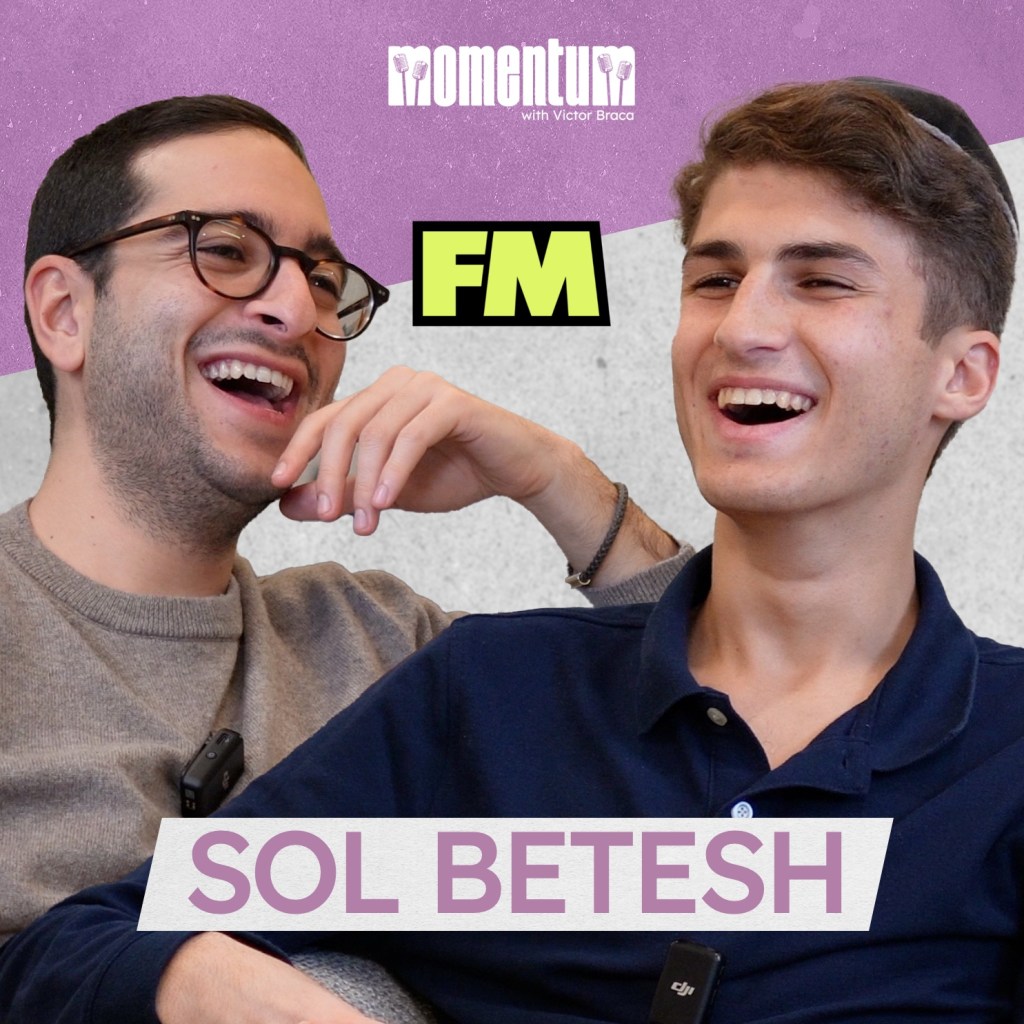




Sol Betesh is Co-Founder and CEO at Fallen Media, a company creating the hottest short-form content for platforms like Instagram, TikTok, and YouTube. In 2024, Fallen’s content amassed nearly 1 billion views across all platforms.
With a track record of producing viral hit shows, they’ve attracted a client list that includes Fortune 500 companies like Apple, Amazon, Warner Bros, Nike, Shopify, BMW, Meta…the list goes on.
In this episode, Sol and I discuss:
- How he went from pitching brands as a 25-year-old founder to working with billion-dollar companies
- The mindset of reaching out to anyone—and how cold emails changed his career
- The moment he nearly lost his company and how he turned it all around…
…and so much more.
Enjoy!
Links
Sol’s Commencement Speech at Drexel University
Check out some of Fallen Media’s viral shows:
Transcript
Victor M. Braca: You have hundreds of millions of views per month. You work with brands like Coca-Cola, Nike, Westin.
Sol Betesh: We posted one video and I watched and I was like, “This video is not good. I don’t even think we should post it.” We posted it, we got a million views, and then every video after that—boom, boom, boom.
Victor M. Braca: I read that your co-founder was a 15-year-old at the time.
Sol Betesh: I looked at my dad like he was nuts. What are you talking about? You want me to start a business with this random 15-year-old kid? So I said, “You know what? Let’s try this thing. Might as well.” We have no idea what we were doing. Growing 100,000 followers a month, and I’m 25 at the time. I never ran a business before. We were in trouble. We had maybe two, three months to live.
Victor M. Braca: How does that feel?
Sol Betesh: Not good. Game on. Let’s go.
The following is a conversation between myself and Sol Betesh, co-founder and CEO of Fallen Media, a media company creating viral short-form content that brought in one billion views last year. Just think about that for a second. One billion views. There’s eight billion people worldwide; that’s over 12% of the world. Just crazy.
You may have seen some of their viral sensations, such as What’s Poppin with Davis, Streethearts, or Subway Oracle, each of which brings in tens of millions of views per month. I had this conversation about three weeks ago, and without exaggeration, I’ve thought about it a bunch of times since then—partially because we covered so many things that I’m obsessed with, like how to craft the perfect cold email, how Sol almost ran out of business and turned it all around, and how he went from pitching brands as a 25-year-old startup founder to leading a media company that works with some of the biggest names out there.
But also because, here’s the thing—and let me get personal for a second—the way this episode inspired me was simple. Sol built a media company, and the truth is, anybody can do that. Anybody can go out, start shooting content on their phone, post it on social media, amass followers, and turn it into something real, something structured, something that brings in money every month.
And I think that’s the beauty of the show. I think that’s what I love most about Momentum: you don’t have to solve world hunger, you don’t have to invent the next iPhone, and you don’t have to write a best-selling book in order to be successful. You just have to start. You have to take an idea, put in the work, and build something from nothing. And if Sol’s story proves anything, it’s that there’s no excuse not to.
I’m Victor Braca, and Momentum is where I dive deep with exceptional leaders to uncover the key decisions, defining moments, and lessons that propel them to success and how those insights can inspire your journey forward. So if you’re interested in building a business in a field you love with no prior experience, pitching brands and landing deals with billion-dollar companies like Apple, Amazon, Google, Coca-Cola, and Netflix, or turning social media attention into a profitable company, you’re going to love this episode. Stick around.
Sol Betesh, welcome to Momentum.
Sol Betesh: Thank you for having me.
Victor M. Braca: One of the younger guests on the podcast, and I’m very excited about that.
Sol Betesh: I love it. I’m honored.
Victor M. Braca: Yeah, I’m honored to have you. You made the trek from Manhattan, first of all. Appreciate that.
Sol Betesh: This is the Momentum podcast. This is like a big—this is a top moment for me. Top of the line. 100% this is Fallen Media, Momentum podcast list. I’m very excited.
Victor M. Braca: All right, cool. So to start us off, tell us who you are and what is your business.
Sol Betesh: So I’m the co-founder and CEO of a company called Fallen Media. What we do is different. We actually create hit original popular shows made for Tik Tok, Instagram, and YouTube Shorts. For those people that usually don’t get it, I usually start by saying, “Did you ever see the man-on-the-street interview series on your Instagram or Tik Tok feeds?” and everyone says yes. We sort of popularized that. The same way movie studios and TV studios make TV shows and movies, we do the same thing. We create great entertainment, but we do it for the TV in your pocket, if you will.
Victor M. Braca: Cool. I like it. You’re Warner Brothers for Tik Tok, Instagram, and YouTube.
Sol Betesh: Exactly. That’s how I sort of describe it to people.
Victor M. Braca: Nice. And doing like a little bit of a deep dive on you and your history and everything you’ve been involved with, it seems like you got into entrepreneurship and business pretty early. Tell me about how that played a role in your upbringing, your early life, high school—we could go before then.
Sol Betesh: I mean, yes, I was always very entrepreneurial. My dad’s an entrepreneur, my dad’s dad’s an entrepreneur, my mother’s father’s an entrepreneur. The whole family—it’s very much in my blood. I think even when I was very young, like even elementary school, I wanted to run a business. That’s what I wanted to do. Maybe other kids wanted to like play basketball, I don’t know, but I always dreamed about running a company and doing something really interesting and different and cool.
But I also wasn’t always just only business-minded in the sense that I was very into creative. I was very into music, I was very into the tech scene—I was a big Steve Jobs guy—I was very into TV shows and media. I was all around, but business was always sort of at the center for me.
Victor M. Braca: Nice. And how did you get it—like what was your first foray into business?
Sol Betesh: You know, I’ve always been the type of guy that if I’m doing something, I need to go 110%. A lot of people that have that story, it’s like, “Oh, and then I started this business while I was in high school.” I wasn’t great in high school or in elementary school, so for me to even get the grades to keep going, I had to give that my total focus. Especially with the dual curriculum—Hebrew and English—was not really my thing. So I had to find ways to get what I need, like get that feeling of not just being stuck in school all the time.
I think for years I was like, “There has to be more to life than sitting in class in elementary school or high school and learning all these things I’m not interested in.” So I sort of, for a couple years in early high school and elementary school, I was dragging. I was like, “I need to figure out the thing that’s going to get me excited.” That’s what I kept saying to myself because you read all these books about how you gotta do what you’re passionate about, and I kept playing that over in my head. I’m like, “I don’t know what that means because I can’t find it.”
Of course, it takes years to find it, but the first time I think I woke up and saw that there’s a fun world to this—to business and what I want to do—was when everyone went to camp. I think it was like early high school, maybe it was my freshman year of high school, and all my friends probably went to camp. Maybe they went to Seneca or they went to sleepaway. And I was like, “I’m not doing that. I’m gonna do something—I need to do something different.”
I signed up for Baruch College; they had entrepreneurship classes. I went alone. I didn’t go with any friends.
Victor M. Braca: On your own accord.
Sol Betesh: On my own accord. I didn’t know anyone there, but I was like, “I got to do something different and there’s something pulling me to do something different.” So I ended up in this entrepreneurship course at Baruch. Again, alone, just figuring this thing out.
They had a business plan competition, which I had never heard of—the idea of a business plan competition. They said basically, “We’re going to do a competition in this class. You’re going to come up with a business, you’re going to write a business plan start to finish, and then you’re going to pitch it to like Shark Tank; you’re going to pitch it to some judges.”
I was like, “Wow, this is great. This sounds like exactly what I want.” Much better than camp. But they paired me with these weird, whacked kids who had no idea what they were doing. One guy was smoking all the time, one girl barely spoke English. I wasn’t handed anyone that was typical…
Victor M. Braca: You didn’t have the typical Steve Jobs team.
Sol Betesh: Not at all. But something inside of me was like, “This is cool.” I brought them together and I got them excited and we came up with this idea and we put together a whole business plan. It was an amazing experience. We pitched it and we won. That was the first time that I had started to do something that I wanted to do—got a team together, worked on something, and built something from scratch on paper and won.
Victor M. Braca: Nice. What was the idea, if I can ask?
Sol Betesh: Take back, you know, now it’s like totally obsolete, but you remember when headphones were wired? It was like this piece that you could attach onto wired headphones. You’d click a button and it would almost coil it up. I would always put my wired headphones in my pocket and they would get all crumbled up. So this was like: you take off the headphones, you press a button, it snaps them into place, and you put them in your pocket. That way when you’re ready to listen to music, you don’t have to untangle the wires.
Victor M. Braca: Cool. And tell me, from there—this is your first venture into entrepreneurship, you put a team together, you’re in early high school at this point. And then what?
Sol Betesh: I loved that business plan competition so much. I loved the idea of: you could at least put on paper and start a business without actually having to go out and do it yet. I liked it because I could do it in the time that I had, and I figured that there were other students out there that wanted to do the same thing.
Victor M. Braca: Sort of like a simulation.
Sol Betesh: Exactly. And I felt like there was nothing like that really out there other than this one time I did it at Baruch. So I sat down and I sort of drew out: what if we did a business competition in America? What if we did a business competition? And I just sort of set it up. That was sort of the second iteration, which was called the Betesh Entrepreneurial Competition. I literally pulled it out of nowhere. I don’t know where I came up with it.
Victor M. Braca: I wonder how you came up with Betesh.
Sol Betesh: That part was easy. I made a video, put it online, and basically said, “We’re looking for people—I don’t care who you are—but come up with a great idea, make a business plan, and you could win $2,000.”
Originally it was really slow. We weren’t getting any responses. I hustled, I pushed, I spoke to people that ran websites, I got on their websites, and we ended up with like 100 teams all over the country working on this thing. It was great. It was fun for me because I got to sort of get other people inspired to go out and start their own business and at least start thinking about that. That was another success in the era of my business plan competitions.
Victor M. Braca: What was the business model? Did you look at that as a business or just as another way of pursuing your hobby?
Sol Betesh: Still just pursuing my hobby. I was still in high school and I was doing some internships, which we could talk about in a second, but it was like an added-on thing. It was just something I wanted to do for fun. I promised myself while I was doing that, that when I got older and I started working, I was only going to do something that I truly enjoyed—where I enjoyed coming into work every day. I know a lot of people that go into work and don’t enjoy it, and you don’t have to do that.
Victor M. Braca: I see that as a theme amongst us youngsters—we really want to go into work enjoying what we do. Thank God a lot of us have the luxury of having that wish. Our parents and grandparents didn’t necessarily get to wish that.
Sol Betesh: Correct. Correct.
Victor M. Braca: So you briefly mentioned your internships. I want to get into that. And also, I remember hearing in your speech that you gave to your graduating class at Drexel that you went into college planning on dropping out. So tell me about all this.
Sol Betesh: Sure. The reason I said that in my speech was because I always idolized—and I said this in the speech too—Steve Jobs and Mark Zuckerberg and Bill Gates. I was obsessed about them. I would study them. I’d be sitting in class watching keynote speeches by Steve Jobs.
Victor M. Braca: Other people are scrolling through Tik Tok watching short-form content, and you’re watching Steve Jobs.
Sol Betesh: Right, exactly. So for me, they were always like, “I’m gonna drop out of college, I’m gonna go start a business, college is a waste of time, and I’m gonna go become a billionaire.” I always thought I would end up doing that.
But even in my internships, I always found something that I wanted to do. I went to Drexel. Drexel puts you in a co-op program, so they put you to work like a year and a half in. Instead of going to school one of the semesters, you’re going to work. That helped me get through it for sure.
I worked a couple of the internships. I worked for Eli Sutton, who at the time would put together basically an app to totally replace email—this crazy concept. I worked with him for a couple of summers. That was great. I worked in licensing, like a licensing agency, for a little bit. I thought that was branding, I thought that was really interesting.
And then in college I worked for this large energy company—like a legit Con Edison in Philadelphia—which is so out of the realm for me. But the opportunity was so great because I got to get an understanding of: how do these big conglomerates work? These huge companies that just spend tons of money and are very, very corporate, and everybody’s on a phone call acting all extra corporate.
I was in this little part of the company that was like an incubator to work on new ideas and new projects around electric vehicles. My boss at the time taught me a lot about storytelling and being authentic, and how to run a team and how to work with people that maybe you don’t always agree with—how to work with younger people, because he was an older guy. I mean, we were all in our early 20s; he was in probably his early 40s. That was an amazing experience. It taught me a lot about how, when you’re managing people, it’s your job to get them to where they want to go. Because he did that with me, I learned so much with him sort of figuring out where I was best placed. I think about that today.
Victor M. Braca: Nice. And you lead a team of 15 people today, which is very cool, very big, and very accomplished for your age.
Sol Betesh: Steve Jobs says you can’t connect the dots looking forwards; you can only connect them looking backwards. So you don’t know how things sort of play out to set you up. Those are the internships I did.
And then I kept on with the hobbies. In college, someone walked into my classroom one time and said that if anyone signed up for the college radio station, here’s my card. I thought that was really interesting. I ended up being a host on the radio at Drexel, which ended up leading to a podcast I did called The Sol Radio Show. I couldn’t call it a podcast because podcasts weren’t a thing yet, so I had to call it a radio show so people understood it. And then I did a DJ competition in Deal with Marvin Azrak and Michael Kassin called Spin City. I kept the hobbies going with the internships.
Victor M. Braca: Tell me a little bit about how you founded your company. I read that your co-founder was a 15-year-old at the time. Take it from there. I always wanted a cool origin story.
Sol Betesh: So going off of the energy company situation, I was still there my senior year of college and they kept me on. I wasn’t planning on working there the rest of my life, but I said, “It’s a job. My family’s in wholesale, and I don’t really want to do that. So I’ll stick around here and we’ll see where it goes, and then I’ll apply to another job somewhere.”
I told them I’m not staying in Philly, I want to move to New York. He said, “No problem.” He got me a great WeWork downtown in the Financial District. I got an apartment downtown right by the office. I’m set, I’m happy. A month later, they shut down the division and they let everyone go.
Victor M. Braca: Oh wow. So this was maybe October or November 2019?
Sol Betesh: October, November 2019. And now I have to go look for a job. I was applying to classic tech and media companies because I was always interested in tech and I was always very interested in media. I thought if I landed at one of them, I would be very happy.
I was also thinking about ideas of businesses I could start. I thought about doing a branding agency. One of the ideas I had was making products for celebrities. But nothing was really panning out. I was applying to these jobs, and I had a pretty good resume, but nothing was hitting.
Victor M. Braca: Why do you think?
Sol Betesh: Now I know it’s a “who you know” thing. For example, I applied to a lot of jobs at NBC Universal—like it would be great to work at The Tonight Show or work at any of these things. And now I have people that work for me who worked at The Tonight Show, and I know you really have to know people to get in. I didn’t know that at the time.
Anyway, I’m applying to jobs, nothing’s happening. One Sunday morning, December 2019, my dad hands me the Sunday New York Times, and there’s this kid on the cover of the Sunday Styles section. I don’t remember the headline; I think it said something like, “Here’s what’s happening in the American teenage bedroom.” And he was like, “Read this article. You should reach out to this kid.”
I’m like, “What are you talking about?” He’s like, “I think there’s something here for you.” So I read the article, and it was basically about this 15-year-old kid who started a meme page on Instagram. This is not like the meme pages that we know like FuckJerry or The Fat Jewish—these are classic brand-name meme pages. His was not. This was like the underworld of memes.
I’m also not a big meme guy, but he basically started this meme page at 15 years old and grew to a million followers in a very short amount of time. Out of nowhere, his meme page got taken down because Instagram did what they called “The Big Meme Purge” in 2019. They took down a lot of meme pages, and he was sort of like the leader of all of these meme pages that had gotten taken down.
I looked at my dad like he was nuts. I was like, “What do you want me to do with this? Reach out to this kid?” And my dad knew because I had always reached out to people. Anybody I want to get in touch with, I’d get their email and I would send them an email.
Victor M. Braca: I want to get to that after. I’m gonna make a mental note. Go on.
Sol Betesh: So I reach out to him on a whim, going off my dad’s gut feeling. He responded a couple minutes later. I got on the phone with him and I said, “Hey, I have a couple of ideas I want to run by you.” I didn’t have any ideas. “Come to New York, let’s meet up.”
He’s like, “Sure, great, no problem.” The guy’s 15 years old in Pennsylvania; he’s probably in chemistry class. I don’t even think he went to class; I think he was on his meme page 24/7. And my dad was like, “All right, let’s go. Let’s write some ideas down.”
I’m like, “What are you talking about? You want me to start a business with this random 15-year-old kid?” He’s like, “I don’t know, but maybe there’s something here.” He kept saying that. I jotted down a couple of high-level thoughts ten minutes before the meeting. He comes in with his parents into my dad’s office in the city. He’s sitting there and he’s very quiet, very reserved.
We just said, “Hey, welcome, let’s talk.” I went down the list of some concepts. I don’t even remember the first probably two that I read. The last one I read was really this concept that people were consuming memes as a form of entertainment, and he had access to all these meme pages with millions of followers. Again, not the most well-known or brand-safe pages.
I basically said, “What if we became a meme marketing agency? Like a middleman. I know the business side of things; you know all these meme pages. What if we brought big brands to these meme pages with millions of followers?” He’s sitting there, and his eyes go wide, and he’s like, “What if we did this and if you did that?” I’m like, “Okay, this kid’s smart.”
I said, “Put together a business plan because I need to see what you can do. Let me see how you see this business looking.” Again, I was like, “It would be crazy if this actually became a thing—met this kid from a newspaper.” A couple weeks later he comes back with a business plan 20 pages long, down to the numbers, really, really well done. He named the company Fallen Media because he put all these memers in a group chat after they all got their meme pages taken down and called it “The Fallen.” I wasn’t always into the name, but it sort of stuck.
That was the first thing. By the time he got me that business plan, COVID was starting to creep through. I was at the time, honestly, working for my dad. I needed a job, so I was there in the meantime, and I was not even paying attention to this thing. It was really on the back burner. It was like, “I’m going to find something else to do because this is not it.”
Victor M. Braca: Just goes to show: what man plans, God laughs.
Sol Betesh: Exactly. So COVID started creeping up and I was working on a different project. COVID eventually really hit and obviously the world shut down. I didn’t know what was happening. My dad said, “Well, PPE…” They were doing some stuff with PPE—selling the masks and the gloves—and I was getting involved in that.
I was so miserable doing it. I remember people telling me, “But you can make a lot of money doing this. Even after COVID ends, you can make so much money selling PPE.” And I’m like, “I can’t do this.” Does that mean I don’t like making money? No, I obviously want to make money, but I couldn’t. This was like a real—not a low point—but I was like, “This cannot work.”
I was getting on the phone with the municipalities of Texas… it was so off of what I wanted to do. All the while, my dad kept saying, “What’s going on with Rowan?” that was the kid’s name. By June 2020 I was like, “I’m not doing this PPE thing anymore and I can’t find a job because no one’s hiring.”
So I said, “You know what? Let’s try this thing. Might as well.” We started June 1st, 2020. I called him and I said, “All right, we’re gonna get started.” He had actually brought in another kid he knew and I said, “Okay, great,” because again, I didn’t think we were really going to do this thing. I asked him, “How do you know this kid? Do you go to school together?” He said, “No, we just met as friends online.”
Anyway, that other kid didn’t end up making it. He wasn’t as driven as Rowan. We started June 2020. I called Rowan the week before and I said, “All right, let’s hit it. We’re going to build this network of meme pages and we’re going to start going out and selling to brands. Let’s just start this thing.”
June 1st he sets up calls. My calendar was filled with all of these young kids in their basements—13, 14-year-old kids. I’m getting on the phone with them and saying, “We’re going to add you to our network.” And the kid’s like, “Yeah, you know, I got to talk to my mom…”
Victor M. Braca: I’m like, wow, this is the internet. You’re talking to the kids that run the internet. Are you thinking, “What did I get myself into?”
Sol Betesh: I think back to that and I should have been thinking that, but I think I was just like, “Let’s go. This is it.”
Victor M. Braca: 110%.
Sol Betesh: It’s 110%. Also: set your expectations. If you didn’t want to go near this, then this is not for you. Getting on the phone with these kids—and again, like I said, the underground of meme pages like Scooby-Doo Fruit Snacks or Satan’s Nostrils—weird, weird stuff. My whole goal was: this is where you start and then you have to elevate. I’m not looking to stick in this world. They were doing ads for girls to sign up for their Snapchat; that was how they were making money. Again, not my world at all.
We started putting together this network of meme pages. Once I go into something, I just devour every article, every single possible thing I can get my hands on. The meme world on Instagram and Tik Tok was obviously starting to come up, and it only took me about a month maybe to say to myself, “There’s definitely something here. This is where the industry is going, especially with COVID. Everyone’s on their phones. This is the Wild Wild West.” If there was ever a time to get in—it’s like getting in on the computer business in the 70s or the internet business in the 90s. This is like getting into the entertainment business very early in this new world. Of course people don’t watch TV anymore; they’re all on their phones.
I saw that. I didn’t know exactly the path that would get me to where I’m sitting right now plus where hopefully we go. So we started getting on the phone and we built this great network with these meme pages. We also brought on what we called a “meme team,” which essentially was people that could come up with funny ads if we were going to work with brands. You’re not going to put a regular commercial on a meme page like FuckJerry; it’s not going to work.
Rowan introduced me to these really talented people that could come up with funny memes. One guy had the number 18 most liked tweet of all time. Another guy was a great fake text message writer. If you ever read those text messages on Instagram, most of them are fake; he was like a savant at writing these things. He actually sold one of them to T-Mobile for a Super Bowl commercial.
Victor M. Braca: That’s cool.
Sol Betesh: It was great. And then just some other people that were also really talented and we just started going. We had no idea what we were doing. And then we got introduced to this very large gas station convenience store chain in the Midwest called Kum & Go. We got on the phone with the guy there, and he was really cool, very forward-thinking. Of course we had spoken to other brands, big and small; nobody understood what we were doing. He took a chance on us. He was like, “All right, let’s do this thing.”
He gave us our first deal—it was a $20,000 deal—and it was amazing because, first of all, we did great work for them. It’s the first time I really saw this thing sort of start to come together. We grew their page by like 50,000 followers. He thought we bought fake followers; he couldn’t believe it. That gave us the proof of concept to go get money from friends and family.
Victor M. Braca: So you’re advertising for this chain of gas stations and convenience stores?
Sol Betesh: Yes. Once we got that deal, and we went out and we got a little bit of money just to get started, I started thinking, “Okay, now you’re in it. Where do you want to take it? Do you want to just be a middleman for these 13-year-old kids? No. You want to build a big business.”
Really started mapping out where we wanted to take this company. It started out by saying we want to eventually create our own meme pages—creating our own IP. IP is very valuable. If you can create a successful intellectual property… Nickelodeon’s SpongeBob is a great example of IP that’s really strong. If you can do that, that’s how you’ll be successful.
So we sort of said we’re going to launch our own meme pages. That was the entertainment format on social. Tik Tok was on the rise, but it wasn’t there yet. We said, “Okay, we’re gonna make some meme pages.” We hired a salesperson and started that small team. From June 2020, we had gotten the first deal by August or September, and then we actually launched two really successful meme pages in November and December 2020.
One was by the fake text message guy. He came to us and said, “I want to do a meme page about fake text messages of guys getting rejected.” I told him it was a stupid idea, I wasn’t interested. And he was like, “Great.” Then he was like, “Okay fine, I’m gonna do it myself.” And he did, and it got 100,000 followers on Twitter in a week.
Victor M. Braca: Wow, in a week.
Sol Betesh: In a week. And of course I was like, “Okay.” We ended up partnering on the page or we bought it—I forget exactly what the deal looked like. It ended up getting a million followers in a month. It was the fastest-growing Twitter account in December 2020, ahead of Joe Biden. It was wild.
Victor M. Braca: That’s wild. In a month.
Sol Betesh: Crazy. But even during that time, we were still in what I call the—I don’t want to say trenches—but we were still in the underground. We weren’t in the mainstream. I also realized—we realized as a team—that you can only take a meme page so far. We would make a meme and it would go crazy viral, and then someone would steal the meme and get all the credit. Memes are pictures, so it’s hard to own that.
Victor M. Braca: True. It’s on social media; it spreads like this. By the time you even can act on it, a million people liked it on the other person’s account.
Sol Betesh: Exactly. So while that was happening, Tik Tok was now the hottest thing ever. We said we wanted to own our own and create our own meme pages because that was the entertainment format on social, but the entertainment format was changing to this 60 to 90-second swipeable vertical format. We said, “Well, why don’t we create a show for Tik Tok?”
That was a new idea at the time. There was another company doing it, but they weren’t really doing it right. It was a side project for them; they were actually a meme company. They had tons of memes, very successful—100 million followers—they owned all their meme pages and they had one show that they were doing. But it was also very—they weren’t making any advertising dollars on it. It was very not brand-safe. They weren’t focusing on brand dollars the same way as a company we were. They made money on the show by having people pay $10 a month to get exclusive content. It was a great business for them; they don’t do the show anymore.
So we were like, “What if we take something like that but make it younger, make it for Tik Tok, and make it in a way that brands will want to be a part of it?” And I don’t know if you ever saw the show Billy on the Street, but clips of Billy on the Street were blowing up on Tik Tok—actual clips from the show from five years ago. We wrote on the board: “Gen Z man-on-the-street show,” “Gen Z Billy on the Street.” That’s what we wrote.
Had no idea what we were doing. Again, we were still this network. We had these meme pages that we owned that were making a little bit of money, but most of our money that we were making at the time was from signing deals with record labels—small deals: 5,000 here, 10,000 here. The way we would work was: let’s say a record label would give us 10 grand; we would take five, put it in our pocket, and then five we would have to give to these meme pages to distribute the ads. That’s how our business was working. We were an agency still. We didn’t know how to make a show. We barely knew how to make a meme page, and we definitely didn’t know how to make a Tik Tok show, which at the time, if I explained it to someone, it was like I was talking about Mars.
But we wrote it on—I’ve heard a quote that it’s either a very good sign or completely wrong.
Victor M. Braca: Right. I’ve heard that too. It’s funny because you listen to successful people and they’ll say, “Whenever someone tells you it’s crazy, that means you’re going in the right direction.” I’m like, “Not all the time.”
Sol Betesh: It’s half and half. So we wrote it on the board with no idea what we were going to do or how we were going to do it. We were basically like, “All right, we’re going to do this thing. So we need to find talent. We need to find the host for this unnamed sort of interview show on the street.” At the time, if you ever saw one of those street interviews made for Tik Tok, they were all very sleazy, very lowbrow, not quality.
Anyway, we were looking for talent. Now of course we have criteria: we look, we do screen tests and pilots and auditions. We didn’t do any of that at the time. One of the guys in the office was scrolling through their Tik Tok and paused and just picked up the phone and said, “What about this kid?” And it was this young kid, Davis Burleson was his name. He had moved to New York from Houston, Texas, to make it. He wanted to be like Andy Cohen and Ryan Seacrest. He had, I think, about 200,000 followers on Tik Tok, but wasn’t—he was known-ish but not well-known. He was doing impressions, he was doing day-in-the-life content.
We just reached out to him and we brought him to our office. To his credit, he walked in and we were four total strangers in some random office in Midtown. It was in my dad’s office, and my dad was in the handbag business. So sitting in this showroom with handbags, he’s probably like, “What’s going on?”
We pitched him the show. We said, “Hey, we have this idea for the show where you interview people on the street. You ask them funny questions, maybe play a game with them.” The concept wasn’t even so tightened. He sat there and he listened and he said—I asked him, “Are you comfortable speaking to strangers?” and he said, “Oh, yeah, yeah, for sure.” He’ll say now today he was totally lying; he had no idea.
I asked him—I ask everyone this question—I said, “Where do you want to be five years from now, perfect world?” and he said, “I want to be a host. I want to be like Ryan Seacrest and Andy Cohen. That’s my dream.” And we said, “All right, let’s do this thing.” So he stayed in New York just to try this thing out with us.
We came up with a name—called it What’s Poppin. I don’t know why we came up with that name. We called it What’s Poppin with Davis. We got a camera person—I don’t know how we found a camera person—we found an editor. We said we’ll film two, three times a week. We’re going to post new episodes every day. Each episode will be 30, 60 seconds long. Davis will ask these funny questions. We had a team of writers—our meme team came up with some questions—and we just said, “You know what? Let’s try this thing.”
He went out and it was all makeshift. It was all, “Oh, we need a coordinator. Okay, we have a friend of a friend who could be a sidekick.” It was just all sort of put together with glue and tape. It’s a whole big mess.
Victor M. Braca: Yes, exactly.
Sol Betesh: I found an editor who we had known from before who put together a really, really good edit. Again, there was no way to edit short-form content—short-form shows—at the time. To his credit, he pulled out some great parts. We said, “All right, let’s just go.” Posted it—not getting any views. We were like two weeks in.
Davis was getting his footing and we kept saying, “Maybe you need to be more like Billy.” He was like, “Okay,” and then he would go and try to act like Billy Eichner. If you’ve seen Billy on the Street, it’s very extra and he’s screaming, and that’s not Davis. Davis is—he likes to connect with people. He likes to actually learn about what people have to say, and he’s a generally very curious person.
We would watch videos and it wasn’t coming out the right way. We both looked at each other and we were like, “This is—something’s not working.” Davis was like, “I think I need to be more myself.” I’m like, “Yeah, let’s do that.”
Went out, made a couple more videos; still weren’t hitting. I remember we posted one video and I watched and I was like, “This video’s not good. I don’t even think we should post it.” “Why not? Doesn’t cost us anything.” We posted it; it got a million views. That was the video. And it was like, “Whoa.” It got a million views, and then every video after that—boom, boom, boom, boom.
Victor M. Braca: After how long?
Sol Betesh: This was a couple months… three weeks. Three weeks, that was it. And it started growing.
Victor M. Braca: Three weeks of an episode a day?
Sol Betesh: Yes. Three weeks of an episode a day.
Victor M. Braca: Okay. A lot of content.
Sol Betesh: It’s a lot, a lot of content. A lot of it just wasn’t working before, and we didn’t know what we were doing. So it was all gut feeling. It was like, “Change this, adjust that, try that. I think this would work, I think this wouldn’t work.” We didn’t know how we were going to make money. We thought maybe we’d get an ad, but who knows?
The thing just started taking off. We launched What’s Poppin in February 2021. By May we got our first brand deal. A brand called us up. We got an email from G FUEL.
Victor M. Braca: Nice. Big sponsor.
Sol Betesh: Yeah. They reached out to us and they were like, “Hey, we’ll pay you 2,500 bucks a video. We want three videos.” Like, “Wow.” And then I don’t have to take that money and split it—you’re doing an ad on something that I own and that we created from scratch.
Victor M. Braca: Totally new business model.
Sol Betesh: Yeah. And so that was like, “Wow, this is cool.” We were very excited. We didn’t know how to price. So they said 2,500—great. We did the videos for them, they came out great, and then we get an email from Milk Bar, which makes cookies and cakes. And they’re like, “We’ll pay you five grand a video.” It’s like, “Oh, okay, great.”
We kept going. All the while, the page is growing. We’re growing 100,000 followers a month at a point. It was really, really on a tear. And then I remember by August, we had gotten a deal from like Adidas for like 20, 25 grand for four videos. It was like, “Whoa.” And I was like, “But I want to ask for more.”
I remember someone in the office at the time said to me, “Oh, you have to take it. This is never going to last.” I remember looking at him being like, “I’m not so sure about that. This is where we’re headed.”
So that was a really successful show. We had launched another successful show called Subway Oracle with this guy who runs over to people in the subway and interviews them. He does crazy subway stunts. That was also a success, although not as much from—we weren’t getting as much brand interest at the time. It was really early and the show was a little crazy. It took us a little time to make it a little bit more brand-safe.
But by the end of 2021, we had two or three shows. What’s Poppin was a runaway hit; it was hotter than hot. I remember walking down the street with Davis at the end of 2021. We were just—I was going with him to film, and I was producing all the shows at the time because I wasn’t going to hire someone to do it. People were stopping to take pictures with him.
Victor M. Braca: No way.
Sol Betesh: Stopping. We couldn’t walk down the street without autograph, picture. “Oh my God, you’re the guy!” And I’m like, we were just doing a Tik Tok show. And now he’s—now we’re going to the Tory Burch fashion show next week. It’s crazy to sort of see that happen.
Really the goal was, once we hit January 2022, it was like, we’re hitting the ground running. Game on. Let’s go.
Victor M. Braca: Okay, so take me through the growth stage of the business from early ’22 to now. It’s early ’25. You have hundreds of millions of views per month. How many shows total so far?
Sol Betesh: I think we had about three shows.
Victor M. Braca: Three shows? No, right now.
Sol Betesh: Oh, now? Now we have six.
Victor M. Braca: Six. Got it. Okay, so take me through that timeline.
Sol Betesh: We thought, “Wow, this is easy. Launching shows is easy.” Because we didn’t know what we were doing with What’s Poppin and we had just done it. Subway Oracle also, we didn’t know what we were doing, we had just done it. Both shows were doing very well, and we started hiring producers, content people. We weren’t growing that from the ground up; we were bringing on, again, experts.
We never sat down and said, “Wait, hold on. We have these shows—What’s Poppin specifically is a brand machine, every brand in the world wants to work with this show—what made that successful? How do we break that apart? How do we reverse-engineer it and break out another three or four?” We didn’t do that. We were just throwing stuff at the wall.
We were like, “Oh, let’s try this and let’s try that,” because we said, “Oh, this is easy, making shows.” So you had one side of the business that was throwing stuff at the wall, one side of business that was losing money, and all the while I have people that are telling me, “This is the way we should do it,” and “This is the way.” And I’m 25 at the time.
So again, you follow—you just—I never ran a business before. Go with the flow. So I’m going with the flow, but in my gut I wasn’t happy. I felt like a stranger in your own home, really. Because I didn’t lay down the law enough and be like, “No, this is the vision.” I had never had people that I had hired before. I didn’t want them to leave, I didn’t want them to be unhappy. They’re telling me it’s the right thing, and we just rolled with that for about a year and a half.
Long story short: wasn’t necessarily working. We had launched a lot of flops—really just not good content. We had an agency business that was probably operating at a loss, and we were in trouble. By July 2022, we had maybe two, three months to live.
Victor M. Braca: Wow.
Sol Betesh: Yeah.
Victor M. Braca: Until you ran out of money.
Sol Betesh: Until you ran out of money. Yeah.
Victor M. Braca: How does that feel at that point? You go from—you’re a young guy, 25 years old, and you built up a pretty big thing from before that, and you’re on top of the world, you’re loving it. Then you start to not love what you’re doing, and all of a sudden… like, how does that feel?
Sol Betesh: Not good. Not good. Because eventually—and I’m sure every person on this podcast would say the same thing—there’s eventually a time where you need to make a decision and you need to make hard decisions. And that is business. Like, it happened before for us; it’ll happen again. It’s how you sort of keep going. There’s always interesting things that come up, but this was a major one.
So we had to really restructure. We let go some of the top managers of the company. That was really hard. That was really hard because, again, once you’re in it, you’re in it; you don’t want to disrupt the flow. I also think I didn’t like the culture at the company. The culture was very, “I’m coming in, I’m doing a job, and I’m going home.”
Not for everyone—there were people that were passionate to come to work—but there were also a lot of people that were difficult or really not in it. And you’re a startup; you’re building something exciting, and that should be the feeling. It wasn’t there. So we eventually made a decision to restructure the business a little bit. We had to let some people go. Not that many—maybe we had 12 people, we went down to 10. But I shut down the agency.
Victor M. Braca: Got it.
Sol Betesh: Said we’re only going to focus on content. Double down on content. It’s a risk because you’re only as good as your next hit, but I didn’t go into this to be a middleman. And you have three months to turn this thing around. This thing isn’t making all that much money; this thing could make a lot of money, but again, a risk.
I remember the first day I came into the office after we had done the restructuring. I got everyone together in the conference room and I spoke to everyone. I had never done any of this in my life, but this was like a culture shock. The first day I walked in—the day after we restructured—was like, “Okay, now I have to do this thing. Everyone’s relying on me to figure this thing out.” Pep talk, step one, step two, execute. Day one I walked into the office, it hit me like a ton of bricks. It was like, “Okay, now really game on. We really have to figure this thing out.”
And then people started leaving. So we had 10 people. I thought it was a sick joke at the time; I thought God was playing a sick joke on me. We went from 10 people to four.
Victor M. Braca: Oh wow. In a month.
Sol Betesh: People started leaving and I’m like, “This is gotta be some joke because I’m also trying to rebuild this. I need people to rebuild it.”
While that was happening, the business on our original content doubled or maybe tripled. That was because we put a little more focus on ad sales. Also, we were hitting our stride. The industry was coming towards what we were doing; the timing was right. So in a way, we got a little lucky, but the timing was also spot-on.
I got this unique opportunity which really doesn’t happen often in business. If you’re in trouble, sometimes you’re just in trouble and it’s hard to crawl out of it. But I got the opportunity where everyone left. Everyone left, so overhead went down and then business went up. We basically got a second chance at life, and I got the opportunity to now rebuild the team with a team of people that are really creative, really excited to come into work and make popular hot content and feel that every day.
I got that opportunity. If the people didn’t leave, I probably wouldn’t have let them go. I was still sort of young at the time; I wasn’t gonna make that big of a change. So sometimes you just don’t know—you think something maybe doesn’t look so good, but ends up being the best thing ever.
Victor M. Braca: Yeah, right. Nice. And you turned it around, you doubled down on the content, you have a smaller team, smaller overhead, and you’re able to act more nimbly. At this point, what does it look like from there? How do you get from that to hundreds of millions of views per month?
Sol Betesh: We really focused on: how can we—well first we said, first we had some other shows that we were doing that weren’t making any money. We tried to fix those, and with the ones that we were able to fix, we kept, and the ones that we weren’t, we cut. We got really good at cutting stuff that wasn’t working. We just kept focusing: what works well and what doesn’t work well? Who are the best people in the world that we can bring onto the team to help us run these shows?
We continued to grow What’s Poppin, we continued to grow Subway Oracle. And then we had another show called Down Bad Patrol—that was the meme page. We had launched a show around it that was doing okay, but I said, “I want to get another What’s Poppin-level hit.” That will really take us, because one hit can take you a long way. What’s Poppin in a way really took us a long way. We fixed Subway Oracle up amazingly; the show grew like crazy. That helped. It was like, “Okay, now we need something really new, something hot.”
I started just talking to talented people in the industry. Again, that’s how you’re going to find great ideas. Jimmy Iovine, who started Beats by Dre, has a quote. He says, “Great can come from anywhere.” You don’t even know where it can come from. The guy came from—he was a farmer. You don’t even know where it can come from, so you have to be really open.
I met this guy who’s really creative and he pitched this idea for a blind dating show on the street. He went out and he filmed a pilot and it was really good. He eventually was like, “Actually, I don’t want to do this.” I ended up buying the pilot off of him and we found a really amazing host named Tiff Baira. Same as Davis—200,000 followers, known but not crazy known, but really talented, really great personality.
We put the show together and it was a couple weeks and it wasn’t really hitting, and eventually it caught fire and it became another massive hit. That really helped. That was like, “Okay, now we got this.” Slowly but surely kept building and building. I think we were able to just double down and double down again on how do we make really just the best, most successful content.
Now it’s the same thing with her: she can’t walk down the street without people wanting to take pictures with her. Brands love her. To give you a sense of how we work with brands: for Streethearts, which is the name of the dating show, we had put basically two people around a table outside on the sidewalk and Tiff is in the middle. She does a date between two people that never met each other, she moderates the date, and at the end they reveal whether they want to go on a second date.
Victor M. Braca: Any marriages yet?
Sol Betesh: Not yet. Some dating, though. So cool. You’re going to get some feedback on, “We just got married!” We have in our office—we’re manifesting a Streethearts baby. That would be funny. I think the show has about 600,000 followers now.
Westin, the hotel company, called us up and they were like, “We want to do something cool.” With them, we came up with an idea to put a king-size bed in Central Park and do a date in this bed. It was Tiff in the middle and two people on each side, and she did a date in Central Park in a king-size bed. People from Westin corporate came to make the bed because they got to make it nice. It got like two million views. It was sick.
Victor M. Braca: Did the police shut you down?
Sol Betesh: No, no, we got a permit.
Victor M. Braca: Oh wow. Very official.
Sol Betesh: Wow, yeah. Love that. That’s great. So that’s an example of how we work with brands. I never mentioned how we work with the brands.
Victor M. Braca: For sure. I love your story, and it’s particularly cool to me because it’s in a new industry. You acknowledge that obviously medium short-form bingeable… what do you call it? Thumb-stopping content. I mean, that’s a great tagline. I think it’s more attractive to teens like me than something like wholesale or licensing.
I want to shift a little bit into your advice to young people like yourself—somebody who is ambitious, who wants to start a business. You got your start very early on. Maybe for somebody who didn’t get their start as early, somebody who’s in high school or college and they want to take the first step. What would you say to them?
Sol Betesh: It’s gonna be a cliché answer, but it shouldn’t be. I think a lot of people run towards the money. Listen, when you reach a certain age, you have to make money. When you’re in college, or at least when you graduate college, that’s your time to go try something great and really go out and do it. So I would really just say pick something that you like to do and go do that.
Then it may lead you to something else, and it may lead you to something else. But I find that a lot of young people hesitate to either get started or they hesitate to do something that they like because they’re scared and they’ll take the safe way out. When you’re in your early to mid-20s, specifically your early 20s, go out and do something cool. Why not?
Victor M. Braca: Love it.
Sol Betesh: And by the way, if you love real estate, great, go do real estate. Just because we know a lot of people that are in the real estate business doesn’t mean that you shouldn’t do that. If you love real estate, go do it. But if you love music, go do something in music. There’s no master plan. You can’t say, “But if I do music, I don’t know how many artists make it.” Who knows? Maybe you’ll start as an artist, maybe you’ll end up being a manager, then maybe you end up running a record label, maybe you’ll end up meeting a guy and then you end up making wholesale items from music art. I don’t know, but you start somewhere.
Victor M. Braca: You lead a team of 15 people and you’ve hired a lot of people. I’m assuming you’ve hired everyone personally; you interview everybody. What are some traits that stand out amongst potential hires that people can replicate? Soft skills, hard skills, anything.
Sol Betesh: I think on hard skills, it really depends on what you’re looking for. If you need someone who’s really organizational and type A for a specific job, then you need to check that box. From the soft skills perspective, I look for people that, in my business, get what we do.
One of the biggest things is: I really look for drive. Really driven people that want to go make it and go build something and get excited, and don’t need to come to me for too many questions or for approval. “I’m really excited about this thing, I’m going to go build it.”
Victor M. Braca: Take initiative.
Sol Betesh: Take initiative. Every time a barrier comes up, they knock down the barrier and they just keep going. Very hard to find, but that I definitely go for.
Very personable people. People that are easy to talk to. I find that makes for a great company culture. The bedrock of our company culture now is that we don’t take ourselves too seriously. I literally say that for every interview at the end of every interview with everyone. I say, “Just so you know, the culture here—we don’t take ourselves too seriously.”
What do I mean by that? If you worked on a video and you ask someone to give their opinion on it and someone comes over and says, “I don’t really love it,” you don’t respond with, “What do you mean you don’t love it? You don’t know what you’re talking about.” They get defensive. That’s a culture killer. That saps the energy out of the room because now everyone’s afraid to speak and everyone’s afraid to say something. We had a lot of that with sort of our original team; that energy was in the room. So I made that a very important point of not having that anymore. I find people that don’t take themselves too seriously won’t get worked up too easily because you can’t build a culture on everyone being on the edge of their seat while you’re trying to do something new and cool.
Victor M. Braca: Yeah, for sure. I want to shift a little bit towards giving back, community philanthropy, volunteering time or money—however it may look like for you. Tell me, how have you gotten involved, whether it be through your company or personally?
Sol Betesh: My honest answer to that question is: I give charity. I give my ma’aser plus plus; that brings me a lot of joy. I get the opportunity to do that. But my honest response to that is that I’m really focused on building this business. I feel like a lot of people that are young and focused and trying to build something—it’s very hard to spend that time to go out or want to spend the time to put your time into giving back, but also figuring out what you want to do to give back.
I don’t want to just go do something. If I’m gonna do something, I really want to do it and I want to do it my way. Do something that I get the feeling out of. I can go work at SBH for sure and go help out there, but I feel like I’ll get more joy out of doing something that I feel a little bit more connected to. So I spend a lot of time, maybe too much time, thinking about what that is.
I think when the right pieces come together, I’ll have the [inspiration] to go out and sort of do it. I think it’s a thing that a lot of young people think a lot about. Everyone gives money and it’s great, but I think everyone’s trying to—at least for me—just trying to just go do something. But if you’re going to give back, where are you going to give back where you feel passionate so you get that feeling at the end of it?
Victor M. Braca: I think that’s really important, especially for somebody like you who’s in the relatively early stages of growing his business. You want to find your way of giving back. Like you said in the beginning, when you focus on something, you’re doing it 110%, tunnel vision, and you put yourself into it.
From a lot of the people I’ve gotten on the podcast, they’ve been in their mid-age and they’ve gotten the opportunity… by the way, let me say, I got nothing on all those people. On all your past guests—they’ve done it ten times over. The goal is to get there, you know what I’m saying?
Victor M. Braca: For sure, for sure. So you know, these past guests, for example, being in the middle or older age—no offense—but they’ve gotten the opportunity to live out a little bit of a career and then get involved. So I think it’s important to take one thing at a time. I like how you’re thinking about it.
Sol Betesh: Correct, exactly.
Victor M. Braca: You mentioned earlier—and I made a mental note—that whenever you find somebody interesting that you might want to meet, you just reach out to them. You get the email, you send them a message. Tell me about that. It’s something that I’m very into as well, so I want to hash that out with you. How has networking been crucial in your journey and just the mindset of being able to learn from every individual?
Sol Betesh: For sure. Networking I’ll get to. On the reaching out to people: I don’t remember when this light bulb went off in my head—that was: “Wait a second. I can get in touch with anyone in the world.” Maybe they won’t respond, but everyone’s got an email and everyone checks their email. I can get in touch with anyone I want.
Maybe my sophomore year of high school, I really was very into the CEO of J.Crew at the time. He had run—he brought J.Crew back from the brink, and he worked at the Gap. He made the Gap hot in the 90s, and I think he did something else before that where he made something else hot. So he had a very good feel for what was cool and up-and-coming, which I always appreciated. I was like, “Wow, wouldn’t it be great as a junior in high school if I could work as an intern at J.Crew? That would be great.”
I always wanted to work for him, but I had read somewhere that he answers all of his emails from customers—anybody that emails him, he answers. And that’s where I got the light bulb moment where I read that he answers his emails and I said, “Wait, this guy who I think is one of the coolest CEOs on the planet answers all of his emails. All I have to do is send him a message.”
I sent him an email. I had a bad experience at a store, so I used that as the message to send. “Hey Mickey, I had a bad experience at the store, just wanted to let you know so you could improve it.” I don’t know what I was doing. Three minutes later he responded. “Hey, thanks for the feedback. I’ll CC my team.”
Whoa. And then I was like, all right. And then I sent him another email. Again, I was just young in high school. I’m like, “Here’s how I would improve the process.” “Okay Sol, love it. Thanks. Team, get on this.”
So nice. Unbelievable. And then I was like, “Okay, maybe I could use this to get a job.” So I sent him an email and I said, “I’d love to work for you this summer. I’m a young high school student and really passionate about what you’re doing.” And his assistant answered me and she said, “Sol, really appreciate it, but you know the internship is for college seniors only.”
I was a little cocky. I was like, “I’m probably better than all those college seniors. What do they know more than me?” just because they’re four years older than me. So I sent the email back and I said, “Just let me come in for one interview, and if you don’t like me you never have to hear from me again.” They didn’t answer.
I was like, okay. Either that’ll be it, or I can try to push. I somehow devised some plan to write Mickey a letter, have that hand-delivered to him from me—many people will find this weird, and thinking back maybe it is a little weird—while sending the assistant flowers at the same time.
So I wrote a letter to Mickey, and I had a manila envelope and I wrote “FOR MICKEY” on the front, and I had set it up so the flowers got there at the same time. I got a courier—literally they called me down at Flatbush High School, “Sol Betesh, please come down, there’s someone here to pick up a package.” And I handed the guy the thing and I said, “This goes to Mickey only.”
Victor M. Braca: That’s awesome.
Sol Betesh: And then she got the letter. He was out of town, so the plan was over after that. She was like, “Letter’s so nice, thank you. Unfortunately, again, the internship is for college only.” And then I’m like, “Oh shoot,” because then she’s gonna think I’m really nuts. Then she got the flowers and she was like, “Sol, I got your flowers. Totally unnecessary, but thank you. Again, the internship is for college seniors only.”
Anyway, that was the first time I realized that you can email anyone and really get a response. And I started doing that.
Victor M. Braca: When else did you utilize that?
Sol Betesh: Utilized it in college. We’d have to do presentations on companies—regular college stuff, case studies. We did a case study on Kodak and about how they fell from being a very, very valuable company into basically being out of business.
As I’m doing the presentation, I had a really great professor who would say, “You get a B in my class easy, no problem. You barely have to do any work to get a B in my class. If you want to get an A, you have to do something to really stand out. That’s my rule.” And I actually like that.
So I kept thinking, “Okay, what can I do to stand out?” I’m like, “Why don’t I email the CEO of Kodak today? I’m a young college student and I need advice.” Who—what CEO wouldn’t answer that email? So I found Kodak CEO’s email online. I said, “Hey, I’m doing a report on Kodak and how it fell from grace. I know you guys have some strategies to bring the company back. Any thoughts on that that you can help me with my project?” And the guy sent me a whole email and I worked it into my presentation.
Victor M. Braca: That’s so cool.
Sol Betesh: That was one time. And then another time when I was doing a podcast—I was doing a podcast with a friend of mine, we were interviewing business people. I said we can either interview people that are really smart but aren’t names people know, or I’m just going to spend hours emailing top people to get on this podcast, even though they didn’t know who I was.
I just sat there for hours taking all the strategies I learned from emailing in the past—which CEOs had answered, which had not—and I got some responses. Martha Stewart responded; I didn’t end up doing a podcast with her. A really influential reporter named Kara Swisher—she’s on CNN all the time, she interviewed Steve Jobs and Bill Gates—she responded. And a couple other people. The point is: you can get in touch with anyone you want.
Victor M. Braca: Yeah, I love that. I think people really need to capitalize on that because, especially young people—when I was in high school, I just graduated high school six months ago, right—I would do a bunch of cold outreach to finance professionals in New York City. Because I wanted to go into finance, and I still do, I’m going to business school. I make the subject like “17-year-old looking for advice” or “17-year-old looking for an internship.” I’m telling you, they eat that up. I got on calls with people and I was like, “Wow, this is so cool.” I was a kid in a candy store. Everyone loves to give advice.
Sol Betesh: Yeah. And by the way, part of what they’re thinking when we email them is like they’re giving back—young kid asking me for advice. Even for me today, I’ll get an email from a young kid thinking about the industry. I have nothing—I’m not going to hire them, they’re not necessarily bringing any direct value to me—so why should I answer? But I go back to those CEOs that answered my emails. I’m going to answer their emails.
Victor M. Braca: I love it. I want to ask you our show’s signature question. First of all, this has been so fun.
Sol Betesh: Thank you for having me.
Victor M. Braca: Thank you for coming. This was great. It’s like free therapy.
Sol Betesh: Yeah, I mean, maybe we should charge the viewers.
Victor M. Braca: I think so. No, I don’t want to charge you. I like you, but I get the friends and family discount.
Sol Betesh: Yeah, I get the free membership because I’m part of the family.
Victor M. Braca: Exactly. I’ll add you to the club. But so the show is called Momentum, as you know. As you’ve been telling me your story, I’ve been able to hear so many bits of inspiration of when you built up momentum—when the snowball started accumulating and when it fell back down again and you had that hard point. I want to ask you: your momentum moment? The one moment, if you had to choose, where things started to turn around. Maybe it was when you realized you could make a business out of your passion, maybe it was when you realized you love what you’re doing, you built a great team. What was your momentum moment?
Sol Betesh: I think the first momentum moment for me was definitely the Baruch College experience that I had, where I didn’t go to camp and for one of the first times did something that I was passionate about. That opened up my eyes to, “Oh, this is cool. I like this. Now go do something with that.” It literally all it takes is that one moment where your eyes widen and you go, “Now I have a direction.”
Then I think more recently it was when we had our first hit. We sort of put the pieces together again—tape and glue—and just figuring it out on the fly. Pure just drive to figure it out and make it. Like my grandpa Sol used to say: “Go out and make it happen. Just go make it happen.” So that was that. It was just figuring it out and making it happen, and then it happened. And it was like, okay, if you could do that once, you could probably do it a couple times.
Victor M. Braca: For sure. Love it. So thank you so much.
Sol Betesh: Thank you for having me. This is a lot of fun.
Victor M. Braca: A lot of fun. This is great. I really enjoyed this. I got to tell you, this is the reason I do the podcast. I was telling you beforehand, if the podcast gets zero viewers—which thank God it doesn’t, it gets like five, which is great…
Sol Betesh: Five, ten, exactly. Whatever. As long as they’re listening.
Victor M. Braca: That’s true. That’s true. But no, in all seriousness, if the podcast gets zero, I’m happy with myself because I meet amazing people and have amazing conversations. On that note, thank you so much for coming. Anything we didn’t touch that you think I should ask you about?
Sol Betesh: No. I mean, I’ll come back in 20 years and I’ll have another 20 years of stories. I’m only 27, so you know, God willing, lot to go.
Victor M. Braca: We’ll do a part two.
Sol Betesh: Part two, I’m in.
Victor M. Braca: Good. All right Sol, thank you. Thank you for having me.
Other: Awesome.
Victor M. Braca: Okay great. Thank you so much for listening to the end of this episode of Momentum. I think if there’s one thing you take away from this episode, it’s this: just reach out. That’s Sol’s mindset, and it served him well throughout his career. He’s built his career on the simple idea that if you want to meet someone, learn from them, or work with them, all you have to do is send the email, make the call, take the shot, reach out, put yourself out there.
Personally, if I can just get personal for a second, that’s been a game-changer for me in my life. Some of the most impactful opportunities in my life have come from nothing more than cold outreach, just putting myself out there. I think that’s a lesson anybody can apply in any industry across their lives, both in business and personally.
But beyond that, this episode was full of things that stuck with me, like how Sol built a media company from the ground up with no experience in the industry, how he nearly lost it all and he turned it around completely, and how he realized that the people you hire can make or break your business, shaping not just the work but the entire culture and the momentum of the company—pun intended. And if nothing else, I hope this episode serves as proof that you don’t need some crazy breakthrough idea to succeed. Like I mentioned in the intro, you just have to start, keep pushing, and figure it out along the way.
If you enjoyed this episode, check out my conversation with Rachel Ostroy. Rachel built a social media influencing business from the ground up and she’s now an ambassador for organizations around the world and an activist fighting anti-Semitism and standing up for Israel online. In our conversation, Rachel shares how she built up her two businesses—her social media business and her clothing store—and her advice for those who want to turn what they love into a profitable and sustainable endeavor. Check out the show notes for that episode or search Momentum Rachel Ostroy anywhere on any platform.
With that said, thank you again so much for watching until the end. It really means a lot to me and I’m starting to see the impact this podcast has had. I’m getting people come up to me, which is just so awesome. I love hearing all of your feedback. Really, if you have any feedback, any ways that I can improve on the podcast, anything you’d like to see, even if you’re enjoying the episode, I would love to hear from you. Please reach out, send me a DM, leave a comment. I respond to all the comments. Please rate the show five stars, send to a friend. Again, leave a comment, a like—I’m repeating myself—but really thank you so much for watching, and until next time.



Leave a comment