

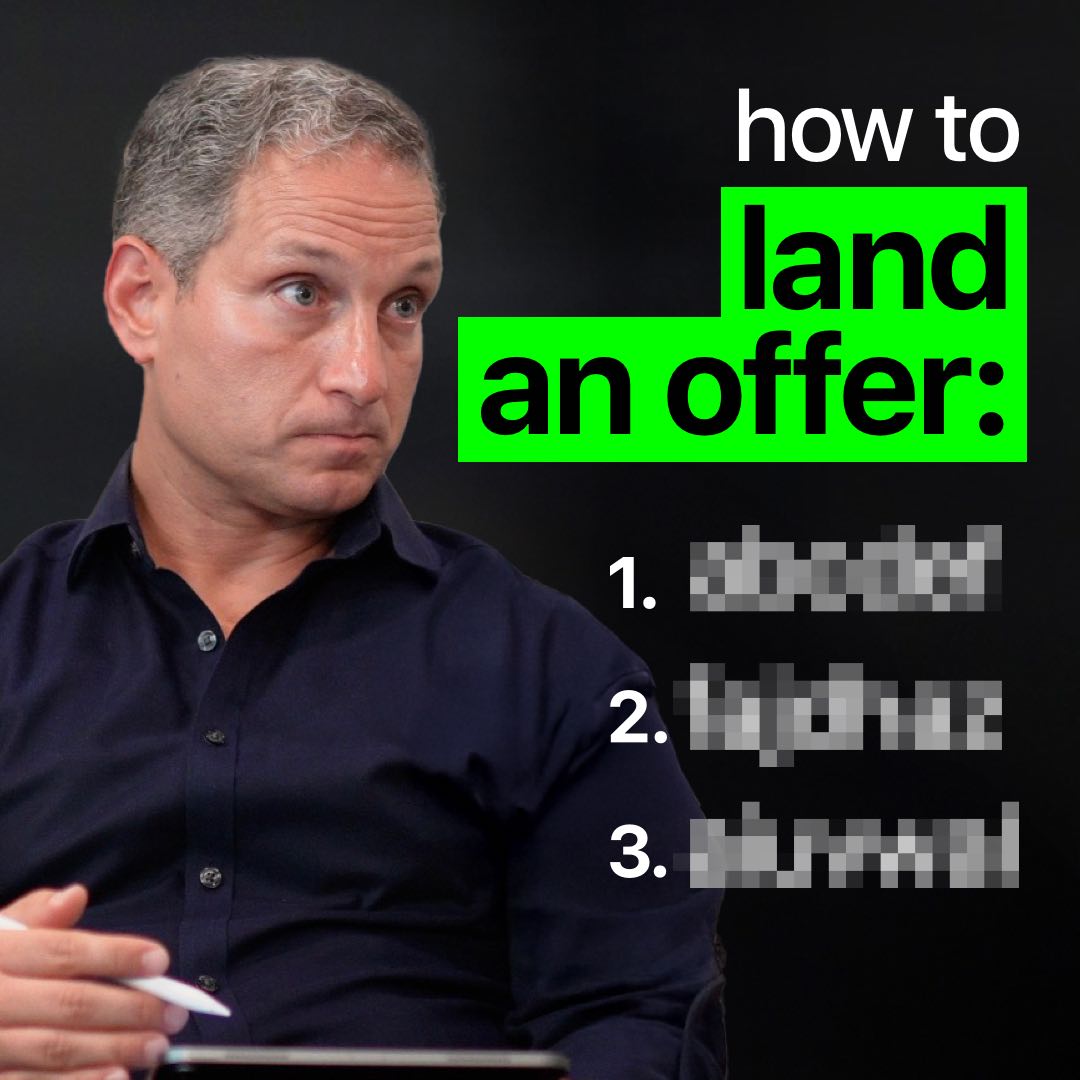


Eddie Rishty is a partner at Debevoise & Plimpton, where he represents some of the world’s most prominent real estate investors-including JP Morgan Asset Management, Carlyle, and one of the highest-net-worth individuals on the planet.
In this episode, Eddie breaks down exactly what he looks for when hiring lawyers, the traits that separate good attorneys from great ones, and how to build a lasting career grounded in work ethic, character, and trust.
Enjoy!
Sponsors
- Advanced Solar Solutions: Go Solar before December 31 to qualify for federal solar incentives! 347-455-8430 or advancedsolarny.com
- Jeff Sitt: book your free 30-minute strategy call today: jeffsitt.com
- Midwood Wine: our community’s #1 wine shop @ 1433 Coney Island Avenue (Avenue J & K). WhatsApp them at (718) 338-7054
Transcript
Eddie Rishty: I’m very blessed to represent one of the highest net worth individuals in his real estate portfolio.
Victor M. Braca: You’re a partner at Debevoise & Plimpton, one of the largest law firms in the world.
Eddie Rishty: Bear Stearns, which was one of the biggest investment banks in the world at the time, was facing incredible distress. And when Bear Stearns fell, I was sitting outside Jimmy Cayne’s office watching the collapse of Bear Stearns that day. I picked up the phone and it was the general counsel for the Walton family. “I’m calling because the Gates family recommended I call you.” And I remember hanging up the phone and calling my mom and said, “Mom, I made it. The Gates family is recommending me to the Walton family.” And what’s better than that?
Victor M. Braca: That’s incredible. So, we have something very interesting at Momentum. This is the first time that we’re doing this. I have here two resumes, different candidates. Which candidate would you hire?
Eddie Rishty: This is great. I love this. My freshman year went to college. My dad got sick and had cancer. Ended up passing away 14 months later when I was a sophomore in college. Nothing is going to stop you from being successful. You can not get into the school of your choice. You can lose your parent at a young age. Whatever it might be, but nothing is going to stop you from being successful. I would leave the library at 1:00 in the morning. I remember the security guard telling me, “You’re the last one.” I’m feeling good about myself. I want to be the best real estate lawyer in the world. That’s my goal. Why not?
Victor M. Braca: Hey guys, I know this is the first episode I’ve put out in a while. I have to say it feels very good to be back. To be honest, I started school a little while ago and I’ve been prioritizing my studies and my GPA. But now that I’ve gotten into the groove, the rhythm a little bit, I’m ready to continue delivering some of the most impressive guests to you guys.
And speaking of, I have an incredible, incredible episode for you today. Eddie Rishty is a partner at Debevoise & Plimpton, a huge firm with over $1.6 billion in revenue. He’s unbelievable, but I promise you, don’t take my word for it. He represents some of the biggest companies in the world like JP Morgan Asset Management and Carlyle on multi-billion dollar real estate and private equity deals.
Here’s just a bit of what we covered: How Eddie got rejected from every Ivy League school twice, but still ended up thriving in big law. How his father passing away when he was a sophomore in college didn’t take his mind off success. He told us the story of being in the room in ’08 when Bear Stearns collapsed and the Great Financial Crisis began. He shared how he represents one of the richest people in the world and how he did such a great job representing him that this multi-hundred billionaire suggested to his multi-hundred billionaire friend to hire Eddie.
Oh, and I also gave him two resumes: a scrappy hustler who went to Brooklyn Law School and a Harvard graduate who followed the big law path to the tee. And I asked him which one he would hire. I think you’re going to find his answer to that very, very interesting and eye-opening. Overall, unbelievable conversation.
Guys, one more thing before we start. YouTube and Spotify are telling me that 80% of you who watch Momentum week after week are not subscribed. 80%. Do me a favor. Wherever you’re watching, click that subscribe button. It shows me that you like what we’re doing and it would really mean the world to me. All right, guys. With that said, let’s get into the episode. This episode is sponsored by Advanced Solar Solutions, but more on them later.
Eddie Rishty, welcome to Momentum.
Eddie Rishty: Thank you. Thank you for having me.
Victor M. Braca: Can I call you cousin Eddie? Are we on that basis?
Eddie Rishty: We can be now, I suppose. Yeah, cousin Eddie.
Victor M. Braca: What do I got? Second cousins once removed?
Eddie Rishty: Something like that. Braca, your grandmother was always very close with my mom. So, she’s going to be very excited about this interview.
Victor M. Braca: Shout out Grandma Joyce. She’s going to love this. And shout out Grandma Susan.
Eddie Rishty: That’s right. That’s right.
Victor M. Braca: But let’s get into your story. You grew up in Deal, New Jersey, small town, right? Fast forward to today, you’re a partner at Debevoise & Plimpton. Am I pronouncing it correctly?
Eddie Rishty: Debevoise. I’m impressed. It’s a mouthful. Most people don’t get it right the first time around.
Victor M. Braca: It’s not my first time. I’ve been practicing. That’s how we know. But you’re a partner there today, which is one of the largest law firms in the world and you lead the real estate group over there which is amazing. Take me back into your childhood growing up in a small town, Deal. You were very involved academically in with all the teams and sports teams in your high school, Hillel. So take me into that. I’m gonna give you the floor.
Eddie Rishty: Growing up in Deal in the ’80s was a very special time. My family was very focused on education. My dad, may he rest in peace, was the president of Hillel at the time. My mom was a teacher in Hillel and in charge of the gifted program. And I grew up one of four boys. We were very active in the community. We love sports. I had a great group of friends growing up in Deal, many of whom are still my closest friends today. We focused a lot on education growing up. It meant a lot. It was a priority in our household.
When I was a kid, I remember till today—must have been about 10 years old—when my dad took my brothers and me to visit Princeton University and told us, “This is the goal to get into.” We’ll get into it later when I actually applied to Princeton, but education was a priority for us. We grew up playing baseball and basketball and football. I’ve learned a lot over the years from my experience playing sports and it really was a great place to grow up; a great tight-knit community. I always marvel at how many people who grew up in those years in Deal are today in leadership positions around the community. It’s a pretty fascinating thing. It’s really a testament to our parents and the community that we grew up in back then.
Victor M. Braca: And a lot of Momentum guests, by the way, have grown up in Deal in that close circle, which is very interesting. Shout out Irwin Dweck, Marshall Mizrahi.
Eddie Rishty: Yeah, soon to be others I think too. I’m sure we have a few more.
Victor M. Braca: So take me into the leadership lessons that your father instilled in you from a young age. I think that’s something that a lot of parents try to instill into their children. What do you think it was about what your father taught you that really put you in that position from a young age?
Eddie Rishty: It’s funny. I thought about that a lot. You know, my father died when I was young. And so, I learned a lot from him both before he died and after he died. And from my mom, too. I thought a lot about their style of parenting as I’ve become a parent. They did a good job of pointing us in the right direction and letting us figure it out. I remember thinking, as I became a parent, that would be a nice way to do it—to not to let me make my own mistakes, let me fail, let me learn how to succeed and learn how to fail.
We didn’t have lessons on leadership. We learned by example. We learned the value of community service. We learned the value of making an impact in life. We learned the values of working hard and never giving up. And those are things that I probably didn’t learn expressly but did by watching my parents. And without a doubt, they were both my role models growing up. Today I think about it all the time when I’m raising my own kids.
Victor M. Braca: And when you were young, you mentioned your father took you to visit Princeton, right? And sort of said, “This is the bar.” Take me into the latter half of high school and applying to college. Did you know what you wanted to do? You’re in law now, but you didn’t really do a pre-law background.
Eddie Rishty: I didn’t have much of a pre-law background. I always thought maybe I’d be a lawyer simply because my dad was. When I realized I wasn’t going to be the shortstop for the Mets or the point guard for the Nets, I realized I needed a new career change. And so, law was something that I grew up surrounded with. I remember my dad telling me once that he thought I’d make a great lawyer and so it was in the back of my mind always.
I didn’t go straight through. I did work very hard in high school. Again, being surrounded by other overachievers around me, my closest friends… we drove each other to be better. And so I certainly worked very hard in high school. I was determined to succeed. I grew up in my brother’s footsteps; he was a high achiever and so for me the bar was set very high. I think probably I credit my high school education with establishing my work ethic, and that’s where I learned to work hard. That work ethic has really carried me through till today.
Victor M. Braca: What does “work ethic” mean? It’s a term thrown around. To you, what does that mean? And to somebody who wants to have a good work ethic, how do you develop one?
Eddie Rishty: Yeah, it’s a good question. I think it’s important to find role models. I think it’s super important to pick up attributes from different individuals along the way and figure out what they do well and then apply that to yourself. You know, I heard something recently that really resonated with me. People said, “Don’t focus on your weaknesses and try to improve them. Focus on your strengths and build off of them,” which I thought was a fascinating concept. We were always taught: think about how you can improve your weaknesses year over year. I realize at this stage in my life, my weaknesses are my weaknesses and I may or may not ever get over them. I can keep trying, but the reality is to play to my strengths. And so I use that in my life today; I recognize what my strengths are and try to use them and surround myself with people who can complement me and supplement my weaknesses. And that, I think, has helped make me successful.
In terms of what it means to work hard, it’s different for everybody. For me, it was making sure no one was going to outwork me. I remember that I may not have ever been the smartest person in the room or the most athletic, but I was good enough to compete. And for me, I was always going to make sure that nobody outworked me.
Victor M. Braca: It’s the one thing you could control, right? Like you can’t necessarily control your IQ, but your hard work and the time you put in is really the factor that’s in your control.
Eddie Rishty: I remember being in law school, my first year. I remember being in finals and being all in—and that’s an important thing for me. I tell young people that all the time: you have to be all in, especially when you’re starting out your career. For me in law school, I remember being in the library late at night and studying, working harder than everyone, and I would leave the library at 1:00 in the morning, walk out of the building and see the security guard and say, “Is anyone else still here?” And he’d say, “No, you’re the last one.” I said, “Okay, then I know I’m doing something right.” And that to me was sort of how I measured my work ethic. It’s almost like in athletics, being the first one in the gym, last one to leave. For me, I was the last one in the library and that was important to me. I remember the security guard telling me, “You’re the last one,” and feeling good about myself.
Victor M. Braca: That sets you up well for big law. Talk to me about undergraduate life. Take me into first applying to undergrad college.
Eddie Rishty: Yeah, it was an important time in my life. Again, I had high hopes for college. I was determined to go to an Ivy League school. Princeton had been on my mind since I was a kid. I applied early to Princeton and I remember getting waitlisted and it was devastating. It was probably the first time in my life where I had a real setback, academically or otherwise. It was heartbreaking and I said, “All the work I’d put in for the past four years to get waitlisted?” That wasn’t the plan. It was the first time in my life probably things went off-script.
I applied again to all the Ivy League schools and I assumed that I’d end up at one, and it didn’t work out the way I wanted it to. I ended up getting into the Stern School of Business at NYU. I got a great scholarship to go there and I wasn’t happy. I said, “This wasn’t my plan.” Fast forward looking back, it ended up probably being the best thing that ever happened to me.
Victor M. Braca: Why is that?
Eddie Rishty: I developed a business background which I never thought I would have. I studied finance and marketing. Probably most importantly, it allowed me to stay in New York at a time where I didn’t know what was coming. A year after my freshman year, my dad got sick and had cancer. He ended up passing away 14 months later when I was a sophomore in college. And being at NYU allowed me to be close to him, be close to my family during that time and really develop relationships around the community that I treasure.
I also was fortunate that when I started college, three of my closest friends were starting at NYU at the same time. We ended up living together. When I was choosing my dorm in college, I remember my dad said, “Try something new. Go meet some new people. You always have your close friends. Go live with somebody else.” And so I did. I remember very clearly, I went to move into my new dorm and I opened the door and there was smoke coming out of it and I thought to myself, “Is this going to work? How is this going to work?”
Timing is everything in life and it happened to be that week my grandfather passed away. I never ended up moving into the dorm. A week later the fourth person who was living with my other three friends ended up going to Israel for the year and so I slid right in. It was a nice fit and I ended up living with three of my closest friends—Morris Akerman, Sandy Shalom, and Solomon Franco—my first couple years in NYU, later Joey Cohen. We bonded. We became close lifelong friends. I believe deeply that it’s all part of the plan and me ending up in NYU was part of the plan.
Victor M. Braca: This episode is brought to you by my friends over at Advanced Solar Solutions. If you’ve been thinking about solar, but you’ve been hesitating, this is your moment. Federal solar incentives expire at the end of the year, December 31st, and once they’re gone, they’re gone. It almost sounds too good to be true, guys. 0 down, a locked-in, low monthly rate, and even a new roof included. Advanced Solar Solutions is fully in-house. That means no middleman, no headache, no hassle. Their dedicated team replaces your entire roof and installs your system to the highest standards. And every project is protected by a 30-year third-party insurance plan covering parts, labor, and roof leaks. And it gets even better. 20% of all profits support people learning in Kollel. So you’re protecting your wallet and you’re doing good at the same time. The clock runs out December 31st. Call now. Get your install scheduled and take control of your energy cost today. Text a photo of your electric bill to 347-455-8430. Again, that’s 347-455-8430 to start saving on your electric bill today. Back to the episode.
And so, you’re in NYU Stern. You’re in NYU Stern and that’s a boot camp for finance and for investment banking. Did you want to do that?
Eddie Rishty: I didn’t even know what investment banking was back then. And I didn’t know what I wanted to do. I convinced myself that having a business background would be helpful as a lawyer if that’s where I ended up, but I didn’t have a clear path in school. I knew I wanted to be in the best school I could be in, and Stern ended up being the best school I could be in.
I remember having a moment sitting in my accounting final in my sophomore year. I looked around and said, “What am I doing here? This accounting is not for me and I don’t know if finance is for me.” But I did it and I went through it, learned a lot. Without a doubt being able to tell people that I have a business background helped when I interviewed for law firms. College was a tricky time for me because my father died when I was young. I found it hard to focus sometimes. But I worked through it and overcame it. Did well enough to then apply to law school and that was the next phase of challenges.
Victor M. Braca: Take me back into college for a second when your father passed away when you were 20 years old. Take me into the day-to-day of your father being sick when you’re trying to pursue your studies at a very difficult university. Did you keep up your grades?
Eddie Rishty: I think I must have done okay. I was very resourceful. I think it’s a skill that not enough people have. It’s something that I try to pass along to my kids: being resourceful, figuring it out. I remember going to say Kaddish three times a day when I was in college. It was a challenge. I remember finding minyanim when we were traveling in Heathrow airport in London or wherever it might be. I wasn’t going to sacrifice my college experience because of it. Never felt bad for myself.
I had a lot of great advice and rabbis and parents and friends that helped me get through that time. I just plowed through. I think that, again, it was a valuable lesson in how to overcome adversity and how to just figure it out and make it work. And that’s a lot of what I’ve done in my life over the years is overcoming that adversity. I certainly had my share of ups and downs. I had a great support system. I have a whole new level of respect for my mom through that process. I’m now 46 years old. I look back—she was 46 when my dad died—and I said, that’s a scary thought when you start to think about that. I had a great support system, a great network. I didn’t let it hold me back and I overcame it.
Victor M. Braca: You were sitting in your accounting final and you had the revelation: “This is not for me.” And you ended up in business school, which is funny. What grade of college was that?
Eddie Rishty: I think I was a sophomore at the time. So pretty early.
Victor M. Braca: And so after that did you tell yourself “I want to do law”? Were you exploring new opportunities?
Eddie Rishty: I liked marketing more than I liked finance. I thought maybe becoming a consultant would make sense. At the time there was the dot-com boom going on and everybody wanted to work in the internet industry. I thought maybe becoming a consultant—I didn’t really know what that meant, but I thought it sounded like something I could do and do well. Maybe foreshadowing to becoming a lawyer because I think a lot of what we do is consulting too, but in a different way.
I was committed at that point and so there was no going back. I think at that point I started to realize that law school was a likely path for me. At some point I remember looking around at investment banking and thinking about that, and it didn’t really appeal to me. Probably the numbers side of it didn’t really appeal to me. And I liked people. I thought my best skill was probably understanding people and knowing how to navigate and get things done. All of which I think are incredibly helpful in becoming a lawyer. And so I graduated a little early from Stern and actually went to work for the Tawil family in the billboard business.
Victor M. Braca: What does the “billboard business” mean? Explain that.
Eddie Rishty: The Tawil family, Ralph Tawil, at the time had a pretty young business where they managed billboards. Had a great strategy to go out and find properties that had billboards on them. Most landowners probably didn’t appreciate the value of their billboards or the value of their properties because of their billboards. And so they would go out and actively try to take over those signs. They had become somewhat saturated in New York and so they wanted to explore a new market. They hired me and my first week on the job, we flew out to Chicago to explore that market.
A lot of great stories in those years. The very first trip out there, we settled on this being a good market. I remember we walked into a barbershop in what was probably the worst neighborhood of Chicago. If I knew then what I know now, I never would have done this. We walked into an old barbershop—think like the movie Coming to America. We walked in, there was a big African-American barber there, must have been 70, 80 years old. And we said, “Who owns this building?” And he turned around and said, “I own this building.” And we said, “Well, do you want to sell it?” And he said, “Yeah, I’d sell it.”
And over the next several months, I was back and forth to Chicago every week negotiating a deal to buy that building because there was a sign in the back. We wanted nothing to do with the building. Actually, there was a drug bust on the property while we were in due diligence on it. I learned a lot back then. I was the client, which was fun. I was a 21-year-old kid flying back and forth to Chicago every week and learning the business side of the real estate industry. I thought that’s where I’d end up—on the business side. Law school to me was a stepping stone to get there. Didn’t happen that way, but things happen, right?
Victor M. Braca: And so you were there only for six, seven months?
Eddie Rishty: I graduated college a semester early and I worked from January until about August.
Victor M. Braca: Was that the arrangement, to only work there in between schools?
Eddie Rishty: I think I told them coming in that my plan was to go back to law school. I think they were hoping that I would change my mind and start making money. I was determined to become a professional and to have a skill that I could always fall back on. They were great people. It was a great business, but it wasn’t mine. I think I wanted to do something that was mine. I knew that going to law school would be door-opening and would enable me to have opportunities to support myself.
Victor M. Braca: Eddie, it’s interesting. You’re a professional in a community of so many entrepreneurs. Do you view it as a binary scale—professional or entrepreneur—or is it more of a spectrum?
Eddie Rishty: To be a great lawyer today you have to be a great businessman too. We are constantly selling ourselves just like salesmen are selling products. It’s a very competitive industry, being a lawyer, especially in the real estate industry. There are many people who will do a good job, but you got to find ways to distinguish yourself. Without a doubt the entrepreneurial spirit of growing up around here and in our community has definitely helped me reach my success. For sure those business skills and that commercial savviness are something that has certainly helped me in my career.
Victor M. Braca: You had faced a huge setback not getting into any Ivy League schools when you were in high school. Take me into the end of undergraduate when you had your second chance to redeem yourself.
Eddie Rishty: It was almost like déjà vu. I graduated college, did pretty well in Stern, had a good GPA, took the LSATs, scored well, and was on track again to make up for missing out the first time around. I applied again to all the top law schools: NYU and Columbia. Again, I had sort of cemented myself in New York. I didn’t really want to go out of town. My older brother was at Harvard at the time, and I really wanted to be in New York. So, Columbia, NYU, Harvard, Yale, Penn were all the schools I applied to. At the same time, I applied to Cardozo.
Sure enough, I got waitlisted again at many of those schools and ended up getting a nice scholarship to come to Cardozo. I felt like it was déjà vu. “We did this already! What’s going wrong?” It was a setback again. I believe that helped me develop skills to overcome adversity. I ended up at Cardozo in September 2001—a historical month, right? Two weeks before 9/11 happened. I made a deal with myself at the time that I was going to put myself in a position after the end of my first year to either transfer or go back to them for a full scholarship. And again, nothing was going to stop me from transferring.
Victor M. Braca: Transfer to which school?
Eddie Rishty: Transfer to NYU. That was my goal—NYU or Columbia. I wanted to be in New York. Cardozo was a great school. I ended up going back to teach there many years later.
Victor M. Braca: You were a professor?
Eddie Rishty: I was a professor at Cardozo for a couple years before COVID. I taught real estate transactions. It was a lot of fun to teach. I went to Cardozo determined to succeed and I worked my butt off to make it happen. Sure enough at the end of the year I was on top of my class at Cardozo and I applied to transfer to NYU and to Columbia. I made sure it was going to happen. I ended up getting into NYU. I remember very clearly the phone call that I got. It was a Friday afternoon in early August, a couple weeks before school was about to start and I hadn’t heard back yet. I remember the phone call from the gentleman at NYU admissions. He said, “Edward, we’ve made a decision on your application, but we’re not allowed to tell you over the phone the results, but you can expect a letter in the mail in the next couple days.” I said, “What does that mean?” He said, “Well, I can’t tell you over the phone what happened, but congratulations.” And the feeling that overcame me… I made it. Accomplishing your goal—there’s no better feeling than that.
Victor M. Braca: Why do you think he broke protocol a little bit to tell you?
Eddie Rishty: I’ve thought about that a lot. At the time, I believed that persistence pays off. I was persistent, not in an annoying way, but in a helpful way. I made sure… quick story: I was at the time one of the people running the Top Gun basketball tournament. The original major event of the summer was Top Gun basketball. With my brother and a couple other guys, we were running Top Gun. We always used to get 17, 18-year-olds who would call and say they want to play in Top Gun. I remember the ones who made it were the ones that really showed their interest. They would call and say, “If there’s a spot that opens up, can I get in?”
And those who were most persistent ended up getting in. And so I took that lesson and said, “That’s who gets in.” I had come up with an expression that my brothers and I laugh about today: “Human beings.” Because there are human beings that are making the decisions. I made a point of making sure that NYU Law School knew that I was the one for them and that if they chose me, they wouldn’t regret it. I think he knew how important it was to me. In deciding between me and someone else, if there was a toss-up, I wanted to have the edge. I think that’s why—he knew I wanted to be there.
Victor M. Braca: You ended up switching into NYU for your second and third year?
Eddie Rishty: Yep. Second and third year of law school at NYU. I transferred a week later and I had 20 interviews at 20 of the top law firms in the world. That was recruiting season. The way it works in law school, your interviews start in the beginning of your second year for your summer after your second year. More often than not, if you do well as a summer associate that year, you’re invited to come back to the firm as a full-time associate. I transferred to NYU and within a couple days, I had about 20 interviews lined up.
Victor M. Braca: 20 interviews is impressive enough. I guess your resume was already strong enough at that point.
Eddie Rishty: It was. Being at NYU really opened a lot of doors for me. Law firms look to schools; they recruit from schools. It was not just an ego thing. It was really about setting up opportunities for work. And so once I was in NYU, I was able to get interviews at a lot of places.
Victor M. Braca: What did you do in the summers between your years in NYU Stern in undergraduate?
Eddie Rishty: It’s a good question. Right before law school, I was working at the billboard company—Sign-Up USA. Before that, I think I worked with my cousins at a company called Office.com during the dot-com boom. Everybody wanted to get a taste of it. Office.com went out of business in the bust. I worked for Joey Cohen at Garnet Group. You interviewed Abie Cohen recently—Abie’s dad. Joey Cohen was my dad’s friend and after Mike passed away, Joey set me up with a job in his office. He ran a hedge fund at the time called Garnet Group. So I worked for a hedge fund, worked for a dot-com company, and I worked at the billboard business. My first year of law school I worked for a small law firm—actually the firm that my father had ended up merging into.
Victor M. Braca: So you were in NYU and then you were recruiting for the big law firms. You had 20 interviews. Take me into those interviews. Recruiters are interviewing hundreds of candidates from across the entire country. How did you stand out?
Eddie Rishty: The interview means everything. I didn’t know it at the time, but I had crafted a story that showed who I was as a person—that I was determined to succeed, that I was commercially savvy, and that I was a hard worker. When I became a partner at Debevoise in 2014, I remember going over to the person who interviewed me on campus that very first time in 2003. I said, “David, you probably don’t remember this, but I want to thank you because without you, I probably wouldn’t be here today. You were the one that invited me back to my call-back.”
And he looked at me—this is literally 11 years later—and he said, “Eddie, of course I remember you. There was nothing that was going to stop you from being successful. I remember your story.” He said, “You were determined to succeed.”
I tell young people today all the time: “What is your story?” Craft your story. My story was: nothing is going to stop you from being successful. You can not get into the school of your choice. You can lose your parent at a young age. But nothing is going to stop you from being successful. And I didn’t just tell it, I showed it.
Everyone claims to be detail-oriented. Everyone says, “I’m very commercial, I’m detail-oriented, I work hard.” There are certain buzzwords that don’t work in interviews. You need to show that you’re detail-oriented. You need to show that you work hard. For me it was not just saying I worked hard; it was showing my grades from the first year of law school. It was look how I did—look what happened to me. I didn’t get into my first choice of law school and I was determined to make it happen. Actually showing that you can get results—that’s what matters.
Victor M. Braca: So you got the return offer to come back after law school. Let’s go into that 100-day internship as a summer associate. What do you do at that point? How do you set yourself apart when you’re in the best of the best of the best?
Eddie Rishty: I really do believe that growing up in our community helped me think about business. I went to Debevoise knowing I wanted to do real estate, and yet you don’t get to pick what group you’re in—they pick you. And so I needed to find a way to let the real estate group know that I was interested in joining.
When I chose Debevoise, it was quite a process. I was fortunate to have offers at about 10 different firms. You target the ones you want the most. Debevoise was at the top of my list because it was the most prestigious firm I could be at. I always thought: you can go down, you can’t go up. It’s much harder to go up than it is to go down from a firm. I wanted to be at the firm that had the highest quality of work, but also at a place that was known for its culture.
Debevoise was renowned for being a good place to work. We’re also a “lock-step” firm. Today that’s a word that’s gone out of fashion, but we’re the last lock-step firm. It basically sets a culture of cooperation and oneness.
Victor M. Braca: What does that mean?
Eddie Rishty: It’s the nature in which we as partners compensate each other. Each of us shares in the profits of the firm in a direct correlation to the number of years that we’ve been a partner. That means if I have a down year but the rest of the firm does really well, I’ll still do well. Flip side: if I have a phenomenal year but the firm does poorly, my share of the profits will still be the same.
It doesn’t create an environment where you’re rewarding the highest producers. It’s the opposite of an “eat what you kill” law firm. We’re the last major firm in the world to still be lock-step today. The industry has shifted to be more of an “eat what you kill” model. But Debevoise has a culture where we are all very much supporting each other and rowing in the same direction. So when my partner in London or Luxembourg does a great deal, I benefit from that as much as I benefit from some of the real estate deals that I would do. It’s a true partnership. It’s a dying model, but it’s one that we’ve espoused and doubled down on.
Victor M. Braca: I guess my initial thought would be that it sort of leaves less room for entrepreneurship in the individual sense.
Eddie Rishty: It doesn’t reward “stars” as much as other firms could financially. It requires buy-in. It presents a potential “freeloader” problem, right? It puts a lot of stress and emphasis on who we make partners at the firm. It’s why it’s so hard to become a partner at Debevoise. When we make a partner, we’re investing in someone for the next 30, 35 years. And if that person’s not going to carry their weight, we have a problem.
Victor M. Braca: And you’re the last major lock-step firm?
Eddie Rishty: There’s one other firm, Wachtell Lipton, which is also a top M&A firm. They’re also lock-step. But of the true “big law” firms, we’re the last lock-step firm.
Victor M. Braca: You joined Debevoise, and what was your plan when you were graduating law school?
Eddie Rishty: I knew I wanted to be in the real estate group and I had to make that happen. I remember very clearly: July 3rd, 2003. It was about 5:00 p.m. on July 3rd. Most of the office had emptied out. I remember the real estate partner walking by my office—I was in a “fishbowl” office, all glass—and he saw me there at 5:00 on July 3rd. Today, people think “July 3rd, I’m not even in work.”
He knocked on the door and said, “Eddie, what are you still doing here? You should go home.”
I said, “Well, I’m working on a deal with this particular finance partner and he told me to hang around. He wanted to talk to me about the deal before July 4th.”
And he said, “Well, don’t you want to do real estate?”
I said, “Yep, I’m committed. That’s my first choice, certainly.”
So he said, “Wait here.” He went down the hall, made a phone call, came back to me. He said, “You can go home now, and from now on, you’re only going to do real estate work.”
I remember that very clearly. July 3rd, 5:00 p.m. 2003 was really the official start of my real estate legal career. My plan was to work for 5 years. I figured the learning curve would start to flatten out at that point and I’d go to the business side and become a real estate investor or developer. That was the plan. It was the first time in my life where there wasn’t really a script for the next step.
Five years into my career, the global financial world collapsed. GFC happened and there was no place to go work at the time on the real estate side. The industry had come to a standstill. For me it was a chance to—I realized at the time it was an opportunity to learn a whole other side of the market. From 2004 to 2008 was the upswing: everyone doing deals, active, positive. The music stopped in 2008 and there was a whole other side of the real estate legal market: figuring out distress, figuring out workouts, foreclosures… all the distress of the industry.
I didn’t expect that to happen, but almost by default there was nowhere to go. And so I got to learn that side of the market, too. And before I knew it, it was 2011, 2012, and I realized that big law wasn’t the nightmare that I was told it was going to be. I actually really liked what I did. I was on the cusp of becoming a partner at the firm. I committed myself then to say, “I’m going to make this run and I’m going to go for it again.” And sure enough, in 2014, I was invited to become a partner at Debevoise. Still till today, I look back and say that was probably the highlight of my professional career—becoming a partner.
Victor M. Braca: Do you ever feel like you’re revving your engine but stuck in neutral? Maybe you’re flooring it in the wrong direction, spinning your wheels, or worse, running on fumes with no clear road ahead. If that sounds at all familiar, it’s time for a tune-up with Jeff Sitt. He’s an amazing guy. He’s an author, speaker, and coach who knows exactly how to help you shift gears, gain traction, and accelerate toward success without burning out. Too many professionals stay stuck in traffic, bogged down by stress, indecision, and bad habits. But with Jeff, you get a roadmap to clarity, confidence, and control. He helps you remove obstacles, hit the gas on what works, and stop stalling on your potential. And the best part is Jeff is offering a free 30-minute “Pivot and Prosper” strategy call designed to help you get aligned, gain clarity, and head in the right direction. No risk, no strings attached, no pressure. So, if you’re ready to turbocharge your life and finally get in the fast lane, book your call now at https://jeffsitt.com. Your next right turn starts today.
Let’s go back to 2008 for a second. Global financial crisis. affected so many people. I’m sure there were layoffs going on at the law firm at that time. Were you close to getting fired?
Eddie Rishty: I remember very clearly the chair of our group called a meeting in 2008. The real estate group—the person that had invited me to join the group—called the meeting and said, “Everyone from the real estate group, come to the conference room. We’re going to talk about something.” We thought we were being fired. Everybody assumed we were being let go. There was no need for a real estate group anymore.
He called us in, we sat down, we all looked at each other like, “What the heck’s going on here?” And he looked around and said, “I’m leaving Debevoise.” He was the chair of the group. He was the Debevoise real estate group. We couldn’t imagine how the group would survive without him. And it was 2008 and the world had just blown up. We looked around and said, “What comes next? Should we all be looking for new jobs?” No one knew what was coming next in 2008.
Sure enough, we persevered. We made it through. But there certainly were a lot of layoffs going on. I remember a year earlier, there were a couple jobs that I had considered going in-house at some of the top New York developers. I had two very attractive offers. I went to talk to my mentor and he convinced me that it wasn’t the right time for me to move. Looking back, I think he was being selfish—he didn’t want me to leave him—but he convinced me. I looked around at those same people that ended up taking those jobs; two years later, they were looking for a job again. So I’m very blessed that I had good advisers who helped me realize that I was on a good path.
2008 was a crazy time. I had an up-close view of what was going on. When Bear Stearns fell, I was sitting outside Jimmy Cayne’s office. Jimmy Cayne was the CEO of Bear Stearns at the time. I remember sitting outside his office at his secretary station while JP Morgan was negotiating to buy Bear Stearns. It was like watching history.
It was Sunday morning 8:30 in the morning and I went to 383 Madison Avenue and there were cameras everywhere. Bear Stearns was facing incredible distress and something had to happen before the Asian markets opened on Sunday evening. I remember getting an email at like 1:30 in the morning on Saturday night from the chair of our group saying, “Is anybody around to go to Bear Stearns and work on this matter tomorrow?” Because I was addicted to my Blackberry at the time, I answered within minutes: “I’m around.”
He said, “Well, be at Bear Stearns tomorrow at 8:00.” I went there and it was chaotic. I said, “Where do I go?”
They said, “Well, who are you?”
I said, “Well, I’m here from Debevoise. We represent JC Flowers,” who was the alternate bidder in the event the JP Morgan deal didn’t go through. We were representing them, and Bear Stearns’ only real valuable asset at the time was their building—the real estate. So I went there and they said, “Send the Flowers team to the sixth floor.”
I went up to the sixth floor and they said, “You go sit at that desk over there.” I looked down at the phone and it said: “KC Cayne 1,” “Cayne 2,” “Cayne 3.” I remember calling the partner I was working for and he said, “Have you seen Jimmy Cayne? Is he there yet?” Because he had gotten a lot of heat for being at a bridge tournament the day before.
I said, “No, I haven’t seen him yet.”
He said, “Well, do you smell the cigar?”
And I said, “I do, actually.”
He said, “Well, then he’s there.” And sure enough, I looked up and I was sitting outside his office watching all this go down. It was like being a fly on the wall watching the collapse of Bear Stearns. The book Too Big to Fail tells the story, and I got to see it up close.
Victor M. Braca: All because you were up at 1:30 on your Blackberry.
Eddie Rishty: Yeah, I was probably out somewhere, but always checking the Blackberry. Being very committed to work.
Victor M. Braca: Why responsiveness? It would have been easy to not pick up your Blackberry at 1:30, right? Why volunteering at 1:30 a.m. on a Saturday night to go in on Sunday morning?
Eddie Rishty: It’s not unique in our industry. In our industry, those are the kind of things that separate us. Being responsive is a key part of success. A client once told me, “You know what I love most about you? You answer the phone every time I call.” I thought to myself: that goes without saying. But I realized that that’s the kind of thing that people value. Someone who, when they need to find me, they can find me.
My clients know that I’m on their team and I have their back. I had a client that used to call me “Eddie Rishty 24/6.” He knew that he could find me 24/6. He knew on Shabbat you couldn’t find me. Which was a big challenge in my career actually—shutting down for Shabbat and doing this job was not easy.
I actually made that decision in law school. I remember as a first-year saying, “Everyone else is going to be studying from Friday night until Saturday and I’m losing that day of work to keep up with them.” I remember making the decision at the time that I’m not going to compromise that value and making sure that I worked from Saturday night to make up the time. I committed to that in law school and stuck to it at the firm—making very clear that for me Shabbat is off-limits.
Victor M. Braca: Was that difficult at the firm?
Eddie Rishty: It was hard. I remember as a first-year at Debevoise—which was a very tolerant place—I remember working hard and submitting an assignment to a senior associate. He said, “You’re leaving at 4:00 on a Friday? We’re all here still working. You shouldn’t really be leaving like this.” That was really jarring.
I went down the hall to the partner and I said, “Look, if this is the way things work around here, then maybe this is not the right place for me.” I remember saying that with tears in my eyes because it was a very jarring experience. It was a heat-of-the-moment comment from the associate, but I remember feeling like, “This is going to be a challenge. And if I don’t lay down that line now, I’m never going to be able to get it back.”
So I was very careful. Friday afternoon is oftentimes the most stressful time of the week for me knowing that I’m going to shut down for the next 25 hours. Clients today appreciate that I do that. They respect it. I try to reciprocate. My partners know that come Saturday night, I am right back online. Soon as Shabbat ends I get back on my phone. My kids know: the first 20 minutes after Shabbat, I’m off-limits because I have to catch up.
I’ve worked on Christmas. You get those “brownie points” when you tell colleagues, “You’ve covered for me on all the Jewish holidays… if you need me on Christmas or Good Friday, I’m here.” And they know that. It’s important to reciprocate and be appreciative.
Victor M. Braca: Very interesting to hear about Shabbat in the context of big law.
Eddie Rishty: It’s not easy. I sat next to another observant Jew in my office when we were young associates. I lived down the block from my office—I lived on 56th and Lex with Irwin Dweck and my brother Michael. They had just started there when I was starting law school. We took a two-bedroom, converted it into three and I got the student bedroom and the student rate. I was able to live with two great mentors and see what they were going through. Debevoise was a block away from that apartment. I literally went from my bed to my office in minutes. That made it very easy to be at the office.
Shabbat would end at 5:00 in the winter and I’d go to the office. I’d go to the office Sunday mornings before football started. It also made it easy when things weren’t busy to come home. I remember one time it actually came back to haunt me. I was a young associate working on a deal. The phone was ringing all night at the apartment phone and I didn’t know why. I woke up at 7:00 in the morning and seeing I had missed calls and emails. They wanted to know if the real estate aspects of the deal were done—and sure enough they were, they had been done for weeks already.
I came to work that day—it was a Friday—and at about 2:00 in the afternoon, the M&A partner came over and said, “Congratulations. And, oh, by the way, where were you last night?”
I said, “Well, when?”
He said, “At about 2:00 or 3:00 a.m. We were looking for you.”
I said, “Well, I was sleeping.”
He looked at me and said, “Well, we needed you to make sure things were signed off.” Then he said, “Then we saw where you lived. We actually almost came and knocked on your door.”
I said, “Well, maybe I should move further away from the office.” But that was the level of intensity. I used to think that lawyers work the hardest, but then everyone works hard in their own way. Being at a big law firm requires that type of work ethic for sure.
Victor M. Braca: How many partners are there at your firm?
Eddie Rishty: We have about 150 globally.
Victor M. Braca: And how many employees?
Eddie Rishty: We have about a thousand employees, of which probably 700 or 800 are lawyers. Our headquarters are in New York in Hudson Yards. I’m one of three real estate partners at the firm. We’re a very lean group, which is by design. We’re trying to be nimble and make sure everyone gets great experience.
Part of what I came to Debevoise for was the ability to get that experience early on. I wasn’t the kind of lawyer that wanted to be making copies or getting people coffee for the first couple years. I wanted to be on the front lines negotiating and counseling clients. I remember as a second-year watching my senior associate on a deal. We were opposite another firm—very prominent real estate group. We were negotiating a deal for a shopping center in Chicago and I was blown away by how much more adept our fourth-year associate was than their fourth-year associate. That was the moment I said I know I made the right choice in choosing Debevoise.
Victor M. Braca: Your initial plan was to practice law for 5 years and pivot into real estate investing. Do you ever feel like you got too comfortable at Debevoise and that dream never got the chance to be realized?
Eddie Rishty: I think about it a lot. It’s easy to get comfortable, especially when you do the same thing a lot. The deals I do are all different, but they’re all in the real estate industry. I tend to do a lot of joint venture work, acquisitions, and financings. counter-parties change, colleagues change. It keeps you on your toes.
But you do get comfortable sometimes and wonder, “Should I be doing something else? Am I just operating in my comfort zone?” I think about it from time to time, but I also am very grateful for what I have. My life at Debevoise has allowed me to be an active father. I have four young kids and a wonderful wife who is incredibly supportive. She understood the model when we were dating. I coach my kids; I love being with them. Figuring out a way to practice at big law, be involved in community organizations, and be a dedicated family man is a struggle. It’s not easy to incorporate all those things. On the one hand, am I in my comfort zone? Somewhat. But I’m happy there. It’s not a bad thing to be comfortable as long as you’re continuing to prosper.
Victor M. Braca: You mentioned some of the exciting deals you’ve worked on. We talked about Bear Stearns in 2008. You are the lead representation for JP Morgan?
Eddie Rishty: JP Morgan is the biggest bank in the world, and they have an asset management division—JP Morgan Asset Management—which operates a real estate investment platform called “Real Estate Americas.” Their largest fund has been as large as $40 billion. I’m blessed that I’m one of their go-to lawyers for all their real estate investing. We’ve grown that relationship immensely. They bring me top-of-the-market transactions. I get the opportunity to work on sophisticated matters all over the country.
They are a great client. They allow me to work on deals that are the most interesting and challenging. One of my now-retired partners had a line she used to say: “Make your friends your clients and your clients your friends.” I think about that a lot because today my clients are my friends. We have texting relationships and I really believe that they know they can count on me.
Victor M. Braca: And you helped lead the sale of the Chrysler building?
Eddie Rishty: Yes, working on the sale of the Chrysler building was an iconic transaction to be a part of. Super cool.
Victor M. Braca: How do you put yourself in the position to represent entities like this?
Eddie Rishty: I really believe one of the biggest reasons for my success is an ability to understand people and to relate to people. Modulating depending on who you’re representing and making them believe that you’re on their team. A lot of what I learned playing sports growing up—being competitive, being diligent—clients appreciate that stuff. Clients know that when you’ll run through a wall for them, that’s what they want on their side. You don’t have to be the smartest, but they know they can find me whenever they need me. I think of lawyers as problem solvers. That’s what we do. We figure it out and I’m good at that. It’s about people skills—understanding their priorities.
I’m very blessed to represent one of the highest net worth individuals in his real estate portfolio. I was introduced to them in 2013 on a transaction. One of the highlights of my career: it was a random Tuesday night about seven or eight years ago when I got a call from a number I didn’t recognize. It was an area code in Arkansas and I picked up the phone and it was the general counsel for the Walton family. He said, “Hi Eddie, I’m calling because the Gates family recommended I call you.” I remember hanging up the phone and calling my mom: “Mom, I made it. The Gates family has recommended me to the Walton family!” It was really cool.
Victor M. Braca: Let’s go into advice for young people. Take me into an interview. What’s a successful interview?
Eddie Rishty: It’s crafting your story and showing your story. For me, it was “nothing’s going to stop you from being successful.” What’s your story and what do you want your story to be? Be very focused on the direction that you want to take in your interview. Don’t let the interviewer decide what questions you’re going to answer. Find a way to bring it back to what you want to tell. Make sure you hit those points.
Victor M. Braca: How do interviews like this work? What percentage technical?
Eddie Rishty: Almost no technical. No one asks you about your legal skills when you’re in law school. They’re looking for people they can train. We’re looking for people who would be nice to work with. When it’s 11:00 at night and you’re working through a tough matter, who do you want to be with? I look for someone who’s going to be hardworking and a good teammate. We tend to look for people like ourselves, but you also want to find people who complement you.
I like to ask one question: “What’s the headline to your story? We’re interviewing hundreds of people today; what do you want me to remember about you?” It gets a sense of their self-awareness and how they think of themselves.
Victor M. Braca: For somebody in undergrad who wants to get into the big law world, what is a hard skill they can develop?
Eddie Rishty: Reading is critical. Reading skills make life a lot easier when you’re a lawyer. In law school, you learn how to “think like a lawyer”—evaluating cases and analyzing case law. Becoming a lawyer is a lot about building one step upon the other. If you don’t set yourself on that path from when you’re in high school or college, it makes it a lot harder. So work hard in high school, find your story, and get good grades. In college, same formula: get good grades, study for the LSATs, figure out how you’re going to do well.
First year of law school, you have to be all in. I know you might see your friends starting to make money, but if you’re in law school, you have to be all in. First year of law school is when you really have the chance to set your path because that translates to interviews and a job.
Victor M. Braca: We have something very interesting. I have here two resumes. Different candidates. Read aloud and tell me what you’re looking at and which candidate you would hire.
Eddie Rishty: Candidate A: The pedigree. Has a JD from Columbia Law School in the top 10% of the class and clerked for a federal judge. Undergrad from Harvard, economics, magna cum laude. Spent four years at a top Wall Street law firm focused on M&A and real estate. reputation for being technically brilliant, meticulous drafting, but not yet tested in business development. Occasional pro bono work but little formal involvement. I’d hire that person. That’s a great candidate.
Candidate B: The grit. JD, Brooklyn Law School night program while working full-time. BS Baruch College. Worked through undergrad as a leasing assistant. Six years’ experience at a boutique firm handling distressed real estate and development deals. Reputation for being a street-smart dealmaker, creative problem solver, strong client relationships but less exposure to billion-dollar institutional transactions. Active board member of a local nonprofit housing initiative and coaches youth basketball.
Looking at these two, I’d consider hiring both. If I could meld the two, that’d be ideal—finding someone with the pedigree and the grit. When we interview at Debevoise, we almost always interview people that have gone to schools like Columbia and Harvard. I have a soft spot for the grit folks because I started at Cardozo myself. But the pedigree is a lot of what we see at Debevoise.
As a young lawyer, we’re not yet looking for somebody that has business development skills. We’re looking for someone that has good people skills and can become a rainmaker. So the fact that Candidate A hasn’t been tested yet isn’t a negative. I love Candidate A and I say that reluctantly because I have a soft spot for the grit.
One thing I look for is someone that played sports because you learn how to compete and be part of a team. I also look for someone who is the first in their family to go to law school. I interviewed someone who grew up on a farm recently and they decided to do something different.
Looking at these two, I’d hire both. But unfortunately, in big law, it’s much harder to get a job coming out of Brooklyn Law School. I don’t mean to sound snobby, it’s just the reality. To get a job in big law out of a school like that, you have to really be at the top of your class. You have a little more cushion at NYU or Columbia.
Victor M. Braca: You were just recently elected as the president of SBH. First of all, congratulations.
Eddie Rishty: Thank you. It’s a tremendous honor—quite literally the honor of a lifetime. When you think about the people that have been leaders of SBH over the years—Fred Bichara, Samson Picciotto, David Bada, Jack Aini, Victor Grazi—they’re people I admire.
Victor M. Braca: Why take on such a big role? There are going to be days where you spend more time on community service than on your work.
Eddie Rishty: It’s important to give back. When you’re given an ability to help people, it’s incumbent to do it. We just kicked off a new program at SBH called Lev Hatikvah to help widows and orphans. My dad passed away when I was 20, so I relate to that. There’s a great quote by Jackie Robinson: “A life is not important except in the impact it has on other lives.” I believe in that.
Maybe it’s because I was at my dad’s funeral when I was young, but I tend to think about what they are going to say at my funeral 20 years from now. They’re not going to say, “I wish he worked harder at Debevoise.” I want my kids to understand that it’s not only about making money. I’m very blessed, I make a very good living, but I also enjoy the fact that I’m able to give back.
My dad, when he was sick in the hospital, was overcome by the outpouring of love we were getting from the community. He said, “There’s nothing in the world like our community. We’re there for each other in the good times and the bad.” I didn’t understand it then, but it stuck with me. I view SBH as that vehicle to help people get back on their feet. I’d like to believe my kids can set an example in the same way my parents did for me. My dad’s name is on the gym at Hillel and people talk about him all the time. I’m super proud of that.
Victor M. Braca: Throughout your career it must be hard to make time for these nonprofit activities. What was your philosophy back then?
Eddie Rishty: People say “I’m too busy.” One of the initiatives I’m working on now is to bring in younger talent. We called a few people and they said, “I’m too busy, call me back in 5 years.” There’s a saying: “If you want to get something done, give it to a busy person.” I believe that. If it’s important to you, you’ll find time.
First-year law school, I was not doing community service. Early in my days at Debevoise, I was all in on being an associate. But around the time I became a partner, Dr. Victor Grazi asked me to join the board and I accepted happily. I’m also on the board of Hillel Flatbush. I’m one of the coaches of the middle school basketball team. I’ve always coached my kids since they were in kindergarten playing DSN baseball. I enjoy teaching. I inherited that from my dad, too.
Victor M. Braca: You were a professor at Cardozo for a couple years. No one becomes a professor for the money. How did that happen?
Eddie Rishty: I was out for lunch with a client at JP Morgan and I said, “When I retire, I’d like to teach.” She said, “Funny you should say that… my dad told me to ask if you’d be interested in coming to teach at Cardozo.” I had a call with the dean—she was my property teacher when I was a first-year. I said, “You remember I transferred out, right?” She said, “I remember, and we’d love to have you.”
I taught real estate transactions for two years until COVID hit and I wasn’t going to teach on Zoom. It’s a very rewarding thing to do. I enjoyed getting to know the students, some of whom came to work at Debevoise.
Victor M. Braca: Where does AI fit into the equation? Everyone was talking about how lawyers are dead.
Eddie Rishty: Not yet. Law firms are figuring it out. There are confidentiality concerns clients have—they don’t want their materials in the cloud. At some point the junior associate role will change; they need to learn how to use AI. I’m working on a deal now where we got the client’s approval to use AI to summarize dozens of leases. We’re finding it is somewhat accurate but not entirely—there are still hallucinations. You can’t rely too heavily on it just yet.
We actually just recently last week announced a policy to enable all of us to use AI in our projects. I was out with a client last week whose brother is the COO of OpenAI and he was telling me all about the vision they have for that company—it is mind-blowing. It reminds me very much of when the internet took off.
Victor M. Braca: Eddie, what was your Momentum Moment?
Eddie Rishty: It’s when I became a partner at Debevoise. It had been a dream of mine to put myself on a path to make partner. Being asked to join a firm like Debevoise was a milestone achieved—a recognition by the best lawyers in the world that you were one of them now.
Victor M. Braca: Year 10 you become partner. What’s next?
Eddie Rishty: At the time, I remember thinking, “I want to be the best real estate lawyer in the world.” Maybe I was naive. Today I think about it differently. I appreciate that there are many great real estate lawyers. I want to be among the best. I want to build a leading private equity real estate practice. We want to be the firm that people call when they know they have a difficult investment that requires excellent lawyers.
Victor M. Braca: Eddie, thank you for coming on. It’s been almost two hours and been super insightful.
Eddie Rishty: It’s been a lot of fun. Thanks for having me.
Victor M. Braca: Guys, thanks so much for watching. Eddie’s journey is insane. I like to distill the conversation into three key takeaways.
First, outwork everyone. Eddie’s story about being the last one in the library during law school wasn’t just about studying. He was setting a standard. You might not control your IQ or your background, but you can always control your effort.
Second, give back. Eddie is a hugely successful lawyer and he does not have a lot of free time, yet he leads a nonprofit. Make sure you’re carving out at least some time to do good. It can be as little as giving a younger person a piece of advice. Eddie made time for a 2-hour interview; if he can do it, we can too.
And third, define your core values. He leads a life he loves outside of work. He coaches his kids, leads a nonprofit, and uses his success to help others. It’s rare to find somebody with such a healthy balance of hard work and family life.
If you made it till the end, click subscribe or follow. And if you enjoyed hearing from Eddie, you’re going to love my conversation with Irwin Dweck. Irwin is a partner at Milbank, another huge law firm. He took us into billion-dollar deals and told us exactly what he looks for in aspiring lawyers. To watch it, click the link in the description.
Before we go, a reminder from our sponsor, Advanced Solar Solutions. Federal solar incentives expire at the end of the year, December 31st. Don’t miss out on 0 down and a new roof. Text a photo of your electric bill to 347-455-8430 today. Thank you for watching. See you next time.



Leave a Reply