

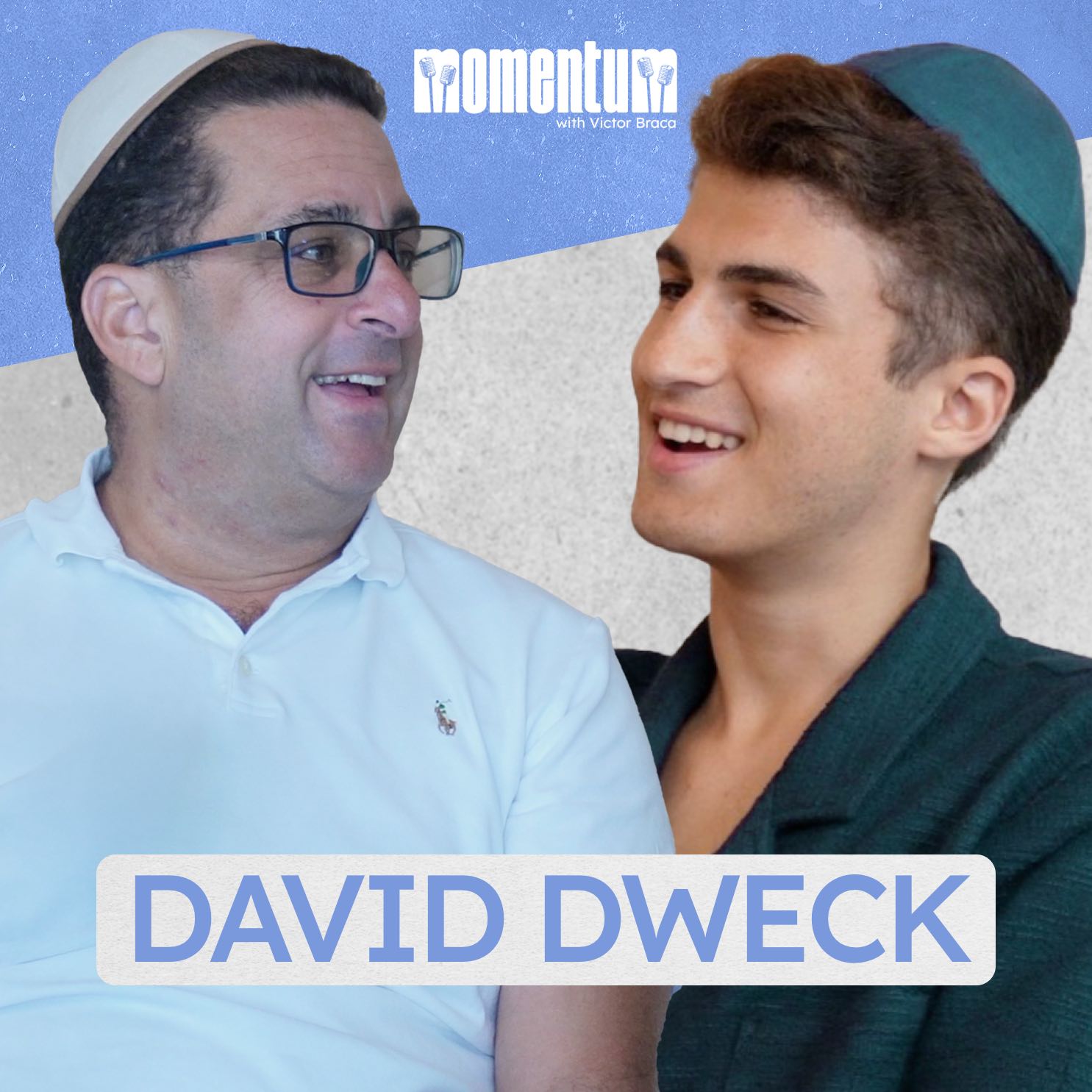


David Dweck is the founder and owner of Camp Allsport, a premier summer camp in New Jersey. Each summer, he employs a staff of over 230, welcomes more than 850 campers, and manages a waitlist of 400.
In this episode, David opens up about his journey—from getting fired from his first camp counselor job to building a business that brings in millions of dollars while working just two months a year.
Enjoy!
Sponsor
Transcript
David Dweck: The day after Labor Day, I had 950 kids signed up for the next year with people on the waiting list. All three of my jobs let me go and suddenly I had nothing. I have a campsite. I’m very happy. I’m opening. This is what it is. It’s a sports camp. And the phone was ringing off the hook. So, you have the first year of camp—Allsport. I still couldn’t believe the moment. I remember when the buses pulled up that day and I’m like, “I don’t know, what do I do now?” I lost a million dollars in revenue. That’s crazy. Do I need to start thinking about a different profession? Is it going to work? And I’m like, “Hell no. This is my dream. We’re going to make this work.” The torture of every single day, not knowing how you’re going to make a living for your family, was a driving force for me.
Victor M. Braca: David, what’s the secret to making a living working two months out of the year?
My guest today is David Dweck. He’s the founder and director of Camp Allsport, one of the premier summer camps in New Jersey. Here are a couple of fun facts about David: He got fired from his first camp counselor job at 15 years old. He tried for 10 years unsuccessfully to open up Camp Allsport, getting turned down by nearly every facility in the area. Fast forward to today, and Camp Allsport has over 850 kids, a 400-person waitlist, and 250-plus staff members. Oh, and David only works two months per year, yet Allsport generates millions of dollars in revenue. How insane is that?
Before we start, guys, I’m Victor Braca. Momentum is where we dive deep into the stories behind business success. Guys, this was a very unique episode of Momentum. Enjoy it with David Dweck. Big thanks to Kosher Media for sponsoring this episode. More on them later.
David Dweck, welcome to Momentum.
David Dweck: Thank you for having me.
Victor M. Braca: You’ve built Camp Allsport into one of the premier summer camps in New Jersey with over 850 kids, a 400-person waitlist, 250-plus staff members, and millions of dollars in revenue with two months out of the year. I want to go back to when you were 15 years old. You were yourself a camp counselor, but you actually got fired from your job. I know that kind of set you up. It laid the foundation for the rest of your career. Tell me about that.
David Dweck: So, I was in 10th grade. I was working at the Jewish Community Center. They had a camp. They were one of the bigger camps, you know, along with Camp David at the time. And I did what everybody did in 10th grade: you applied for a counselor job and I applied for it. I wasn’t really the best counselor. After about a week, they demoted me to being an art assistant, which was like, “Okay.” And then I was like, “This is not going to work.” And then they let me go like two weeks into the summer season.
Victor M. Braca: What did you do wrong?
David Dweck: I just—I don’t remember. I really don’t. I just wasn’t, I guess I wasn’t a good counselor. I wasn’t prepared to be a counselor. I guess I wasn’t with my group as much. I came for a little bit for social reasons, and I just wasn’t doing their piece. And they had a very strict director. He’s like, “Listen, it’s not working. I’m going to put you in the art department. See if that works for you. And if it doesn’t, then you got to go.”
Victor M. Braca: So, let’s go back a little bit to earlier in your life, maybe elementary school or earlier high school, ninth grade even. Were you always entrepreneurial? Did you ever have a business before? How’d you do in school?
David Dweck: So, you know, at the time, I just always went to camp. I went to the camps growing up. Went to Camp Hillel, which was before Camp David, and then I got into Camp David, I guess, as a camper in fifth or sixth grade. And just went to camp and did my thing. I never thought about running my own camp. It wasn’t even in my mindset. It wasn’t even a thought.
When I got fired, I had an interesting opportunity. Camp Aura, which was not far from the Jewish Community Center—it was about a 2-minute drive at Deal School. I asked for a job. I said, “Listen, I’d like to work.” I got a job. I was getting paid $250—$237 after taxes. That was the… I don’t know what that is with inflation now. It wasn’t a lot of money, but it was my first intro to starting bottom-up, if you want to say that, as a camp owner.
Victor M. Braca: That was the same summer that you got fired?
David Dweck: That was the same summer I got fired. And they threw me into a few things. I just started to step up, and the first week that I was there, I happened to have known Heshy and Rabbi Jay. They were the directors of the camp growing up. They used to do youth programs at the Deal synagogue. And they said, “Listen, we have someone who needs a sports lesson. Kid is 8 years old, wants to learn how to play baseball a little bit.” So, I went. His name is Abie Sutton. I gave him one lesson. I gave him two lessons, three lessons. Suddenly, they wanted me to come three, four times a week. He couldn’t play sports for anything. Now, I think he still can’t play sports. I tried my best. He didn’t play enough over the years.
And then it turned into its own thing. And suddenly I was doing very well in the camp. I wasn’t making a lot of money, but they were starting to give me some leadership roles: “Run a game show, do this, color war.” And then one lesson led to a few more lessons, and then by year three, when I was a senior in high school, I was running groups after camp of four to six kids and making 10 times the amount of money that I was making as a camp counselor. And it was great. And then that’s when I started to think about, “Okay, wait, I can do this.” It’s not only some side money. Maybe I can turn this into something bigger.
Victor M. Braca: Two questions for you. Number one: you were working in camp while you were doing the private lessons on the side. Why did you still work in camp if you were probably making five or ten times the amount of money per hour working privately? And my second question: you’re a 15-year-old—why are you working off-hours? It was normal for your friends to work in camp, but after work, when your friends were hanging out, you were still working.
David Dweck: So I always believed in order. You know, when we have camp, first of all, it’s dead hours. I didn’t have anything that I could do during those hours. There was really nothing. You want to be with your friends, you want to meet girls, you want to be social. But at the same time, in the afternoon, it was one or two lessons that I would get each night and okay, I made some side money.
I remember my father telling me, “Listen, I’m not going to be able to give you allowance. My business is going through some changes. You got to make your own money.” So, that was a little bit of a driving force. And then I started to just build some money, put some money in the bank account. I got an ATM card. I remember the bank account I opened up on Norwood Avenue was called First Fidelity, right where Jerusalem 2 Pizza used to be. And started to make some side money.
So, it never interfered. Once it started to get really serious, I was working the camp day and then working from 4:00 to 8:00 every day cuz people just [wanted to] take my kids, teach them how to play. Then when I went to my year in Israel—my gap year—it got very busy and I started to say, “Okay, I could do both—camp and private lessons.” I could work hard. It’s Monday through Thursday. You work hard and bank the money because I was going to start to go to college, so I wanted to have some extra money. This was my two months to really work hard. And that became my model for the rest of my life: Work hard for the two months and it takes care of the rest of the year.
Victor M. Braca: You’re working in camp throughout the rest of high school, you were doing the private clinics on the side, you took a gap year in Israel. Today you run a camp; you don’t really need a college degree for that. But you have not only a college degree, but you have a masters in social work. Was college not a question for you?
David Dweck: College was not a question. I was the only one in my family that was actually going to go to college and actually finish. My older brothers didn’t get a chance; business needs were needed at the time in the family. So I was always dedicated to that and I believed that, okay, I’ll go for my degree in business, which I had at Yeshiva University. It actually was very helpful because I took marketing and management classes and those are things that I use every single day in what I do.
Then I switched my major halfway through college to a bachelor’s in psychology because I felt like if you really want to understand people, you really got to understand the psychology of people. I went and got my bachelor’s in psychology. I said, “Okay, this business stuff seems very basic to me. Marketing, management, lowball the market. This is how you manage people. But if I get the psychology degree, maybe I want to go a different route. Maybe I want to do a little counseling or therapy while I’m trying to build this side business.”
So, that’s what I decided to do. I not only have a masters in social work, I have actually a masters in Bible as well, which I went back to do about eight or nine years ago. I’ll give you more about that later.
Victor M. Braca: That’s very cool. Very different for a camp director. Tell me about the term paper that you wrote when you were in school and how you outlined an entire plan for opening up a camp.
David Dweck: So, one of the things that I had the opportunity to do—and sometimes you don’t know it until you experience it—is I went to Camp Hillel growing up and then Camp David as a camper. Then I was a counselor in the JCC briefly, and then I worked in Camp Aura for a few years. When I came back from my year in Israel, I didn’t quite know that I wanted to do a camp yet. I was doing a lot of sports lessons on the side. I decided to work as a counselor in Camp David. After that, I had the experience of working in all the camps and I’m like, “Wait, I see this here. I see that there. I can make a camp and totally knock it out of the park and revolutionize the camp industry. I can do this much better than everybody else.”
Victor M. Braca: You were 19 years old.
David Dweck: I was 19 years old. I knew I could do a certain model. I was a very big sports guy. I didn’t love color war and the smaller activities like bocce or things that were just “okay” camp activities. I said, “Wait, I can do a sports camp where I could have leagues and sports instruction and teach kids how to play from the beginning.”
Victor M. Braca: That didn’t exist before you?
David Dweck: Didn’t exist at all. It was not even a model. Camp David at the time maybe had an after-camp baseball league. That’s it. There was no instruction. There was no teaching. There were no leagues every minute. I’m a boy; I watch ESPN all the time. I wanted to play sports 24/7. So when it got broken up with activities that weren’t sports or color war for three days, we used to be bored out of our minds. The guys were never into it in seventh, 8th, 9th grade. No one wanted to sing cheer songs. We just—give us a basketball, we’ll play for six hours. So, that was the model.
The summer finished, and then I had a marketing class. The teacher was the head of marketing of Procter & Gamble. She said, “Okay, you have to pick an idea and you have to do a marketing report on how you’re going to deal with market share. What is going to be your marketing strategy to pull the people in? You have to describe the market that you’re trying to go in.”
Suddenly I’m typing this paper—which they called at the time a “term paper” for all those who are dating themselves. I just turned 50, so you’ll understand the term. I sat there and I came up with: “Okay, I’m going to lowball the market, I’m going to charge less, this is the market share, these are the camps I’m competing with.” I put a whole plan together. I was a decent student in school, I wasn’t always in the highest classes, but it was the only paper I ever got in my life I got an A from the professor. So I was onto something. You know, sometimes you have those stories where they give you an F on it and then you become this billionaire. It was opposite. He was like, “Okay, wait, maybe she sees something.”
Then I said I can do this and I started to work on it and work on a brochure. Then I approached my old high school coach, Joel Rishi, who was the president of Hillel. I said, “Listen, I would love to use Hillel. I grew up in Deal my whole life; I’d love to use Hillel Yeshiva and use the grounds. This is what I want to do.” I showed him the marketing proposal, I showed him the brochure.
Victor M. Braca: You’re still a teenager by the way.
David Dweck: I’m still 19. It’s all in the same year. I sat with him that January and he said, “Okay, let me bring it to the board and see if I can get you a meeting.” He brought me into a meeting in May or June of that year. So, I just wrote the paper in October/November, and now I’m sitting in a meeting and this thing is happening way faster than I think.
I go in there, I present myself, and they’re grilling me. They said, “Listen…” I was answering questions, but I guess I was stuck a little bit on some of them. One question was, “How you going to collect the money? You want to pay us rent to use the school, but how you going to collect money from Syrians? We barely could do it as a school and we’ve been around the block.” I guess I didn’t give them sufficient answers at the time. He came out and told me, “Listen, you lost the vote five to four.”
I was crushed. I was a little upset. I had even a t-shirt made with my logo. I was getting very excited. My father at the time got me this t-shirt with the Camp Allsport logo. It sort of dampened things. I said, “Okay, I need to start looking around.” I started to do a lot of one-week pre-camp and one-week post-camp programs and I found some places around the area and I would keep in touch with them. For a few years I was hitting dead ends. Everybody looked at me as too young. “There’s no way you could do this.” Then I finished my degree in Yeshiva University and went to social work school for my masters.
Victor M. Braca: Why did you never give up on the dream of opening up a camp? You were getting turned down time and time again. Why did you keep trying?
David Dweck: For me it was, “Okay, I’m still pursuing what I need to do in the wintertime. I’m going after my degree.” The summer would come up and I would get 50 or 100 kids for a post-camp program. People would say, “Why don’t you open up a camp?”
I think the biggest challenge at the time was just finding a facility. I didn’t want to be like a “homeless camp” and just take kids on buses; I needed to have a resting spot. I tried each year as the business grew and as I was making this side money in the summer. I remember even at the time when AOL first came out—that was the first place where you had actually Instant Messenger—it was the first time there was an email address where you could actually send an electronic email to someone else and I said, “I’m going to make my screen name ‘Allsport15’.” They said it had to be a name and a number. I put the number 15 because that’s when I started my first sports lessons. I said I want to call it Camp Allsport because I wanted to accomplish all of the sports. I wanted people to know what it embodied in just the name.
So that’s what I did. I got pushed off, I got my degree, and then I started to do community work, build my reputation, work with kids. A lot of my specialty was working with teenagers, young adults and children in therapy, and also building youth programs around the community.
Victor M. Braca: Was social work something that you were passionate about?
David Dweck: I loved it. I always said to myself in some classes as an 18 or 19-year-old, “Find your purpose, find your mission, find what you love to do.” And I felt like this idea of helping people—this is a good thing. It gets you up every morning and you can change people’s lives.
I saw through my sports lessons kids who weren’t good, when they started to get better, they were able to socialize better with other kids. They made friends; they weren’t the kids sitting on the side that didn’t know how to catch the ball. It started to make a difference and I saw, “Okay, I could do this even more.” And then I got into more serious issues. You find out what holds people back from building their skills or their confidence is sometimes they come from a bad family life. Sometimes they had a hard time growing up—they were bullied or teased. And here I was, I can get involved in that on an everyday basis. Okay, the camp thing may happen at some point, but this is a pretty good gig, right?
Victor M. Braca: It’s cool that they tie into each other—social work, working with people, psychology helping you run your camp.
David Dweck: And I need it all the time when I’m dealing with parents. You need a lot of good psychology and a lot of mental health training in dealing with the whole gamut of complaints, arguments, talking down people. You need a lot of that.
Victor M. Braca: What was the vision for your life after you had gotten your masters degree? You’re working for SBH, you’re working for Magen David Yeshiva… what did you see for yourself as the end goal?
David Dweck: I looked at it more as, “I want to do camp one day, but right now I’m going to be a community guy.”
Victor M. Braca: So camp was always in the back of your head.
David Dweck: It was always in the back of my head. I never gave up that dream ever. A lot of people would tell me, “The more you work for the community, the more you’re jeopardizing [your future] if something were to happen.” Your eggs are in the community basket and when things go wrong… it’s good to be an entrepreneur. It’s good to control your own business and be able to call your own shots. When you work for people, you’re making your salary and doing those things; you don’t have the same opportunities.
But I said, “Okay, let me this is part of my vision.” I worked for a synagogue, Bnai Isaac, for about 13 years. I met my wife the first day I worked at Sephardic Bikur Holim. She was working on one of the young adult programs we called “Spark” at the time, which was going into high school classrooms and leading discussions about social issues. I met her the first day. And then over a few months, we started to date. She just loved the idea that I was dedicating myself to work for the community.
I wasn’t making a lot of money at the time and people were telling me, “This is not a career, social work. You’re going to make $30,000, $40,000, $50,000—it’s not going to work.” And I said, “Okay, no, but I can do it with a community twist. I’m going to find a way to make a business out of being a social worker.” So I worked a few jobs and then little by little I built my credibility with the organizations and I got raises. I was able for six or seven years to do really well while every summer was quiet in those jobs because schools don’t have a summer job and Bikur Holim would give me time off. I would work on other things in the summertime and look at facilities and drive around Deal, Tinton Falls, Long Branch, and see if there were any places I can consider. So, I never gave it up.
Victor M. Braca: Take me into the year or the day when you announced the launch of Camp Allsport. How did you set yourself apart? You were entering a space where the camp market was dominated by major players. You were late 20s, 30 years old, and you have to set yourself apart in this saturated market.
David Dweck: I finally made a call when I was 29. I called this place up in November. I was doing some post-camp programs in the place and I said, “If your place becomes available, I’m interested.” I got a call early November. And he said, “I’m willing to rent it to you for the summer. I have a camp that comes in, Seashore Day Camp, which was a prominent camp in the area, but I can’t give it to you from 1:00 to 3:00 every day. They come every day 1:00 to 3:00. So, you’re going to have to figure out where you’re going to go during that time.”
Some people could say, “Okay, that’s not good enough.” I said, “I got an opening. I can do this.”
Victor M. Braca: Was that the first time that somebody offered you the space?
David Dweck: First time I got offered a space; otherwise I was rejected everywhere. And he said, “Okay, yes, let’s do it.” So, we put together a contract. I signed the contract. I didn’t have to give any deposit at the time.
My first phone call was to a guy by the name Albert Hakim. He ran an advertising agency called Laser Wave. I brought him to my house in Brooklyn. Said, “Okay, this is my idea. This is what I want to do.” After a preliminary phone call, he came to my house and we sat there. At the time there was a show on TV rivaling ESPN called The Best Damn Sports Show Period. It was on late at night. He goes, “Listen, I have the line: ‘Best Sports Camp Period.’ That’s it. Best Sports Camp Period. And not only that, if you want to lowball the market, what is everybody charging? $3,000? We’re going to do ‘Best Sports Camp Period: $1,850’.” I still have the ad.
At the time, the Image magazine was the premiere. Everybody was reading it. There was no Instagram. I called up and said, “I want the back cover.” Now, keep in mind, I had zero money. I’m living on my social work salary. I took out a credit card. I got married in 1999, so I was married for five or six years. My wife was like, “Go for it. Do it.” And I said I want the back cover of the Image magazine because I noticed that when it’s on the coffee table, the front and the back are the two pieces people see. I said I want it to come out in January. At the time that’s when people started to think about camp.
So I put the ad out. It came out the weekend of the Super Bowl. I added a second phone line to my house which was going to be my work line. Suddenly the Super Bowl started and the phone was ringing off the hook. I had a bunch of friends over and I did not watch the Super Bowl the entire time. The calls kept coming in and they’re asking me questions: “Where’s your pool?”
I had no pool at the time. I had no idea that that was even a question to answer. I said, “I’m working on it. I’m going to know in a few months.” I don’t even know what I was saying. There were calls coming in, calls, calls. And there were some “leader parents” of different grades thinking about bringing their kids. They wanted a change. They were in this camp or that camp and this sounded like an exciting idea. I already had a reputation in the community working with kids. So they were like, “Okay, we want to give this a chance.”
I was telling my wife, “Okay, they want to come. What do I do next?” I didn’t have credit card processing set up. There was nothing. What do I do? How am I taking the money? I just made a bank account and just got the corporation papers. She goes, “Listen, why don’t you just put together a letter?” Which I sent in the mail. Again, no email. I said, “Okay, if you’re committed, I need to know by this date and you’re in and I’ll call you for a deposit.”
At that time, I had to rush to get credit card processing and QuickBooks. My accountant at the time was my brother-in-law, Lee. Suddenly I had 120 commitments in a month. All the calls came during the Super Bowl and by the second week in February, I had everybody committed. Got the deposits, I had a product, it was ready to roll and I’m like, “Okay, what do I do next?” That was a very exciting moment because you can have an idea but it has to materialize.
I didn’t know how I was going to actualize it, but little by little, I just kept on asking for help. My wife was manually typing in every single credit card, every single person. I didn’t think it was going to materialize that fast. And then all of a sudden, okay, now I got to work on: how do I take them to a pool? What do I do? And then I just started to work hard and build a staff and start interviewing.
Victor M. Braca: You were 29. You had two kids. You were starting something totally new, but it was kind of additive to your career.
David Dweck: I was still working for the community organizations. So this was like side money. I didn’t even plan on making money. It wasn’t even a thing to me at first.
Victor M. Braca: What do you think drew people to the camp?
David Dweck: I think it’s three things: I think the idea was such a new concept—a sports camp with sports leagues during the day. I think the price—$1,000 cheaper—definitely made people say, “Okay, let me give it a shot.” It was like two-thirds of the price. And people knew me; I was a community guy, a wholesome guy.
So, you have the first year of Camp Allsport. I got 140 kids. That was a “wow” moment. I only did boys and I was only doing older kids—sixth grade and up. People were willing to take a chance because if it didn’t work, “I’ll send them to sleep-away or back to another camp.” I knew it would be good for those older kids because it would be leagues and sports all day and one trip a week, an overnight. That’s the age I loved.
Victor M. Braca: Guys, there’s a very good chance you found out about Momentum through Kosher Media. These guys are the premier advertisers throughout Jewish communities all over the world. Momentum currently has thousands of listeners per episode. David and the Kosher Media team have been helping me expand my reach for over a year now. They have dozens of Instagram accounts, tens of thousands of contacts for email and text blast. Whatever it is you’re trying to advertise, call Kosher Media. It’s an amazing experience working with them. https://www.google.com/search?q=koshermedia.com. Tell David I sent you.
So, you’ve scrambled to put all this together. Now it comes to actually running a camp. They come in day one—what do you do?
David Dweck: I still couldn’t believe the moment. I remember when the buses pulled up—the four buses that pulled up that day—and I’m like, “I don’t know, what do I do now?” I made a schedule and I did have good facilities around there. Nobody even knows that the fields I had outside, I only was able to rent them for the month of July. I didn’t have it for the month of August. In the end I was able to purchase August a few weeks in, knowing he didn’t have anybody there during the day.
Victor M. Braca: What did you do about the 1:00 to 3:00 p.m.?
David Dweck: I remember giving a gift basket to someone near the Fort Monmouth area. I asked for a field that I was going to bus them to. I was going to have a bus on the site and bus all the kids for that time period. But I ended up getting the fields right outside the campus like two weeks before camp started. So I said, “Okay, I’m just going to keep them outside.”
Victor M. Braca: How did you put the team together so quick?
David Dweck: I hired an assistant director at the time, Al Picciotto. I knew him well from SBH. We started to interview counselors in March. We needed like 12 or 14 of them. We just hired and we picked the best people. A lot of those guys worked for me for the next five or six years. They loved it. I was crazy, I was nuts, but at the same time, we bonded and I trained them how to run the leagues and do the statistics. I want kids every Saturday morning to get a newsletter and read their stats like they’re reading the morning paper. The kids—I used to watch my own boys studying their stats. It was just “sports-infested.” It was a camp that finally boys can go to and think about sports 24/7. No boring periods. That was my mantra. And every day I would adjust the schedule, seeing what they would like. I was doing everything from cleaning the floor to putting the kids on the bus to getting the lunch.
Victor M. Braca: After the first year, you had 140 kids. Were you rolling in money?
David Dweck: I think I lost like $20,000 that year. I lost money that first year. I was a kid in a candy shop. I loved camp. “Dave, give us an overnight! Dave, give us this!” I didn’t even have overnights in the schedule. So I did it and the overnight cost more money than what I charged. I was still working out the details.
I didn’t make money for the first few years. But I loved it and I was making money during the year in the other jobs. I was always told, “Build the product, worry about the money later.” I didn’t want to inch up too much. The next year I raised it a few hundred, but I went from 140 kids to 90 kids. People said, “Okay, we tried it. It was a new novelty.” It took a lot of eighth graders, so they already graduated out. It was hard to get in more customers. It’s always easy to get people to come back; it’s hard to get new people. I made some mistakes. I spoke to parents a certain way; they didn’t like certain things.
I just remember walking into my Bnai Isaac Saturday prayer group and one of the fathers telling me, “You got to get through the first three years. You get through the first three years, you’re going to go clear sailing. But you got to survive. Most businesses need three years.” And how prophetic it was because what happened in year three was life-changing for me.
Victor M. Braca: Take me into the winter months after the first summer. Did you essentially have two full-time jobs working on the camp year-round?
David Dweck: Not so intensive. I would work on it on the weekends. During the week I was working at Sephardic Bikur Holim from 8:00 to 2:00. I was working at Magen David for about four or five hours in the middle of the day. I was working 12-hour days practically four days a week. Friday was a shorter day. Saturday I was running a kids minyan. I had to pay the bills. I was working seven days a week. I didn’t have a break, but I had to keep going to make ends meet and put my kids in school. Year one, lost $20,000. Year two, lost money again.
Victor M. Braca: Why’d you continue running the camp if you were losing money?
David Dweck: I kept getting feedback on the street like, “Your idea is going to work. It takes time.” I was never one to give up on anything. I would say that the losing of the money was probably drawing a little bit of a salary out of the camp. It wasn’t entirely profitable, but I was able to take a salary. I knew the price needed to go higher. The question was when. And then I had an eye-opening moment.
I was working in the community institutions and the 2008 financial crisis came to be and suddenly all three of my jobs let me go. They didn’t know how they were going to survive within the organizations themselves. It wasn’t personal. Thank God most of them gave me severance for about six months. Suddenly I had nothing—just camp.
I remember sitting in my basement looking at the walls and saying, “Okay, I guess I got to do this full-time.” The severance helped, but I still didn’t know what I was doing. I was deciding whether I was going to open up the camp for girls. People were begging for a girls camp: “Dave, there’s a market out there. I want to be able to put my daughter and my son together.”
The camp model wasn’t making money. I sat with one of my close friends, Sammy Haddad—he was an expert in Excel. We broke down the expenses and the revenue and I realized the model was making $200 less a kid. I was losing 200 a kid. The more kids I took, the more money I was losing.
Then I sat with another person, Ronnie Haddad. He said, “Listen, I want you to sit with somebody. There’s a person in the community that wants his kid to open up a camp. Maybe he’ll back you.” So I sit down with the guy and he tells me, “You’re not making money. Maybe I’m interested… but stick with boys only.” He was a little bit more of a religious guy and he wasn’t going to get into anything if it was going to be a co-ed camp. He said, “Your blessings will stay with you if you keep it separate.”
At that moment, I realized what I needed to do. He told me a piece of advice that was very helpful: “No matter what you do, you have to raise the price. Raise the price.” So, I jumped from $2,200 to $2,800. I did a $600 jump. I had no other jobs, so I needed to make more income. I put it out there.
And then the registration came in. Because I opened up for girls as well, all of a sudden I had 350 kids. I doubled the enrollment once I went to girls. People were like, “Okay, this guy’s doing it for a few years.” I didn’t know a financial market collapse along with opening up for girls would work like that. During the financial collapse, people were throwing money at me with the deposits for camp and all of a sudden, boom, I have to make camp for 350 kids.
Victor M. Braca: Could you fit them in the same facility?
David Dweck: Once I saw I had 350 kids, there was another part of the building that someone was running a winter business in and I offered to rent that space from him. He gave it to me for the summer.
Victor M. Braca: Was it at this point that the income from the camp started to sustain you year-round?
David Dweck: Yes, I had no choice. What I started to do at that moment—I was approached by a community member running “Hits and Hoops” on Avenue Y, David Shama. It was a sports facility with batting cages and basketball courts. I said, “You know, if I’m going to get my product to where I want it to get to, I got to do some Sunday programs.” So for a few winters, I was doing a Sunday program along with preparing for camp. I was getting a few hundred people and that was sustaining me. I was able to make a decent living. I had to. And then this place came to be about two years later and he said, “Listen, I want to sell the business. Would you consider it?” I got someone to back me. I bought the business.
I turned the batting cages into a huge soccer field. Started to rent it out to all different nationalities—Russian clientele, Spanish clientele—and suddenly my place was busy 7 days a week. At the same time, I was at about 350 campers. By doing these programs, it was increasing my enrollment for the summer. The synergy of one leading to the other worked and by year 10 I hit my goal, which was about 850-880 kids.
Victor M. Braca: That was your number that you wanted.
David Dweck: My number I always wanted to get to was between 850 to 900 kids. I thought that was critical mass. It also has a certain energy in the camp. I was able to have more purchasing power, bring in real coaches, and I felt like that was the number that meant I was established. I was real.
Victor M. Braca: You didn’t want to go bigger?
David Dweck: The place couldn’t handle it. I still don’t know how I handled it in a 30,000-foot warehouse space, but it worked and kids loved it. We had the social scene that everybody wanted and everything was hitting its peak in year 10.
Victor M. Braca: Take me into a time when the growth felt like it was plateauing.
David Dweck: I would say I had an eye-opening moment in my 15th, 16th year where maybe this place is not the right place. People were starting to go to outside community camps where the facilities were much better and people wanted more. I realized I went from 850 kids stabilized to 700 the next year. I thought people would sign up last minute and it never came. People just walked away and said, “I want the better product.” I started to hear rumblings: “People are saying your facilities are not so great. The kids are playing a lot in the parking lot when they’re doing foursquare. The sports is great, but it’s not enough.”
When you lose 150 kids off your bottom line but you’re still keeping up the same expenses—I had the same staffing—I said, “Okay, this is not working. I need to start looking for something better.” I started to really work. I think that was around 2017. I had a long-term lease where I was, so I pushed it off. But I saw the enrollment was going a little backwards.
Victor M. Braca: You were in this warehouse for 17 years. Tell me about finding a new place.
David Dweck: I met with one or two consultants and I was prepared to pay—”find me a place, and you’ll be happy.” At the time I approached the person who was in charge of the lease for the Ranney School. And he said, “I’m not going to give you over my lease. I’m doing very well.” He goes, “Listen, I’m not going to give you the school, but I did make some contacts throughout New Jersey. This is going to be my consulting fee.” So I paid him a fee and started the search and those places didn’t seem to work out.
Then I went to a fundraiser for Baruch Yeshiva in November 2019. I approached one of the managers there and some people brought up, “Dave, why don’t you consider this as a camp facility?” I had a few discussions; it didn’t really get anywhere. Then when the summer came, a different manager said, “I heard you had this discussion, I’m the new general manager, would you like to have a conversation?” I came to see the place. I’m like, “Wow, this really is Camp Allsport in the best sports camp facility in New Jersey.”
It literally was a 150,000 square foot place: 100-yard turf field and seven full-court basketball courts. I sat down for what I would call one meeting that went on for 12 hours to hammer out a deal with the owner of the facility and the general manager. We hammered out a 15-year deal.
I was very excited. Now the next thing was: I want to show people I’m no longer in this warehouse space. I wanted to clinch the deal because I knew that if I made a video, I wanted it to go viral right before registration could start. I asked the guy, “Can I just bring my kids here for the last day or two of camp?” I brought the kids there. They had no idea that I already secured the facility. I brought all fifth grade and up—about 300 kids. I wanted to get a feel of where they stood. I brought a few parents down. The parents were going nuts. “This is going to change everything.”
I remember doing the video while I was at the place—a 90-second video. The video went viral as much as viral can go in 2019. It was being passed around and everybody got excited. I told the kids, “This is going to be the new campus.” It got even the counselors excited. Registration was flowing in that by the day after Labor Day, I had 950 kids signed up for the next year. 950 kids with people on the waiting list. It was the first time I had more boys than girls. Unbelievable.
I started to work on the projects. I wanted to build a pool outside, ziplining, ropes course, rock climbing—the whole thing. And I was ready to go. The vision was coming together. And then six months later, the world changed.
Victor M. Braca: COVID hits March 2020. What does it look like? Were you even allowed to open up camp?
David Dweck: Running camp was in jeopardy. I had put laid out all this money, and I might not open. I was freaking out. For the first three months of COVID, the whole world was shut down. Is a camp an essential business? School wasn’t even operating. My lawyer’s telling me, “It doesn’t look like your case is going to be heard.”
Governor Murphy eventually gave permission that camps could open, but with restrictions. You couldn’t send kids out on trips. At the same time, the town of Manalapan was telling me, “We’re not going to allow you to use outside.” And all of the guidelines were saying you have to be outside! They said, “Sorry, the owner doesn’t have permission to use the outside of the facility.” That was a mishap in our contract. I didn’t have a camp facility.
We waited it out. Through a few back-channel connections, I was able to get permission and they basically told me, “You can only use the inside of the facility. And if you have one case, we’re shutting down the camp. You can’t use outside. You can’t send out on trips.” I got that permission legitimately two weeks before the start of the camp season. At the same time, Camp David just made a decision not to open. I was getting hundreds of phone calls. I wouldn’t pick any phone call up; I didn’t know if I was going to be able to open.
Finally, one Sunday, we got them to give me permission and then I had to put it out to the parents: “Listen, we have permission to open, but I’m going to give you an opt-out of 48 hours.” I went from 950 kids to opening at 500 kids. I lost a million dollars in revenue. I had to do it over a 5-week period instead of 7. I tried to create a good experience within the confines of knowing that if I had one case they were going to shut me down.
Miraculously, I didn’t have one reported case of corona in the camp that summer. I mandated masks only when they went from period to period. They had very high ceilings there. I got through the summer, but then I had a much bigger problem. They said, “We’re going to only let you come in for the one summer. That’s it.” And I started to ramp up this conversation with the guy that had the Ranney School lease.
Victor M. Braca: Before we get into this new facility: you opened up, you lost a million dollars in revenue. Was the camp in the green?
David Dweck: I was behind. Thank God there were government benefits, the PPP loans, disaster relief. The revenue I lost, I was able to get some of it back in disaster relief loans that I still have to pay back to this day. It got me through that rough period to have a little bit of cash flow to survive into the next year. I didn’t take any salary those three or four months once COVID hit.
There was no manual for what was about to happen. My biggest challenge wasn’t even the income; I didn’t have a camp facility for the next year. Usually, I rely on deposits to live through cash flow for the next year. I only had a few hundred people register because after doing five weeks of camp inside, they were like, “What’s going on with this camp facility?”
My wife and I made a very big family decision that we were going to move to Israel and make Aliyah. But I didn’t have a facility; I didn’t have a business. My wife tells me, “Let’s go in January. Let’s go sooner. The world’s upside down.”
“Ra, I don’t have a business. I don’t have a place.” I was told by some close family members, “If you send out this letter, you’re going to lose your business. People are going to think you’re going to Israel and you’re not coming back.” I put it out there anyway because I want to be transparent. In the meantime, people thought I was still opening up in Sportika. Registration didn’t work out so well. It’s October, November, and I had 250 kids signed up for camp. Stark difference from the year before when I had 950.
The blessings came from God. We announced we’re going to Israel. We moved out of our Brooklyn house November 1st. I signed the contract for the Ranney School with this guy for four years. I put the video out Thanksgiving week. Enrollment slowly started trickling in. That summer we moved to Israel in January. I ended up opening up that first year with 680 kids, which was a big drop-off but I was able to scale back. I cut down a lot of payroll. I cut down on certain expenses and sort of started over—a little bit of a reset. I had a great first summer in the new facility.
I started to develop this new identity. They didn’t see me only as a “camp guy” anymore. I started putting out these videos about fruit trees and the beaches in Herzliya in the middle of the winter. Corona made me think: what do you want your legacy to be? I don’t want to only be a camp guy. I wanted to be a guy that had an impact on people on something much bigger than just summer camp.
Victor M. Braca: I want to go over the numbers for your camp for a second. This year: over 850 kids, 230 plus staff, a 400-person waiting list, and millions of dollars in revenue for just two months out of the year.
David Dweck: There were two things: You need to be innovative. Assume that your competition is going to be better even if they aren’t. And you also can’t be complacent. I think during those years from my 10th anniversary to year 17, I got a little complacent. The money was coming in and I wasn’t seeing that things were changing. No regrets. God took me on that journey.
Victor M. Braca: David, what’s the secret to making a living working two months out of the year?
David Dweck: I was told by a close friend that if you want to make it in the community, either you have to cut your expenses or make more money. He goes, “Listen, you’re not going to be able to cut expenses. Just make more money.” But it wasn’t only about that. Create a product that everybody wants and they’ll pay for it.
I created a model that I can live during the year off of that income. The only issue for me was being bored during the winter. So, I phased out my Sunday and Friday programs realizing they were no longer injecting my camp enrollment. I went into a model of just working on camp. Well, I worked on some side things. I went for a masters in Bible for four years. During my time in Sephardic we call, I would sit with volunteers who were unfulfilled. They made all this money and they didn’t know what to do with it and they realize they have regrets—they could have helped more people. I said to myself, “Wait, why can’t I do that at 30 and 40?” So I get to do all the things that I love to do during those nine months.
Victor M. Braca: There was no desire to keep the winter leagues going? You would have been making hundreds of thousands of more dollars per year.
David Dweck: My answer was just take 10 or 20 more campers. When you do that, it’s more money than every Sunday in four hours. It didn’t make sense anymore. I sold the business two years before Corona. I said, “Okay, let me I want to do the other things. I want to be around for my kids.” I coached my kids’ basketball team. I coached Little League. I never lived to work. I love what I do, but I would work to live. Enough money that I can pay the bills. Why not live life from day one where I can enjoy it?
Some of my close family members still laugh at me and say, “What do you do during the year?” I just need to be working, you know? I worked in Yeshivah Flatbush for a couple of years. I understood not being [idle]—if I didn’t have a new project, I’ll work somewhere, but I didn’t have to work. I just did it. I worked with the athletic department and did a little counseling. But again, I get to wake up every day and decide what I’m going to do. I get to control my own schedule, which is a luxury not everybody has.
Victor M. Braca: For young people today, there’s a conflict of whether you should go for a steady but safe career or the entrepreneurial route. What should people do?
David Dweck: Before I went to my year in Israel, I went with my father to Barnes & Noble and I picked a book off the shelf: Do What You Love, The Money Will Follow. I read the book like seven or eight times. It talked about people in these dead-end jobs who pivoted their career—some at 30, some at 60—and once they pivoted, every day they would wake up excited. I believe very strongly: do what you love, the money will follow. Live it passionately but stay the course.
You got to be smart; you got to get the right people to help you with finances, but you are the only one that can be passionate about your product. It doesn’t work for everybody. If you think it’s too hard because it’s just too comfortable to go into a family business, you find the hobby and you do that on the side. But don’t get stuck every day regretting the job you’re in.
I have found that people who have done what they love to do will be successful if they’re passionate. And passion doesn’t always win the day; you have to be smart. You could love something so much, but if you’re not monetizing it, it’s not going to work. I learned that from business people who came back saying, “I’m not fulfilled. I’m going to go to my grave with these millions of dollars and I didn’t help a person.”
In this community, it can sustain itself. If you have a product that someone likes, even crackers are selling. The cracker business is huge. Shout out Michael Harari. Find something you enjoy and passionate about and you figure it out.
Victor M. Braca: Take me into your passions outside of work. You moved to Israel in 2021 and shared your journey on Instagram.
David Dweck: I’m an avid reader. I read 50 or 60 books a year. I got really into Zionism. I started to read about the early pioneers and the prime ministers. I came to the realization that there’s something more to the Jewish people than just being a community and a tribe—the ultimate destination is the land of Israel.
I said, “Wait, it can’t be that Brooklyn, New York is the endgame.” Every day we pray to go to Jerusalem. Why can’t this be my life? I have an income; I don’t have to give it up. I started to read at least 30 or 40 books on Zionism itself. I can get up and go—I have a nice gig here in the summer. I never would have thought 10 followers on Instagram would turn into a sensation where I became the face of Israel for the community.
I was just reflecting what I was observing: this land is not just a bunch of rocks; it’s vibrant. The weather’s awesome. I get to spend more time with my wife. My son went to the army fighting for the Jewish people. It suddenly became much more meaningful. Corona made a lot of people think, “It’s not working the way I want.” That was our change. No regrets.
Victor M. Braca: What has been your momentum moment?
David Dweck: I don’t know if I want to say it’s one moment. I think the 2008 financial crisis where the whole world seemed to be falling apart, along with all my jobs, and camp wasn’t making money. That was a big momentum moment. And the Corona moment with the camp.
People will say, “How did you get through it?” The torture of every single day, not knowing where your money’s coming from, was a driving force. I didn’t have a choice. Those two moments I saw life crashing down and saying, “Okay, the gig is up.” The first time around, that was an impetus to do camp full-time. The second time, I’m like, “Do I need to start thinking about a different profession?” And I’m like, “Hell no. This is my dream. We’re going to make this work.” I didn’t give up. I had great people always helping me.
I’ll never forget Saturday morning, two weeks before the camp opened in 2020, when I didn’t think I was going to open. I told God, “Listen, help me open. I will make sure that I do more and I’ll make the Israel idea attractive to the community to consider. I’m going to live a life of more purpose. Just help me open.” It was 6:00 a.m. and I sat outside in my backyard. The next day, all the details worked themselves out, at least to open for one summer.
Victor M. Braca: David, thank you for coming.
David Dweck: Awesome. Thank you for having me.
That wraps up this conversation with David Dweck. Here are my top three takeaways.
First, start building a good reputation as early as possible. Even if you’re planning on launching a business 10 years from now, start earning trust today. David did this by working with youth at community institutions. So when he finally launched his camp, families already knew and trusted him.
Second, the first version of your business won’t be perfect. Not only was David not making millions in the beginning, he was losing money. He made mistakes with pricing and had to figure out logistics like pools on the fly. But it’s all part of the learning curve.
And third, find your differentiator. It doesn’t have to be groundbreaking. For David, it was an all-sports camp with leagues and instruction, something no other local camp was doing. That clear niche gave parents a reason to switch.
And guys, a fourth takeaway: work to live, don’t live to work. To live a truly fulfilling life, you have to fill your time with non-work activities. For David, it’s family, Israel, and reading. Work is great, but it’s these passions that keep him going.
If you made it this far, drop the word “profit” in the comments. If you enjoyed this, check out my conversation with Abie Rosow. He’s the founder of Rosow Elite Performance. It was super interesting to hear his take on scaling a company. Thank you for watching until the end and I’ll see you next time.


Leave a Reply