




René Rofé is the founder of René Rofé Lingerie, a global lingerie company whose can be found in retailers across the globe.
In this episode, Rene shares his unlikely path from engineering and investment banking to “peddling panties,” how a napkin sketch landed him a Victoria’s Secret order, and the persistence that turned a discount-store hustle into a decades-long success story.
Sponsor
- Discover how The Hedaya Capital Group’s factoring services can help power your business’s financials: https://hedayacapital.com
Transcript
Victor M. Braca: I remember coming home and telling my wife, “I’m going to quit.”
René Rofé: “What are you talking about? What are you going to do?” I said, “Well, I’m going to go to work for my…” “What do you mean? You don’t know anything about importing, about anything.” People would say to me, “You know, René Rofé sounds like a French designer.” They didn’t know that I was a kid from Egypt. So, I drew it on a napkin. We showed it to her. She loved it. She gave us an order. The fear of failure is what kept me going. If someone had told me that I was going to end up peddling panties, I would have thought they were crazy.
Victor M. Braca: My guest today is René Rofé. He’s the founder of René Rofé Lingerie. I know, I know. Who could have guessed? René’s products can be found in Macy’s, TJ Maxx, Marshalls, Victoria’s Secret, and they also sell direct to consumer on their website. Guys, this was a fun episode. René is a colorful character, that’s for sure, which made for a great conversation.
Here are some of the highlights. He told us about how after he got an order from Macy’s, he literally ticketed every single item in his living room with his wife and kids. He told the story of how a sketch on a napkin of a Prada design led to a multi-million dollar relationship with Victoria’s Secret. And he gave us the blueprint he used to expand from selling to discount stores to some of the biggest retailers in the country. Oh, and before we start, I’m Victor Braca and Momentum is where I dive deep into the stories behind business success. But enough about me, let’s get into the episode. This episode is sponsored by the Hedaya Capital Group.
René Rofé, welcome to Momentum.
René Rofé: Thank you.
Victor M. Braca: I want to ask you for my first question: how did you grow up? I know you grew up in Egypt. Did you grow up with money?
René Rofé: No. In Egypt we were fairly well-to-do, but we left Egypt in January of 1957.
Victor M. Braca: How old were you?
René Rofé: I was 6 and a half. So when we left, we were not able to take any money or anything with us. We went to France and stayed there for a year and a half and we came to the United States in September of 1958. I was 8 years old.
Victor M. Braca: What did things look like for you at that time? Like, it’s a whole new world. It’s a whole new life. It’s totally different from everything you grew up with.
René Rofé: First of all, I’d like to say that as far as my growing up in Egypt, I have the memories of a six-year-old. So those are not extensive. Many of the memories I have are from talking with my parents and seeing photographs. I do have some very specific memories.
Leaving Egypt was very exciting. We left January 2nd, 1957, and what I recall is having all new clothes. Obviously it was warm in Egypt. We never wore long pants. All of a sudden we had wool pants and sweaters. We flew from Cairo to Vienna and we stayed in Vienna overnight and then took another flight to France. When we got to France, we actually lived in Vichy and it was the first time I had seen snow. As a kid, it was very, very exciting. I wasn’t aware of any of the politics that led to our leaving Egypt. It was just an exciting time for a little boy.
Victor M. Braca: I want to zoom in on that contrast. You didn’t have wool pants, you were seeing snow for the first time. What are some of the other things that draw the contrast between growing up in Egypt and moving to the new world, so to speak—America and the West?
René Rofé: For me as a kid, I wasn’t aware of all the things my parents were going through. But when you think about it, my father was only 33 and my mother was 31. For them, traveling with three little kids, it must have been a very difficult time.
We went from having a nice big apartment in Egypt and a villa—my grandfather had a beautiful villa—to a small apartment in Brooklyn. We didn’t really know anyone. My parents were friendly with some of the other Egyptians who had come. We first lived in a hotel in Manhattan, Hotel Embassy, and I went to school for a couple of months in Manhattan. I recall coming home saying some Spanish words. It was a lot of it was in a Puerto Rican neighborhood and me coming home and saying “mira mira” and not knowing whether that was English or Spanish or what.
But we caught on very quickly. As little kids, we learned English very quickly. I would say probably after 6 months of watching TV and cartoons, we picked it up. For me it was an exciting time. I didn’t feel like there was anything different other than we didn’t have all the luxuries. We had a very nice life in Egypt. People don’t realize that Egypt, as I grew up in Alexandria, was a very cosmopolitan city. Most of the Jews spoke four or five languages, as did my parents. Coming here was very difficult for my parents having to start all over again.
Victor M. Braca: Like you said, traveling with three young kids must be so difficult. You were just six, seven, eight years old. You didn’t really realize what they were going through. You picked up the language quickly, which was good. I would say if you guys were even five, six years older, you would have struggled a little bit more to learn English. Did you do well in school?
René Rofé: Yes, I was a good student. I did well in school. We came—I’m an original boat. I still have the tickets that my father had purchased for our family.
Victor M. Braca: Some boats are planes, but you guys are real boats.
René Rofé: We’re real boats. Well, now the boats are no longer boats; they’re yachts. Many of them have done very well in this country. But we came by boat. As I said, we first lived in a hotel for a couple of months in Manhattan and then we moved to Brooklyn. I wasn’t really aware of the whole Syrian community. I didn’t realize it, other than my father was—a couple of years after we arrived—very heavily involved in Ahaba Ve Ahva congregation. His parents—my father was born in Egypt—his parents are from Damascus. So we were Shammy. On my mother’s side, her parents are from Aleppo and Morocco.
Anyway, you asked if I was a good student. I came here in third grade, and in the sixth grade I made what was called the SP at the time. The SP was a special program for kids in sixth grade. They had the option of either skipping seventh grade or taking an enriched curriculum. My parents thought it would be better if I didn’t skip a grade, so I took the enriched curriculum and ended up going to Cunningham Junior High School on Avenue S and East 17th Street, where I made some friends that are still friends of mine to this day.
From Cunningham, I went to Lincoln High School. I did well in school. Came time to go to college and I had done well in math and science. I went to see my adviser and he said, “Oh, engineer, you should go to engineering school.” I had no idea what an engineer did, and I ended up going to engineering school. I guess I liked it. It was very difficult, but I stayed and I got my masters also in engineering.
Victor M. Braca: Wow. So you really pursued that?
René Rofé: I think it was the easiest thing for me to do, right? I had graduated and there was a 5-year course where you could get your masters. So that’s what I did and then in 1973, I got my masters and I went to work for an engineering firm in Manhattan.
Victor M. Braca: I want you to be a part of the Momentum Army. The Momentum Army is our frontline force that holds up this entire podcast. Now, you might be wondering, “how do I enlist in this Momentum Army?” Guys, it’s very simple: share this episode with three people right now. Before you continue watching, don’t skip this. Three people is all I ask. I don’t run any ads for Momentum. And the main way the podcast grows is through word of mouth. So, be sure to enlist in the momentum army by sharing this episode with three friends. Let’s get back to the episode.
At this point, I’m assuming you didn’t always know that you wanted to get into the apparel industry.
René Rofé: I had no idea. If someone had told me that I was going to end up peddling panties, I would have thought they were crazy.
Victor M. Braca: It’s a good way to put it. So you were telling me you worked at an engineering firm after you got your masters. What did you see for yourself at that point? Did you have a vision for your life?
René Rofé: At that point, I thought that maybe I would get together with a couple of my college friends and perhaps start an engineering firm. That was my thinking at the time.
Victor M. Braca: Were you always entrepreneurial? Did you always want to do your own thing? I see that as a common theme among a lot of immigrants.
René Rofé: Well, I’m not sure that I was so entrepreneurial at the time. It just seems like my career developed. I worked for an engineering firm for only about a little over a year and then I took a job for a think tank in Bedford, Massachusetts called the MITRE Corporation where we were doing work in environmental engineering. I was there for three years, but during the second year they sent me to Honolulu for about 10 months working on a waste disposal project.
At the time, I was working with an investment bank from New York; they were going to issue the bonds to finance the cost of the facility that I was involved in engineering. After the project was finished, they came to me and they said, “Hey, how would you like to come and work for us?”
I said, “Work for you? I don’t know anything about finance.”
They said, “Nah, we’ve seen you. You can sell. And if you can sell, you’ll do all right.” I ended up coming back to New York and I went to work for an old white-shoe investment banking firm. I think I was the only Jew in the firm. It was called White Weld & Co. I was working in financing waste disposal facilities—energy recovery, resource recovery, burning solid waste to generate steam and to make electricity.
I liked the job I was doing. It was a big change from engineering in the sense that the bankers got a lot of respect. Here I was, a young guy, 27 years old, and all of a sudden I’m flying all over the country. All of our clients were municipalities or public agencies and we were treated very, very nicely. The work was very long. I remember spending a lot of nights at the financial printers in those days. We used to print the red herrings, the prospectuses. I was in investment banking for about 4 and a half years.
Victor M. Braca: Before we go into that, I want to ask you one question. When you were at White Weld & Co, you were 27. Tell me about the hustle, the grind. I’m actually planning on going into finance. What I hear at least about the investment banks is you’re working overnight.
René Rofé: It was an exciting time. We were financing multi-million dollar large projects. The truth of the matter is that the lawyers did all the work. We did the financial projections and the feasibility studies. It was really an exciting time in terms of being able to be part of something real—knowing that in a few years there was going to be a big plant processing waste.
It did put a—I was married by the time, actually. I got married when I was 22 years old. There were many, many nights I came home very late. We had to put in a lot of hours. The younger guys are always the grunts. If you’re going into finance, you should expect to become a grunt for at least a few years. That’s the role: the junior analyst. But it was rewarding.
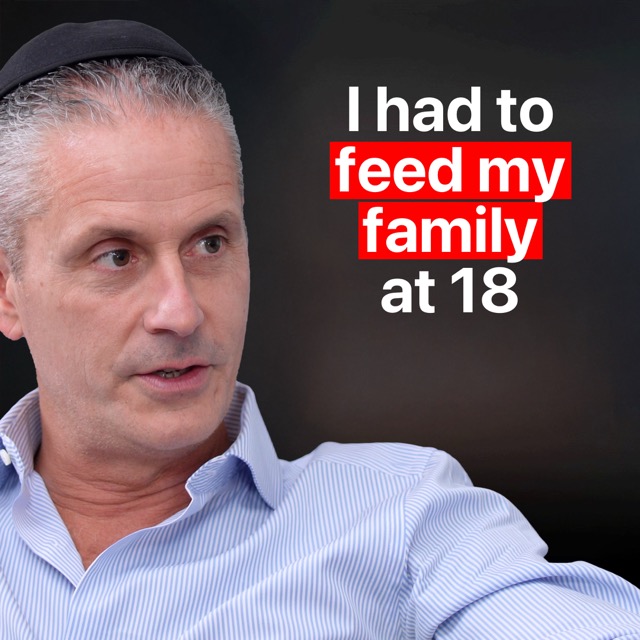
I did see friends of mine who hadn’t gone to college or hadn’t gone to graduate school and they were starting to make money. I was wondering, “When am I going to start to make money?” After about four years, my father had started a company in 1962. He imported disposable paper and plastic products—primarily toothpicks, coffee stirrers, skewers, things like that. He had a partner who had died a couple of years earlier and I decided I was going to leave my job and go to work with my father. I remember coming home and telling my wife, “I’m gonna quit.”
“What do you mean you’re gonna quit? What are you talking about? What are you gonna do?”
I said, “Well, I’m going to go to work for my father.”
“What do you mean? You don’t know anything about importing, about anything.” Anyway, I ended up resigning in December of 1977 or ’78 and I went to work for my father. I was working for him for about three weeks when an older relative who was retired called my father. He said, “I’m retired but I’m really bored. I want to do something. I think I want to import something.”
My father said to him, “Hey, my son just left his job. Maybe you want to do something with him.” So I went into business with this older relative—a wonderful man, he was a mentor. We said we’re going to import stuff and go around and sell it.
Victor M. Braca: I think what’s important is that you were starting your own business at that point. You had the entrepreneurial drive. I’m sure they were paying you well at that investment bank.
René Rofé: When I was in college, our goal was to earn $30,000 by the time you’re 30. That was the goal. I’ve just celebrated my 75th birthday, so I’m 75 years old. At the time, that was the goal. If you were making $30,000 before you were 30, you were doing really well. I was earning about $30,000 and I thought everything was great, but I didn’t like the idea of reporting to somebody.
When I went into my business with this older relative, it was a lot of freedom, but it was very, very challenging. I didn’t know anything about importing, about selling, about product. Here I was with a mentor taking me around Brooklyn to see the Syrian discount stores, look around in the stores, see what kind of goods we could import and sell.
We took a trip to Hong Kong and we started buying different items that we could sell to the Syrian stores. We bought umbrellas in Taiwan, then we bought socks in Korea and underwear in Hong Kong. China wasn’t quite open yet. We saw that if it was raining, they’d call you for umbrellas, otherwise they didn’t call you. But they always needed underwear. A few years after being in partnership with this relative, his son came into the business. We built up a bit—we were doing a couple of million dollars in sales—but we weren’t getting along and we split up.
In 1986, I started my own company, International Intimates, which is still in operation. At the time I decided I was going to focus on women’s underwear. I didn’t have a lot of money and underwear, panties, was something that people needed every day. Women needed them every day. It was a relatively easy area to get into with a little bit of money; you could buy a lot of goods. There was a lot of manufacturing capacity.
I still didn’t know anything about anything, but at the time Calvin Klein had started an underwear business in the early ’80s. At the time there wasn’t much fashion in ladies’ underwear; it was basic colors—white, black, and nude. I had an idea that maybe we can make fashionable panties at a price. So that’s what I did.
Victor M. Braca: How did you set yourself apart as this nobody 31-year-old who’s importing? Were there many other ladies’ wear brands at the time?
René Rofé: No, I wasn’t really a ladies’ wear brand. I was just really selling panties and I was really focused on selling the discount stores. Syrian people who owned the discount stores… they were very helpful. Thank God, the community is so helpful to each other. They gave me a boost, they gave me the confidence to continue. I would go from store to store.
I needed a label, and people would say to me, “René Rofé sounds like a French designer.” They didn’t know that I was a kid from Egypt. They said, “Wow, it sounds like a French designer.” On one of my early trips to Hong Kong, I got together with an artist and I said, “I need to make a hang tag.”
She said, “Well, why don’t you sign your name a few times and we’ll see what we could do.”
So that’s where the René Rofé brand was born. I started putting René Rofé on everything I did. Everything we made had René Rofé on it. After a couple of years, I expanded into other areas—into ladies’ bras and then sleepwear. Mostly in intimate apparel. We didn’t do anything in boys’ or men’s.
Victor M. Braca: What was it like starting an apparel business before social media, before e-commerce?
René Rofé: What I did really was I essentially I copied what I thought at the time were successful Syrians who were in the business. There were a few guys who were established in women’s underwear and basically I tried to copy the types of things they were doing but putting a little bit of a twist—adding prints. At the time, women didn’t have printed underwear; everybody was wearing solid colors. I tried to make things a little bit differently than they did, but certainly I used them as inspiration for everything that I did.
Victor M. Braca: Hedaya Capital Group is a trusted business advisor helping entrepreneurs unlock the growth potential of their businesses with tailored accounts receivable factoring and working capital solutions. They’re a family-owned, approachable team who listen and provide solutions while sharing their business experience and knowledge to help protect clients’ interests. They work from a core of old-world values where ethics and integrity have meaning and new-world thinking where speed and flexibility ensure success. Visit hedayacapital.com. Back to the episode.
How did you grow the company?
René Rofé: I grew my business by—I tell you, it was just persistence. It was a big struggle. To this day I tell my younger son that it was fear of failure that drove me to work. The idea that I would collapse and not be able to succeed kept me going. I started calling all kinds of retailers. I started with relatively smaller retailers. They gave me an opportunity and I sold my goods.
The most difficult thing was finding a factory. Today it is very easy; you can go online and you can find factories all over the world. In those days it wasn’t so easy. You had to actually travel and go and find and look. I’ve always liked to travel and I always viewed my whole business, my whole life, as an adventure. So I ended up traveling to places that most people didn’t go to. I was an early importer from countries such as Sri Lanka, Bangladesh, Mauritius. I went there because I was interested in different cultures. To this day, I’m still doing business with many of the people that I started with.
Victor M. Braca: You tapped into potential that really nobody was tapped into yet.
René Rofé: At the time, people were importing either from the Caribbean basin or primarily from Hong Kong. People were not venturing to other places. I started doing business in Sri Lanka in 1984, in Bangladesh in 1987. We were one of the first. During my travels, I ran into people who worked for very large firms and I got to know some of them and I used them as inspiration for what I should be doing.
Victor M. Braca: I just love the way you look at business. Success is very attainable and you don’t need to invent the next breakthrough technology. You took inspiration from the people who were ahead of you and said, “Hey, listen, what they did worked out for them. Let me do the same thing.” Can you tell me about a failure that you made that really shaped the way you look at business?
René Rofé: I’ve had many failures along the way. I really can’t pinpoint one particular thing off the top of my head. But as I said earlier, it was a big struggle and the fear of failure is what kept me going. I made mistakes in buying goods. I made mistakes in not pursuing other areas. I made mistakes in being too dependent on certain factories. But failure is a part of success. People learn from their failures hopefully.
At one time I did sell the big box—Walmart, Target, Kohl’s. I don’t sell them anymore.
Victor M. Braca: Okay, tell me about that.
René Rofé: It’s funny because I started at the low end. Price was the way to get into the stores, especially the Syrian stores. You came in, you had a good price, they gave you a shot. I got a break with Macy’s in the early ’90s. Out of the blue, we called up Macy’s and had a nice buyer. He came in, he liked my goods, and he gave me an order.
And now I said, “What? Oh, he wants the goods ticketed.” What am I going to do? Believe it or not, I would bring the cartons of merchandise home. Me and my wife and my two children—they were little kids—we would sit around the living room and we would put tickets. I bought guns and we would tag the merchandise. When somebody is shopping in Macy’s, they don’t realize that a man, his wife, and his two kids ticketed that.
As we grew, it became very difficult when you’re in the low end to go up. It’s much easier when you’re up here to start selling to the lower-priced stores. But around 2001 or 2002, I started selling Victoria’s Secret. Total fluke. I was making merchandise at the time for Maidenform. Maidenform was making goods for Victoria’s Secret, but I wasn’t making goods intended for Victoria’s Secret; I was just making goods for Maidenform.
One day I got a call from Maidenform saying their main supplier who was making goods for Victoria’s Secret was no longer making the goods and would I be able to quote them a price? I flew out. I made bras and the bras did well. Next thing I know, I contacted Victoria’s Secret myself. We went out to Columbus, Ohio, and brought all kinds of samples.
One of the merchandisers said, “I saw something in Prada”—some very high-end brand—”and I’d like to make something like it.” The thing she saw in Prada cost probably $400 or $500 and she wanted to make it for $8. Anyway, I recall she didn’t have a sample. She only had one and she couldn’t give it to me. So I drew it on a napkin. After the meeting, we went to the stores and we bought an actual sample and we actually made a sample in New York in a Chinese workshop. We brought it to her and she was amazed that we were able to do it. We showed it to her, she loved it, and she gave us an order. We’ve been doing business with them ever since.
Victor M. Braca: That’s great. What does your business mainly focus on now?
René Rofé: My business is really primarily focused on off-price—with the exception of a few department stores. Off-price is my biggest channel of distribution. Marshalls, TJ Maxx, Burlington, Ross—all those stores that sell brands for less.
Victor M. Braca: How did you break into those stores?
René Rofé: Price was the key. It was all commoditized. I started first selling TJ Maxx in 1989 and I sold them large-size women’s briefs. They put them out at 99 cents right in front of the cash registers. The goods sold. I got more orders. A few years later, TJ Maxx bought Marshalls, so I started selling Marshalls. I had a little bit of confidence to call some of the other stores and that’s what I did.
Victor M. Braca: You kept the business family-owned and family-operated since its inception. What went into that decision?
René Rofé: Firstly, my experience when I first went into business with a partner. The older relative was a very good partner, but I didn’t get along really with his son. We didn’t really get along in terms of our business decisions. So when I went into my own business, I really didn’t want a partner. My father had been my partner in the first business.
I mentioned that we were doing a couple of million dollars and I said, “I have to break off.” Because he was a relative, we wanted to keep the family happy. We hired an attorney—the same attorney my partner had. He devised a plan: “Why don’t you make him an offer and he can either accept the offer or he can turn it around? That way it’ll be fair.”
It turns out my partner kept the business and then I had to start all over. So I knew at that time that I didn’t want to have a partner other than my father, who was a silent partner. I knew at the time that I didn’t want to have a partner or any investors.
It’s great to have somebody to wallow in your misery and also to rejoice in your successes. When you’re alone, it’s very lonely at the top. Work never leaves me. I leave the office and I come home and I’m still thinking about it. It’s always with me despite the fact that I’m surrounded by good people. It’s difficult to be on your own. There are many advantages to having a brother or a sister in the business. For me it just turned out that I did it on my own and I still worry about the business. Especially off-hours. When you’re an importer dealing with the Far East, there are no off-hours. When you’re sleeping, they’re working. Many nights I would be on the phone till crazy hours to talk to the factory.
Victor M. Braca: I want to shift into advice for young people. What are some key traits you think young people today must have in order to succeed?
René Rofé: Hard skills are acquired; you learn a trade. Soft skills have to do with interpersonal relationships, connections, being able to speak to someone and get your ideas across. Unless a person is specializing in a particular area, soft skills are really what you need in every endeavor. You need to know how to speak to people. Soft skills are what really contributes to your success. It goes without saying that having expertise in hard skills is indispensable, but you need to be able to speak to people intelligently.
My advice to young people would be to network as much as they can. Meet people. Always be open to meeting people. If you’ve just entered into an industry, go to industry functions. It’s very, very important to get to know your industry and your competitors. Everyone can acquire soft skills.
Victor M. Braca: What I find interesting is that the investment bank recruited you even when you didn’t have the hard skills.
René Rofé: No matter what, you have to be able to sell yourself in everything that you do. Having the skills of a salesman is very, very important. Today it’s much more complicated than when I went into business. The retailers expect a lot more out of their suppliers—they want floor-ready merchandise, they want you to guarantee sales. There’s a lot of things they want today that they didn’t at the time.
Victor M. Braca: Can you touch on giving back and getting involved in the community?
René Rofé: My father, when we first came, he also struggled but he was always very generous in his tzedakah. Being the first president of Ahaba Ve Ahva on Avenue X, he always made the fundraising speeches in French, English, and Arabic. Our congregation was mostly newly arrived immigrants who didn’t speak English. My father was quite educated and even though he was not wealthy, he was always giving. He taught us by example that this is what you have to do.
My biggest involvement was serving on the board of Hillel Yeshiva for about 14 years. It was very rewarding. I would go and make speeches to all the shuls during the summer and try to get the people to give. I recall my father coaxing and trying to get the money out of the people. In those days, they used tactics that are no longer accepted—they were able to shame people into giving. Now, this is frowned upon.
Raising money for the school was something that I’m most proud of. Along the way I would ask myself… people come to you and ask for tzedakah and it got to be non-stop. I would say, “Is Hashem testing me?” You never want them when they stop coming; that’s a problem. I prefer to give to struggling organizations that don’t have so many contributors. You have organizations that are well-oiled machines, but I would rather give to the small medical facility that’s just starting out in the Negev and that is struggling. I feel good when I do things like that.
Victor M. Braca: Looking back from your whole career, what has been your momentum moment?
René Rofé: I think it was probably in the mid-’90s where I started to sell stores other than the Syrian discounters. From my background in investment banking, it was always in the back of my mind that I could build up the company and then sell it. Once the momentum was built by getting more and more customers and seeing that the products were accepted, I hired a boutique investment banker. Together with him, I wrote my prospectus to sell the company.
What led me to it is I was going, unfortunately, through a divorce from my first wife and I knew I had to do something. We got some offers from different investors and I ended up selling 70% of my company. I ended up selling it to an investment bank in Bahrain. I couldn’t even travel to Bahrain because I had Israel stamped on my passport, but they had an office in Connecticut and they liked my story.
I had started my business in 1986 and in 1999 I sold the company to the Bahrain investment bank. Shortly thereafter, we started doing business with Victoria’s Secret and the business grew substantially. Then around 2008 or 2010, the people that bought me—Bahrain Investment Bank—filed for receivership. One day I got a call from Ernst & Young in their Bahrain office telling me that my new owners were going bankrupt and they were going to sell all their assets, including my company. I was only a 30% owner. They had the right to do that in the contracts. So, I ended up buying back the company.
Victor M. Braca: I’m sure you bought it back for a discount.
René Rofé: Yes, of course I bought it back for a discount, but still, I went from no debt to taking on debt. But thank God, things worked out and it turned out okay.
Victor M. Braca: René, thank you so much for coming and for sharing your story.
René Rofé: You’re welcome. Thank you.
Victor M. Braca: All right, amazing. That’s a wrap on René Rofé. Here are three things from this episode that you could take into your own life.
Number one: speed is key. René had a meeting with Victoria’s Secret. He didn’t wait to get them professional renderings; he literally sketched it on a napkin, moved quickly, got them a finished sample, and got the order. There should be a minimal amount of time between idea and execution.
Number two: put yourself in a position that motivates you. René mentioned repeatedly that fear of failure is what drove him to succeed. Discover what will drive you to succeed. Engineer your environment so that pressure works for you, not against you.
And third: soft skills beat hard skills. The investment bank called René up and wanted to hire him even though he knew nothing about finance because he was a good salesman. Soft skills are what set you apart.
Guys, if you made it this far, comment “unstoppable” down below so I know you made it till the end. And if you enjoyed this episode, you’re going to love my conversation with June Aboksis. She’s the founder of Junee’s. Against all odds, she founded a clothing brand that has retail locations around the world. Check it out by searching “Momentum June Aboksis.” Thank you again to the Hedaya Capital Group for sponsoring this episode. I’ll see you next time.


Leave a Reply