

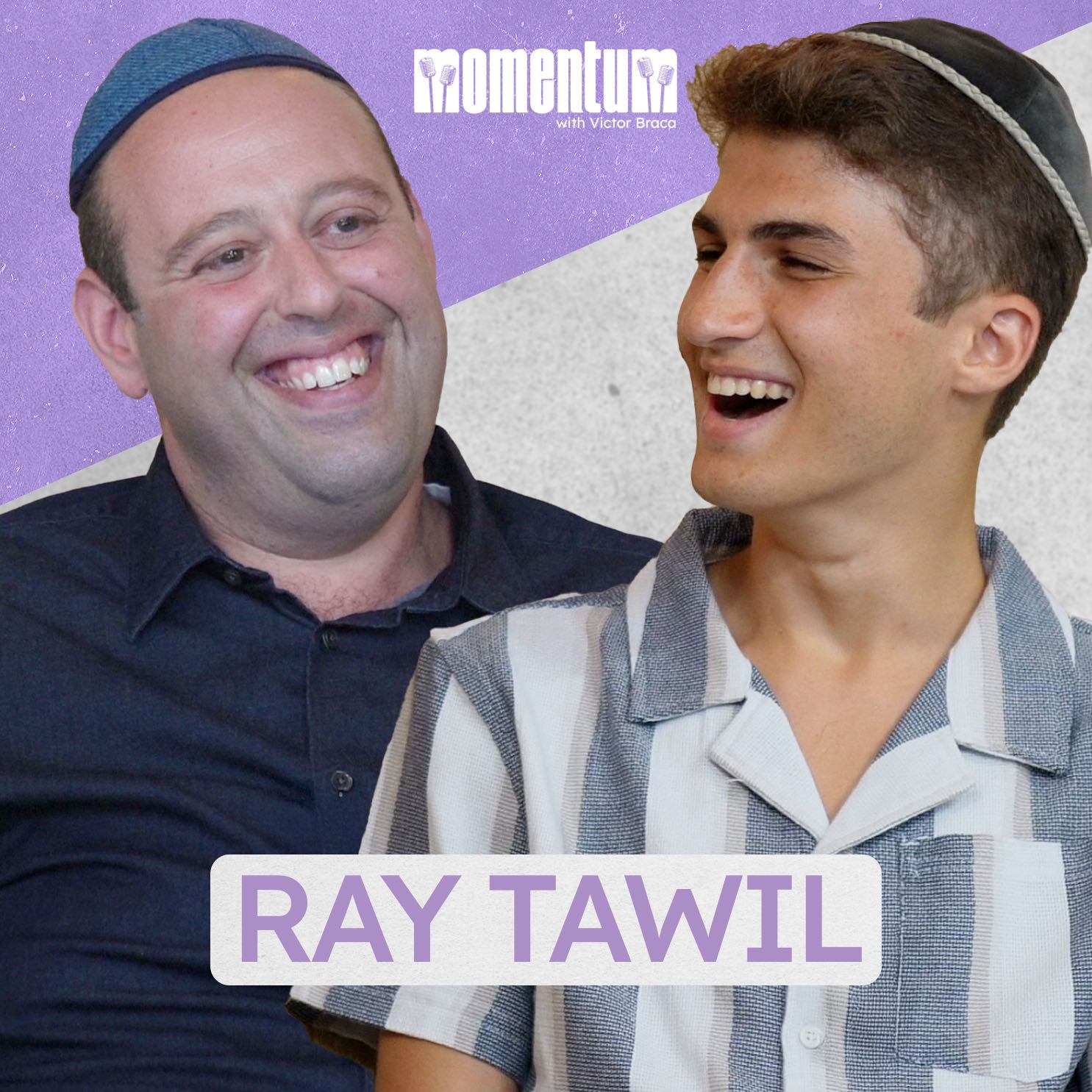


Ray Tawil is the founder of PREPT by Ray T, a hospitality business based out of Brooklyn specializing in high-end catering, events, and food delivery.
In this episode, Ray opens up about what it’s really like to run a hospitality company–and it’s not what you think.
Sponsors
- Yazdi Entertainment, New York’s premiere event production company.
yazdientertainment@gmail.com or (646) 765-5643 - Kosher Media, the #1 advertising network for Jewish communities worldwide
Transcript
Victor M. Braca: What’s it like serving President Trump?
Ray Tawil: There’s boats in the water and you’re hearing the helicopters, and all of a sudden the head of the Secret Service looks at me and goes, “Stop everything that you’re doing and leave the premises.” I go, “Huh?” Very, very difficult out there. I was a couple of weeks away from closing the doors. I could either, you know, file bankruptcy—that just wasn’t me. It’s not what I’m about. No idea what I was getting myself into, but holy moly, I pulled it off.
Victor M. Braca: My guest today started his first business at 12 years old, grilling hot dogs in people’s backyards. Today, he runs a full-blown premium catering operation with multiple arms: a butcher shop, a gourmet prepared food store, a food delivery shop, and a growing wholesale business. Ray Tawil, better known as Ray T, is the founder of Prepped, Beta, and Flipped. And if you’ve been to a major event in the community, chances are he catered it.
Here’s what we discussed: How Ray cooked for President Trump twice. How he pulled off feeding 1,200 people for 10 straight days on a Passover trip. And how just eight months ago, he was two weeks away from shutting down his entire operation. I’m Victor Braca. Momentum is where we dive deep into the stories behind business success. Enjoy this episode with Ray T. Guys, this episode is sponsored by Yazdi Entertainment. More on them later.
Ray Tawil—Prepped by Ray T. Welcome to Momentum.
Ray Tawil: Thank you for having me. I’m very excited to be here.
Victor M. Braca: I’m excited to have you. Just to go over a little highlight reel of your career: You’ve cooked for President Trump twice. You’ve done events with thousands of people. You’re set to do 80 events per year nowadays, and you’re doing over 50-60 events in like the 45 days of the summer, which is incredible. I want to use that as a starting point to go back in your life. Were you always interested in cooking and the culinary arts?
Ray Tawil: So yeah, I would say from when I was very, very young, like 8 years old. I’m a big family, so I’m bottom of the totem pole. I was home and I would help my mom in the kitchen sometimes. Whenever we had Sunday barbecues with my father, I would be able to like roll the hot dogs, flip the burger. And once I heard the sizzle of the grill and we got to get hands-on in the kitchen and these types of things, I always knew that this was something I was interested in.
And then when I was about 12 years old, somebody called my mother and said, “Do you think Ray Ray would come over to the house and like man the grill for us? We have like 30 people, but we don’t really want to be on the grill.”
Victor M. Braca: It’s a big job for a 12-year-old.
Ray Tawil: Yeah, you know, so my mom talked to my dad and they asked me, “Are you interested in doing this? We’ll drive you to the job and see how it goes.” Wow. That was the start of something big. Really from there, I created like my own barbecue business called Grillin’ Out with Ray T. You know, “don’t eat home without me.” We made business cards. It was a lot of fun. My parents would have to drive me to the events. We’d have to screen who are the people, what house is he going to, stuff like that.
And then as I got older, I started to ride my bike to the events. The customers started to ask me, “By the way, could you pick up my butcher order? Could you maybe come with the marinades?” They started to ask for more things. And I started to do more things. And I really, really started to love it.
And then I looked at my parents and I said, “You know the truth, I really want to go on a culinary track and would you guys help me and support me in doing so?” And they said, “Absolutely.” They never wavered from that, but they said, “Go get some experience. Go work in a restaurant. See if it’s really something that you love, something that you really like, and that you want to do as a career.”
So, I said, “Okay, fine.” I ended up working for Gabe Levy, Chef Gabe Levy. He was the chef and owner of Alice’s Restaurant.
Victor M. Braca: Great place. I must have been like six, seven, eight years old when it closed down, but amazing place.
Ray Tawil: Yeah, it was definitely bittersweet when it closed down. I was happy for Gabe, he got to have a break now, but people will stop me in the street—nothing to do with Prepped—they’ll just be like, “You know the mac and cheese recipe? Can you make me the mac and cheese?”
Victor M. Braca: Really, still today?
Ray Tawil: Still to this day. “I need the dressings. Where’s the dressings?” stuff like that. So, it’s something that I really, really cherished and really loved. There was really nobody like Gabe. And he opened up his kitchen to me also for when I decided to go to culinary school. I went to Johnson & Wales University. It’s arguably the number one culinary school in the country.
Victor M. Braca: Oh, wow. How’d you get into there?
Ray Tawil: So you apply, you take the SATs, you apply like anybody else. Listen, the acceptance rate is high, but the dropout rate is even higher. So it’s challenging. Very, very challenging. My freshman year, we started off with 2,000 kids in the grade. We were down to 500 or 600 by the end of the year.
Victor M. Braca: One of the highest dropout rates.
Ray Tawil: It’s a very, very high dropout rate. A lot of kids, like, they’re going because maybe they think they like it, maybe they don’t, maybe they weren’t good academically, so they said they’re going to do this. And then once you get thrown into the curriculum and you get thrown into seven, eight-hour labs—a lab is a cooking class—you know, you have to show up.
It’s dual curriculum. So, the same way we go to yeshiva and we have Hebrew classes in the morning and you have to go to minyan and then you do all your English curriculum in the afternoon, you’re getting home at 5:30, 6:00 at night. So, we had to do that, and kids coming from public school weren’t used to that. So, that was a regimen that I really knew how to do. We would have to show up to a roll call at 5:45 in the morning for a 6:00 in the morning class.
Victor M. Braca: It sort of emulates like a real restaurant.
Ray Tawil: Real restaurant. Real boot camp style. You have to have a pressed uniform, no stains. If you want to have a beard, you have to wear a beard guard. If you don’t want to have a beard, they take a credit card and they swipe your face to make sure that there’s no hairs coming off. They check your fingernails. Very, very strict. And you have to keep like a Tide to-go pen in your pocket cuz if you get a stain during production, you have like 20 minutes to go to your room and get a new coat or just take the stain out.
Victor M. Braca: Where was the school?
Ray Tawil: I went to the big new campus which was in Rhode Island. The Cuisinart company created a brand new building, the Cuisinart Center of Excellence. And there were 30 kitchens in that building. All state-of-the-art, top-line. You got to deal with, you know, Wolf and Viking and Vulcan, and every kitchen had its own brand and its own company and a lot of toys. A lot of gadgets. You had to have the best time. And you really didn’t realize what you were doing and what you had until you left college and you started to have to pay for all these things, right? And you saw that the oven that you were using—this combi oven that you’re using—is $100,000.
Victor M. Braca: Wow.
Ray Tawil: You know, or you’re in dessert class and you’re making ice cream. “Yeah, just throw it in the blast chiller.” That blast chiller that fits the one little ice cream is 20 grand.
Victor M. Braca: Wow. That’s crazy.
Ray Tawil: The chefs there, the teachers there, they are all decorated chefs who are coming to now teach the next generation, and it was just an amazing experience. So, during that time when I came back on weekends, I was able to practice all the non-kosher recipes and ingredients that I was using. I was able to practice in Gabe’s kitchen and try and get a feel for those flavors and that technique.
Victor M. Braca: I’m glad you mentioned the non-kosher recipes. How does it work when you’re in culinary school as a religious Orthodox Jew?
Ray Tawil: So, I was actually… they’ve had many Jewish people on campus, but the dean himself told me when I had a meeting with him that I was the only practicing Orthodox Jew on campus out of probably 3,000 in the beginning and then out of the 500. It was pretty intense. I didn’t realize that.
I had a meeting with the dean a few weeks before classes started. My brother, Rabbi Aiki, made me a list of dos and don’ts—cans and cannots. And I handed it to the dean and he looked at everything. He was like, “This is all great, but I’m just letting you know that you’re getting graded just like anybody else. So, if your food doesn’t taste good, it doesn’t taste good.”
I was like, “Okay, thank you so much. We’re going to do this thing.”
He said, “Go for it. If I were you, I would make a good friend that you trust to taste your food because, like I said, everything has to be tasted.”
Victor M. Braca: Interesting.
Ray Tawil: So, I ended up making a very close friend who I’m still friends with till today, Joshua Zichney from Bayonne, New Jersey—a really, really great guy. We were in day-one classes together. And he tasted everything that I made. And he would tell me, you know, “it needs a little salt, it’s not salty enough,” more acid, things like that.
And over time, your senses tend to heighten. You could really smell when something’s bitter. You could smell sweetness. You don’t always have to taste it. You could see a viscosity of a sauce and you could really tell if that sauce broke. I don’t need to taste it to see if it broke. You could see it. Like if you’re making a blonde roux versus a dark roux. These are things you could see. You don’t have to taste everything in order to make a successful dish. Even though now I don’t let anybody who’s working with me NOT taste everything. So I’m thankful to Johnson & Wales for allowing me to go through the process without having to taste anything.
Victor M. Braca: It’s even very interesting how you can’t mix meat and milk together.
Ray Tawil: So that whole halakha comes down as: a kosher animal, even if it’s not slaughtered under kosher supervision, a kosher animal can’t be mixed with milk. So a lot of times I would actually choose to work with the pork. I would choose to work with a non-kosher animal because you are allowed to mix them. There were actually less restrictions on cooking with a non-kosher animal than it was with the kosher animal.
Victor M. Braca: Very cool. That’s so different. You know, it’s funny like you were the only Orthodox Jew or practicing Jew in that program. I think for good reason. I think a lot of people, but Syrians especially, would be afraid to go into a creative business like the culinary arts because they’re worried about how much money they’ll make. Was that ever a concern for you?
Ray Tawil: It’s definitely a concern. It’s still a concern till this day. I had a decision to make: do I want to do all this training and do I want to do it the right way, the real way like all of the Americans are doing and take it out of here? You know, go stage at the French Laundry, go to Italy for a little bit, start gaining more culinary experience.
Victor M. Braca: You could have become like a celebrity chef. Who knows?
Ray Tawil: Who knows? But I didn’t put myself on that track after college. I put myself on—we have a very strong upbringing. We have very strong values here in the community. We’re Syrian Sephardic Orthodox Jews. And there’s a lot of responsibility that comes with that. Throughout my college career, I was dating my high school sweetheart. And I wanted to get married, start a family. What is life at the end of the day? So, you turn around and be like, “Look at this sick restaurant,” but you don’t have a family and a wife to celebrate? It’s really nothing.
Victor M. Braca: So you wanted to keep those community ties.
Ray Tawil: 100%. So, right out of college, I married my wife Theta Beta and we have four beautiful kids. And the community who has supported me since I was 12 years old, and the community who loved to see me in Alice’s and who loved to see me, you know, just all over Deal during the summertime chugging along doing the barbecues… I had no reason to leave them. They were very good to me. So moving forward, I said, “You know what? Maybe I could bring something different, something more special, something elevated, something more from a chef’s point of view. Not just the cook, not just the person who does it as a hobby, but a person who’s invested their entire life doing this.”
Victor M. Braca: I want to jump back to when you were aged 12 to 17. You’re in elementary school and then high school and you go into people’s houses. Your parents are driving you there or you’re riding your bike. My question is, you could have done that as a hobby. You could have just grilled when you felt like it and not had to make it into a business. Where did that entrepreneurship come from?
Ray Tawil: So yeah, I come from a very, very strong home—a home of doers. So like both my parents are community servants, have always been active in all of our institutions, and I was taught from a very young age that we have to be building and giving back to the community all the time and you have to be moving, you got to be working, you got to be doing something. So yes, I didn’t do it because I needed to do it. I did it because I genuinely wanted to do something. I wanted to put my stamp on the community. I wanted to get involved. I wanted people to know who I was. And I really wanted to bring that love that I’d been experiencing at that time to other people. I thought that it was new. I thought that it was innovative. I didn’t really see anybody else doing it. I thought it was a very cool thing that I was attracted to and that I wanted to do.
I always love to be different. All my brothers—we’re a hockey family. Everybody wants to score goals. Everybody wants to go be the superstar. Of course, I’m different. I decided I’m going to be the goalie. You know, baseball—my brother’s short-stop, this one’s pitcher, the other one’s a coach. Okay, I’m the catcher. I always had to be a little bit different, a little bit off the beaten path. I also looked up to my brothers, too. I mean, they’re all doers. We got two rabbis—that’s a 24/7 job.
I never pictured myself sitting at a desk or being at a computer or taking phone calls or dealing with people virtually. I love the interaction, the personal interaction. I love seeing the people’s faces and hearing their compliments. Yeah, it’s tough when it’s not always good stuff, but it’s important to hear and it’s important to see and it’s important to grow from that. I don’t know, I just loved it. I was always working.
Victor M. Braca: I love how you had that passion for being out in the field and interacting with people as opposed to just being behind a desk. I could say that a lot of people have that passion but the majority of people don’t follow that. The majority of people are nervous they won’t make enough money or they don’t believe in themselves. I respect how you chased that, and thank God you built a premium brand for yourself.
Ray Tawil: Yeah. No, it’s very, very important to—I know that people say it all the time and it’s a cliché, “love what you do.” If you love what you do, it’s like you never worked a day in your life. I love what I do. I’m working every day of my life. But at the end of the day, it’s the love and it’s the passion that gets you through the times when yeah, you live in this community and you can’t pay the bills, right?
In my opinion, you can’t stop your love and passion, which is what’s going to drive you to end up being successful. You can’t make that decision and not do it because initially on paper, it doesn’t look like you’re going to be able to make it here in the community, or initially people are telling you, “In order to scale this up, you’re going to need X, Y, and Z.” Okay, so come with a plan. Make a plan. Go get the right people to do that plan with you and make it a reality. Not always are you going to make it happen the way you initially envisioned it or the way people are thinking from the outside looking in—”he’ll never be able to make it doing that.” You got to make it happen. So if it’s really a passion that you have and you have that drive and you’re really offering something to the community that’s different, the community realizes that and they’ll support that. And there’s no greater community than the community we live in.
Victor M. Braca: I totally agree. We have this fly over here that’s trying to get on the podcast, but so I want to jump back into your story for a second. You’re working for Gabe Levy while you’re in school. When you graduated, did you want to continue working as a chef in a restaurant? Did you immediately start your own thing?
Ray Tawil: So, it’s a good question. It was a 4-year program. The first two years I got the Associates in the Culinary Arts and then I had to apply to a different type of program. You could either go into hospitality management—how to run a business. I was just itching to get back in the kitchen. My first two years just wasn’t enough. And they had a really, really top-notch culinary nutrition with a concentration in food science program. I’m a big science guy. You know, when you see molecular gastronomy, spherification—they’re turning the juice into caviar and all that stuff. So I did that for two years in Johnson & Wales. It was really a fantastic experience. Very few people from the associates program get accepted into this program. So I got accepted and I finished another two years—so four years—and I got my BS in culinary nutrition with a concentration in food science.
Victor M. Braca: And did you get that as a backup, just in case practicing culinary arts wouldn’t work out? What drove you to get that second degree?
Ray Tawil: Flat out, my parents are what drove me. They were very specific on saying, “We support you and we love this idea.” They paid for the university, but they needed to know that if, God forbid, I had a change of heart or couldn’t make it, you have that college degree to fall back on. At that time, a college degree was very, very important. But at the end of the two years, I wanted more. It was very difficult for me to live away. I didn’t take well to living away. So classes were Monday through Thursday. There were no classes Friday to Sunday. So Thursday night, right after class, I’d get on the Acela in Rhode Island and I’d go 3 hours to Penn Station and then another 45 minutes to get home just because I couldn’t sleep there the weekends. I needed Shabbat. I needed to see my girlfriend at the time. I needed to see my family. Some people will say that hindered me from enjoying being away. I think it was the opposite. I think it rejuvenated me to keep going every week because I got a re-boost over the weekend.
Victor M. Braca: I really respect your parents’ nuanced approach: let you pursue culinary school, but make sure you have a backup. I think most parents would just say, “No, be a lawyer.” Let’s talk parties for a second, guys. Let’s be real. We all love partying. But don’t even get me started on planning a party. The pressure is so stressful. From juggling multiple vendors to choosing the right music, lights, games… it could be a real nightmare. That’s where my good friends at Yazdi Entertainment come in. These guys are the expert one-stop shop for event production. Whether it’s a wedding, engagement, bar or bat mitzvah, corporate event—literally any type of event—Yazdi Entertainment is the only call you will need to make. I’m talking lighting, sound, male or female DJs, photo booths, games, staging. They do it all. Guys, if you’re planning a party, make the call to Yazdi Entertainment. You can call 646-765-5643 or email YazdiEntertainment@gmail.com. And be sure to check out their Instagram, @YazdiEntertainment, for their back-to-school giveaway. All right, back to the episode.
So, you graduated culinary school, after the base program, you’re back in Brooklyn. Are you running your business at the time?
Ray Tawil: So, I’m back in Brooklyn. My business is only booming more and more. I get married. I move to the city and I start really pumping and kicking the “Grillin’ Out with Ray T.” It builds into full catering where, you know, people are asking for staff. I have a staffing company who’s been staffing me for over a decade. People have been asking me now for the side dishes and hot foods—why just barbecue? What if I want a meal like braised short ribs and veal and these types of items? It really, really snowballed into a full-blown catering company. Like I said, there’s no one like our community. So once the community starts to talk positively about you and they start to see that you’re talented and that you’re next level, they start talking to everybody else.
Victor M. Braca: Take me into that formation of an actual, legitimate company. Was it just a product of how long you’ve been doing it? I think a lot of people in the community are doing what they’re doing, but that step of turning it from a one-man band to a whole catering company… a lot of people are lost in the middle. How do you grow it?
Ray Tawil: There’s different ways of growing it. You could get an investor and say, “This is my plan,” and you start purchasing things. But the way that I went about it is: every single event, when the needs changed and when I needed to get something, I slowly, slowly built up to the point where now somebody calls you for a thousand-person event, I have everything that I need to do it. But I didn’t turn around after college and say, “I need half a million dollars right now. I’m gonna get a truck. I’m gonna get all this equipment.” Then you spend another five years to pay that back. As the events happened, yeah, I didn’t pull a profit from a lot of events for a long amount of time. But I also didn’t have to spend money in order to build those things up. So all of a sudden, a few years later, you turn around and you own six cast-iron grills and you own a fleet of fryers and you have this open-flame grill and you have a rotisserie and you have serving platters. Oh, we have wood. Now we have mother-of-pearl. Now we have stainless steel. You just turn around and over time, as long as you have events coming in and you have things you could rely on, you could keep putting it back into the company.
Victor M. Braca: What does growing your business look like? I think for a lot of people it’s sleepless nights, skipping parties, working weekends.
Ray Tawil: Yeah, it’s no life. The community and the parties and the culinary world—that love and passion that you have for what you do becomes your life. My mentor, Chef Gabriel, always said, “If you’re going to do a restaurant, you’re married to the restaurant.” And that’s really true. I am married to my company, but now the company is Prepped by Ray T and Flipped by Ray T, and I’m okay with being married to my own brand that’s really been headed to the next level.
There were some tough times. There still are very tough times where I’ll turn to my wife and I’ll be like, “I don’t know, maybe we should just do something else.” And those are the times where she picked me up. Till today. I had a meltdown a few weeks ago. I was just like, “I don’t know, maybe it’s time to just call it quits.” And then that’s when she picks you up. And she tells you, “Absolutely not. Relax. We’ll figure it out.” And we always figure it out and we’re always fine. Then there’s other times where she could turn around to me and she’ll be like, “I would love to just have a night. Could we get a Thursday night to go out to dinner? Could we do something?” So those are times you have to be sensitive to that situation.
And thank God, in building this company now with my new partners, it’s really been a tremendous last eight months. People should know: it’s not all glamour. It’s not all fun and games. It’s very, very difficult out there. I was a couple of weeks away from closing the doors to Prepped.
Victor M. Braca: You were a couple weeks away?
Ray Tawil: We had really tremendous outstanding balances with our vendors, but through my relationships over the years—I’m very into like having one vendor for each item, I don’t really shop around—I make good relationships and I have good people behind me. So, thank God, those vendors allowed me, you know, for 90 days sometimes to pay when that’s unheard of when other people are getting seven and 14, maybe 30 if they’re lucky. So, I really had a great team behind me who wanted to see me succeed. And I had a great reputation, had great credibility.
Thank God during those couple of weeks, I got a new investor and it’s really been tremendous afterwards. You know, it’s not only about the plan, it’s about the execution. You have to be building up in this company. It’s a game of inches in this type of business. Small wins are going to eventually get you to that touchdown. So, it’s not just, “Oh, if you do this now, all of a sudden you made it.” You’re constantly trying to have small wins in order to break that ceiling. My new partners were able to really put me on a track and have a regimented plan on where we want to be and how we’re going to go out and do it. And that’s very, very important. I’m very goal-oriented.
When it comes to catering an event, they post the menu: “This is the menu.” “Okay, go do the menu.” I could do that. So when you’re goal-oriented and you need to hit certain milestones by a certain time, now you have a drive. Now you have a focus. You know what you need to do in order for your vision to be a success. So that’s something that I was missing, and now it’s here. And I think our greatest success right now is that Ray T is becoming a brand. It’s becoming a really high-line brand that the community and everybody else is looking at and they understand that I have credibility. They could trust the product, which is the most important thing.
They know that the product that they’re getting is a chef-created, chef-executed, top-notch, high-level product all the time. We don’t cut corners. The product itself is a very expensive product. Like, just take for instance on the Flip truck, the side sauces—the special sauce, the truffle aioli—yeah, one could use admiration mayo, but we don’t do that. It’s Hellmann’s mayo all the time. Whether they tell the difference or not, I don’t know, but I could tell the difference and I know that I’m working with the best product possible. So the community at this point understands that when they’re getting Prepped by Ray or anything by Ray, it’s of the highest caliber. I brought chef techniques and took the community flavors and really married them well together in order to make an elevated Syrian cuisine for our community.
Victor M. Braca: Like your business is called Flipped by Ray, Prepped by Ray T. Was there ever… did you ever struggle with divorcing your personality from the brand? Because a lot of times for people, that prohibits them from scaling because they themselves are personally required.
Ray Tawil: I don’t know if it’s an issue; it’s a struggle. Everybody wants you at their event. So, if we have three events in a day, I have to set up every event so that it could really work on its own without me there, and then I roam to all three events.
Victor M. Braca: Interesting.
Ray Tawil: Yeah. Now, of course, that’s just the part for the customer to see that I was at the event, but there’s no food product that gets to those events without me. At the end of the day, it’s me in the kitchen with a sous chef who’s helping me with anything that I need, but I am producing and creating every single thing that comes out of that kitchen—whether it goes to a catering event, into the cooked showcase in the store, or into the butcher department. I am on top of every single item that’s there.
Is it hard to upscale? Listen, as long as I could make the product and distribute the product to all of the different facets in the company, that’ll be okay. And I’ll be able to hop in all these different locations at any given time. I’ll tell you a little secret: Flipped by Ray T—you know, I’m there. Am I there till 2:00 in the morning? No. So, if you ordered something at 1:00 in the morning, my sous chef, Marc, is going to be the guy who made your burger. And I’m fully confident that that burger is going to be made exactly how I would make it, right? Because I taught him and the burger itself was formed and handed to him raw, obviously, but handed to him where he just has to cook it perfectly. We changed the hours a little bit on the Flipped truck—we’re there about 2:00 in the morning now.
Victor M. Braca: What’s your daily schedule, your daily routine? I think it’s important for people to hear not just how hard you work, but how hard you have to work to run a business like this.
Ray Tawil: Yes. On a normal day… let’s say it was a day where I just needed to worry about the store and there were no caterings, which is very rare in the summertime. I could get into the kitchen at 8:00 in the morning, get everybody’s workstation ready to go for when they all show up at 8:30, and then we go straight into production, stocking, and doing everything we need to do for the store, and that’ll go on till about 7:00 or 7:30 at night. Now, if you have a day with a catering event—multiple catering events—I definitely get into the kitchen by 6:00 in the morning. I like to be there quarter to 6:00 and I start pumping from there. I start sending the food to the event during the day where I have another crew who’s accepting the food and starting to get everything ready. Then when the store closes, I’ll get to the event. Then we do the event and then there’s cleanup and we’re not done till about 2:00 in the morning.
Victor M. Braca: Wow.
Ray Tawil: Yeah. And with Flipped, I supply Flipped. I have a certain amount of hours during my production day where the production goes straight for Flipped. Everything is made fresh daily. I’ll send that stuff to the commissary and then once I close the store, I’ll go to the commissary and we’ll spend a few hours there. It’s very important that the staff and everybody turns around and Ray is there. Nobody wants to work for somebody who’s not there. So, I put in many hours at the commissary on a nightly basis.
Victor M. Braca: You mentioned you have three main arms: the butchery, catering, and food delivery. And you mentioned a wholesale company.
Ray Tawil: Yeah, that’s the goal. The wholesale and the Prepped is definitely the goal. We’re looking to make two flagship stores. We’re looking to expand and really bring Prepped and Flip together in Deal, New Jersey. The situation in Brooklyn just isn’t the best situation for what I was saying earlier—how the customers want to see me and want my blessing on the product. We just can’t do that right now because we have a little storefront on Kings Highway, then I have a commissary on Avenue X. So we’re really trying to make a flagship store in Brooklyn and have everything under one roof so that our shoppers could really have the experience that they’re looking for.
Victor M. Braca: What’s it like serving President Trump? That’s my question.
Ray Tawil: I have to tell you, to this day, I won’t forget one detail of that day. When you get a phone call from Norma Cohen, you answer the phone call no matter what’s going on. And no matter what Norma Cohen says, you say yes. Norma decided to take a chance on Ray, and the family that was hosting President Trump is also a very special family to me, have been big supporters of me since I was a kid.
So Norma called me and she said, “Ray T, we have a job that’s only made for you. I can’t tell you who it’s for, I can’t tell you when it is. All I could tell you is that you need to say yes and come to my office.”
I said, “Okay, no problem.” So I get into Norma’s office and she sits me down and she just looks at me and she goes, “It’s the President.”
I go, “Huh?”
She goes, “Yeah, the President’s coming to Deal and you can’t tell anybody.” Now I’m thinking no one knows. And she says, “He wants burgers. The best burgers you ever made in your life, and that’s what you’re going to do.”
Everything leading up to that day—between having the Secret Service looking into you, looking into everybody in the staff… I got a phone call, I’ll never forget. The event was on Sunday. I got a phone call Friday afternoon, 20 minutes before Shabbat. “Ray T, you can’t have your refrigerated truck on premises.”
“What are you talking about? I can’t have my refrigerated truck? It’s the President of the United States. I have raw meat. Everything’s got to be under refrigeration.”
“Absolutely not. You can’t have your truck.” I hang up the phone. I think I had a complete meltdown. I had to call Lisa and Pauline from Sahoura. Norma had contracted them to help. And Lisa and Pauline were great. They said, “Ray T, breathe. We’re going to go to Walmart right after Shabbat and we’re going to get every cooler they have and we’re going to fill them up with ice and we’re going to deliver them before Secret Service comes and everything’s going to be fine.”
Hurdle after hurdle. The Secret Service does this on purpose. They don’t want you to be able to be prepared for anything. Now the day comes. I didn’t sleep all night. Secret Service lets you in. Okay, now I’m ready to rock and roll. VIPs come in. All of a sudden, I realize there’s like a scaffolding behind my grill. All of a sudden, two snipers dressed to the nines with guns like this big start saying, “Excuse me, sir. Excuse me, sir.” The scaffolding was for the snipers. There’s boats in the water and helicopters.
Then the head of the Secret Service looks at me and goes, “Stop everything that you’re doing and leave the premises.”
I go, “Huh?”
He goes, “Everything needs to be off. No cooking is to be done right now. The President is about to walk in. No open flames. Your job here is done.”
I said, “Okay, no problem.” You know, everyone had to go to the front. I’m staying as close as possible. No phones—everyone’s phone was locked in those pouches. I had my phone on me from 5 in the morning. So all of a sudden I take out my phone, I get a little video, and all of a sudden somebody right behind me was like, “I’ll take that.” You know, I was like, “You can take it. Just keep the video. Just keep the video, please.”
And yeah, it was just a tremendous day. And thank God it was a success because when President Trump was running again, we got the call to do it again. I got to serve to the pleasure of the President.
Victor M. Braca: Did he like it?
Ray Tawil: I don’t know. I could lie to you and be like, “He said it was the best burger ever,” but you don’t really see him. He probably didn’t even eat. But the staff liked it. The sniper liked it, so that was good. You know, he didn’t kill me. You don’t get that phone call and you don’t get to do that event if you weren’t doing these small wins and building up to that point for Norma to turn around and say, “Ray is the guy for this.”
Victor M. Braca: That’s awesome. You’ve been doing High Heat for 15-20 years at this point. You do every premier event in the community. I just think it’s unbelievable—the scale of your operation. Guys, there’s a very good chance you found out about Momentum through Kosher Media. These guys are the premier advertisers throughout Jewish communities all over the world. David and the Kosher Media team have been helping me expand my reach for over a year now. Whatever it is you’re trying to advertise—a product, a service, a podcast—call Kosher Media. It’s an amazing experience working with them and I promise you will not regret it. Guys, koshermedia.com. Tell David I sent you.
Not only have you done events, but you’ve also done trips for thousands of community members at a time—winter vacation or Pesach. You’re essentially feeding 1,500 people for 10 days straight, and they can only eat your food. It better be good.
Ray Tawil: Yes. You got to make it extra good.
Victor M. Braca: How did you get into catering trips?
Ray Tawil: When I graduated culinary school, the word catering… for me a catering event is when I’m handling everything from A to Z in a different venue and I have to go execute that, whether it’s for 30 people or a thousand people.
Victor M. Braca: Do you do weddings, by the way?
Ray Tawil: I actually did do one wedding with Norma Cohen, which was an amazing experience. I’m not opposed to anything. The whole way this business came to be was I just said yes to everything. Say yes, work hard, and then all of a sudden you turn around and you’ve built a catering company.
A lot of people would ask me, “Could you come to the house and do a private five-course plated dinner?” One of my first clients for that was Joey Shama. That was a tremendous opportunity to showcase my culinary skill—whip out the sous-vide, do a little molecular gastronomy. The food was why they were coming together.
From there, people started to think, “If Ray T is willing to come to the house for 12 people, would he come to Aruba?” I got a phone call: “Could you come with three couples to Aruba?” I did Aruba. I got a phone call from Bobby Dwek years ago to go to St. Kitts. He told me, “Listen, we just need you to do lunch and dinner. Sit with the wives, make the menu, get the shipping done.”
I just said, “Yeah, let’s do it.” Meanwhile, I had to figure out USDA, how to ship my stuff, how to truck my stuff from Brooklyn to Miami, then airship it to St. Kitts all in time to serve for 100 people for 6 days. I had no idea what I was getting myself into, but I pulled it off.
My biggest break in this category was Charles Shahar. Charles called me up a few years ago and said, “Ray T, I want you to come handle the barbecue portion of the lunchtime for my Passover trip.” I said, “Okay, sounds like a dream job.”
Victor M. Braca: I’m sure they got a lot of people coming on the trip because of you.
Ray Tawil: The second time they were definitely coming for me; the first time no one knew. I was a newbie. They had a great caterer already. Charles was creating a team. He realized that once you’re known for something, that’s who you are. Akimori is sushi; Ray T is the authority on barbecue. Again, not my first hopes and dreams—I did go to four-year culinary school and I’m hoping people realize I can do everything.
I sat down with Charles and the caterer. We made the meat list. I’m thinking there’s five pallets here worth of meat—thousands of pounds. I said, “We’re coming back with half this stuff.” I turn around on day eight… there must have been 1,200 people on the trip. Turn around and there wasn’t a hot dog left at the end of day eight. Totally exceeded expectations. Now we’re already signed up for a third year. The vacation trips have become a thing.
Victor M. Braca: I love it. You mentioned that eight months ago you were two weeks away from closing your doors. It’s important for people to see that—they see you today and all these ventures, but eight months ago was different.
Ray Tawil: Listen, when I first started Prepped, I was all over the place. I didn’t have a clear vision. People would be like, “Oh, I didn’t know you do that. I thought everything comes marinated.” It was very difficult for both myself and for the customer to really figure out what it was that I was offering.
One of our greatest accomplishments in the last eight months is thanks to my new partners. Joe Beda, who runs my marketing—this guy is rolling. We’re about to hit 1 million views.
Victor M. Braca: 1 million views for a food business?
Ray Tawil: He is so meticulous about every single thing that he posts. Almost to a fault. Sometimes I just want to shake him and be like, “Joe, just post it, man.”
He’s like, “It’s not ‘G’, man. We got to wait till it’s ‘G’ (good).” Joe really took the vision and created a story and a look that was definitely missing. All of a sudden, everyone’s going, “I didn’t know you do this.” It’s tremendously important. You think everybody knows, but really nobody knows. You have to go out there and teach the community. The only way to do that is to be in their face and to be attractive. Just like the food product is on the next level, the marketing and the Instagram are on the next level.
Victor M. Braca: And “ooh ooh ooh”? Who thought of that?
Ray Tawil: It wasn’t planned. Joe gives me a script and he’ll be like, “Yo, it’s just ideas.”
I go, “Just leave it to me. I got this.” One day I was in an extra good mood. People don’t know that out in front I’m always smiling, but I’m a chef and I’m very moody. And I was very, very happy that day. Joe was like, “Okay, you ready, Ray?”
I was like, “Just turn the thing on.” And I don’t know, it just happened. Now I’m riding my bike and there’s little kids on the porch like, “Ooh ooh ooh!” And my kids are looking at me like, “Dad, they said ooh ooh ooh, could you do the ‘oo’?” It just happened.
Victor M. Braca: That’s great. What was the moment that you told yourself, “Am I really going to continue or do I have to close this down?”
Ray Tawil: You’re looking at the vendor bills. You’re trying to see, “Maybe if I don’t draw a salary this month…” You turn around and you say, “I could either file bankruptcy and mess everybody over, but this is the only thing that I know how to do. This is what I love.” That just wasn’t me. It’s not what I’m about. And I know that if I want to continue in this business, I won’t be able to buy anything ever again if I do that.
Thank God I was able to partner up with a family—two brothers, Jeffrey and David Bada—who are very, very meticulous. I didn’t have that business side. I’m not looking at the numbers like that. They came in and cleaned up that situation and put it on a track. They put in a nice sum of money into saving the company. I was faced with a deal to make: do you want to take care of the vendors or do you want to take care of yourself?
I told Jeffrey, “This business is all about relationships. The vendors have to get taken care of.”
He said, “Okay, so here’s the deal.”
I said, “Okay, thank you. Let’s do it.” We put it away. We locked it up. And we’re just focused on getting this job done. I just had to make a decision: am I going to be behind a desk or am I going to continue to do this? And I said I want to continue to do this. So the only way is to find a team who’s going to put you on the right path for your last shot.
Victor M. Braca: I want to ask you about balance. You mentioned your wife. In a business that’s 24/7, how do you make sure you’re carving out that time?
Ray Tawil: My wife never nags. There’s nobody like my wife. The only reason why I’m still on this path is because of her. She’s much stronger than I am. You start to appreciate and love and understand Shabbat. There’s nothing like Shabbat. I spend all 25 hours with my kids and my wife. I carved out that Friday afternoon till Saturday night.
Victor M. Braca: How’d you make it about 36 hours?
Ray Tawil: Yeah, that’s how I did it. Now, when it comes to trips, there are perks. My family gets a tremendous Passover trip. And again, I have the dream job: I’m the lunchtime guy. So I’m there at the Seder. I’m there at the dinner table. From 5:30 in the morning till about 5:30 in the afternoon, I’m unavailable. But after that, it just turns off. The second that chef coat comes off, I’m like a new person. My “me time” is with my family and my wife.
And of course, there’s always slow times. This is not the summer every single day. There are slow times—the dead of February. I get to go to my son’s ice hockey game. I get to be with my girls at the Center. You find your moments and you just roll with them.
Victor M. Braca: A lot of teens feel pressured to follow safer careers. What would you say to an 18-year-old who feels the pressure to pursue something less risky but has a passion for cooking?
Ray Tawil: I don’t think that anything is “safe” anymore. I don’t think that anybody knows what’s going on anymore. I think anybody who tells you “go with the safer choice” hasn’t experienced adversity at all. There are people who just have an easy, breezy, successful time, and I wish them the best. But very honestly, I don’t think anything is safe. You could be as calculated as you want, but if you’re not passionate about it and it’s not something that you want to do, there’s going to be a time where it’s hard and you’re not going to be able to move forward with it. Now you’re going to be stuck at a worse point where you’re starting over. Instead of building from a young age to that passion, you could have spent all those years building to it so that when you’re 34, it’s not so hard anymore. But if you went with the cookie-cutter thing and something happened… now you don’t have the passion to turn around and say, “I need new investors now.”
Victor M. Braca: Do you think people should chase their passion?
Ray Tawil: I think that they should chase their passion within reason. I went to culinary school, but I didn’t go to a certificate program or a three-week crash course. I’m invested in it and I have a degree. I have options. If you want to follow that passion, do it in a well-rounded way where the sky is the limit and you have other options down the road. But the option should never be “don’t do it.” Go after it. Do it, but there’s a right way to do it.
Victor M. Braca: I love the nuanced approach. To close, I want to ask you for your Momentum Moment—a moment of internal realization that changed everything for you.
Ray Tawil: I would say my graduation weekend from Johnson & Wales. My parents came up, my sister, and my girlfriend at the time—soon to be wife. We were in the Dunkin’ Donuts Center and I really realized that, holy moly, I really invested monetarily and physically and mentally into this career. I looked around the Dunkin’ Donuts Center… I’m in my garb and I’m graduating Summa Cum Laude, and I’m really at the top of the world at this point. That’s when I really realized like, “This is real. This is happening. There’s no turning back.” You got the best training that you could get and you’re going to go do something with it. That was my aha moment.
Victor M. Braca: Ray, thank you for coming on. This was awesome.
Ray Tawil: Thank you so much for having me.
Victor M. Braca: Hey guys, so glad you made it to the end. Here are my top three takeaways from my conversation with Ray.
Number one is: accept now, figure it out later. There were so many times in Ray’s career where he was called for an event or project he had never done before. He had no idea how he would go about these things, but he just said yes. He figured it out as he went. The lesson here is to never turn down an opportunity. Say yes, and if you’re determined, you’ll figure it out.
Up next is to: follow your passion, but in a smart way. Ray’s parents sent him to culinary school, but they made him get a food science degree just in case. He needed something to fall back on. Ray has a passion for cooking which has worked out for him, but he recognized—really his parents recognized—that you should go for what you love, but you have to do that in a nuanced and smart way.
And last but not least: diversify your income streams. Ray does catering, he has a delivery service, he has a butcher shop, and he’s expanding into wholesale. So, if it’s a slow season for food delivery, he’s okay. If a retail partner doesn’t reorder, it doesn’t tank his business.
That’s all for this episode, guys. If you enjoyed it, check out my conversation with Morris and Simon Faks. These guys came from Syria to America as teenagers with no money and they are now two of the top DJs in New York. Check that episode out by searching “Momentum Faks” on any platform.
And guys, before you go, a little bit of homework for you. Either leave a comment down below with one thing you like about Momentum and one thing I can improve, or share this episode with three friends. It’s very simple. With that out of the way, guys, thank you so much for watching. We have some of our most high-profile guests coming up. So, be sure you’re subscribed and I’ll see you there. Until next time.



Leave a Reply