




Haim Dabah is a serial entrepreneur who’s built and sold billion-dollar companies across fashion, venture capital, real estate, and healthcare.
In this episode, we break down the rise and fall of his billion-dollar brand Gitano, how he pioneered designer collaborations with mass retailers, and the mindset that’s kept him building ever since.
Enjoy!
Sponsors
- Help us build the Sephardic Mikveh of Gravesend: https://raisethon.com/gravesend
- Book your free Pivot & Prosper strategy call with Jeff Sitt: https://jeffsitt.com
Transcript
Victor M. Braca: We developed a brand called Gitano. It did about $1 billion in sales. Actually, in 1991, the company failed and the banks took it over and we had to start from scratch.
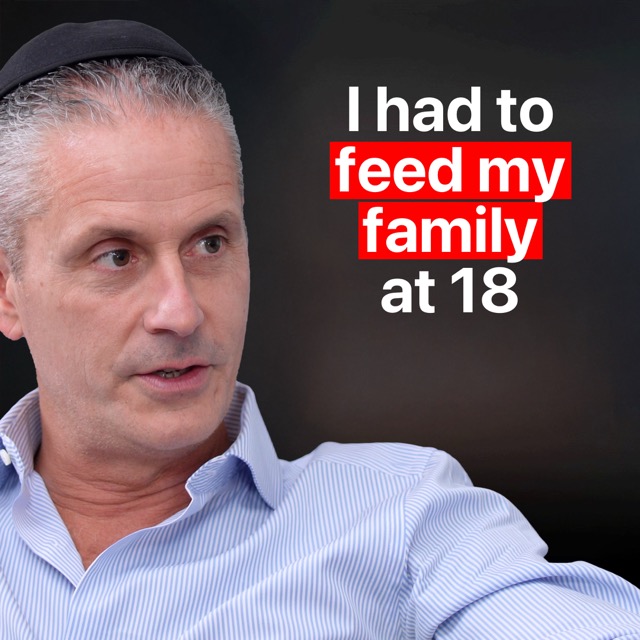
Haim Dabah: I wasn’t a good dad to my oldest kids. I was really more married to my business. A billion dollars to zero the next day and you have to start from scratch. What do you do? Where are you? Where do you go? At that time, it was very, very challenging.
Victor M. Braca: My guest today is Haim Dabah, a serial entrepreneur who’s founded multiple multi-million dollar companies across fashion, tech, real estate, and now healthcare. The first was Gitano, a clothing brand his family scaled to over a billion dollars in revenue. They became one of Walmart’s biggest suppliers, eventually sold the company to Fruit of the Loom, who took it public, and not long after, the billion-dollar company went to zero.
Then Haim started Regatta, where he pioneered a new business model in fashion partnering designers like Vera Wang and Karl Lagerfeld with mass retailers like Kohl’s and Macy’s. He also brought Missoni to Target and then he went on to sell that company to a $20 billion Chinese conglomerate. After that, he founded HDS Capital, a venture firm that invested early in companies like Uber, Spotify, Snapchat, and Pinterest. And during COVID, Haim pivoted into industrial real estate with his sons, co-founding Box Equities, which now owns over 6 million square feet with clients like Home Depot, Pepsi, and Rivian.
And now, I’m not done yet. He’s leading innovation in mental health as a key investor in Being Health, a company that’s taking a holistic approach to mental wellness. Oh, and when he’s not doing all that, he’s running his farm, growing his own vegetables, raising animals, and finding peace on his tractor every Friday morning. I’m Victor Braca and Momentum is where we dive deep into the stories behind business success. And stick around to hear Haim’s amazing journey from tech to investing to healthcare and how he thinks that’s the new big business opportunity just waiting to be tapped into. You’re going to love this one. Let’s get into it. This episode is sponsored by the Sephardic Mikveh of Gravesend.
Haim Dabah, welcome to Momentum.
Haim Dabah: Good morning, Victor. Thank you for having me.
Victor M. Braca: Thank you for being here. And I’m so excited to unpack your life and your business life, but there’s so much more beyond business for you, which we’ll get into. I mean, growing up in Israel, getting into the wholesale business and investing and everything else that you’ve taken part of in your life, I just think you’re a very fascinating individual and I’m very excited to get into it. So, you ready?
Haim Dabah: I’m ready.
Victor M. Braca: Take me back to the beginning for you. You grew up in Israel. What was life like in Israel? Did you guys grow up with money? Were you well off?
Haim Dabah: So, I’ll take you back a little bit to where my grandpa, Alav HaShalom Haim Dabah, moved from Aleppo, Halab. He took a boat through Tripoli down to the port of Akko in 1924 with his family. My dad was like six months old or something like that, and they lived in Israel and lived a modest life. My grandpa had a textile store in Ramla, and my father was the youngest of nine kids. All his brothers actually moved to Panama and America in the 30s and 40s, and he was the only one of the family that stayed in Israel to take care of my grandfather and grandmother. My grandma had polio, so he really had to take care of her.
My dad was dedicated to his parents. It’s all he took care of. As a matter of fact, he graduated Terra Sancta College in Israel. He was given a scholarship to go to London to study, but he wouldn’t because he didn’t want to leave his parents. Then he had a job as a government official. He actually worked in Mas Hachnasa, which is the equivalent of the IRS, in Jerusalem.
I grew up in Jerusalem. And you know, we had a modest living. I mean, there was a time during Israel’s growth where there was no food, no sugar. There were rations. They would give you books to show how much sugar or oil you can buy. Totally different from today, from America. So there was a period of that, and my uncles used to send us wood crates with canned food and oil and sugar and stuff like that.
I loved Israel. I went to a yeshiva called Netiv Meir. I was part of Bnei Akiva. And then in 1966, my grandpa Haim passed away. The family, which did not really have any family left in Israel because everybody was already in either in New York, Hollywood, or Panama—we only had an aunt living in Israel, but the majority of the family was here—my parents were thinking about coming to the United States. And then the 1967 war broke out. I was about 15, going to be 16. My birthday was in June, so it was right around the same time. My mom kind of freaked out that I might go into the army. She didn’t want me to go into the army. So, she shipped me and my brother Ezra to live with my uncle Albert in the United States till they decided and kind of wrapped up their business to come in.
Actually, I remember that they gave us I think like $20 as money for the trip. We flew Air France via Paris. We had to change flights and there was a movie, Our Man Flint, and they charged a dollar at the time for the headphones and I didn’t want to pay the dollar for the headphones. Then we came here and stayed by my uncle Albert and Salma; they’re really, really nice.
Actually, we went—I went to school in Mirrer on Avenue R for a year, and then I went to school in Talmudical Academy in Baltimore. That kind of was like my upgrade. I wasn’t happy to leave Israel. I didn’t know English when I came here. 16, learning a language from scratch, is a big deal. I mean, I knew a few words like they teach us English in Israel, but I knew the English like “stand in the queue” and “how do you do?” and that kind of stuff, but I definitely needed to learn the language.
Victor M. Braca: Right. And I learned it from watching TV because in Israel we didn’t have much TV. Really?
Haim Dabah: Yeah. Really.
Victor M. Braca: So I mean, what was life like in Israel versus America? I know, was it in your time that they had to ration the food?
Haim Dabah: When I was a young kid. Coming to America, all of a sudden you see all this opportunity, like the land of opportunity. First of all, in Israel it was one TV channel, it was black and white, and over here was many TV channels in color. So that was… and then you see all the… I remember my aunt and uncle taking me to see the Rockettes and I thought it was amazing. It seemed amazing, but I was not happy being here for about two years until my parents came.
Victor M. Braca: And so from that time, you were learning, you were in yeshiva when you came to New York. What did you see as the path for yourself? Did you see a learning path or a working path?
Haim Dabah: No. At that time there was not much of a learning path. Nobody had the concept of like really giving up. I mean, you needed to learn. I didn’t have money. So when I finished school, I started working as a stock boy. I got a job from Albert Dweck at a chain of stores called D&D Discount. I think the store was on Flatbush Avenue and I worked as a stock boy. They had like these tables on the sidewalk and I used to fill them up. He taught me and he believed in me, and over time I became a stock manager, an assistant manager, and I was making money.
Then my cousin Shoula Dayan, her husband had a chain of stores called Straight from the Crate. He asked both my brother Ezra and myself to go work for him. I worked in a store in Jamaica Avenue, originally as an assistant manager, then a manager. Then I moved to run a store in Trenton, New Jersey, where I was a partner, and that’s how we cut our teeth into the business.
Victor M. Braca: It’s so interesting just to hear from your early days, working from a stock boy. You really started from the bottom. There was no established family business, no father’s connections that you built off of. This was all on your own accord.
Haim Dabah: That’s how we started. Yeah. And then my dad, Alav HaShalom, came to America and he started working as an accountant for Buddy Sutton and his brothers. They had a bunch of stores and a small wholesale [operation]. Then he left them to start a small wholesale business with a partner. The company was called Orit Import.
I remember him coming to me and my brother Ezra. His partner wanted to leave. They tried to collect some of the money that was owed them from the stores and some of the stores would not pay. The partner wanted to leave and my dad sat us down and he says, “Listen, I’d like you to come join me. We don’t have much, and I can’t guarantee you the amount of money that you’re making in the store, but God willing, we will do something.”
Both Ezra and I joined Orit Import. It was at 1199 Broadway. There was a warehouse on the floor and an office in the front and a showroom. We were sweeping the warehouse and loading the trucks and that’s how we started. I mean, I remember we used to carry samples. There used to be these big giant suitcases that are huge, and I used to go to Pitkin Avenue to show the samples to the stores over there and take orders. One day it was pouring rain and I said to my dad, “Maybe I’ll go tomorrow.”
He said, “No, no, you should go today.” He was very dedicated.
I said, “But it’s pouring.”
“So take an umbrella.”
I said, “I’m going to hold an umbrella with two suitcases?” But that was the business. My dad taught us a lot. He did it by—he never told us what to do, he showed us what to do.
I remember an interesting thing. I went with him to St. Thomas at that time. We used to go to the islands to sell the small gift stores—tank tops and t-shirts and stuff like that. We went to a store and we got a huge order. It was like, at the time, 160 dozen. We used to sell three, four, six dozen. It was like maybe 3:30 or 4:00 in the afternoon and I said to my dad, “Okay, amazing order, let’s go to the pool.”
He says, “No, no, no, we have one more store to go to.” And I knew it was a tiny gift shop; the most they could give us was like one or two dozen. We drove like 40 minutes to that store and he got like the two dozen. That was the effort. That was the thing that my dad taught us, even though others would think it’s insignificant to get that extra two dozen on top of 140 dozen. That was his perspective on life.
Victor M. Braca: And how old were you at this point?
Haim Dabah: I was probably 21 or 22.
Victor M. Braca: You were 21 or 22 and you’re working with your father. What does it look like in the years that follow? It was a while from that point until you went out on your own.
Haim Dabah: Correct. Well, so with my brothers, Ezra and then my brother Isaac also joined Orit Import. Sometime in the late 70s or early 80s, we developed a brand called Gitano. It was kind of an accident. There was a t-shirt called G-U-A-N-O and we kind of knocked it off and developed a brand called Gitano. We built a company that over time, with many divisions, went public in the late 80s. It did about $1 billion in sales. $1 billion in 1988 is probably equivalent to 2.5 or 2.6 billion today. Still, it’s a lot of business.
We had amazing people working at Gitano. It was called the “Gitano University.” Different people ran different businesses. For example, Zeeban Haim ran the swimwear division, Eli Harari ran the men’s division, Abie Rose the accessory division, Eddie Betesh ran the intimate division, and we had Gabe Zeitouni and Alan Levy. We had tons of people that now have successful businesses that got their start at Gitano.
Victor M. Braca: That’s so interesting. It was like the university, like Gitano University.
Haim Dabah: Yeah, these are the “baby Gitanos,” if you will. The thing that we did best was my brothers and I divided the responsibility. My brother Isaac focused on production, my brother Ezra focused on design, I was focused on marketing and managing the sales, and my dad oversaw everything. It was hard work. I mean, we’d be in the office at 8:00 in the morning, we would be back at 10:00 or 11:00 at night.
I literally remember that I wasn’t a good dad to my oldest kids because I was really more married to my business than to my family. Only my youngest child, Steven, when I was older and wiser, I was like a good dad when he was younger. We were working very hard. We identified some interesting niches. We became one of the largest suppliers to Walmart early on. We developed programs that were ahead of the trend.
I remember some interesting thing. Sam Walton, the head of Walmart, used to come to the office and he used to say to my dad, “Just keep on shipping me the jeans containers and I’ll ship you the cash.”
Sam Walton actually taught us a lot. I asked Sam Walton at the time to allow me to be a stock boy for four days. We used to ship him a lot of cartons and they would get stuck in a back room in a warehouse. They had so much inventory in the back room and it would come out to the floor like two or three weeks later. I was trying to figure out how we could get them on the floor sooner to get the sales better.
I wore the vest and I was working as a stock boy and I realized at the time that many of the people did not know English. So then we put all the marking on the cartons in both English and Spanish—this was the mid-1980s before anybody did that. And then when they opened the carton, they didn’t know how to do it, so we put like a little drawing inside the carton on how to display the merchandise, etc. After we did that, it really showed that the goods hit the floor faster. We got better sell-through. That’s the way it works.
Victor M. Braca: You really built off of his expertise. I love that.
Haim Dabah: The idea is to really get in and understand what you don’t know in order to fix it.
Victor M. Braca: Did you know that there’s no women’s Mikveh in Gravesend on Friday nights and Yom Tov? Walking to the nearest one on Avenue S can be a real challenge, especially late at night or in tough weather. That’s why we’re building the Sephardic Mikveh of Gravesend, a beautiful, halachically approved women’s Mikveh right off of Avenue X and Ocean Parkway. Designed with elegance, dignity, and complete privacy for the women who uphold Tahara in our households. But we can’t do it without you. This is a community project, and every donation helps bring it closer to reality. Guys, to partner with us or learn more, visit raisethon.com/gravesend. Guys, the Sephardic Mikveh of Gravesend is close, dignified, built by the community for the community. Let’s get back to the episode.
What I find interesting is that if you look at a lot of wholesale businesses in the community, people will specialize in one sort of product, whether it be intimates or shoes or children’s socks. But with Gitano, what it sounds like is that you had many different people specialize in everything.
Haim Dabah: Yeah. The great thing about it is that we had a great brand. We developed a brand and we had a great outlet for it. Our biggest outlet obviously was Walmart, but we had Kmart and we had Sears and we had many retailers that are no longer there. We sold to both the department stores at that time—Bamberger’s and Abraham & Straus—and Walmart. We didn’t know you’re not supposed to sell both! And that really worked well. We were lucky to have amazing guys working with us and running the businesses as if it was their own. Zeeban was the best at swimwear. Eli was the best at menswear. He focused on it, he built it, he ran his production and his sales. Everything was under one umbrella.
Victor M. Braca: It’s so interesting. It’s like entrepreneurship within this big Gitano conglomerate. I want to zoom into the growth of Gitano because I don’t want to just jump from “we started the business” to “we did a billion dollars in sales.” I want to get into the real growth stages. You’re starting with your brothers and your father from scratch. You guys are not really titans of the industry yet. And you ended up securing Walmart, Kmart, these very valuable accounts. You brought some of the best talent in the world from our community to run these divisions. Tell me about growing the company in the beginning. How did you guys set yourselves apart? There were many importers at the time, right?
Haim Dabah: I think, first of all, it was the culture in the company. We kind of let people do what they do best. Secondly, we looked at opportunities or white spaces within various industries. For example, embroidered jeans at the time were very, very big and we realized that companies like Lee or Levi’s did not have any of that stuff. And we had amazing design.
I remember my brother Ezra getting an order from JCPenney, I think for like 18,000 dozen jeans. We never got an order that big. We never knew how to manufacture it, but he took it and we figured it out and then we shipped it and then it grew from there. Just accept the order and then figure it out.
Victor M. Braca: How did you guys expand from just a company that does one sort of wholesale to swimwear and ladieswear and shoes?
Haim Dabah: It came over time. We first did jeans, then we did sportswear, then we started activewear. It kind of grew organically over time. I mean, the company started in 1971 and it wasn’t until 1988 that it reached a billion dollars.
Victor M. Braca: Right. But that’s a 17-year zero to billion dollars. That’s still very impressive. But I mean, you were running a billion-dollar company and at that time it was very, very challenging. Why?
Haim Dabah: We grew too much. We didn’t have the wherewithal. We had a CFO that was great when we were a $400-500 million company, but then he became a Chief Operating Officer and he kind of got Peter Principled when the company got to the billion dollars with different banks, lines of credit, etc. Actually, in 1991, the company failed and the banks took it over.
Victor M. Braca: Really?
Haim Dabah: Yeah. Then we had to start from scratch.
Victor M. Braca: Oh wow. So you go from zero, you reach a billion dollars in revenue, and then the banks take over the company. That’s really the definition of highs and lows.
Haim Dabah: Indeed.
Victor M. Braca: I wanted to ask you, how did you learn all that you knew about business at that point? You were running a billion-dollar company but you hadn’t gone to college for business. Did you pick it up all on the job from your father?
Haim Dabah: Well, my father did not have the academic background for that. So, I think we all kind of learned from doing things and making mistakes and correcting. I don’t think there was any kind of academic training for what we were doing at any time. Only Gitano University.
Victor M. Braca: Right. It’s so interesting to see how the landscape has shifted with the education and college. So, how old were you when Gitano filed for bankruptcy?
Haim Dabah: Probably in my 40s, just getting to be 40 or something like that.
Victor M. Braca: Oh, wow. Okay. So, just to give a quick recap: you’re 40 years old, you’re married, three kids, and you were flying high—on top of the world—and then bankruptcy. A billion dollars to zero the next day and you have to start from scratch. What do you do? Where do you go?
Haim Dabah: You start from scratch. You get into your bootstrap. There was a period of about three or four months that I was kind of trying to figure things out. Then I got somebody in the community to invest in me and in my idea and I started a new company.
Victor M. Braca: Tell me about that.
Haim Dabah: We started a company called Regatta. An interesting thing happened when I was at Gitano. I realized that a luxury business is the next generation, but not just in itself, but actually if there’s a way to democratize it. An interesting story: in 1986, my wife’s cousin, Sarah Cheney, came to me—I remember she came to my house with a young guy, an amazing designer named Isaac Mizrahi. She told me about him, told me that he wants to start a new high-end company, and he showed me his designs and I was totally floored. I said, “This kid is going somewhere.”
So, both myself and Jack Hidary funded his company so he could start. His first trunk show was at Bergdorf Goodman in 1987 and he was the darling of Women’s Wear Daily. Every time there was a cover, the business grew and grew. At that time, I was in a mass business and I was watching this amazing opportunity in a luxury business. Then in 1992, Isaac came over and said that Chanel wanted to buy his business and both Jack Hidary and I sold everything except 1%. The rest is history with Isaac.
So when I started Regatta, I thought there would be an interesting concept to have a business convince designers to take their brand on a temporary basis as a diffusion brand to the mass market. For example, one of the brands that I worked on was Vera Wang. I had meetings with Vera and her husband for two and a half years to convince them to do a diffusion line for Kohl’s. She thanks me every time she sees me now because that generated a huge amount of revenue for her. She was getting millions of dollars in royalties.
Victor M. Braca: Was that a new business model?
Haim Dabah: It was the beginning of a new business model. People in the industry humbly refer to me as the person who helped develop that proprietary business model—pioneered it. That at the time was a new business model. That’s how we started Regatta. Again, very disciplined, very focused. After a few years, I didn’t see eye-to-eye with my investor and I decided I asked him if he would sell his share and I overpaid him just to be done. I then became basically 100% owner of Regatta and I built Regatta as a proprietary business model and sold it in 2007 to a company called Li & Fung.
Li & Fung at the time was a $20 billion Hong Kong-based conglomerate and they liked my business model. They actually bought a bunch of Syrian companies from community members. As part of the sale, I needed to stay there for three years to grow the business and I ended up staying a little too long—from 2007 to 2014. I was their executive director running the U.S. women’s business. I kind of built up on the model of proprietary brands. We then took Oxford, and then we took Missoni to Target, and we created Karl Lagerfeld for Macy’s and all of these amazing brands to other retailers. Some, like Vera Wang, was a diffusion line that stayed for years, and some was like Missoni that was there until the merchandise ran out.
Victor M. Braca: Your new company was sort of like Gitano but different, right? In the same apparel and wholesaling industry, but you put a new spin on it that seemed to be new in the whole world at the time. And it worked out for you; they bought your business. So you were there until 2014. How old were you at that point?
Haim Dabah: I was in my mid-50s.
Victor M. Braca: And so did you stay in the wholesale business?
Haim Dabah: No. The last thing I wanted to do—the reason I sold in 2007—was to get out of the wholesale business. I decided to hang around younger people to get energy and some wisdom from them. I used to go to breakfast in a suit and a tie on the Upper East Side at 8:00 for my apparel-related businesses. Now I was investing in tech startups and I was going to breakfast at Kenmare and Lafayette at 11:00 wearing jeans and a t-shirt. Totally different. Much more casual. I got a new passion.
I actually started investing in tech startups before 2014 as an angel investor. I basically told the guys at Li & Fung that I needed a day a week—I started as half a day—to start a company called HDS Capital with the understanding that I’m going to be looking at early startups. Later on, I funded businesses and invested in tech, and that was a very rewarding time for me. I invested in funds, I invested in individuals, I invested in people that I believe in what they’re doing. I made some pretty interesting investments very, very early on.
Victor M. Braca: We’re going to get into Uber and a couple of other notable ones and dozens of others that you’ve invested in. It’s so interesting because investing, especially in early-stage companies, is rewarding monetarily but also fulfilling. You’re immersing yourself and getting into new industries. Tell me about how you made some of your investments. Were you pitching founders or were they pitching you?
Haim Dabah: It’s mostly the latter. Once you make one investment, people hear about you. But the interesting thing is that you have to first identify the individual. If you believe in the individual—and believing in the individual is first of all figuring out if he believes in himself. A lot of them are full of it, you know? When you listen to them, you kind of cut through the clutter and understand that they’re making up stories and you kind of very nicely say “thanks but no thanks.” But those that really believe in themselves and believe in the story, you then get to develop a loyalty for them. You want to see them win. There are always issues that come up in business, but as long as they’re not an issue with the individual, you’re able to deal with the pivot. If the individual is straight, if he’s got integrity, if he’s got honesty, hard work, and if he’s motivated, then if the idea makes sense, go ahead and invest with him. But if any of those don’t check the box, don’t even start.
Victor M. Braca: Moving into becoming an investor is super interesting. I want to shift a bit towards the businesses that you are involved in with your sons. Tell me about that.
Haim Dabah: As I said before, I love hearing from young people; it energizes me. Some of those young people are my sons. My son Mac, especially during COVID, brought me the idea that we should be looking at industrial space. We bought one facility years ago and it did very well as an investment. Then we had another situation. We are investors in the brand company Bluestar, and they were buying a brand and the brand also had a warehouse. So my son Mac jumped on the idea and said, “You don’t need the warehouse. Let me buy the warehouse from you. We’ll give you X amount of money so you can bid higher to cover the warehouse, and then after you get the brand and the warehouse, spin the warehouse off to us.” It was Brookstone, and we bought the Brookstone warehouse.
That was the first step of us getting into the industrial space. Buying warehouses and then leasing them either for logistics, for distribution, or for light industry. At that time, during COVID, I read an interesting data point—I think CBRE said that for every billion dollars of e-com business, you need 1.25 million square feet of warehouse space. E-com during COVID grew like 40% versus the prior year. We saw it coming in a major way. I spoke to Mac and we decided to dedicate some funds to that.
Then, interestingly enough, my other son—and that’s a funny story—my son Mike is a lawyer. He left a big law firm with a bunch of partners to start his own firm in the real estate space called Stein Adler Dabah. When he went to law school, I wasn’t really that happy about it because I wanted him to be a businessman.
Victor M. Braca: That’s very interesting because with most parents, you see they want their kids to pursue education.
Haim Dabah: I wanted him to pursue education, but I did not think that you can make as much money being a lawyer as building a business. Anyway, Mike is starting this new law firm and one of their ideas was: when they get a quarter-million dollar fee or a half-million dollar fee from their clients for closing a huge deal, they don’t take the full amount as a fee. They say to the guy, “Let me just charge you 50% and take my other 50% and invest it alongside you.” So, their clients love it.
That’s how my son Mike and his partners started in the real estate business as well. They had a young smart guy by the name of Uri who was looking at all these deals and saying yes or no. Then I said to myself, “Why don’t you two get together?” Mike’s law firm together with Mac and with me as a minority investor started Box Equities. Box Equities today has over 6 million square feet and 28 different properties. They’ve got two major private equity partners—Pimco and Rockwood. That all started in the last year of COVID.
Victor M. Braca: That’s very recent. And you guys are actively growing that business?
Haim Dabah: Yes. It’s a big business. I am basically the silver-haired guy in the room. They have three active partners who are… Mac… listen, silver hair is better than no hair! Hashem blessed me with some hair. But so you have Mac, you have Uri, and this guy Zeke Faham. All of them are super smart. They took that niche of real estate and today they have clients like Home Depot, Pepsi, Rivian—really amazing brands. And they’re growing an industrial real estate niche. And now with the Trump [administration], it’s amazing because a lot more industries are coming to start in the United States and we’re getting a lot of calls from people moving from Mexico and Canada into the United States. My role there is to be the adviser. I work there on Mondays and join the investment committee meeting on Thursdays and that’s my contribution. I’m guiding them, coaching them, and investing with them.
Victor M. Braca: You have another son, am I correct?
Haim Dabah: Yeah, we have Steve. We have my son Morris who’s in the apparel business. But my son Steve came up with the idea of mental health. We have a relative that unfortunately lost her life to mental health issues, so it’s dear to me. He started a mental health business, a clinic. He got an amazing partner, Dr. Shamba, and they are focusing on healing people and using novelty treatments like ketamine and using a mind-and-body approach. People come in, they get a blood test and they get functional medicine and they get nutrition. Mostly mental health is single-dimensional; this is a holistic approach. I spend my Tuesdays there.
Victor M. Braca: Monday and half of Thursday at Box Equities, Tuesday with mental health… and then on Thursday I go out to the farm. I just find that so interesting. For most people, it’s community service, but for you it’s both: you have community service and you have your farm, which you spend a lot of time on. Tell me about it.
Haim Dabah: During COVID, I rented in Woodstock and I always wanted to live in a kibbutz. I started looking around for property to buy there because I wanted a place to go during the winter and be in a nice secluded place, and have the grandkids come spend the weekend. I needed a place where I could fit a lot of grandkids. Then we found this amazing farm.
For the last couple of years, we built it to—I’ve got 14 bedrooms, I’ve got three horses, I’ve got some goats, sheep, and I do what I love to do. I grow tomatoes there in the summer. I’ve been growing tomatoes for 35 years. I grow apples, I grow peaches, and since we have tons of chickens, we have amazing eggs. It gives me time with the earth. My best time is usually on Friday morning; I get on a tractor. I have no phone, no music, nothing. Just the sound of the tractor and me for a few hours. That’s probably my favorite time of the whole week.
Victor M. Braca: Incredible. It’s such a cool escape. After people are successful, often that success causes a hunger for more success. I admire how you were able to take a step back and do what you love.
Haim Dabah: People like to play golf; I never played golf. People dedicate a lot more time to golf than I dedicate to my farm. In the winter, from September through April, I go Thursday afternoon and come back Sunday afternoon. When we’re lucky, we have a lot of grandkids over. I have local farmer friends that I would never have otherwise. I’m the only Jewish guy! Very interesting.
Victor M. Braca: Tell me about how you get involved in charity and philanthropy.
Haim Dabah: Barbara and I and the family have a foundation. I like to give deep. Of course you have to give everywhere when you can, but Barbara loves to give to hospitals, so we give to Cornell. I give to some charities in Israel and obviously the community charities. There’s one charity that I’ve been connected with for 15 years called Delivering Good. They’re part of the industry; they give hundreds of millions of dollars in product a year to needy people throughout the United States.
About seven years ago, Ezra Ashkenazi asked me to take the leadership of Propel. The idea there was that women in our community at the time did not have the wherewithal to really reach careers, and we created a platform and a team to support them in whatever career they wanted to get into. We are very blessed by Hashem that today the community women we have helped are generating over $30 million of annual revenue into their households, which reduces the dependency for schools and the food fund. It’s growing. Today Gail Kassin is the leader and she’s amazing. About a year ago we changed the mantle; Jackie and I left and gave the mantle to Gail.
Victor M. Braca: To give a recap of what we learned today: you came from Israel at the age of 16. You didn’t know English and you had to learn. You got into business with your father and brothers, Gitano, and you guys grew the business from zero to over a billion dollars only to see it file for bankruptcy soon after. At that point you had kids at home, and you started a new business. You pioneered an industry with Regatta—a new business model—and after selling that company, you turned yourself into an investor and you’re able to see what’s beyond business. You’re able to spend time on your farm with your family. And you use the word “give” 40,000 times, which I think is unbelievable. Looking back at that summary, what has been your momentum moment?
Haim Dabah: Realizing that you have it within you to really pull yourself up by the bootstrap, figure out a way to get started again, and bet on yourself. I kind of knew in my gut that I would succeed. There was no other choice. And then we have succeeded. Even in my last investment with my son at Being Health, we focused on trying to do good. One of the key reasons why I’m supporting and investing in that business is because we have to reinvent an industry—the mental health industry is really a huge problem. Wanting to do good as you mature… you can take $100 and invest it here, or you can take $100 and invest it in a place where you can do good. You can make money, but also do good. I like that—finding those businesses where you do good while you invest. I thank God I’m fortunate that I’m able to do that.
Victor M. Braca: I heard a nice quote: “You can do well and do good at the same time.” I want to zoom in on what you said, which is that you always knew that you would be successful. Success was the only option.
Haim Dabah: No other option. I had kids, I had a wife. That’s it. It’s a big cliché to say that, but you have to believe in yourself and know that you’ll do it.
Victor M. Braca: I would say since I started the podcast a year ago, I’ve developed that mindset for myself. I know I’m going to be successful no matter what I do. It is a cliché, but it instills you with a sense of confidence.
Haim Dabah: You have to trust yourself. I love your probing questions. It comes from curiosity. But you’re sitting there full of confidence. I think anybody who’s successful has to at least have that. When I was investing in startup guys, if they weren’t confident in their ability, then I could not be confident in investing.
Victor M. Braca: Haim, thank you so much for coming. This was very insightful.
Haim Dabah: Thank you.
Victor M. Braca: Thanks so much for listening until the end. As always, here are the three things that you can take away from this episode.
First: convince yourself that you will be successful. Haim built Gitano into a billion-dollar business, and when it all collapsed, he didn’t blame anyone. He bet on himself. He started over again and built an entirely new business model in fashion that hadn’t existed before. But none of that would have happened if he didn’t believe he would succeed. He always knew he’d be successful. I can relate to that personally. I know that if I put in the time and the effort, I will be successful. That instills a sense of confidence that carries over into everything I do.
Second: you’re never too experienced to get your hands dirty. When he realized Walmart was sitting on his inventory for weeks, he asked Sam Walton if he could work undercover as a stock boy. That single experience directly led to an increase in sales. No matter how big your company gets, being on the ground is sometimes the only way to really understand your customer.
And third: don’t be afraid to reinvent yourself. Haim went from fashion to tech investing to industrial real estate. Even today, he’s still building and advising companies while spending his Fridays on his farm. There’s no rule that says you have to stay in one lane forever. Dip your feet in different industries, try new things, and discover what you love to do. Look at your life through a lens of consistent improvement and reinvention.
If you enjoyed this episode, you’re going to love my conversation with Joey Shamie. Joey is the co-president of Delta Children, which is the largest manufacturer of children’s furniture in the world. In that episode, Joey opens up about what it’s like to lead a company that dominates an industry with partners like Jeep and Walmart, while also giving back to the community. Check that out on any platform.
Guys, thank you so much for watching this episode. Please share it with a friend who you think would enjoy it. If you’re listening on YouTube or Instagram, click that subscribe button. If you’re on Spotify or Apple Podcasts, be sure to rate us five stars. Thank you so much for watching and I will see you in the next one.



Leave a Reply