

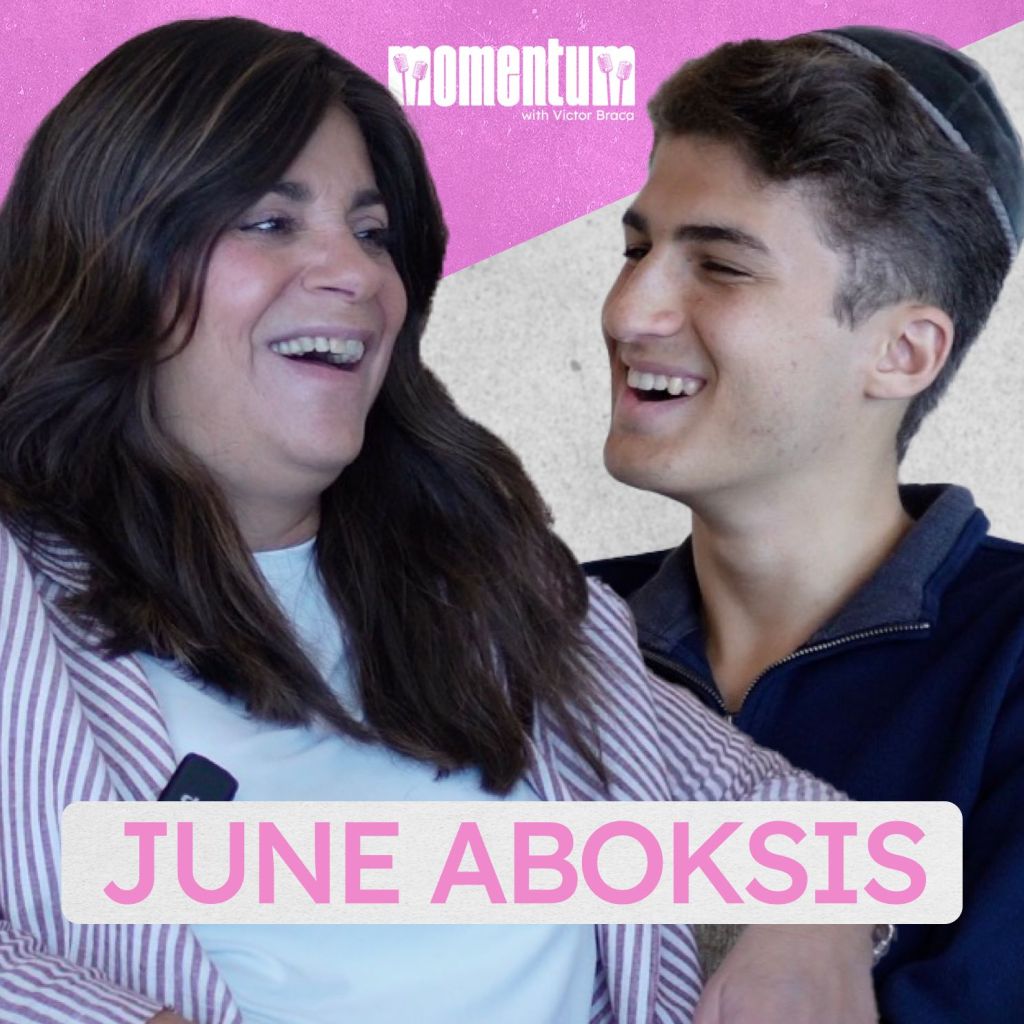




June Aboksis was kicked out of school and told she’d be “nothing in life.” Then she went on to build Junee, the largest modest-wear clothing brand in the world, with stores across NY, NJ, and Israel.
Enjoy!
Sponsor
- Discover how The Hedaya Capital Group’s factoring services can help power your business’s financials: https://hedayacapital.com
Transcript
Victor M. Braca: If I tell you how much money I made, my grandmother, God bless, used to sit and take all the cash. You built Junee’s into the world’s largest modest wear clothing brand.
June Aboksis: I had such a hard time in school. The principal called her up and she said, “I’m not letting your daughter graduate. Sorry, your daughter’s getting thrown out and your daughter will be nothing in her life.”
Victor M. Braca: How’d you go from one store on 18th Avenue to stores all over the world?
June Aboksis: The beginning was not easy for me to go into this store. Like, who am I?
Victor M. Braca: You were making money.
June Aboksis: Tons. I made tons of money. All out of your house. All out of my house.
Victor M. Braca: What’s the thing that most young entrepreneurs get wrong when starting a business?
June Aboksis: Oh, don’t ever forget this. The most important thing.
Victor M. Braca: Most of the founders I’ve had on Momentum so far have built their businesses either after college, in their 20s, or in their middle age. June Aboksis built hers after getting kicked out of high school, failing out of multiple schools, getting fired from her first job, and being told by her principal that she would be nothing in life.
Today she’s the founder of Junee’s, the largest modest wear clothing brand in the world with locations across Brooklyn, Lakewood, the Five Towns, and even Jerusalem. In this episode, June tells us the full unfiltered story of how she went from being a class clown with undiagnosed dyslexia and ADHD to managing retail stores, warehouses, and an international wholesale operation that produces and sells tens of thousands of pieces every season.
June also opens up about what she calls the most difficult moment of her career when her top employee left to start a competing company. And guys, June is really such a character. Let me just tell you, this is one of the more fun episodes to film. Before we start, I’m Victor Braca and Momentum is where I dive deep to uncover the stories behind business success. Let’s get into it. This episode is sponsored by the Hedaya Capital Group.
June Aboksis, welcome to Momentum.
June Aboksis: Thank you. So excited to be here.
Victor M. Braca: Very excited to have you. You built Junee’s into the world’s largest modest wear clothing brand with how many locations now?
June Aboksis: A bunch. A bunch. If I tell you, I can’t tell you. I’m going to tell you why. Cuz my kids, God bless, keep opening up pop-ups here and there. So, I don’t even know anymore. They close, they open, they have the stores.
Victor M. Braca: Amazing. But all over the world—I mean, we’re talking New York, Lakewood, Israel, Monsey, Brooklyn, the list goes on. And I know that it wasn’t always like that for you, especially growing up. It was difficult for you.
June Aboksis: Nah.
Victor M. Braca: In terms of school, in terms of… take me back to the beginning.
June Aboksis: So, I was a very interesting child growing up. I was in school—actually the funny thing is I was in Ateret Torah. My mom put us in yeshiva and she realized that she didn’t want us in longer hours and she saw that it was difficult for us, so she put us into a more reformed school. In second grade I was left back. This is the first time. Because I was not on the same level as the other kids.
From second to 7th, I was in the same yeshiva but I had such a hard time in school. Let’s go back 47 years—not that I’m 47—they didn’t understand the meaning of what kids had, like ADHD, language processing, dyslexia, all these different kind of things. So I never made it in school. I was not able to understand these things and I didn’t even understand them myself, so going to school was very challenging for me. I really had a hard time.
And it’s not like I did it on purpose. I was the class clown cuz if you think about it, I don’t want anyone to think that I’m dumb. So I had to distract everybody in different ways. From second grade till 8th, I made a big balagan in school. I understood—I didn’t know then why—so I was the bully. I hate to say it. I really feel bad. I made sure… and I was also older than everybody. So I think people were scared of me at the time and I really feel bad about it now. They used to follow me and I used to make a problem. I used to go up to the roof because I never wanted to answer any questions in class. I felt like if you would ask me something it’d be like, “Uh…” I didn’t know what they were saying. So I would always find ways to distract myself when it came to learning because I felt—I hate to say it—dumb.
But the one thing I did have was confidence, which was amazing. So I didn’t look dumb. I always maneuvered everything to a different way. So whether I was a class clown or being a bully, it always took that attention off me so I wouldn’t look like I was not smart.
Victor M. Braca: Why did you think you were dumb?
June Aboksis: Because I wasn’t able to understand anything. I really felt bad. It’s like taking somebody and putting a whole lecture on the board and it’s Chinese. It’s Chinese. It was so hard for me to understand anything. Imagine going to school, a child like me, and the teacher says in sixth grade, “Okay, read this.” And somebody like me who doesn’t even know that she has a language processing situation and is reading backwards… you know, should I embarrass myself or should I make a joke? Wouldn’t you rather make a joke instead of looking stupid? So, I always thought I was not smart.
By seventh grade, school convinced you that you weren’t smart. I was thrown out of every class every day until we went to seventh grade and I was supposed to graduate and I was going into eighth grade. And don’t forget, I was with my friends in second grade. We finally getting into eighth grade and the principal called my mother up and said, “Okay, you need to come to school.” And she said, “I’m not letting your daughter graduate with the kids.”
My mother’s like, “What? No, I’m sorry.” My mother goes, “I’ll pay you double tuition.”
He goes, “I’m sorry. Your daughter’s getting thrown out and your daughter will be nothing in her life.” The principal said this to my mother. He was a principal and a doctor. Not a very smart one, obviously not. But let’s go back 48 years. They also thought they knew everything, right? Instead of trying to help me in other ways. But again, I don’t blame them. Maybe there were other ways to deal with me, I just don’t know. So I wound up going to public school for eighth grade until through high school.
I graduated junior high. In the public school system, you don’t just automatically advance. No, you go from seventh, eighth, and ninth. And then there’s high school. I got to 10th grade. I went to Midwood High School. It was huge. Like, oh my god. It was way overwhelming to me. I didn’t know what I was doing. I was wasting my time. We used to have bunk beds in my house, so I used to hide myself in the corner, cover myself, and my mother used to come check on me. She thought I left to school. Then she used to catch me and I said, “Ma, I’m not going back to school. I’m done. See, I’m wasting my time.”
She says to me, “No problem. Go get a job.”
Victor M. Braca: How old are you at this point?
June Aboksis: 10th grade. I was 16 because I was left back. I said, “No problem.” My friend got me a job in the office of Cookies. I think it was Stanley Chera down Fulton Street. Me sitting in a chair… I didn’t last very long cuz I always have to make my opinion. I definitely didn’t do any good on a desk job. I got fired. I worked there a few months and I got fired.
Victor M. Braca: Oh wow. They kicked you out. Kicked out of school. Kicked out of work. What’s next?
June Aboksis: I realized I can’t sit. I really can’t sit. So then my friend got me the best job in the world: I worked in a jewelry store. Okay, I want to tell you I’m a people person, right? I’m a street person. I like to interact with people. At the end of the day, it turns out I’m street smart. That’s where I got everything from. I started working for the jewelry store. I want you to know, I would never get up in the morning, but I was up at 6:00 every day, on Wall Street at 7:15 a.m. opening the store by myself at the age of 17, managing the store by myself.
Victor M. Braca: Wow. You loved it.
June Aboksis: I didn’t love it. I lived for it. You understand? This is what I did. This is where I started my talent. But I did forget to tell you at the age of 12, I used to go to work for my dad in Brownsville. Why? Because it was Christmas season. He needed help. I always went to work on Christmas. Are you kidding me? I never went to school. I used to work Christmas season; I always believed I was “sick” and I used to work for my dad. I used to take the cashier. What am I doing in school? It’s a waste of my time.
Victor M. Braca: So school wasn’t for you.
June Aboksis: School’s not for everybody.
Victor M. Braca: I want to hear about your perspective on that. When you were older, you were diagnosed or you were evaluated with whatever you should have been evaluated with when you were younger.
June Aboksis: Right. And how did I figure it out? Cuz my kids started going to school. You should just know—it is hereditary. ADHD, learning disabilities, it comes from the family. My father, me, the kids, the grandkids… all my cousins have it on my father’s side. You understand? You have to work double hard. All my cousins in Mexico, we’re all crazy. When we all get together, it’s like fire. Whoa, whoa, whoa. You can’t put us all in a room cuz the Ashkenazi family gets together and there’s fire exploding everywhere cuz everyone’s more crazy than the next. So when I went to take my kids to be evaluated for school, that’s when I started learning what the kids had: language processing, dyslexia, very hard to express what’s coming out. So they had to be taught. They went to speech therapy. It was rough. I made sure all my kids got what they needed. I fought the Board of Ed for everything.
Victor M. Braca: Really for special privileges?
June Aboksis: Yeah. Once the Board of Ed told me my son didn’t need services. I realized a mistake I made and I went back to the Board of Ed and I fought them tooth and nail. I just want to know, ever since I walked into the Board of Ed, they are scared of me. Really? Oh my god, Mrs. Aboksis is coming. The teachers used to tell me, “They need 12 hours.” I go, “I’m not going to get 12. I’m going to get 24.” I used to walk in there: “Hi, Lorraine. Hi, Lisa. How are you? What’s doing, darling? Give her 48 hours. Give her 16 hours. Give her whatever she needs.” I used to walk out of there with 40 papers in my hands. Whatever I need because they know I’m an advocate for my child. Don’t mess with me.
Victor M. Braca: Wow, that’s great. And you didn’t have that when you were growing up.
June Aboksis: I didn’t have that.
Victor M. Braca: And you think growing up and not conforming to the school system made you who you are today?
June Aboksis: I am in a way grateful. It made me who I am. I had such a hard time. I wanted to get my GED. Honestly, it’s hard for me. I don’t know if I would even be able to do what my kids did: three times a week to speech therapy and three times a week of this. I can’t sit. I go to a class, let’s say in shul… get the gun and just shoot me. I can’t sit, right? It’s very hard unless you’re exciting me. I need to be entertained, my brain needs to be stimulated. That’s the kind of person that I am.
Victor M. Braca: And so you were 16 years old working for Cookies at your desk job. You were fired. What’s next for you?
June Aboksis: I don’t think I ever told anyone I got fired. It’s okay, I’m not embarrassed. I went to the jewelry store—best job. And then an unfortunate thing happened. My brother had passed away. He was killed by a drunk driver.
Victor M. Braca: Oh my gosh. I’m so sorry. How old were you?
June Aboksis: I was almost 18 and he was 16. He was the only boy. So my father asked us to join the business. I went to work for my dad in the schmatta business. I worked with him in Brownsville, like Utica Avenue. I got knocked out a few times. I fought with everybody. You steal something from my father? I’m going to fight you. I was like a gangster.
Victor M. Braca: Wow. You’re working for your dad and you got into street fights?
June Aboksis: I was a gangster. I fought a lot growing up. I’m still a gangster, except I look a little different.
Victor M. Braca: And what was working for your dad like?
June Aboksis: I feel like you have it or you don’t. You’re a salesperson, you’re a people person, it all comes together. Also, I think it’s more important to be street smart than book smart nowadays. I know it sounds crazy. “High-tech.” Okay, be high-tech. Put the computer on. That’s nice. But when you’re street smart, I feel like you can get everything together. You have to have the social skills and how to walk a room. I can do that, no problem. I’ve been doing this since I’m 12 years old.
Victor M. Braca: Would you say that you developed that street smartness because you were lacking in the book smarts?
June Aboksis: Absolute. Hello. If I didn’t have that, I’d have nothing. I think that’s what Hashem gave me: “June, you’re not going to be… you’re going to be a little bit of a dummy on this side, but you’re going to be great on that side.” Also, I will tell you, I was brought up with a lot of confidence.
Victor M. Braca: Without confidence, what are you doing?
June Aboksis: Without confidence, what are you? Thank God I have confidence. As dumb as I felt, I always believed in myself. That was everything. Because if you’re walking around without confidence, you’re a little screwed.
Victor M. Braca: Right. So you went from getting left back, getting kicked out of school, getting fired, to working for your father. How long were you there?
June Aboksis: A good three, four years. I learned a lot. My father taught me everything. He was a great man, God bless him. He taught me how to deal with people, how to be honest, how to be straight—not to steal, always to be honest.
Victor M. Braca: Did you want to go into business at that point?
June Aboksis: I told my father when I get married, “I’ll see you.” The second I got engaged, I go, “Bye, Dad. I’m leaving.” I had no intention. I was done. I did my share. I worked. I enjoyed my life. I just didn’t really want to continue working. I wanted to relax and raise my children. Thank God, my husband when we got married had a few bucks so we were okay. Then after a few years his business wasn’t doing as well. So he came home and he’s like, “June, I have this great deal with these pajamas.”
I’m like, “Wow, you know what? Bring home some pajamas. I’m going to start selling pajamas.”
Victor M. Braca: Why?
June Aboksis: It helped my husband. He wasn’t doing so great anymore. In the 90s he was in the schmatta business and at one point it started slowing down. So I said, “Let me help him out a little bit.” I started getting these crazy deals on pajamas. If I tell you how much money I made… how my business—that stupid pajama business—how I made shows in my house. People used to beg me to come be in my show. My grandmother, God bless, used to sit and take all the cash for these $5 pajamas. Everyone would buy 20 pairs at the same time. I was known all over as the pajama lady.
Victor M. Braca: What was so special about your pajamas?
June Aboksis: They were Gap, Old Navy, Gymboree. They were like $20, $30 in the store. I wish I had them now for my grandkids. They were the best quality.
Victor M. Braca: And you were making money?
June Aboksis: Tons. I made tons of money. All out of my house. I did that for years.
Victor M. Braca: Did you enjoy it?
June Aboksis: I loved it.
Victor M. Braca: But you told your dad, “I’m done.”
June Aboksis: But this was great. I had income. I loved it.
Victor M. Braca: You’re an entrepreneur at heart.
June Aboksis: I’ll tell you why. Because when I was working in the office and I had my own opinion and I wasn’t able to get my opinion in… I can’t work for anybody because I always have to state what I feel. I don’t know how to keep my mouth quiet. If I feel something, I got to say it. So, I really can’t hold back. It’s a problem with me.
Victor M. Braca: But that fueled your entrepreneurship.
June Aboksis: I can never work for anybody. I always have to say what’s on my mind. So, I realized at that point I can’t work for anybody. Sometimes it sucks to be a boss, but yeah. We opened this business and we did well, thank God. Then one day my husband came home and my kids were getting older—my oldest at this point was 15 and my baby was two. I had six kids: my daughter was the oldest then all the boys. He came home and said, “June, you can’t believe it. My kabbalist has a store for us on 18th Avenue. You want to open a store?”
I don’t know. He goes, “Well, I’ll give you a couple days to decide.”
I’m like, “What kind of store?” I go, “Like a snoot store.” I call it “sne.” Everybody makes fun of me.
Victor M. Braca: Modesty.
June Aboksis: I said, “You know what? That might be a good idea.” So I said, “You know what? Let’s do it. Yalla, let’s just open a store.” My neighbor in Deal was Molly Haba. I was sitting there, “Molly, you think I’m crazy, but I’m opening up a store.”
“Oh, yeah? What kind?”
“A modest clothing store.”
“Okay.”
She’ll tell you till this day, she laughs at me. I’m telling you guys, I’m opening up a store. You’ll see.
Victor M. Braca: So, they didn’t believe you. You just had it at your house up until that point.
June Aboksis: No, I didn’t even have it in my house. I told my husband, “Yalla, let’s open the store.”
Victor M. Braca: So you accepted and then you said, “I’ll figure it out.” You didn’t have a grand plan?
June Aboksis: Who has a grand plan? There was no grand plan with us.
Victor M. Braca: Empty hands and you took advantage.
June Aboksis: Yalla, let’s do it. I don’t wait. My husband helped me. I went into the city and I started buying things. I have one daughter, a bunch of boys. I wasn’t rich, I was regular. I said, “Let’s open up the store for people that have five, six girls and can’t afford to go spend $400 on a skirt or an outfit. It’s not fair for them.”
Victor M. Braca: What were the prices?
June Aboksis: Expensive! They really only had high-end stores. I didn’t know one Jewish store. Someone tells me, “You had the nerve to open a store down the block from this store.” I’m like, “What’s down the block?” I didn’t even know who was down the block. He’s there for 30 years. I’m like, “I don’t even know who he is and I don’t even care.”
But I did it, right? It was a completely different customer. My goal was to dress girls that come from a home with a lot of girls. I’m going to get you a skirt for $40, $50, $30. Why do I have to go spend $300 on a dress when I could spend $40? That was my goal. How many people turned me down in the city? “Sorry, he’s down the block from you. I can’t sell to you.”
In the beginning, it was not easy for me to go into the store. Like, who am I? I have one store. Eventually, I started bringing in my merchandise. I opened on Labor Day weekend. My husband took the boys to Lake George, and me and my daughter stayed back. My husband’s laughing—I put furniture in the store. I made it cool. I went to like Anthropologie. I go, “Honey, please do me a favor. Go pick up this great armoire from the neighbor. It’s free. It’s so sharp. I’m going to put jewelry in it.”
He goes, “What?” My husband’s used to the schmatta business.
“No, I’m going to do this.”
He’s like, “Oh, okay.”
I put pictures on the wall. I want it to be like a cool, fun look. It came slowly and slowly. My husband, God bless him, he really helped me so much. He helped me with everything. I could have not done it without him. We are partners in this whole thing. I’m the front end, he’s the back end. And you know what? He really all he kept saying is, “Hashem, please, I just want to close my business. I don’t want to think about working on Shabbat.” Baruch Hashem, a year later, he closed his business.
Victor M. Braca: One year after you opened your store?
June Aboksis: One store after the next store and then slowly I invented a skirt—the “Junee’s skirt.” You don’t know that, you’re too young.
Victor M. Braca: I’m also not of that gender.
June Aboksis: In every seminary, they used to make songs about our Junee’s skirt. It was wild. We were the first modest store that was fun and inexpensive.
Victor M. Braca: Hedaya Capital Group is a trusted business advisor helping entrepreneurs unlock the growth potential of their businesses with tailored accounts receivable factoring and working capital solutions. They’re a family-owned, approachable team who listen and provide solutions while sharing their business experience and knowledge to help protect clients’ interests. They work from a core of old-world values where ethics and integrity have meaning and new-world thinking where speed and flexibility ensure success. Visit HedayaCapital.com. Back to the episode.
How’d you build the brand? How do you make the name Junee’s associated with high quality and an affordable price tag?
June Aboksis: I don’t know. It’s all Hashem. I used to walk into the store—I did this for 10 years—”How many you want? Oh, give me 10 of these, 12 of these, 14, 16, 18.”
“How do you know what you’re doing?”
“I don’t know.”
“Did you count it?”
“No.”
My kids started saying, “Ma, what are you doing?” I did that for at least 10 years. This is how I bought from the suppliers. I used to walk in and they’d say, “Oh my god, she’s here.” Cuz they knew I used to come. “Hello. What do you got there? Oh no, I’m not paying that price. Take it down a few bucks. Okay, give me 14, 12, 18.” They were shaking when I left. But they loved me.
I built relationships with everybody because I was always friendly and honest. I never lied to anybody about anything. If it’s working, it’s working. If it’s not, it’s not. I ran my business like that until my kids started getting involved. I don’t know how much money I spent. Never looked at the money. My husband did all the money. If you told me how much I made, I don’t know. I was the front end. I love to dress people. I love to make people feel good.
When a younger girl would come into my store and not be so comfortable with herself… her mother was kissing me and hugging me saying, “Thank you so much for making my daughter feel like a princess.” This happens till this day. I see a girl that walks in and looks so down, I will go straight to that girl and say, “Come here, cutie. First of all, you better start smiling.” When she walks out of that store, she’s so happy. And you know who’s happier? Me. Even if I sell you one item that makes you feel good. That’s my passion.
Victor M. Braca: How’d you go from one store on 18th Avenue to stores all over the world?
June Aboksis: We opened up four months later on Avenue J.
Victor M. Braca: Four months after opening your first store?
June Aboksis: Mhm. And then my husband’s like, “All right, Junee’s, let’s do it.” I left it all to my husband. I was nervous cuz I’ve seen people open and close very fast. In Lakewood, they begged me to come to the complex. I go, “Please, I have to finish 18th Avenue. It’s too stressful.” And my husband’s like, “Yalla, let’s just do it already.”
And I have to tell you the craziest thing, how my wholesale came about. A lady called me up. She goes, “Hi, listen. I have a little store and I really want to buy your Junee’s skirts.” I started manufacturing just these skirts. I said, “Okay, you know what? Come to my basement on 18th Avenue, I’ll sell them to you.” I make $5 on a skirt. Next thing you know, I started doing wholesale from my basement. So I was doing retail and wholesale. It was a lot.
Then we had one little warehouse, then another, and eventually we started building our own brand. Because in order to make money, you really have to start making your own merchandise. Thank you, Hashem, in the last few years, we’ve been just making our own production.
Victor M. Braca: You expanded so rapidly in the first couple years. How did you learn how to do all those things?
June Aboksis: There’s this one girl that came to work for me when she was 18. She was my sidekick. Her name was Hannah. She worked with me for about eight years. This girl was just… she helped me do so much. She was like my manager—my right hand, my left hand, my right foot, my left foot. She managed my girls and she knew how to talk to them. I learned so much from this little 18-year-old. She was my best friend. She stayed with me until she was 26, until she got married.
But I want to teach a lesson—and I want everybody to listen to this lesson. It’s the most important thing I ever learned in my life and it was the hardest thing in my business. This girl Hannah worked for me for seven years. I couldn’t do anything without her. That’s how I felt. Now, of course, people fed her brain. “Open your own business. Do your own thing.”
Somebody actually offered to sponsor her to open her own wholesale company. She slowly let me know that she was opening up a wholesale company and she would be leaving me. I felt stabbed in the back. It was like you took a knife and stuck me in the back. “You’re going to become wholesale? You’re stepping on my toes? You’re not working for me anymore?”
I really needed her. I was very upset. I called my father. I go, “Dad, I don’t know what to do.”
He goes, “You listen to me good, June, and you listen to the lesson of a lifetime. Don’t forget how many years this girl helped you. How many years she busted herself and was there for you. It’s called Hakarat HaTov. Now, you know what you’re going to do? You’re going to go buy her merchandise, you’re going to let her come to your warehouse, and you’re going to call all your customers and tell them to buy from her.”
I said, “You know what, Dad? You’re right.”
So I go, “Hannah, get your butt over here. Let me show me your merchandise. Come, bring your merchandise.” I gave her a list of my wholesale customers. I told everybody to buy from her.
Victor M. Braca: You turned somebody who was going to be direct competition into an ally.
June Aboksis: It was very hard for me. But my father taught me something and he was 100% right. You have to have gratitude for the people that helped you. Ever forget.
Victor M. Braca: I want you to be a part of the Momentum Army. The Momentum Army is our frontline force. Share this episode with three people right now. I don’t run any ads, and the main way the podcast grows is through word of mouth. Let’s get back to the episode. How did you maintain the balance of growing a family and running a business? You had six kids from age 2 to 15 when you started.
June Aboksis: I’ll be honest with you, the first six years I didn’t have a balance. I worked six and a half days, 20 hours a day. I didn’t know anything but business. I put my blood, my tears, my sweat. I worked like a dog.
Victor M. Braca: Why did you do that?
June Aboksis: Cuz that’s me. You give me a project, honey, I will not sleep till I’m done. I put my heart and soul into everything.
Victor M. Braca: I want to draw the contrast between you in school—when the system was telling you that you were a failure—and you working your butt off 20 hours a day in the store.
June Aboksis: I was not interested in school. School was dumb. I could read four books a week now. I love it.
Victor M. Braca: Really?
June Aboksis: Yeah. I read educational books, self-help books.
Victor M. Braca: That’s great.
June Aboksis: I try to learn, give myself more knowledge. My grandkids see me reading all the time. When I went to school, if you would tell me to read a book, I’d rather shoot myself. It’s a world of difference.
Victor M. Braca: You guys do huge volume online now, plus wholesale and retail. How did you grow into these different channels?
June Aboksis: People actually reached out to us. And then we have a whole office that does it. My kids, baruch Hashem, are very involved right now and they actually grew the business more. Don’t forget, I’m old school. If you ask me to get on that computer, the only place I could go is shopping for myself.
My son Ezra came in and started changing things up, and then my daughter came in, and then my son-in-law came in to help us fix things in the back end. He does a lot of China and all these things. At this point, I don’t deal with wholesale. My main job right now is to be in the stores during busy season.
I love it. It’s a rush. It’s so fun. People love to see me in the store. I love to dress people. If you’re putting on an outfit and that looks terrible, I’m like, “Yo, take that thing off now. That’s too tight. That’s ugly. Take that off.” I’m an honest salesperson. Everyone knows when I’m in the store they’re coming straight to me cuz I tell it straight out.
I just started this thing called the vintage shop. My kids think I’m crazy. “If that’s what’s keeping Mom busy, let her do it.” Vintage is very hot right now. I go and I buy clothes from people’s closets that are 30 and 40 and 50 years old. I drowned myself in it the whole summer last year. I need to be busy 24/7. I can’t even sit in my own house.
Victor M. Braca: I want to shift a bit to giving back. You don’t just give back personally, but also within your company. You guys have given back millions of dollars worth of clothing. You’re a business coach and you help people all over the world kickstart their businesses. Tell me about some of the causes Junee’s is dedicated to.
June Aboksis: Do you know about Orava? Orava is in my heart. Rabbi Wallstein, Alav HaShalom, he was the most amazing rabbi. He took it upon himself to take care of the girls off the derech and the girls that are struggling with sexual abuse, physical abuse, being thrown out of their homes. He made a school for them, a ranch upstate… look into Orava. They are the most amazing organization. We’re very involved with them.
We’re involved with everything. We never say no. Chai Lifeline called me up: “You want to sponsor?” Sure, why not? I think we were the first clothing store to put our name onto one of these bike things. Special Children’s Center, all these organizations… if you’re getting, you better give. If you don’t give, you’re worth nothing at the end of the day. Hashem’s giving to you for a reason. He’s giving it to my family for a reason. He knows that we’re going to do good with it.
When they had that hurricane in Texas, they called my son. I go, “Ezra, you got to get stuff down to Texas. They have no clothes.”
He goes, “Ma, I sent out two truckloads. It’s on the way already.”
I’m so proud of him. Our community is a very big on that, and that’s what life is about. Hashem gave you money for a reason. Unfortunately, there are people that were given the bracha and don’t have the bracha to give it out.
Victor M. Braca: What’s the thing that most young entrepreneurs get wrong?
June Aboksis: Don’t ever forget this. The most important thing: till this day, I don’t care if you’re young or you’re old. If you have advice, I will open my mind and I will listen. I will never say, “I know it all. What are you talking about?” I will hear what you have to say. I don’t have ga’ava (pride). Listen to people that are smarter than you, older than you, and younger than you. You can always learn something new. If you have ga’ava, you’ll never make it. You have to be humble and simple.
Victor M. Braca: What traits do people need to succeed?
June Aboksis: Social skills. Just being a good person. And you have to be honest. If you’re not honest, you’re a loser. If you’re a liar, if you steal, you’re a loser. People know me—what you see is what you get. If something bothers me, I’m going to tell you. I’ll never steal, I’ll never lie. The second you start lying and cheating, you are worth nothing.
Victor M. Braca: Should people follow their passion?
June Aboksis: Yes and no. If it’s a dumb passion, don’t bother. If it’s a passion that’s a reality that you’re able to make work—yeah. Be realistic.
Victor M. Braca: What would you pinpoint as your momentum moment?
June Aboksis: It was opening the store and being like, “Oh my god.” That’s where my life began. The day I opened my store. It was Labor Day weekend. People were coming to shop. I was in the store with my daughter and I realized, “Holy cow, what am I into? What am I doing? June, this is crazy.” My whole life changed since then. I never considered myself an entrepreneur.
Victor M. Braca: Why is that?
June Aboksis: I feel like I’m a regular person.
Victor M. Braca: You launched a business from zero! It’s a multi-multi-million dollar business all over the world.
June Aboksis: Yeah, I guess now I never considered it like that.
Victor M. Braca: How does it work opening a store in Jerusalem?
June Aboksis: Our partner is my rabbi. He’s like our family.
Victor M. Braca: You have probably a dozen locations.
June Aboksis: Thank God. It’s all Hashem. My kids laughed at me when they came into the business. I don’t even know how much I paid for anything. “Yeah, I’ll market this.” I’m still laughing till this day thinking: how did I do that? It’s a miracle. It’s all a bracha.
Victor M. Braca: But you put in the work.
June Aboksis: I did. And it was worth it. I’m just so happy that people are happy with our clothing. We really try so hard to give the best quality and keep the prices down. Our customer service is number one. It’s all bracha.
Victor M. Braca: June, thank you so much. It’s been a fun time. I really appreciate it.
June Aboksis: Thank you, Victor.
Victor M. Braca: Hey guys, I really hope you enjoyed this episode. Here are three lessons that you can take away and apply to your own life.
First, don’t let a system define your limits. June was labeled a failure by her teacher and told she would never amount to anything. Yet today, she runs a company that does tens of millions of dollars per year. If you don’t fit into the school system, don’t let that convince you that you’re stupid. Once June created her own path, she started to thrive.
Second, exude confidence. Even if you don’t feel confident, practice looking confident. It’ll make people respect you more and it’ll actually make you into a more confident person.
And third, sell something that you yourself would buy. June built her brand by solving a problem that she personally understood: dressing five daughters without spending $400 on a skirt. That’s how Junee’s was born. Start by solving a problem you understand deeply.
If you enjoyed this episode, check out my conversation with Rachel Ostroy, who founded Pink Label. Check out that episode by searching “Momentum Rachel Ostroy” on any platform.
And before you go, I want to give you a bit of homework: think of one thing that I can improve with Momentum—my questions, style, editing, choice of guest, anything at all. Please comment it down below. The only way I improve is from you.
With that said, I want to thank the Hedaya Capital Group for sponsoring this episode. Check them out at HedayaCapital.com and be sure you’re subscribed wherever you get your podcast. Until next time.




 Momentum
Leave a comment