




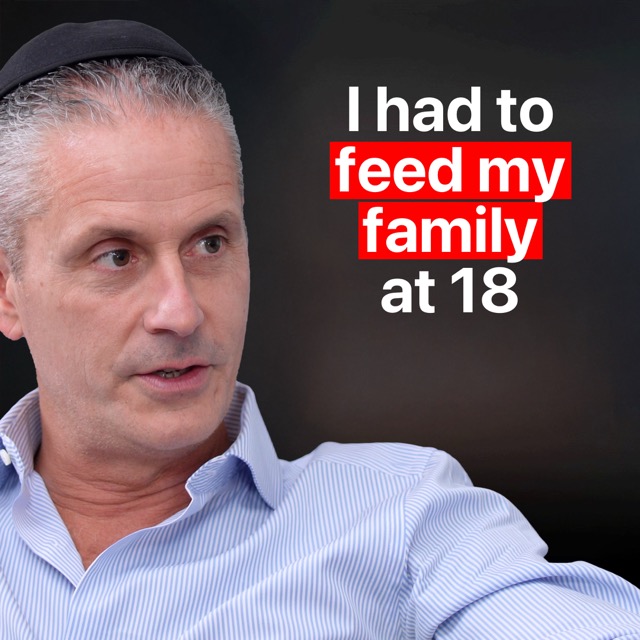
Jack Aini is the founder of Aini & Associates, a thriving law firm in New York. He served as President of SBH (Sephardic Biker Holim) and is currently President of his shul, SLC (Sephardic Lebanese Congregation).
Enjoy!
Sponsors
- Help us build the Sephardic Mikveh of Gravesend: https://raisethon.com/gravesend
- Partner with Kosher Media, the premiere advertising network for Jewish communities worldwide: https://koshermedia.com
Transcript
Jack Aini: I almost failed out of college. Two all-nighters back-to-back, which was a disaster. And the only reason I left was because my wife was giving birth to my son. You’re going to learn how to help me buy a house faster than I’m going to learn English. You know what I’m doing? I did something wrong again. I didn’t even know I failed a personality test. I felt like I didn’t fit in. Everybody there was from Harvard or Yale except for me. And I just felt like, what am I doing here? I remember getting a letter from Brooklyn College saying that if I can’t maintain the 2.0 average, I wouldn’t be able to continue.
Victor M. Braca: Welcome to season 2 of Momentum. Momentum has been around for a little while now, and I’m so proud to have seen it grow over the past 12 months. Before we start, guys, be sure you’re subscribed so you don’t miss our weekly episodes.
My guest today is Jack Aini, a guy whose name comes up in every corner of the community, whether it’s in law, leadership, or just getting things done. Jack is the founder of Aini and Associates, a thriving real estate law firm. He’s the former president of SBH and the current president of Sephardic Lebanese Congregation. And what I love about Jack through this conversation is the way that all of those roles connect.
We talked about how a single phone call from a family friend who only spoke Arabic and needed help buying a house completely changed the trajectory of Jack’s life. I mean, that one moment turned into a law firm, a community career, and years and years of lasting impact. Jack also opened up about how his childhood shaped him. He tells us why he always felt like he didn’t fit in and how he turned that feeling into fuel for helping others. I’m Victor Braca and Momentum is where I dive deep into the stories behind business success. Enjoy. This episode is sponsored by the Sephardic Mikveh of Gravesend.
Jack Aini, welcome to Momentum.
Jack Aini: Thank you. Great to be here.
Victor M. Braca: It’s great to have you over here. You founded a global law firm, a very successful law firm, and at the same time, you’re president of a shul, you’re former president of SBH, you’re very involved in your shul, and you do so much charity work within and outside of the community. So I want to start off by just asking a question that encapsulates who you are. How do you explain what you do in the sense of work?
Jack Aini: I’m an attorney. I’m also a businessman. I really just try to do my best in any capacity that I’m in. So if somebody needs legal help, I’ll try to advise them as best I can with the knowledge that I have and experience that I have to that end. But more often than not, people are coming to me for life help—for help with their business, help with their family, help with anything else. And that’s great. I usually take those calls before my legal calls.
Victor M. Braca: That’s great. I mean, it shows what’s really important to you. I love how you pointed out that you’re an attorney and you’re a businessman, and you have a law degree and you have an MBA, right? So I want to get into how those meld in terms of business and in terms of helping people with their companies and kickstarting their careers.
Jack Aini: I didn’t grow up thinking that I wanted to be an attorney. That was never a thing. No, I grew up thinking I wanted to be a businessman. My father was in retail. I was going to be in retail. That was the life that was planned out for me. He got me a store for the graduation gift of high school. I think he was somewhat disappointed at the time that I wanted to go to college. Maybe it was because I was going to college cuz my friends were going to college, right? But we came to a good understanding with each other that I would go to college, but it would be Brooklyn College cuz it was blocks away from Church Avenue, which is where the store was. And I would basically do double duty. I’d go to school when I had to and I’d go to work when I could and I would make them both work. And that was the beginning of my juggling career which lasts until today.
Victor M. Braca: And you were only 18 years old at that point. You’re in school full-time, you’re working full-time. What did you study?
Jack Aini: Business. I had a business management and finance degree. I think it was called a Bachelor of Science in Business. Everything I took was related to business. There was only one class that was called business law. That was it. Yeah, I was going to be a businessman, right?
Victor M. Braca: And were you always studious in school? Did you do well?
Jack Aini: I mean, coming from an immigrant background, I was a disaster. Really? I was always capable. My report cards always said, “very capable but just not performing well enough.” I think I was kind of scared to perform well. I was scared that if I gave something my all and I didn’t succeed, then that was kind of who I was. I was just a guy who tried and couldn’t do it. So, I’d rather not try. And if I didn’t succeed, it’s because I know internally I didn’t really try my best. So, I didn’t fail at that point. I just didn’t try hard enough. I think that was a theme growing up. Like, I was okay just kind of going with the flow and not doing my best.
Victor M. Braca: And at what point in your life did you shed that mindset?
Jack Aini: I don’t know if there’s a particular time, but I definitely know that it happened over time slowly.
Victor M. Braca: Right. I mean like when you got to college, were you applying yourself?
Jack Aini: No, I almost failed out of college. Because I was working in the stores during the days, I didn’t take school seriously at all. I remember getting a letter from Brooklyn College saying that if I can’t maintain a 2.0 average that I wouldn’t be able to continue. Pretty bad. Yeah. I mean I was missing finals. If the finals happened in December when we were busy at retail, I would just completely skip them. My friends in college had already dropped out after the first year and they all went into their own businesses and they were succeeding and they were starting to see money where I was still, you know, writing reports. It wasn’t a great scenario for me.
I don’t really know why I stayed. I think I really didn’t love the retail. It helped that it was the early ’90s and retail wasn’t that great, especially in the business that I was in, which is really all types of variety and housewares. That was on the downhill. So, it helped that I didn’t really have a great fallback. You know, if you’d asked me in the late ’80s when I was in high school, retail was unbelievable. So, there was no reason to go get a different type of education. But in the early ’90s, you could kind of see the writing on the wall and um, I stayed in college because I felt like I needed something different or just because it happened to me, but that’s what happened.
Victor M. Braca: And so, you stayed in college and did you go straight to law school?
Jack Aini: I did. I went straight to law school.
Victor M. Braca: So, when did you decide that you wanted to go to law school? And when did you turn your average around from 2.0 to whatever was able to get you into law school?
Jack Aini: So one day in the cafeteria, we were waiting to go for lunch, a couple of friends, and there was a girl who was supposed to come to lunch with us, but she was busy practicing her LSATs. She was going to take the LSAT to go to law school. And I remember sitting there and we’re waiting for her and we’re like, “Come on, come on, we got to go.”
And she’s like, “I just I can’t get this problem.” And the LSAT—one of the sections at the time were analytics. So it was really just games. It’s these games where you have to figure out like, “Okay, five people have to sit around a table, one guy can’t sit next to this guy,” whatever it is. Analytical games. And I used to do these whenever I used to go on vacation. I used to buy a book at the airport with these types of games. This was fun for me. And I was like, “This is the LSAT? Are you kidding me?” So, I look at it and I’m like, “Well, this is how you do it.” And I kind of did it quickly just so that we can go out to lunch.
And she was amazed. She was like, “Wow, you could do this? You should totally take the LSAT.” And I was like, “That’s funny cuz anybody who knows me knows I’m not the lawyer. I’m the business guy.” But as soon as she said it, my friends were like, “Wow, you could do this.” And it was like, if this is what law is—playing games all day—I’ll do that. I’ll try it.
One thing led to another. I ended up signing up for a Princeton Review course to take the LSAT the next time around. And then things started falling into place. I did well on it. I ended up getting scholarships to different law schools. And I remember thinking to myself, “Is this really… I’m going to be a professional?” It was never in the cards for me.
I remember telling my parents and they’re like, “What? You’re going to be a lawyer? You’re going to go to law school?” And I remember being so nervous to tell my father that I was considering doing this now that I actually got into law school. Cuz what’s going to happen to the stores? And that was his question: “And what’s going to happen with the stores?” I was helping him. He built a beautiful business with it and he was really building it for his kids. I was like, “I’ll do both,” and he was fine with that and I was fine with that. And actually I did—throughout the first year of law school, I was still going back and forth to the stores.
Victor M. Braca: That’s a lot of work. At what point did you get your act together and turn your GPA from a 2.0?
Jack Aini: It was junior year that I applied to law school, that I took the LSAT and I saw that I did well, and I said, “You know, this could be a new me.” I really did give it a lot more. And I actually graduated with an okay average from Brooklyn College. I think it was even one of the cum laudes or something. So, I did pick it up from sophomore year. Freshman year, I really wasn’t there. But then sophomore year, I think I had some friends and, partly to impress some of the people around me at the time, tried to do a little bit better on the classes. Just really try to come to class, I should say. And then I graduated. I ended up in law school and I did well in law school.
Victor M. Braca: Take me into when you were graduating law school. I mean, you’re an entrepreneur and you’re all of a sudden becoming a professional. I’m assuming you didn’t go into business right after graduating law school.
Jack Aini: I was still finding myself. I was still trying to develop myself and figure out who I am. It didn’t occur to me yet that I’m going to be a lawyer, right? I was just going through the skills. I remember one of my friends from way back tells me, “What are you going to do? Put the diploma behind your register? What are you doing with law school? You have stores.” And I was still that guy. I didn’t know what I wanted to do. I knew that I took the test, I got into law school, I went to law school, I was doing well in law school. What was going to be from that? I don’t know.
It was a little bit discouraging. We’d go out, I’d have events with the professors from time to time, and you’d realize their lives sometimes were a little bit shallow. They were just living paycheck to paycheck, teaching, going back… it wasn’t our community life. It wasn’t a lot of things going on with families. So, I wasn’t sure that I wanted that academic life. If that was the epitome of success in law, I wasn’t sure that that was the field that I wanted to be in. I was getting a skill. We’re going to figure out how to use that skill at a later time. But for now, I’m getting a skill. And you know what? If that skill leads me to have stores where I could review my own leases, great. I didn’t know what I wanted to do yet.
Victor M. Braca: Interesting. You were just in law school without a clear plan, saying, “Whatever I get from this, I’ll get from this.” Or did you have an idea of where you wanted to go, like big law?
Jack Aini: Had no idea. No clear plan but I had a strategy. My strategy was to build myself up with skills as much as I can along the way. So I didn’t miss an opportunity to get a skill. If there was a program somewhere that would teach me something, I would go do it. My whole life is anytime I see an opportunity to improve myself, I take it.
Victor M. Braca: I love it. And it sounds like you don’t need to push yourself too much to motivate yourself. You’re a guy who wants to learn.
Jack Aini: I don’t like to know that there’s something out there that I can’t do. I want to try it. I may not be the best at everything, and that’s fine. I may not be good at many things and that’s also normal, but it’s not going to be because I didn’t try or explore it.
Victor M. Braca: In law school, law firms recruit the students. Where did you go when you graduated?
Jack Aini: To a firm called Cadwalader, Wickersham & Taft.
Victor M. Braca: Wow, that’s a mouthful.
Jack Aini: It’s a mouthful. Oldest firm in New York. White shoe. One of the largest firms then and now.
Victor M. Braca: So you got into the world of big law. That’s like the opposite of the stores. So tell me about that.
Jack Aini: First when I got in, the school was very excited because Cardozo, where I went, was a relatively new school and they didn’t have many people at Big Law at the time. So it was a big deal for the school.
In fact, I remember going to the dean after I got in. I wanted to do a joint JD/MBA degree because they had a program with Baruch to do that. The dean was like, “I’m not going to approve it.”
“Why not?”
You spend one extra year doing this joint program and with that one year you get both degrees. Instead of spending three years for law and two years for an MBA, you do it in four. Why wouldn’t you do that? I really wanted to do it. But he was like, “No, I’m not going to approve it.”
I said, “Why not?”
He said, “Because if I can get a guy into Cadwalader in this year, why would I wait another year?” And that was it. And I was like, “Okay, I guess I’m not getting my joint degree.” But they were really excited about you getting into this firm.
Victor M. Braca: What did your first day at this firm look like? Huge company, hundreds of people.
Jack Aini: I felt like I didn’t fit in. Everybody there was from Harvard or Yale except for me. And I just felt like, what am I doing here? It was very white shoe. I felt out of place for a while. And then I just… I mean, I’ll tell you, I did my best. I really worked hard. I worked ridiculous through the nights. There were many nights that I didn’t come home.
There was one time that I worked two nights in a row. Two all-nighters back to back, which was a disaster. And then the following day, the only reason I left was because my wife was giving birth to my son. I’ll tell you the story. I was there all night. It was Monday I went into the office. Monday night I had to work an all-nighter. No problem. Tuesday I’m supposed to go home. So by the time I was able to get there it was like about 9:30 or 10:00 at night and I’m like, “I’m done.” I already had my Karacha in my hand already cuz I had had it driven over—I sent a car to my house to bring my Karacha so I could pray in the office.
I was done and Cadwalader was located at 100 Maiden Lane, which was at the time three buildings connected by an atrium. It was a beautiful building, but the lobby was huge. We had our own car dispatch service. You go there, you give them your name, where you’re going and they get you a car right away. After 8:00 or 9:00, the lobby is full with people who are waiting for their cars and you have to go in order. But if you stayed the night before, then there was an unwritten rule that you just go right to the front of the line and you say, “I need to go now.”
So I did that. I went and said, “Yeah, I need to go now.” Great, they got me a car. I get into the car. I’m talking to the driver as to where I want to go. And I get a knock on the door and I look and I see it’s the managing partner of the firm. He was my direct supervisor at the time cuz everybody between us had left.
He’s like, “Uh, hey, where are you going?”
I’m like, “I’m going home.”
He’s like, “Oh, um, you know, we have something that really needs to get done.”
And I was like, “You know, I’m here since Monday morning.”
He’s like, “We have something that really needs to get done.”
And I was like—and I’m thinking to myself, like I could totally just say no. But I was like, “No, I’m going to do this.” I said, “All right.” I got out of the car and I walked right back with him. I felt like I was being punished as I walked through the lobby. And now everybody in the lobby that was waiting for their cars and saw me go to the front of the line knew that I was there from the day before. And now they see me being pulled back in and they were just staring and they couldn’t believe it. Oh my god, the comments that I got the next day from everybody was like, “What the hell happened last night? Why didn’t you say something?”
Victor M. Braca: This is like Tuesday at like 10:00 at night and you’ve been there since Monday 8:00 in the morning pretty much.
Jack Aini: Yeah, something like that. I actually stayed the other night and then my wife gave birth the next morning. I had to go.
Victor M. Braca: That is unbelievable. I mean, I think stories like that really show the grind that’s required to a couple decades later just step back and look at your life and be satisfied with your success.
Did you know that there’s no women’s Mikveh in Gravesend on Friday nights and Yom Tov? Walking to the nearest one on Avenue S can be a real challenge, especially late at night or in tough weather. That’s why we’re building the Sephardic Mikveh of Gravesend. A beautiful, halachically approved women’s Mikveh right off of Avenue X and Ocean Parkway. Designed with elegance, dignity, and complete privacy for the women who uphold Tahara in our households. But we can’t do it without you. This is a community project and every donation helps bring it closer to reality. Guys, to partner with us or learn more, visit raisethon.com/gravesend or click the link in the show notes. The Sephardic Mikveh is close, dignified, built by the community for the community. Let’s get back to the episode.
So you’re working at this big law firm for how long?
Jack Aini: I was there for two years and one minute. Two years was the standard thing. If you worked there for two years, then you could leave. If you leave before two years, it looks like you couldn’t make it. I really felt like I never fit.
I’ll tell you, I had a summer internship at the firm and they brought somebody in to run the Myers-Briggs personality test. You fill out a questionnaire and then they tell you where you fit in. She does the results and she explains it on the board: “Well, not surprisingly, almost all of you fall into this category.” And she shows like a scattergram showing all the dots where everybody is. “Here you all are and you all fit into one segment.”
Victor M. Braca: Probably rigid?
Jack Aini: Yes. And then she says, “And one of you fell on the opposite corner all the way down here. It’s so strange because I really in all my years I’ve never seen anybody in big law really so far deep into this corner. Jack, can I talk to you for a second?”
I’m like, “I knew it. I did something wrong again. I didn’t even know I failed a personality test.” And it was a good conversation. Her name was Eva Wisnik. And she had told me that look, there’s no wrong personality, it’s just that you may feel like you won’t fit in here.
I’m like, “I kind of told you that.”
She’s like, “Data shows you’re an INFP. It means that you may feel like you’re out of place. You may feel misunderstood. You may not be communicating the right way.” And I said, “Okay.” And that was it. So I’m an INFP and I have to deal with it. But it was fine for me because that creative side and that emotional side… I think that did me very well in my career path.
Victor M. Braca: For sure. And I could say looking back at your peers at that big law firm, you’re probably one of the only ones who went on to start his own company and took the entrepreneurial path. I think it’s funny to point out that you didn’t feel like you fit in at that big law firm when you were just out of law school and you’re so thankful for that today. So you were at this law firm for two years and where did you go after that?
Jack Aini: Correct, I did not start my company right after that. I got a call, fittingly at 3:00 in the morning, from one of my clients. This was when websites were starting—showing my age—it was a new concept. The call was from my client at the time, Norwest Bank, later to become Wells Fargo. He was in the office at 3:00 in the morning and I was in the office at 3:00 in the morning.
He’s like, “Jack, we’re trying to develop something where instead of calling a number to have a report faxed to you as an investor, we want to have it on a website where people can go and get it themselves.”
And I was like, “Wow, that’s huge. That’s a huge concept.” Hard to believe, but so we were talking about it and I said, “This is something that can be done. We just have to develop how it’s going to work.” And he tells me, “Jack, the truth is… we’re looking for somebody to come help us run our business and grow our business. Would you know anybody?”
And I’m thinking, “Who would I suggest?” I’m a second year at Cadwalader, very junior. I started recommending names and he’s like, “No, I was thinking somebody a little different who’s been doing our deals, maybe understands about our website a little bit.”
And I’m thinking, like, it’s describing me. I’m like, “Are you asking me to come over? I hardly know what I’m doing here.”
And he’s like, “Jack, I can’t ask you, but if you were to ask me, I would be very interested if you’d come over.”
And I said, “Yeah, I’d be interested in coming over.” So, we went for meetings and that was it. That’s how one thing led to another and I ended up at what would become Wells Fargo.
Victor M. Braca: Nice. And what was your position there? I mean you went from the law world into the banking world.
Jack Aini: I was on the business side, not on the legal side. I think it was head of business development. I was a VP. I was the guy in charge of CMBS in the corporate trust world.
Victor M. Braca: What’s CMBS?
Jack Aini: Commercial Mortgage-Backed Securities. You pull commercial loans together, strip them into securities, sell them out. We were on the service side of that business. Nice. Very different than Cadwalader, although I was working with the same people. Cadwalader was our attorney.
Victor M. Braca: You mentioned in passing how your boss told you that you had to choose between being an Orthodox Jew and being in big law. Can you tell me a little bit about that? So many people are faced with those challenges of having to leave at 4:00 p.m. on a winter Friday or having to take off on a random Wednesday for the holidays. How did you navigate that when all your colleagues are working literally 24/7?
Jack Aini: That was definitely an experience. I remember it like yesterday. I was going out—it was Passover—and we had the first two days of holidays on like a Tuesday, Wednesday. I remember I’m about to leave the office for the second part of the holiday and he sees me passing.
He’s like, “Jack, where are you going?”
“It’s holiday. I got to go.”
He’s like, “What do you mean you have to go? Where are you going? We have a lot of work to do.”
And I said, “Well, it’s holiday. I have to go home.”
He’s like, “What do you mean you can’t? Please come in.”
I go into his office and he says, “I need to understand this. What do you mean you can’t come in tomorrow?”
I said, “I can’t. I’m not allowed to do it.”
He goes, “What do you mean?” He goes, “Does somebody physically tie you down to a chair so you can’t move and get up, or are you choosing not to get up and come to the office?”
I’m like, “Nobody ties me to anything. I’m an Orthodox Jew and that decision precludes me from making a decision to come in to work on holiday.”
So he says, “I don’t understand.” He does this thing—he goes, “I could stand here or I could stand here. I have the power to choose what I do. Are you saying you don’t have the power to actually get up and come to work tomorrow?”
So, I said, “I made a decision years ago to become an Orthodox Jew and that precludes me from making a decision to get up and come to the office tomorrow.”
So he says to me, “Well, you should have known that that decision that you made so many years ago precluded you from making a decision to come service your clients 24/7 right here. That’s ridiculous.”
I was like, “You know, this is a very good point that you’re making, but unfortunately I have to run because I’m late for my holiday. But put it into an email and copy HR so that I can read it when I come back from holiday.” I just walked out.
I remember coming back on Thursday and he comes into my office and he says, “Listen, I just want you to know that while you’re away I spoke to your clients and I understood you spoke to them before and everything was in order. The truth is you did have everything in order while you were away, so I appreciate that.” And he left.
I remember I told people of the story and one of my good friends at Cadwalader, also an Orthodox Jew, he’s like, “You have to go to HR and tell them what happened.”
I said, “No, I’m not going to make a stink out of anything. I’m fine. He came back and he apologized.”
He’s like, “That was not an apology! He just said that you had your work in order.”
I said, “I’m not going to make a stink. I’m fine.” My advice to kids: that was a hard position to take, and I could see how many people might flip and say, “You know what? I have to do it.”
The reality is there’s no such thing. Life is much bigger than those little things and you have to be true to who you are. Your opportunities will come to you that way. I think the fact that I was able to stand up for myself and for what I knew was right, even though I wasn’t sure what would come out of it, made me stronger as a person and even more important, stronger in my relationship with him. I think that I developed a respect. If I were to flake out, then I would have lost all respect from him. Everybody knew the amount of work that I was putting in. They saw it in my work, the way that I stayed at night, the way I covered for them on their holidays. I was not a slacker. So there was no question that I was making up the time. But stay true to yourself and do what’s right and those opportunities will follow suit.
Victor M. Braca: And so you were at Wells Fargo for how long?
Jack Aini: 10 years.
Victor M. Braca: So at this point you’re 33ish. You have a wife and kids, a steady job at Wells.
Jack Aini: It was a great job, great people. I didn’t want that crazy life. My—we were having kids. I wanted to spend time with them. I wanted to grow up with them. I wanted to kind of take it easy and just be a person. And then you started a business. It didn’t last, not even a day. Even while I was at Cadwalader, I got a call from a family friend who only spoke Arabic.
He says, “Jack, I need to buy a house.”
And I was like, “Okay, good luck.”
He’s like, “No, no, I spoke to your father in shul and he said that you’re a lawyer and I need a lawyer.” He’s telling me this in Arabic. And my Arabic at the time was iffy at best. I’m like, “I don’t do houses. I’m a lawyer but I don’t…”
He’s like, “What do you mean?”
I’m like, “I don’t know how to do that. Like if you’re buying a billion dollar house, that’s what I do. Everything on Wall Street is in the billions.”
My father called me once: “Jack, I need you to work on something for me.” I’m like, “I don’t care how many zeros you have after what you’re doing, but I’m your father. This is what you’re going to do.”
So I was like, “Listen, your house is not a billion dollars. It’s not something that I can handle.”
He tells me, “You’re going to learn how to help me buy a house faster than I’m going to learn English.”
And I was like, “All right, what did my father get me involved in?” This shul talk in the morning: “Oh, Jack can help you.”
So, I had to figure out how to represent somebody buying a house. I called a couple of friends, did some research and said, “Okay, it doesn’t seem too difficult. We’re going to try this out.” And I ended up representing him on the house. Closed. A week later, his brother-in-law calls: “Mr. Jack, I need to buy a house.”
I was like, “You got to be kidding me.” And that became a business. Started moonlighting and just doing work on the side.
Victor M. Braca: What does “moonlighting” mean?
Jack Aini: Moonlighting means you work during the day at a regular job, but then at night when the moon’s out, you have a whole other life. You’re doing a whole other job off hours. I remember getting a fax machine at Cadwalader, my own personal fax machine. And everybody’s like, “Why do you need a personal fax machine? We have a whole fax center.”
“I have my own things, I’m doing my own thing.”
Later on, my supervising partner would see me at a golf game and was like, “So, Jack, you still doing moonlighting?”
And I’m like, “Uh, yeah.”
He’s like, “Yeah, you still have your own fax machine?”
And my supervisor was right there and he’s like, “Yeah, Jack actually helped me close up my house a few months ago. He was very good.” He wasn’t upset with it at all. So that became my law firm business. It started with those house purchases and I did it all throughout the time that I was at Wells and eventually it became huge.
Victor M. Braca: Did you leave Wells at the point where your moonlight business was surpassing your day job?
Jack Aini: It was about the same. With all the moonlighting that I did, it never affected my day job. My day job was my day job and I made sure I did everything right there. I left Wells at a time where the market was in a frenzy. It was in 2008. The financial markets were a mess. There was a lot of uncertainty.
They were letting a lot of people go. I was unhappy with those decisions. They were asking me to let go of people who had worked there for a long time and who were really reliant on the job. Our business group was actually doing great; it was making a ton of money even during the crisis. So, I didn’t really agree to that and I had expressed my frustration a couple of times.
People weren’t happy that I wasn’t really firing them. I remember saying something to somebody: “Listen, if they’re going to go reducing everybody, I’d rather let them take me out.” You have to be careful in this environment, you don’t talk like that, but I’m like, “Well, it’s okay. I kind of have my own thing. I’m okay with it.”
One thing led to another and all of a sudden we were in discussions over: if I were going to leave the firm, where would I go? Would I go to another firm and compete? And we came to a good understanding that I would go do my own thing and the bank would use me as their counsel. Which was great for me and great for the bank. The business was down, there weren’t many new deals for a long time, so it gave me time to figure out my business and grow it.
Victor M. Braca: You go full-time into Aini and Associates. Was it called that from the onset?
Jack Aini: It wasn’t. The first rendition when we were moonlighting was called Aini and Blat. Then later on it became Aini and Lazar, and then later on it was just Aini and Associates.
Victor M. Braca: And that was in 2008. You told me about the late nights and the grind in big law. What does it look like now that you’re working on your law firm all day?
Jack Aini: It became worse. I realized that it wasn’t Cadwalader that made me work through the night—it was myself. I remember I was working through the night at Wells Fargo and they were like, “Jack, we don’t do that here. Why are you sending emails at 3:00 in the morning?”
I was like, “I don’t know. That’s when I can get things done.” I don’t like having things on my head. When there’s something to do, I like to do it. Still like that.
Victor M. Braca: I mean, it’s great cuz you have so many more hours in the day to do things, right? You’re taking it out of your sleep. How many hours do you sleep a night?
Jack Aini: Shabbat’s great.
Victor M. Braca: Don’t give me that.
Jack Aini: On a typical night, four or five hours. Every night.
Victor M. Braca: Wow. That’s very little. And you’re up and you want to do a podcast at 7:00 in the morning.
Jack Aini: Got to fit everything in. I said we’ll do it.
Victor M. Braca: What exactly is the type of law that you’re in?
Jack Aini: I don’t even know. It’s a little bit of everything that comes my way. In general, most of my deals are real estate related—purchasing, selling, refinancing. But a lot of partnership deals, a lot of licensing deals. I don’t see myself as a lawyer with a particular skill. I see myself as an attorney who has a broad range of skills. When somebody comes through the door, I try to figure out what they need for help. Sometimes it’s not even legal stuff.
Victor M. Braca: And your growth at Wells Fargo was capped at a certain point.
Jack Aini: I remember having a conversation with the division head. He was speaking to me about different opportunities. The situation at Wells was that I was working in New York, and Wells wasn’t a New York bank. It had larger offices in Maryland, Minnesota, and California. Being in New York in the satellite office, my opportunities were limited.
He suggested that I move to Maryland or Minneapolis. I was like, “It’s not going to work. I’m in New York. This is my community, my life.”
He’s like, “I think those opportunities are limited while you’re in New York for our bank.”
The next time I met with him, I said, “My opportunities are limited here, but we send so much money out to legal every year. What if I go off on my own and do that? Would I be able to represent the bank?”
He said, “Look, we wouldn’t want any attorney other than you representing us, but what would that look like?”
Ultimately, he really wanted me to just stay and grow the business. I asked, “How can I make a certain amount of money that would make me comfortable?” I told him the amount.
He said, “Jack, I don’t even make that kind of money.”
So, I was like, “All right, well then, what do I do from there?” That wasn’t a path that I thought I could grow enough. I know people in our community who have grown really high in the banking world and I’m sure they do very well, but for me it didn’t look like that was going to happen.
Victor M. Braca: I’m sure it carries over into your community activities. You were the president of SBH for a good four or five years, and you guided SBH through COVID. You’re the president of your shul. I think this really speaks to who you are as a person. Why do you choose to get involved?
Jack Aini: I don’t live on an island. I live with people. Religiously, I believe everything is from Hashem and he gives it to the people that are going to help those around them. I don’t believe that everything I get is really for me. I believe it’s for sharing. Everybody has certain skills and resources, and I think that we do better as a team when we share all that. I just see it as part of the very fiber of who we are—that we share.
Victor M. Braca: Kosher Media is the prominent advertising network for the Jewish community. They reach millions of people in thousands of Jewish communities worldwide through text, email, and social blasts. Be sure to check them out at koshermedia.com.
Tell me in your words a little bit about what you’re involved in.
Jack Aini: Yes, you mentioned SBH. I was involved in SBH for many years. Loved it. Best years of my life so far. An amazing organization and amazing team. I remember my first foray into it; I became a captain. Getting into a room to try to help people with their problems… the sensitivity that goes into keeping information private. Just great people around the table making those decisions while at the same time maintaining their dignity. They’re not getting a handout; they’re getting help so they can succeed on their own.
That was just mind-boggling to me because until that time, chesed for me was a one-man show. You’re doing things, carrying bags, opening doors—we’re doing chesed all our lives. But when you’re able to do it as part of a team that’s really strategizing and pulling resources together to find the perfect solution, that’s crazy. And that was a great time at SBH and I enjoyed every minute of it. It took up every minute of my time, but it was just amazing.
Victor M. Braca: And tell me about the shul.
Jack Aini: At a time that we were doing a lot of things in the shul, a lot of people wanted to get involved. When the ask came for me to step up and do something in a leadership role, I took it. That was also a great growing experience and you end up really building a great team around you. I found my teams—both in the shul and at SBH and in my office—to be the best part of everything that I do. They’re all so capable.
Choosing the right people to be associated with is key. I used to say at many SBH meetings, “We’re not friends. We don’t go out for dinner together. We’re here because we’re like-minded. We want to help people. And that’s what’s going to drive this friendship.” And the truth is, when you get like-minded people together, I was so impressed with each one of them. People say, “Oh, you built a great team.” That’s so wrong. They really built me and they built the organization. You learn to appreciate that every person on my team could probably do what I’m doing better than me. The only reason they’re not doing it is because they’re actually doing the right work.
Victor M. Braca: How do you make the time for all these things when you’re running a business as your day job?
Jack Aini: I don’t know. The timing doesn’t make sense. When I was president of SBH, SBH took up the majority of my time. That wasn’t a moonlight business for me. That was my job. Every day: meetings, calls, going to the office, meeting with people who had issues. One of the realities of being in a leadership position is that people want to talk to you about things and everybody thinks it’s only going to be five minutes. In reality, five minutes is not five minutes. When you’re dealing with an organization as large as SBH, you’re impacting tens of thousands of lives. Each one of them wants to have just 15 minutes of your time. And that time gets eaten up very quickly.
I actually remember a funny story. There was a past president of SBH that I met at a party. I had become the president-elect and I saw him at the event. He didn’t know who I was, but I wanted to introduce myself. I went up and said, “Hi, my name’s Jack. I just wanted to introduce myself. I know you were the president of SBH.”
And he just said, “I’m really sorry, but I’m at a wedding and now is not the right time.”
I was like, “Okay.” I was so taken back by it.
Years later when I was the president, I was at a wedding and there were really like a line of people. Everybody wanted to ask something about what was going on. My wife was itching to go home; it was late. She was like, “Jack, let’s go.”
Finally somebody came and said, “Jack, I just want to ask something.”
I’m like, “I really don’t have the time tonight. I have to go, but another time.”
They said, “Okay,” and she’s like, “Wow, you became that guy.”
I’m like, “You can’t blame me.” It’s hard. You have a limited amount of time in the day. Even if you were only going to do one thing, when you do it really well, it takes time. When you want to share with people what you’re doing, when you want to follow up with your team, that takes time. And at some point, you end up being short. Not because your mindset is that you want to be short, but because you have so many tasks to do in a day, you need to do it and move to the next. People who aren’t in that inner fold can get the wrong impression, like I did.
Victor M. Braca: You must have been the 10th person that came up to him that night.
Jack Aini: I would imagine so. I think the answer to “how do you make the time” is: I don’t know, and I don’t always. Look, before I joined SBH, I considered myself to be one of the busiest people in the world. The only reason I got involved was because somebody asked me to help with a particular case that involved finance and mortgages. I was like, “I’ll give him five minutes.” That became five years.
Somebody once said when I was growing up: “You don’t have time for anything except for the things that you want to make time for.” You find time for the things that matter to you. I prioritized SBH because it was making such a huge impact across such a big population as opposed to maybe making time for something that was helping one person at a time. I found that my business grew during that period, if anything. And that also doesn’t make sense. Everything seemed to run really, really well. I guess the rabbis will say things run really well when you leave God in charge, right? And that’s a good way to live.
Victor M. Braca: Should people follow their passion?
Jack Aini: Depends on what their passion is. If they’re realistic and they have a passion for something—photography, law, music—and you could figure out a way to get there. You also have to know what you need in life. If you’re a trust fund baby, you could follow your passion in acting even if you don’t have the greatest skills because you could live a very nice life anyway. But if you really have to succeed on your own in order to make it, then your passion has to resonate with your skills and it has to be compatible with what society will pay for.
If your passion is to be a tech giant, then great. But now that you have that passion, what are you doing towards it? Are you spending your days playing video games or are you learning code? Following your passion in theory is great, but does that mean just doing what you like to do, or doing what needs to be done in order to be successful in that path?
Victor M. Braca: Looking back on your journey from your younger days until today, what has been your Momentum Moment?
Jack Aini: I was at Cadwalader and I was in my first year. The hiring partner walks by my office. For some reason, the HR person liked me and she put me on the floor with all the partners—the 7th floor of 100 Maiden Lane. Somehow also I got this corner office, which was rare for a first year. And this hiring partner walks by and he says, “Great job last night.”
I was like, “Okay.” And now there’s somebody sitting in my office and he looks at me and goes, “What was that about? Do you work with Paul?” Paul’s a litigation partner, and I was in the capital markets division. He’s like, “What did you do with Paul?”
And I said, “Nothing.”
He’s like, “So what was that about?”
“I don’t know.”
“All right, that’s weird.”
Couple of days later, Paul walks by again and he’s like, “Great job last night.” And the guy sitting in my office looks at me and goes, “You still don’t know what that’s about?”
“I have no idea.”
“I’m going to find out.” He walks out to Paul’s office and they come back together laughing. Apparently Paul was a huge tennis fan and he was watching the US Open and he thought I looked like Pete Sampras and he was congratulating me on my game! I would have never made that connection ever.
We became friendly, and then he comes in one day and says, “Jack, I need a favor. We’re looking for somebody to do on-campus interviews at Cardozo, the school that we hired you from. You’re the only person we have here from Cardozo. Would you like to be the person that goes there to interview all of these candidates to come to the firm?”
And I said, “Okay. So weird.” A year ago, I was in the interview seat, and now they want me to be that guy. He goes, “Just bring back people like you.”
So I go to the dean and I said, “Do me a favor. People who are very, very strong—in the top 20% of their class—but they’re not getting the interviews that they need to get at big law. I want to meet a lot of them.”
Sure enough, I go in for the interview and I meet them and I find that they are great people. Not stuck up. They just really want to work and are very appreciative that they got an interview at big law because everybody said they wouldn’t get that if they weren’t top 10% on Law Review. I figured that these people would work harder at the position than somebody who thought they were entitled to it.
I ended up bringing a lot of them back for second interviews and sure enough, a lot of them got offers. I remember a partner comes back and says, “Jack, what did you do? We had one token guy who was in Harvard or Yale, and you bring back a whole crew from Cardozo?” But in reality, those people were the hardest workers. Super qualified. Many of them I still work with today.
That realization—that was an opportunity. Why was I in that position? I always think back to the religious story of Mordechai and Esther. When they tell Esther to go in front of the king and she’s afraid, Mordechai says, “Maybe this is the precise reason you got into this position.” I keep that with me in my back pocket whenever opportunities like that come where you can help somebody, especially when it’s out of your comfort zone, especially when there’s a risk to you. “What if I vouched for somebody and they’re not good?” I really lean on that in my decisions in life. Anytime there is an opportunity to help, I do my best to do that. If I put it all together: I always felt like I didn’t fit in. But when that opportunity comes to help, that’s when I realize why I fit in. That was the reason.
Victor M. Braca: Love it. And I could tell that you really use your experiences to help people—all the way back from when your father’s friend called you in Arabic asking for help buying a house. That turned into your business and that laid the foundation for your presidency at SBH. You apply your experiences in life to helping other people. It’s very admirable. Jack, I thank you for coming. I learned a lot and I’m sure others will as well.
Jack Aini: Thank you very much. I appreciate it.
Victor M. Braca: I really hope you enjoyed this episode. Here are my top three takeaways from my conversation with Jack.
First, small moments can change your entire life. I mean, Jack’s law firm started with one phone call from a family friend who didn’t speak English. And that single moment turned into a law firm, a platform for leadership, and a decades-long impact for our community.
Second, you’ll never have the time, but you have to make the time. This is something that Joey Jerome echoed in his episode. We’re all busy, we all get caught up in life, but if something is important to you, you’ll carve out the time for it.
And third, acquire skills, no matter what they are. Jack’s all about continually learning. Now, I’m not saying you have to be like Jack and go to law school just to have another skill under your belt, although it definitely worked out for him. But what I am saying is that we should all develop the mentality to be continually improving. Whether it be keeping up with new technologies, immersing yourself in different industries, or even meeting new people, a growth mindset is crucial in business.
Guys, if you enjoyed this episode, check out my conversation with Irwin Dweck. Now, like Jack, Irwin is also a lawyer, but he took a totally different path. Irwin actually stayed in big law and is now partner at Milbank, a huge firm with over $2 billion in revenue. It was an eye-opening conversation for me personally, especially to look at how Irwin did not grow up with money, but after putting in the time, he made a name for himself. Check that out on any platform by searching Momentum Irwin Dweck or by clicking the link in the show notes.
And with that said, everybody, thank you again so much for watching. This is the first episode of season 2 and we have great things coming. I really hope you enjoyed this episode. If you did or if you didn’t, drop a comment below. Give me your feedback. I hope you enjoyed, and I’ll see you next time.



Leave a Reply