


Avi Akiva has closed over 3,500 commercial real estate leases and transacted hundreds of millions of dollars worth of real estate. All before turning 30!
Avi is Partner and Executive VP at TriState Commercial Realty, where he leads the sales team, which he helped grow to over 60 agents.
Links
- Atomic Habits by James Clear: https://amzn.to/44aJ5B3
- Impact Players by Liz Wiseman: https://amzn.to/4laAx3Y
Sponsor
- Explore smarter insurance solutions for your real estate portfolio: https://www.elicohenagency.com
Transcript
Victor M. Braca: You’ve transacted hundreds of millions of dollars worth of real estate and you’re only 28 years old.
Avi Akiva: Like, holy cow, made 10K in a couple of weeks. I said, at this rate, I’ll be a millionaire by the time I’m 20.
Victor M. Braca: You’ve closed hundreds of leases. You’ve helped build Tri-State Commercial Realty, 60 plus agent team.
Avi Akiva: She’s like, you want something, you want a new phone, you want nice clothes, you want to go out with your boys to these places, go make money.
Victor M. Braca: You worked your whole time throughout college?
Avi Akiva: Yeah, I worked full-time, went to school full-time. I used to sleep on the train, used to sleep in the library.
Victor M. Braca: You were 21 years old being recruited to a company to be their vice president.
Avi Akiva: I was in the office from literally 8:30 in the morning till 11:30 at night, 10:30 at night, 12:00 in the morning. I was there all day. We are going to be the richest people in the entire industry. We’re going to be the kings in the company doing crazy deals. 4 million each commission. Meanwhile, this guy just slammed us down.
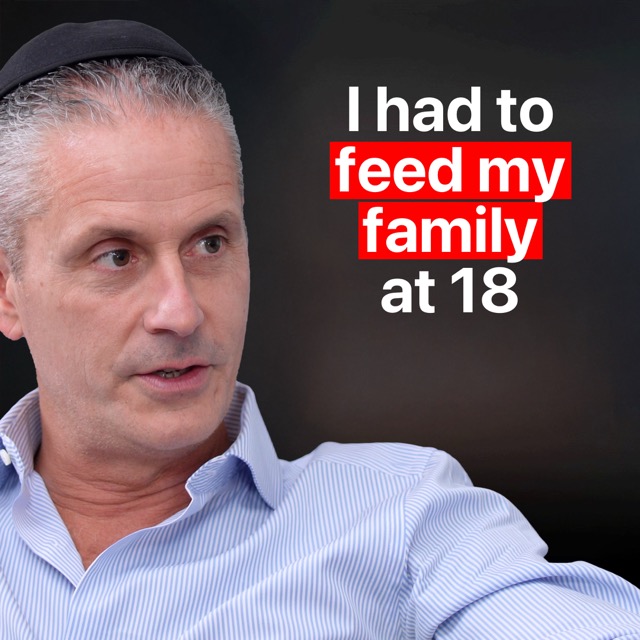
Victor M. Braca: Avi is partner and executive vice president at Tri-State Commercial Realty, one of the largest brokerages in the New York area, closing thousands of leases per year. In our conversation, Avi lets us into his past. And what’s crazy is that he grew up as a first generation American with English as his third language. He started working as an electronic salesman at age 13, and he would pull 18-hour days working full-time while in college.
Fast forward to today and Avi leads a team of over 60 agents. He’s closed over 3,500 leases and has in the process transacted hundreds of millions of dollars worth of real estate. He shares his business philosophy, his unconventional advice for young people as a guy who’s been around the block, and his very unique way of giving back to the community. I’m Victor Braca, and Momentum is where we dive deep into the stories behind business success. Let’s get into it. This episode is brought to you by the Eli Cohen Insurance Agency.
Avi Akiva, welcome to Momentum.
Avi Akiva: Nice to meet you. I’m happy to be here.
Victor M. Braca: Nice to meet you in person to match your name to a face. You know what I mean? Match your voice to a face. And I want to get right into it. You’ve closed hundreds of leases. You’ve helped build Tri-State Commercial Realty’s 60 plus agent team and you recently won landlord rep of the year. I want to use that as a starting point for who you are. When you meet somebody for the first time, how do you explain what you do?
Avi Akiva: So really I explained that I run a real estate brokerage firm on a macro level and then, you know, depending on their needs, we’re really there to help them to grow, to service which needs they need at that time. So whether it’s commercial leasing, whether it’s investment sales, whether they’re in a situation they don’t really know what to do.
Especially in the last few years, a lot of people are in situations they don’t know what to do, whether their debt is worth more than the building, whether they’re just stuck with tenants, or whether it was COVID that people didn’t want to pay and they were asking for rent breaks and landlords couldn’t afford it. We just held everybody’s hand. We guided them through it. We worked things out so that way they come out, you know, they come out basically a winner at the end of it.
Victor M. Braca: And if I were to ask you who is Avi, it’s a fully loaded question.
Avi Akiva: It is. It is a fully loaded question.
Victor M. Braca: How would you answer the question to somebody in our community and to myself?
Avi Akiva: I like to answer that I am God’s child and I come with that responsibility. I am a Syrian Jewish community member and that has a lot that’s tied to it, whether it’s in business, whether it’s in chesed, whether it’s in charity responsibilities that we take on. You can only really become great with the more responsibilities you take on. So that’s to really sum it up in one sentence.
Victor M. Braca: Love it. I love that description. And tell me about your role in Tri-State.
Avi Akiva: So I run the entire sales team on a macro level. So all levels, whether it comes to hiring strategies to move forward, obviously in collaboration with my partner Shlomi Bagdadi. And then we have a few partners throughout, a few managers, executive positions that really help run the team on a macro level. But pretty much you could think closer and coach at the end of it.
Victor M. Braca: Love it. I love the coach part of it. We’re going to get into that. I want to take me back to the beginning a little bit. You just told me just before we started recording that your first language was not English. Your second language was not English and you’re a first generation American. So tell me a little bit about growing up for you.
Avi Akiva: So you’re going way back. My parents moved here in 93. They moved to America. They were one of the last ones out. They were die-hard Syrians and honestly they loved it over there and were one of the last out. They just didn’t really want to leave. They ended up coming here in ’93. I was born in 96. I went to the yeshiva on East 7th and Avenue T. I think it’s called Kol Israel or something. I don’t even remember.
My parents spoke to me in Arabic. They didn’t know English. So, at home, I spoke to everybody in Arabic. I get to school, everybody—and I remember this cuz it was a very traumatic time in my life. You know, imagine you’re 3 years old, you’re going to school for the first time, and you’re surrounded by a bunch of little kids that are speaking gibberish. They’re all speaking one language. You have no idea what they’re saying. And I’m freaking out. I remember being in a very panicked moment.
And you know, obviously I see, I hear only one person that’s speaking a language that’s similar to mine. It’s Hebrew. It’s the rabbi. You know, he’s saying in Arabic it’s similar to “Baruch Hashem,” which is, you know, very similar. So I started looking like, “Okay, this guy’s gibberish sounds like my gibberish.” And that’s how I learned Hebrew. That’s actually the second language I picked up.
Victor M. Braca: Wow. You just picked it up. You didn’t learn it formally.
Avi Akiva: I stuck by the rabbi’s side. Only he was a communicator. I couldn’t—I needed anything. I needed food. I needed water. I needed to go to the bathroom. If I wanted to ask what I needed to do, there’s only one person in the room that really understands me. It was him. He was able to understand me. I was able to understand him. And that’s how I gravitated towards Hebrew next. And then just naturally through school, English became the primary language.
Victor M. Braca: So tell me a little bit about your early working experiences. Am I correct in saying that you started working at 18 years old?
Avi Akiva: No, I started working earlier. I started working probably around 13, 14.
Victor M. Braca: Oh wow.
Avi Akiva: Yeah. My parents put me in Magen David, first in Barkai then Magen. I had friends that were not first generation Americans. They had a decent amount of money. And to them, at 13, 14 years old, going out to Burgers Bar every night and doing once-a-week L’Amuse-Gueule was a very normal thing. My parents didn’t go to L’Amuse-Gueule early on. It just wasn’t a thing to go spend $100 on dinner. It’s not something that we did.
But I wanted to go out with my friends and I wanted to figure it out. So, my older sister was my mentor early on in my life. She’s like, “Avi, you want something? You want a new phone? You want nice clothes? You want to go out with your boys to these places? Go make money.”
I said, “Okay.” So, lo and behold, I went. I started finding through my cousins… they operated cell phone stores and electronic stores. I used to go there basically every Sunday all summer and during the winter every Sunday during tax refund season—which is the first, second, third, and fourth of every month. I used to ditch school, go to the Bronx and sell on 149th and Third Avenue in the Boost Mobile stores.
Victor M. Braca: Wow.
Avi Akiva: So like 14, 15, 16, I started originally.
Victor M. Braca: You were in electronics.
Avi Akiva: I was in cell phones like—just again, I needed money on the side. Um, so I used to go there and just do sales. What else can I do? Another one of my cousins hired me for a nighttime job just to build him a—like just data input all sales and invoices and orders and kind of just consolidate the books because it was a mess. So I ended up doing that, moved it to his .com under my sister’s help and advisory and they were paying me by the hour. I was doing it after school. I was doing it on Sundays and I ended up making some money.
Victor M. Braca: And you were still 14, 15 years old at this point.
Avi Akiva: I was basically 9th, 10th, 11th, and 12th grade.
Victor M. Braca: Oh, wow. So, you’re a high schooler. How did you learn accounting? How did you learn sales?
Avi Akiva: So, for the .com and for consolidating the books, it was just my sister. She did it for a very big company, another Syrian company. She basically just showed me the ropes. She’s like, “It’s very simple. You could do it from home. You know, the reason that this company likes me is I’m extremely honest. If I go to the bathroom, I press pause on the timer. I go to the bathroom. I come back. If I’m going to eat, I press pause and I give them net effective hours.” She goes, “You have to be honest. That’s how you make it better.” And thank God I did. And I started doing that for that company. Once I did it for them, my cousin said, “Hey, can you do it for me?” I said, “Absolutely, I could. It wasn’t rocket science. It’s just moving numbers around.”
Victor M. Braca: And how’d you learn to sell? I mean, that’s a—like you learn from your sister how to do the accounting and to clean the books, so to speak, and that’s like a hard skill. But learning how to sell is a soft skill that you really need to build up the personality and you need to be able to handle rejection. How did you learn to do that as a high schooler?
Avi Akiva: So it was two levels of sales. The first level of sales was when I was in the retail stores by selling to street people. That’s a very unsophisticated manner but very by-the-book type of sales business. That was taught to me by actually around three people: my cousin Akiva, a guy named Salem Bumaji and this Indian guy named Raj. I can’t remember his last name. Funniest guy on earth, completely whackadoodle, but he was trained by my other cousins, Joey. These guys apparently were legends in the Bronx and I got some of that basic training and slowly, you know, I said, “I don’t want to stock shelves anymore.” That was ninth grade. Now I’m in 10th grade. I said, “Let me try selling.”
And so they trained me and they gave me the spiffs and the bonuses, etc. You hit this month, you hit this much, you get this spiff, you sell that kind of phone, it’s on a promotion, you get that amount of money. and I just started. Honestly, I loved it and it was fun. I didn’t like it in the Bronx so much just because it was, “How much more can I possibly sell you?” versus they’re not actually growing and benefiting.
The second level of skill set is I’ve picked this up from people throughout my life, whether it was guys in other companies that I worked by, whether it’s my partner, other people that I’ve met that I just found to be fantastic. This is a more sophisticated level of sale which is: I’m not selling you something you don’t need or you don’t really want and convincing you. I’m understanding what you need. I’m understanding what’s going to help you take you to the next level and then I’m identifying that opportunity and then I’m making that sale. Whether it’s a lease, whether it’s a sale, whether it’s a partnership, whether it’s a hire, I’m understanding what you need, breaking it down, finding the match, and then basically navigating the sale from beginning to end.
Victor M. Braca: It sounds like you’re really trying to help the person on the other side of the deal. And like that yields two things. Obviously that builds trust with the client, but it also happens to be good for business in terms of being honest with people, being upfront with people is actually going to get them to transact with you more because they know that you’re not trying to give them the shorter end of the stick.
Avi Akiva: That’s a very short-term mentality—”shorter end of the stick, let me make a quick…” as the older generation says, “let me make a quick…” It doesn’t work like that. You burn out very quickly, you lose reputation. What breeds the most business is exactly what you just said. Make sure everyone—and they actually wrote an article about this a while back. They did an interview on me in New York Real Estate Journal and I said the reason I loved this industry is so many people make money every time I do a deal: the brokers, the landlord, the tenants or buyers and sellers, the lawyers, the architects, the contractors, the construction workers. They just breathe so much parnasa all across that this is the business I want to be in.
Every time I do a deal, how many families are eating from that deal? It just goes all the way through. And you know, I’ve even came to recommend contractors and lawyers, etc., without a referral fee. I said, “Just pass it forward to the next guy that needs it. Next guy that’s starting up, pass it forward.” And that’s really a good deal. And I described that a good deal is only when everybody wins. If somebody’s getting a short end of the stick, the deal wasn’t fully good.
Victor M. Braca: Great mentality. And I love it. So tell me, you mentioned something before. You said, “I’m in ninth grade now. I don’t want to be stocking shelves anymore.” I find that so funny because most people, if they look back at their early high school years, they’re playing video games or out with their friends and bumming and doing whatever. And I’m sure you still enjoyed your time in high school, don’t get me wrong.
Avi Akiva: I was very good at Call of Duty also, you know. Right, right.
Victor M. Braca: Happens to be though that you were ahead of so many people your age. So, what did it look like for you after high school?
Avi Akiva: So after high school, I thought in 11th, 12th grade, I’m going into cardiology. I said, “I’m going to be a surgeon.” At that time, I started dating my current wife. We’re in high school. I’m in 12th grade. Really, really liked her. Both of our families, new immigrants, don’t have money. First generation. Cardiology, a surgeon, is a 15-year process. It’s a very long process. I would still be in residency right now.
And I was always… I had good grades, but I was a little bit of a troublemaker. You know, I tried to push my limits, see what I can get out of. I think my last year I had like 66 cuts and north of 35 absences—something abnormal. They came to me and they’re like, “The whole school year is like 180 days. How is this normal?” And I just asked him, I’m like, “Listen, I’m not failing anything. I’m in honors in half my classes. Let me be.” So, I tried to always push my limits.
Ms. Malach—Sabrina Malach at the time, who ran the Magen David internships—tells me, “You’ve done a lot of internships with the cardiologist and some other doctors. Why don’t you try real estate?” She said her cousin owns a shop in Manhattan—Abe Kassin and Morris Sabbagh. She said, “Why don’t you go try it?” I ended up going there. And within the first few weeks, I did a deal with like a local cell phone store. Really small deal.
But then the next deal that I did was with a friend’s father. He needed an office. I asked at the time, Albert Manopla, I said, “Al, how do I—I’m new. How do I do deals?” He said, “You find the tenant, you find the space, you do the deal.” I said, “That’s it?” He goes, “That’s it.”
Wasn’t “that’s it.” There were more steps to it. I had to find out along the way. But I went to shul and I said, “Anybody need any space or does anybody have any space?” and my friend’s father tells me, “I’m actually looking for a small office/showroom. I’m restarting another line and I want it to be a separate office division.”
I said, “Okay, great. Where do you want to be?”
Tells me he wants to be in one of these four buildings. So, I ended up calling, figuring it out, setting up the tour. Ended up doing a deal. I got paid and my cut of the deal was like $8,000 or $10,000 to my pocket. It was a $20,000 check paid all on signing. I’m like, “Holy cow, I’m a schmuck. I’m going into medicine for 15 years? I just made 10K in a couple of weeks.”
I said, “At this rate, I’ll be a millionaire by the time I’m 20.” And I said, “You know, I’m going to do it throughout college.” My first year of college, I ended up loving it. Ended up doing more deals—slow growth. I didn’t become a millionaire in year one or year two. I think I made like 20 to 30 my first year, or 50… I don’t remember. It was very slow growth but I ended up loving the business because of what I said: I’m not hurting anybody. I’m helping people get into business. This could be a good opportunity.
Let me do this while I’m in college. I ended up doing college in five years instead of four because I did four classes a semester. By my fourth year, I was already married and I think I was expecting at the time and I said, “You know what? Medicine’s not for me.” I was still in the medicine track at that time, again, I was able to minor and major in pretty much whatever because I had to go to med school after.
So, I basically took business classes because that’s what was relevant to me. I took philosophy, business, and psychology. And then I did a few marketing classes. I was well-versed in all of these different areas. And then by the time my fourth year came, I said, “I could make a real living out of this. Why am I going to go to medicine now for another 11 years?” And thank God, I ended up switching my major to Business Management and Finance. I minored in Philosophy and then I took a bunch of psych classes just because it interested me, and thank God, never looked back. It was the best thing I ever did.
Victor M. Braca: Wow. And you worked your whole time throughout college?
Avi Akiva: Yeah, I worked full-time, went to school full-time. I used to sleep on the train, used to sleep in the library. I used to put two desks in the library section of Brooklyn College, two chairs in between. I would get there 30 minutes before because I had classes from like 6:30 to 9:30 at night. I would have morning classes and I would work all day, and then I had some online Sundays. I always maneuvered. I used to wake up really, really early, go to school. At the time, I used to work out. Get to the office early, crank out, go on the train, do some homework on the train or sleep on the train if I was able to, and then sleep in the library or do homework in the library. That was one of the two. And then get refocused for the nighttime classes.
Victor M. Braca: Sounds like 18-hour days.
Avi Akiva: 12 to 18-hour days.
Victor M. Braca: Unbelievable. What made you so motivated?
Avi Akiva: I wanted to succeed. I really loved my girlfriend who’s now my wife. I wanted to marry her. So, I didn’t want to let that go. I knew that I—I promised my mom… that was another promise. I told my mom I wanted to get married and I was very young. You know, I got engaged at 18. I got married at 19 turning 20.
Victor M. Braca: Wow. That’s very young.
Avi Akiva: Nobody was pro. Everyone’s like, “You guys are crazy. You guys are kids. Who’s going to support you?” And I remember telling my mom, “Ma, you always tell me in Arabic ‘Itakal ala Allah,’ right? Rely on God.” I said, “You always tell me rely on God. Where’s God now?” I said, “You can’t tell me that God’s not here because I’m young. If God’s not here because I’m young, then how could there be a God?”
My parents were stumped. They’re like, “You know what, Avi? You’re right. God’s going to take care of you.” And thank God. But she said, “You have to make me a promise. You can’t drop out of college.” I said, “You got my promise.” When I make a promise, it’s my bond. That’s it. I have to do it. So, I had to, first of all, stick out college. As stupid as I thought it was at the time, today I am so pro.
Education is huge. Something that a lot of us overlook in the community, but later down the road you realize that there’s so many things I learned in college. Yes, 60-70% of it was a waste, but the 30% of knowledge that I took away… people that didn’t go to college just don’t have that.
Victor M. Braca: Right. And I think it’s also, like you said, it’s very overlooked in the community. People who want to become, let’s say, a real estate salesman, they might think to themselves, “Oh, I’m just going to sell buildings. What do I need college for?” And I think that’s a dangerous mentality. So you were working at KSR throughout your college years. Did you rise the ranks over there?
Avi Akiva: I mean, I did. I love them very much. They taught me a lot. I say all the time: I’m one part I learned from Mo, I’m one part I learned from Al, and then I’m one part Avi, one part Shlomi, my partner. And I’m kind of a fusion of all because I’ve just got to learn from the best. All awesome people. Loved everyone there. We still do work together. Learned a lot and just opportunity arised for me to become a partner from the ground up [at Tri-State]. Um, and thank God it’s been a good move.
Victor M. Braca: I want to zoom back into your first month at KSR. You closed a deal in your first month. That’s very impressive. It takes some people six to 18 months to close a deal. Like, was there something about you?
Avi Akiva: No, keep in mind I didn’t close more deals for like another three months after that. It was a fluke from Hashem.
Victor M. Braca: Beginner’s luck.
Avi Akiva: Beginner’s luck. I wasn’t a magician. I didn’t do anything completely out of the ordinary. I guess it had to happen for me to kind of get that little hook. And you know, God always has a plan for us. Like it happened. Again, I told you I thought I was going to make 200, 300, 500K. I didn’t. I made like 20, 30 grand at the end of the year.
Victor M. Braca: I like how you give the credit to luck or to God. What I love about that is a lot of people look back at their lives and they’ll say, “Everything was meticulously planned and strategically thought out.” But meanwhile, you closed your first deal within a month. And yet here you are successful 11 years later and you’re telling me it was God and it fell into your hands. I just love that mentality.
Avi Akiva: We know so many people that work so hard and they just didn’t make it, or guys that didn’t work at all and then they’re crushing it. But then you start to get to know their stories, and you’re going to uncover that a lot of the special people that have extraordinary success… there is a common denominator, whether they’re religious or not. They are filled usually with charity, with good deeds. There’s a mission.
Even the non-frum guys that are running crazy hedge funds, they’re giving $100 million of charity. Like that big hedge fund that cut off the money to Harvard because of what happened October 7th. You would never even know, but these are the core lines that turn somebody into an extraordinary person. Saying “I did it all”… I’m no different than most people. We can all work hard. We can all not work hard. We could dress the same.
But at the end of the day, when you live your life in a path of… and I’m not the most religious guy. Part of what I do every single year is I try to be slightly more religious. Nowhere near a rabbi. But I try to just become a better Jew, a better business person, a better father, a better friend, a better family member consistently. And I break it down by goals. They’re very small goals. I want to take one thing upon myself. I didn’t pray at all for a few years, but I talked to God multiple times a day. So I wanted to take on making sure I put on Tefillin every day, making sure I keep kosher all the way. Just small things every year so that in 10 years I could look back and I could see a completely different person.
Victor M. Braca: Love it. Have you ever read the book Atomic Habits?
Avi Akiva: I haven’t.
Victor M. Braca: It’s a very good one. The whole premise is exactly what you’re saying: small incremental improvements over time that, if you look back after 10 years, you say, “Wow, look how much I grew.” If you grow 1% every day, you grow thousands of percent compounded over the years. I just love what you’re saying about setting small goals, not taking too much on, not trying to transform your whole life in six months.
Property insurance for residential and commercial real estate has been nothing short of a nightmare this year. Rates are up, coverage is down, and confusion is everywhere. That’s exactly where the Eli Cohen Insurance Agency comes in. With deep industry expertise and a focus on high-value, complex portfolios, they know exactly how to cut through the noise. Eli and his team leverage strong carrier relationships to find coverage options and pricing you won’t easily find elsewhere. Whether you’re a property manager, investor, or owner, you need a trusted adviser who understands the landscape and who knows how to deliver results. Call Eli Cohen today at 718-336-1700 or email info@elicohenagency.com to explore smarter insurance solutions for your portfolio.
So, you had just graduated college when you went to Tri-State around…
Avi Akiva: Yeah, same year. I just had a baby and I just graduated college.
Victor M. Braca: It was your first kid. You had just graduated and you were doing pretty well at KSR. Thank God I was doing good. And so how—I was going to ask why, but I want to ask how—did you leave that job, that security, and go to a new firm?
Avi Akiva: I was so scared to be honest, but I knew I wanted to lead. I realized that my talent is leading people and I wanted to lead people on a macro level. The opportunity arised where I got the blessing from them to move on. And it was very hard because I was extremely close—still am extremely close—to them. It was hard for me to move on and leave the family that I had over there.
And more so, leave the security. I was making money and I sat down with my wife and I’m like, “I’m going to try something new right now and we just had a kid. I have no idea how it’s going to be.”
And my wife tells me, “Doing deals is doing deals. What’s the difference?” She’s like, “I believe in you here, I believe in you there, I believe in you anywhere.” She said, “Do you see an opportunity to get to where you want to get to?”
And it’s not just deal-wise and money-wise. There was a certain pathway I wanted to take my life. Part of what I wanted to do is I wanted to be a part of a lot of people’s parnasa. I wanted to be somebody that helps a lot of Jewish guys in our community have a place where they could come and make real parnasa. And when the opportunity arrived and I got the blessing from my former bosses, I ended up making that switch. It was very nerve-wracking, but I had to just—that was my Hishtadlut. I needed to have the Bitachon and thank God it all worked out.
Victor M. Braca: I mean, you clearly took that decision very heavily.
Avi Akiva: It took me eight months to make the decision.
Victor M. Braca: Really?
Avi Akiva: Yes. It wasn’t a split second. It ate me alive for eight months. But my wife ended up telling me, “What does your gut say?” and I’m like, “You know what? My gut’s telling me…” and I asked other mentors and everyone was kind of telling me the same thing. They’re like, “You got to just do it. Just take the leap. Trust Hashem. It’ll all work out.”
And thank God it all worked out more than I expected, better than I planned. Not just my monetary goals, but the goals that I had for my life—to be involved in certain things, to coach other community members to grow from 18 years old, just like I did. A lot of my guys also went to college full-time and worked with us full-time. Now those same people have gotten married, bought houses, and have a baby.
So to be along their side and guide them through that, not just in the business world but even talking them through that: “Yeah, you know, you’re coming home, have some patience, reset yourself before you walk into your house to your wife. Don’t bring the baggage home no matter how bad of a day we had. Take a breath, listen to music 10 minutes before you get into your house, decompress, get in with a smile on your face.”
Your wife may tell you—she’s complaining about something that may seem so small to you, but to her it’s everything. Don’t shut it down. Don’t just say like, “That’s some BS, I can’t believe you’re even wasting my time.” There are people that react this way. So just being part of my guys’ lives and helping them grow in the personal world and in their relationships… it paved the pathway. Like I said, hindsight’s 2020. God had a plan. There was a reason why everything happened. I didn’t understand it seven years ago, but seven years later, I understand it.
Victor M. Braca: I really love your mindset of mentoring people. I want you to take me into your first day at Tri-State. Fast forward to today and you’re executive vice president and partner, but on your first day—are you a salesman? How are you feeling? Are you intimidated?
Avi Akiva: I was basically just thrown in. It was a moving company. My partner was looking to bring on a partner to really grow the sales force, grow the deals, grow the volume. And between you and I, it was bigger than I was at the time. I put on my great poker face and I made it look easy.
But I was nervous every day. I was nervous to get to even come to the office and take such responsibility. What if I fail? What if I don’t step up to the plate? What if I try doing everything and the company ends up collapsing? All these “what-ifs” that never end up happening. I heard one time from someone—I think it was Rabbi Abadi—he said, “99% of the things we worry about don’t happen, and 99% of the things that we don’t worry about happen.”
It was kind of that moment. At that point I’m like, “You know what? I just have to come.” I was moving 100 miles an hour at that time. I was out of college but and I thought I’m going to start cruising. I was now building the entire start of my life. And I was in the office from literally 8:30 in the morning till 11:30 at night, 10:30 at night, 12:00 in the morning. I was there almost all day. I practically lived there until COVID. First identifying, just jumping into a moving company, helping do the deals, getting acclimated to the people that were already there, hiring new people, working with that dynamic, then actually getting a second to myself to think about where do I want to see this go, collaborating with my partner, explaining these visions and then taking it there. First day it was just chaos. First couple years, chaos.
Victor M. Braca: And so when you were brought into Tri-State, your position was what?
Avi Akiva: My position was Vice President. It was a managerial position. It became a partnership position over the years, but at the time it was just a managerial position and I was 21 years old.
Victor M. Braca: Wow. You were very young. It’s funny you were saying, “I was married, I had my first kid,” so I’m thinking a 24-year-old. Meanwhile, you told me you got married at 19 turning 20.
Avi Akiva: I got married at 19 turning 20. Last day of my Sheva Brachot was when I turned 20.
Victor M. Braca: That’s young.
Avi Akiva: I’m 28 now.
Victor M. Braca: So when I said 10-15 years, you corrected me—rightfully so. But wow, okay, you’re very young. You’re one of the youngest guests. So you were brought on as a vice president and you pretty quickly rose the ranks. You turned it into a partnership position… what set you apart? You were 21 years old being recruited to a company to be their vice president, right? What was it that set you apart from the pack?
Avi Akiva: It’s a good question. I think at that point I became synonymous with the company—Tri-State, Avi, TSC—we were one person. My current partner and I, Shlomi, we molded into one person. What started as two separate people or three separate entities—the firm, him, me—really over time, it just merged into one.
I think that it just goes back to the one talent of: I wanted to help lead the people in the right direction. It was something that I knew I was good at. It was something that I found a calling to. I found excitement. It’s what drove me to the point where I get so connected to my team that I am more connected to them than just business. I actually feel their pains. I feel their wins. And I want to see them all become extremely, extremely successful. So I think that leadership position and kind of sacrifice… I didn’t put Avi first. I put the firm first. I put the people first in the firm and my partner saw that and naturally the team saw that and the firm and I just—we all just became essentially one entity.
Victor M. Braca: I love that you’re really on the side of your team members. Business is not a zero-sum game, we know that, and if you’re doing a transaction then all parties involved can stand to benefit. But there are always those points in business where you have to choose between the ethical choice and the choice that’s going to make you more money. How do you go about always doing the right thing and being the most moral version of yourself while also being the most successful version of yourself?
Avi Akiva: So it boils down to our beliefs, right? I start off by telling you when you said “Who is Avi?” I said I’m God’s child. Not that I’m the most religious, not that I’m the most perfect, not that I haven’t made mistakes. I’m sure if you ask 10,000 people, I’m sure there’s a handful that may not say good things. I’ve crossed so many paths throughout my 11 years. I’m not going to tell you I’m perfect.
But it boils down to one thing: who are we? And in that moment, you have to ask yourself, who am I? Am I a shrewd businessman and I want to just make it a zero-sum game, or am I a reflection of God and what’s happening right now is classified as Kiddush Hashem or Chillul Hashem? We have enough throughout the day that I don’t need to add more to the table. So my parnasa is my parnasa. It’s written on Rosh Hashanah. Whether I’m religious or not religious, I know this. It’s a fact.
Now, quantifying religion again, it gets to the best of all of us and that’s what makes us a little less religious, a little more religious, and it’s something that we’re constantly battling. But knowing who we are, knowing that my parnasa is set whether I hurt this guy or I help this guy, whether I do it in the right way or not the wrong way but not really the right way… am I going to feel good at the end of the business transaction? Am I going to feel good at the end of the action? If the answer is no, there’s no amount of money that’s worth it. I’m going to make the same money anyway, unless I’m going to do it illegally or anti-halachically. At that point, we’re talking about a completely different path. It’s just not the path I’m going on.
Victor M. Braca: Take me into your growth at Tri-State from day one vice president to today executive vice president and partner and you lead the sales team. How did that set you apart and how did that fuel your growth?
Avi Akiva: So I’m going to answer slightly differently, but essentially my focus was to grow the firm. My focus was never, “Oh, these are my tasks that are in my contract, these are my obligations, and I’m not doing anything thereafter.” If it’s not in my obligations, I’m not doing it? I always made sure I went above and beyond. I saw a problem, I fixed it. I saw something that needed attending to, I attended to it. I didn’t always look at how Avi was going to make the most money, but I looked at how the company was going to grow. And naturally when I did that, I was fit for a leadership and partnership position because when you put the firm ahead of yourself, when you put your people ahead of yourself, that’s essentially what a leader is. So that’s really what accelerated the growth.
Victor M. Braca: I love that. To do another book recommendation: it’s a great book called Impact Players. It talks about not doing only strictly what’s on your job description, but doing what needs to be done. Not just doing the task you have, but doing the task that needs to be done. So, even if you’re stepping outside of your boundaries in terms of your contract, but you’re helping the firm grow, then that’s totally worth it. It makes you more successful in terms of future partnerships and it helps the company. I love that mindset.
Avi Akiva: Exactly. And really we all grow from it. We still carry that mentality to every single position. The people that have rose the ranks—employees that started off as front desk and now are office managers—it’s the same type of dedication, grit, and passion. It’s “Do you view this as one unit, one family, or do you view this as a place of ‘I want to get in, I don’t really want to talk to people, I’ll do my job and I’ll leave’?” Those people generally don’t last in our firm; it has to be the first type.
Victor M. Braca: And on that note of the people at your firm, how do you hire the right people? Hiring is one of the most tiring, long, and expensive processes out there. And companies more often than not fail at that process and they don’t hire A+ players and it costs them more money and time to train new people. So how do you hire A+ players?
Avi Akiva: When I find the secret sauce I’ll tell you. So far we haven’t. We hire… we’ve probably hired and lost north of 300 people to get to the 60 amazing people that we have. But that could be the secret sauce. A guy in our industry—a mortgage brokerage guy named Ira—posted that it’s all a numbers game. You keep 22% of your hires. I think I did the math and he was actually right; in a 12-month period, we kept around 23-25% of our hires. I ended up looking up the stat and he was correct.
How do we make that stat a little higher? I recently started hiring less on just resumes and more on people’s “why.” Why are you doing this? What drives you every morning? What set of values do they have? Because somebody could be an awesome salesman, but if they’re a sneaky guy or they bring toxicity to the environment, no matter how much money they’re bringing to the company, they’re out. So, it’s a fine balance, but really it’s kind of gut feel—getting an understanding of the human fabric of that person—and then numbers.
Victor M. Braca: I find it very interesting that what I’m hearing from you—which is something that’s echoed by a lot of successful founders—is that you don’t just hire based on the hard skills and the resume, but you hire based off of personality and based off of who is sitting across from you at the desk. You’re not hiring achievements or test scores, but you’re hiring the person.
Avi Akiva: I can’t teach personality, character, and values. I can guide on values, but if somebody’s just to their core not a good person, or they’re not personable, they’re not self-motivated… I can’t teach those things. The other stuff, we have a full academy. We teach how to close deals, how to find tenants, how to negotiate, how to become a better business adviser. That’s teachable. So really, it’s the first part that we’re looking for.
Victor M. Braca: Did you know that there are ways to fight back against the IRS? This episode of Momentum is proudly sponsored by Goldberg McCone LLP, the very best that tax law has to offer. From audits and big tax balances to penalties and complex cases, they know exactly how to handle it all. When the IRS throws you a curveball, they hit back hard. Whether you’re a business owner, high-net-worth individual, or facing global tax compliance challenges, Goldberg McCone is the team you want in your corner. Goldberg McCone delivers creative tax strategies and real results. Take control today. Visit https://www.google.com/search?q=goldbergmccone.com. That’s https://www.google.com/search?q=gldbrglaw.com, like dog, or call 212-302-9400 to schedule a consultation. And don’t forget to mention code “MOMENTUMTAX” to save on their consultation fee. Goldberg McCone LLP, because you shouldn’t have to face the IRS alone. Back to the episode.
You mentioned in passing that you’ve closed north of 3,500 leases in your 11ish years. So if we average that out, it’s a few hundred leases a year, which is a lease every day, on average. Obviously, it doesn’t actually pan out like that.
Avi Akiva: I did this via my team also, right? I can’t… it’s not possible.
Victor M. Braca: Listen, it doesn’t have to be single-handedly because you built your team and you trained your team and you call yourself a coach. So, I’m sure you don’t attribute all of it to yourself.
Avi Akiva: Happens to be I have the best people around me—my partners, my teammates, the actual fabric of the company. Everybody that’s there—admin team, sales team. There’s not a person that’s on the team that’s not phenomenal. And thank God we’ve been very blessed with that.
Victor M. Braca: And your team has helped you. You’ve transacted hundreds of millions of dollars worth of real estate and you’re only 28 years old. I want to shift into the advice that you have.
Avi Akiva: I tell this to my team also: don’t be a hero and try to do 10, 15, 20 deals on your own a year. Do 60, 70 deals and partner up with one or two guys. First of all, when you have that much volume, you’re gaining the experience. You’re gaining the exposure. You’re seeing more—your eyeglasses kind of widen up—and again, your name is out there more. I would rather have a fraction of a fraction of a fraction of a deal, it doesn’t matter, because I’m a part of so many transactions that it allows me to have so many key relationships in my life: amazing friends, amazing partners, investors, and clients that really kind of wove into my life only because I operated this way.
Victor M. Braca: Right. The more deals that pass your desk, the more knowledge and experience that you gain. Amazing. I want to go into the advice that you have for young people. What are you telling people when they’re calling you up asking you for advice? We were talking a bit before the cameras that young adults are very nervous about how they’re going to make money. We’re seeing our fathers spend hundreds of thousands of dollars on vacations, lifestyle, tuition… and as a young guy, it can be very intimidating. What are your thoughts on that?
Avi Akiva: I always encourage people to ask those people that made it. If their fathers inherited it, then ask the grandpa. If the father is one that made it, ask the father, the uncle… whoever you’re looking at and saying, “How am I going to make that amount of money?” Ask them their journey because it didn’t happen in one year. It didn’t happen in two years. It was a process.
My advice to most people is try to identify what speaks to you because, again, our parnasa is set—God knows what we’re going to make year one, two, three, four. And there are things that speed it up: getting married, having kids, giving more, and doing more. Naturally, it speeds up the process of how much money you make and how much you have. My cousin Jimmy Hidary and I were once sitting—we’ve had a wild five years with COVID and rates—and he tells me: “Avi, you want to always be the source of Kiddush Hashem, not Chillul Hashem.” It’s happened to stick with me.
But back to what I tell guys: don’t look at adults in our community spending 100 grand on a family vacation and saying, “I worked so hard and I only made 50K.” Ask them how much they made 25 years ago, 30 years ago, 40 years ago when they first started. Ask them their startup stories. The same questions you’re asking me. Ask them. Nobody came and made a million dollars their first year. It just doesn’t happen. You hear their stories: they lived in a small house, they lost their job, they almost had no money. I think even Shaare Zion went bankrupt at a point about 40, 50 years ago before it became the institution that it is. It happens. We all go through this.
So for them to look at “I want to make that today” 30 years or 40 years early, it just doesn’t work. They have to find their position that speaks to them. A job or a career that they really, really love. Understand it’s a step-by-step building and they have to love it. Try to do it in the way of Judaism and Halacha and Torah. But love it and then enjoy the journey.
Enjoy your first not-so-nice car. Enjoy your first $3,000 watch you got before you’re wearing a $100,000 watch 20 years later. Enjoy that first apartment that you had to paint yourself. Enjoy it! Me and my wife, when we first got married, we painted our apartment ourselves. It was a terrible apartment. It took us eight or nine months to furnish it because we would only furnish one room at a time because we had no money. It was like orange walls that we had to go [paint] and we didn’t have money to hire painters. So, we literally painted it all ourselves.
I had a bunch of my friends over at the time trying to figure out how to hang up a chandelier because I didn’t want to pay $150 to hang it up. My dad ended up coming down. He’s like, “You guys, they teach you nothing in school. I do this one minute.” Then he climbed up on a ladder and just put up the chandelier in 30 seconds. We’re all like, “How’d you do that?” He goes, “You connect wire to wire. It’s nothing they teach you in school.”
So just a different gen. My dad didn’t teach this. There’s no course in Magen David on how to do handyman work in the house. And just enjoy the journey. I say it to my brothers all the time. We pass by these $6 million houses and we’re like, “We got to get a house already.” And I just tell them, “Step by step. Enjoy the ride. Enjoy writing your story.” And in 20 years, when you’re taking the right steps and you’re not like a chicken without a head running from spot to spot trying to figure out how to make a million dollars before you even built yourself… when you’re doing that, you look five years, seven years, 10 years, you hit your goals.
Victor M. Braca: What’s a failure that you’ve made that you’ve learned from?
Avi Akiva: Funny story. I think I was 19 years old. I walk into this store called Massimo Dutti on the Upper East Side.
Victor M. Braca: Heard of it.
Avi Akiva: Beautiful clothing store. I walk in. It’s gorgeous. It’s not so crazy priced; it’s like a little more expensive than Zara. Buildout is beautiful. Service is amazing. I sat down. I cold called. I remember it was me and somebody named Clemmy; he was in KSR with me for about three or four months. We’re cold calling together. We happen to walk into that store together. And I get the main guy on the hook: Moises Costas. I’m never going to forget this guy’s name.
I go, “Moises, we just saw—we walked into your store, Massimo Dutti. It is the best store, best content we ever saw in our life. What we’re gonna do with you…” this was our pitch… we go, “what we’re gonna do with you is everywhere that there’s a Zara, we’re gonna open you up across the street. You’re gonna boom, you’re gonna take over the whole city. You’re going to put Zara out of business.”
And I remember this guy’s response like it was yesterday. He goes, “Next time you’re doing a cold call…” he’s a Spanish guy… “Next time you’re cold calling, you have to do your research.” He goes, “Massimo Dutti… we own Zara. So why would I want to put myself out of business?” He goes, “Don’t ever call me again.” And he hangs up the phone.
I remember I just like… my—I lost all the blood, you know? And we walked into the store Friday. So we made this call Monday, and me and Clemmy were walking on Saturday and we’re like, “We are going to be the richest people in the entire industry. We’re going to roll out 30 of these. We’re going to buy buildings. We’re going to be the kings in the company doing crazy deals. 4 million each commission.” Meanwhile, this guy just slammed us down. He goes, “Do your research next time.”
And that was a lesson I carry. I don’t make a call now without doing my proper research. Just felt like such a fool. We had all these plans and all it would have taken is one simple search of who owns Massimo Dutti—and the parent company is the same parent company as Zara. So, something I carry with me till today.
Victor M. Braca: I find it a great story. I find it interesting how one interaction 10 years ago… you remember exactly how it played out till today and you take that into your business.
Avi Akiva: It’s important to learn from the key moments. These one-liners… you can learn from anybody.
Victor M. Braca: For a guy like me, 18 years old, I don’t really have much to offer in terms of a relationship with a successful person. Let’s say, if I’m talking to a millionaire, I’ll be building off of their knowledge. They’re not really standing together.
Avi Akiva: What do you mean? They have your hustle. They have your youth. They have your dedication. My pitch when I was 18 years old was: “I’m 18 years old. Hire me. I’m full of energy. I have nothing to do. I’m not married. I have no kids. I have no household that I need to get back home to. I’m in the office till 9:00, 10:00 at night. I’ll go canvas 100-plus blocks every single week or twice a week. That’s 200-300 blocks. Can your other representatives say the same thing? You’re a small fish to him now. To me, you’re the biggest fish I ever had. I’m 18.”
Victor M. Braca: I love that.
Avi Akiva: You really utilize me. You just got to be open with it. Don’t BS them and say, “Oh, I’m the most experienced guy.” You’re not. But you’re fresh, you’re hungry, you’re energetic, and you’re willing to do what others are not willing to do. And again, at this specific generation, you guys have the technology edge on everybody. That should be part of your pitch.
Victor M. Braca: How can young people make connections? Like we’ve all heard the phrase: “It’s not what you know, it’s who you know.” How can I go about making connections with people?
Avi Akiva: You really have to put yourself on the field. One, I’m sure it wasn’t easy for you to reach out to people. Like, you cold called me to do this podcast. I’m sure it wasn’t your first few cold calls. I attacked you after you canceled on me and then I made sure that we rescheduled for this week. I know that you sent the calendar invite confirmed. So, I’m sure it wasn’t easy for you the first couple of times. You got to get out of your comfort zone.
Victor M. Braca: Yeah. Be persistent.
Avi Akiva: Persistent. But you also had a unique edge: you found your niche. It’s a podcast, which really gives you an intimate moment with a lot of people. So, you got to be different in some regard. Be different. Be you. It’s something that you didn’t do this necessarily for all the reasons that you’re going to benefit from this, but it started out as something that you liked, something that interested you, something that you had a passion with, and that was your unique edge. And you just have a genuine want to connect with people.
I don’t think a lot of people have that. There’s not a lot of people that genuinely want to go out and meet unique individuals and really understand and just absorb knowledge from them. So, if somebody does want to do that and they have that personality, they’re going to be able to do that anywhere: on vacation, on the plane, they go to a certain networking event, a weddings, etc. There’s a million people that cross your path. For people who want to be a sponge and absorb and connect and have that personality, they’re going to be able to do it.
Victor M. Braca: I think what it comes down to is a genuine desire to connect with people, to learn from people. If you go into a coffee meeting with a prospective client only thinking about how you’re going to close the deal with them, then it probably won’t work out.
Avi Akiva: It doesn’t work out. Most of my meetings, I like to first understand the person. I ask them a lot of similar questions that you’re asking. “How’d you get into it?” Even if we’re meeting for a specific business meeting or a specific deal, I first like to understand who is the person I’m dealing with.
Victor M. Braca: Guys, I’m really excited about our sponsor for this episode. I think personally it’s an absolute game-changer and incredible resource for our community. It’s called PitchPlace, and it’s designed to give young entrepreneurs in the Sephardic community the opportunity to pitch a business plan, access capital, and receive mentorship to launch and grow their businesses.
Imagine having the opportunity to secure funding for your startup from successful business owners and leaders within your community—people who you trust and who genuinely want to see you succeed. That’s the vision behind PitchPlace, a platform designed to provide young entrepreneurs with the capital and mentorship needed to turn their ideas into thriving businesses. Whether you’re launching a startup or growing an existing business, PitchPlace gives you direct access to a group of investors who are looking for the next big idea, offering not just funding but real partnership, guidance, and connections to help you succeed. Apply today for a chance to unleash your inner entrepreneur. Visit https://www.google.com/search?q=pitch-place.com.
I think a good measure of success is fulfillment, and you seem pretty fulfilled, not just from your business but from your chesed and your giving back. I know two main things about you: that you’re very involved in A Giving Hand both personally and through your business, which I very much admire, and you run a shul with 150 young guys every week, which is very impressive. Why do you get involved in that way?
Avi Akiva: So one is I think it’s part of the core of who we are. Let’s not lose who we are. I feel that a lot of the community, unfortunately… while yes we have a very, very special community, there’s so many people that are dedicating their lives and really going above and beyond… there’s a… the community is growing at an exponential pace and they’re losing sight of what was the core part of our community: Torah 24/7 and Mitzvot, etc. These things are what our community was built on. The Torah is really what—that’s the basis of and the foundation of what our community was built on.
Since I was 16 or so, 17, my pact with God is I don’t want to just make money to make money because it’s a very simple and kind of shallow end after 120. And I’m still on my journey, right? I’m not a 50, 60-year-old accomplished man. I’m still writing my story page by page. I have my setbacks, I have my growth. But a big part of my underlying story is: what can I do every year or every 24 months—what organizations can I be a part of that I can make a real impact? And every two to three years… and then fast forward, God willing, by the time I’m 80, 90, 100, I want to know that I’ve impacted hundreds of organizations, tens of thousands of people. And the way that I could do that is by being involved in specific organizations every couple of years, whether it’s SBH or whether it’s A Giving Hand.
All these kind of just happened. For the shul: I moved to East 18th. I bought a house there and I didn’t find a place where I felt like I belonged. Again, I’m 28. I was going to Shaare Shalom. A lot of the crowd was awesome. I loved them—the president, the board, the rabbis. They were amazing. But no one was my age. I’m 28; they were all around 40ish and so on.
And I saw that a lot of my family members, friends, cousins, brothers didn’t really want to go to shul either. Same problem. They’re in their 20s to 35 years old and we just didn’t have a place that we can actually congregate. Ateret Torah… I love it, but it was way too far. And I didn’t have a place where I could connect. So I ended up actually getting pushed, and I got inspired by what Lee Cohen did in his summer shul in Deal. It was like the first time in years that I was excited to go to shul every single Shabbat.
So thank God we put together a fantastic team—it’s like 10 young guys all around my age or a little younger. And some of the older family members that are like in their 50s that give us their support and their guidance. And thank God we went from a 20-30 person kahal to like—now we’re having thank God three minyanim every day, three classes every day. Hopefully one day I’ll start joining these morning minyanim classes, we’ll get there. We have nightly classes every night. Shabbat is booming; Shevuot night, 100-plus guys. It was fantastic. Like, I didn’t used to want to stay up on Shavuot night. Now I look forward to it. Even after Simchat Torah, we did an all-nighter where we just learned and we did a tikkun and we all did it together. It was a last minute thing and it was just awesome. But it goes down to: I want to be surrounded with the right people, I want to do this with the right people, I want to have fun and I want to grow all together. Same thing with A Giving Hand.
Victor M. Braca: I love what you said in passing: if you get involved deeply with a couple organizations every three or four years, then you look back after 50 years and you got involved with dozens of organizations. It’s a great way to spread your focus while not spreading yourself too thin, and to really get deep into each organization.
Avi Akiva: One or two projects every few years. Exactly.
Victor M. Braca: I love that about just your mind frame and everything about how you get involved in business and nonprofits. So I want to ask you for your momentum moment. It’s a moment of internal shift or a mindset change that where you told yourself, “Wow, I really could do this,” or when you realized that your unique strengths can really set you apart in the industry. Do you have a moment like that?
Avi Akiva: I’m going to give you my first moment, but I think that most people have this moment every five years. And it’s important to reinvent yourself every five years—not entirely, but to evolve yourself. But my momentum moment really—and my father says this all the time—is when I married my wife, Sarah. She is the source of… I think the entire family is better. She puts the right mindset in me, put the right confidence in me. I go to her… she’s not a business person, but anytime I’m having some sort of dilemma in my head or a fear of taking the next step, the first person I go talk to is her.
And she always… you know, like it says—if you’re, God willing, when you get married, you’re going to read to your wife on Friday night—it says, “Her mouth opens with the wisdom of God.” And it’s really true, right? The women… God sends the wisdom through a good wife. And that was my momentum moment. That’s when my life really started. That’s when I started growing personally, financially, spiritually. My mindset and really confidence-wise… everything in my life started to elevate the moment I married my wife. We were dating from high school, but when we got married and started living together and really grew that intimate personal relationship—especially after we had our first kid—it was kind of like that’s where I see this version of Avi that started. She’s a huge part of that. 50/50… my personality, my brain, and my soul is basically half-half with her.
Victor M. Braca: Such a unique moment. I’ve never heard one like that before, but I really love it. And you really—I can tell just as a recap of our conversation—you give the credit for your success to the people in your life. You’re giving it to God first of all, but you’re giving it to your team, to your wife, to your family.
Avi Akiva: I never mentioned my parents though.
Victor M. Braca: You did! You mentioned them in the beginning. Your parents, your cousins originally… there’s just so many people who you very much acknowledge played a big role in your life. Is there anything else you think we didn’t touch?
Avi Akiva: I don’t think so. But I’m a very accessible guy, or at least I try to be. So, if you or somebody want to talk through things, I’m always available. My number’s online, my email’s online. I love talking to community members; it’s something that’s close to my heart. I try to make as much time as possible for it. Forgive me if there are times that it’s just a little hectic and it doesn’t happen during normal business hours, but anything somebody needs, they can always feel free to call and we’ll go deeper into it.
Victor M. Braca: Amazing. I’m excited. You have to remind me that in about five years I have to interview you on this podcast. I think it’s only fair. So set a calendar invite, put me on it and Be’ezrat Hashem, I want to interview you in five years. We’ll switch seats also.
Avi Akiva: Exactly. We’ll switch seats. Great. I’ll come with my questions prepared.
Victor M. Braca: Awesome. Thank you so much for coming.
Avi Akiva: Thank you, Victor.
Victor M. Braca: Hey guys, so glad you made it until the end. As always, here are my top three takeaways from my conversation with Avi.
First: be ethical in business. Like Avi said, it’s not worth sacrificing your values or your reputation to squeeze a bit more money out of somebody. I mean, do you think that when you’re lying on your deathbed at 120 years old, you’re going to wish you made 5-10% more money, or are you going to regret making that borderline unethical business decision? It’s as simple as doing the right thing. You won’t regret it.
Second: give credit to those around you. I know these may not sound like the things that are going to make you rich quick, and that’s because they’re not. But we see Avi doing just this time and time again throughout the episode—whether it be with his team, his wife, or his mentors—and it’s clearly played such a huge role in his success. Avi’s humility makes people gravitate towards him, and the effects are twofold: number one, it makes him into the amazing person that he is, and it just so happens to be good for business.
Third: don’t be a hero. Don’t try to do everything yourself. Partner up. Get involved in as many deals, as many business endeavors as possible. Cover the most ground that you can. You’ll gain valuable experience so much quicker than you would have if you try doing everything yourself.
Guys, if you enjoyed this episode, check out my conversation with Ab Sarway. At 26 years old, Ab was named the top real estate salesman at Douglas Elliman, which is just insane. And similar to Avi, actually, Ab started from the bottom working in real estate at age 18 while in college and rising the ranks to eventually transacting hundreds of millions of dollars worth of real estate. The guy is a true hustler. Our conversation was honestly unbelievable; I think it was actually one of the top most popular episodes of Momentum to date. Check it out by clicking the link in the show notes or searching “Momentum Ab Sarway” anywhere you get your podcasts.
And guys, before you go, if you have any feedback from this episode, drop it in the comments below or send me a DM. And by anything, I mean anything. If I was too low, too loud, too slow, too boring, if there’s a question you wish I had asked… literally anything at all. I make this podcast for you, the viewer, and the only way I can improve is by hearing from you.
With that said, thanks so much for tuning in to this week’s episode of Momentum. Please subscribe wherever you get your podcast. I heard that some people are still listening to the full episodes on Instagram; if so, I personally would recommend switching over to a platform like YouTube or Spotify where we have audio and video and it’s just a more pleasant, enjoyable viewing experience. We’re also on Apple Podcast if you prefer listening over there. And don’t forget to leave a like, rate the show five stars, and share with a friend who you think would enjoy.
Guys, it’s kind of incredible to think about how I’ve had people come up to me and tell me that a single podcast episode changed the entire way they looked at business or that Momentum as a whole has changed their life, which to me is just so immensely gratifying. I would have never thought that that would have been a byproduct of the podcast. But you can play a role in changing somebody’s life by just sending them a podcast episode. It’s not a lot of work. You never know the effect that one single hour-long podcast can have on somebody. So, if you have any friends or family members who you think would enjoy this episode, send it over. I would appreciate it, they would appreciate it, and who knows—you might just change their life.
And before we go, I just want to thank the Eli Cohen Insurance Agency for sponsoring this episode. Thank you so much for watching and until next time.


Leave a Reply