

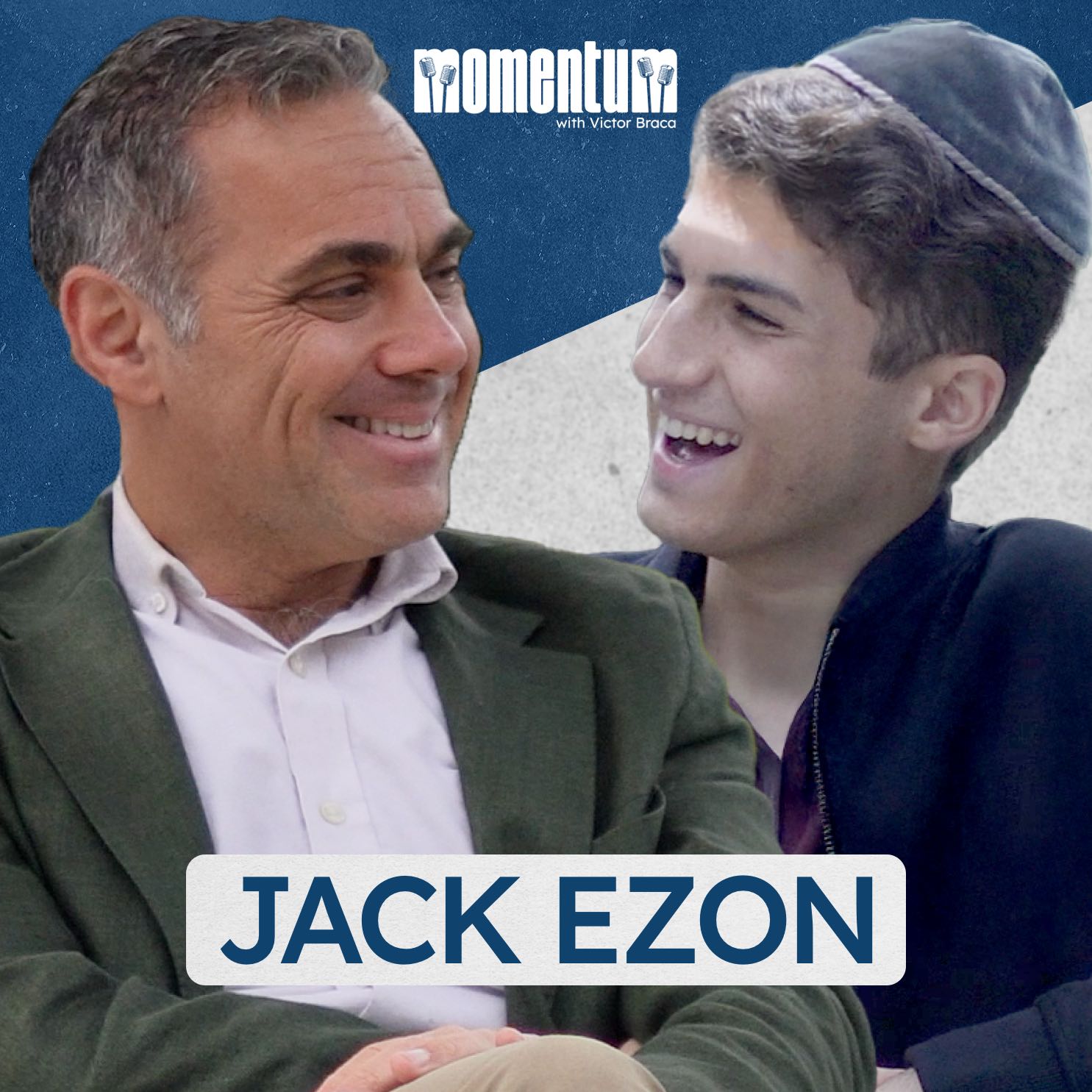


Jack Ezon built 2 of the world’s largest luxury travel companies. Most recently, he founded Embark Beyond, a $250M+ business with over 300+ employees that plans unbelievable getaways around the world.
In this episode, Jack opens up about quitting big-law to chase his passion, renting out private islands for $40 MILLION parties, and how he launched a travel business just 6 months before COVID.
Sponsor
- Brought to you by Goldburd McCone LLP, the very best that tax law has to offer: www.goldburdlaw.com
Transcript
Victor M. Braca: Embark CEO Jack Ezon.
Jack Ezon: I turn around and all of a sudden I’m doing over a million dollars in business. Maybe 6 months later, the market collapsed. I went from hero to zero overnight. For me, I was never naturally smart. It was about grit. It’s about working my butt off, working double time.
Victor M. Braca: A $40 million wedding in Paris, a bachelorette party on the top of the Arc de Triomphe, a party on a rooftop of a hotel, and it was a 500 lb chandelier.
Jack Ezon: 3 days before the event, the engineer comes and saying, “What are you doing? The roof’s going to cave in. We can’t do this.” It’s kind of like it’s 3 days before the event. You’re going to tell me that now? All over the world. I have about over 300 people. 80 or 90 in South America, 30 in Europe, couple in Dubai.
Victor M. Braca: Wow. Jack Ezon built not one but two of the world’s largest luxury travel companies. He’s the founder of Embark Beyond, a 100 plus million dollar business that services billionaires, celebrities, and some of the most iconic brands in the world. In our conversation, Jack opens up about his past. And the interesting thing is that he didn’t start out in travel. He actually went from being a lawyer, which he hated, to raising $60 million for a startup that collapsed within a matter of months, to employing over 300 people and pulling off some of the craziest events and vacations you could imagine. I’m talking $40 million weddings, working with brands like Dior and Hermes, renting out private islands, chartering cruise ships. It’s insane, guys. This was honestly one of my favorite episodes yet. We also get into how Jack started Embark just a couple months before COVID and the business philosophy that’s helped him scale to hundreds of millions of dollars in sales. I’m Victor Braca and Momentum is where I dive deep into the stories behind business success. Let’s get into it. This episode is sponsored by Goldburd McCone LLP.
Jack Ezon, welcome to Momentum.
Jack Ezon: Thanks for having me.
Victor M. Braca: Thank you for being here. You’ve built not one but two of the largest luxury travel companies in the world. Your company now, Embark Beyond, a multi-hundred million dollar business. Unbelievable. If I had to ask you to describe what you do, how would you do that?
Jack Ezon: Yeah. So ultimately our mission statement describes what we do and it doesn’t say travel in it. It’s leveraging relationships to build connections. And if you think about the core of what we really want to do is build connections and using our relationships all over the world to do that. Because when you travel, it’s not anymore to see the Eiffel Tower. It’s really to connect either to yourself, to the people you’re with, or the places you go. And that feeling of connection now is I think ultimately what people seek, especially in a world of loneliness.
Victor M. Braca: Interesting. You weren’t always in travel.
Jack Ezon: No.
Victor M. Braca: Tell me about that.
Jack Ezon: When I wanted to be a travel agent, my parents killed me. They were like, “You’re going to be like a little travel agent making $30,000 a year. What are you going to do?” No.
I had the privilege of growing up in Deal. And, um, I struggled as a student. I went to public school, Deal School right here until like sixth grade and then I went to Hillel. And I didn’t start to thrive until probably seventh or eighth grade when I woke up. And then I really started to accelerate. And for me, I was never naturally smart. It was about grit. It’s about working my butt off and working double time.
I had the privilege of going to NYU Stern for business school. But my real business school was Haddad School of Management. I worked for my uncle Charles Haddad, for Jack Haddad, David, and Richie. And um, they really taught me what grit was all about. I mean those guys, if I showed up at 6:15 in the morning to work and not 6:00, I got whipped.
I remember one day I walked into the office and I didn’t shave. I was in a suit and tie back then. That’s how everyone dressed right out of school. I didn’t shave. And they said, “Jack, you’re not dressed for work.”
I said, “What do you mean? I have a suit and tie on.”
They’re like, “Go home. We don’t accept people not dressed for work.”
I was like, “What?”
They’re like, “You didn’t shave today. That’s not presentable. You have to always look exceptional, not acceptable.” And really that framed my real work ethic and it framed the platform, I think, for where I am today. That and community service, which was so much a part of my youth. I think I was involved in like running 10 different committees and programs from, you know, high school on to after college, my single years.
And that really framed my success, taught me—and anyone who runs leadership, you learn so much more than just giving back. You get so much back. And people say that boomerang, and it’s really true. You know, when you lead a group of young people especially, you have to learn how to make an agenda. You have to learn how to motivate people, how to organize people, how to delegate. It’s incredible the skills you learn when you take a position of community leadership.
And that started with SBH. We were part of the first group to launch SBH in Deal with Danny Betesh. He gave me the first book that is so much a part of my life right now, How to Win Friends and Influence People. So funny. It comes up in so many interviews obviously, and it’s all about having a genuine interest in other people. It’s a brilliant, such a core belief.
And there were so many other initiatives here. One of them, I ended up when I moved to Brooklyn after going to NYU in the city, was the Sephardic Community Center. We ran the whole young adult program which changed names several times; it was New Directions. And anyway, I always loved travel. I got my senior trip—instead of going to Washington DC because I was president of the student council—to Disney World. And it was like game-changing because nobody ever went on a plane for a student trip. Nobody ever went on a plane for a graduation trip back then.
And I had taken the singles trips for the Center to another level—going to Europe, going to the Grand Canyon every year, more things, doing a cruise. And it was amazing because when you do something like a cruise, so many couples are together. I think we had like just eight marriages from one trip. But that really sparked me not just in organization and business management, but travel. It happened from community service. I found my passion. And though I went on to law school and ultimately practiced law for a big law firm for three years, that passion and that love really shone through and continued to irk me as I continued my career as a lawyer, which I hated.
Victor M. Braca: You hated being a lawyer.
Jack Ezon: I hated it.
Victor M. Braca: Why’d you go to law school?
Jack Ezon: You know what? Like so many kids, I didn’t know what to do. My dad was a lawyer. My uncle was a lawyer. My other uncle was a doctor. Well educated. And my father and my—may he rest in peace—and my grandmother, may she rest in peace, were like, “What else are you going to do? Be a lawyer, get the law degree and practice. It’s a steady income. It’s a great job.” And so I begrudgingly went. I did pretty well. I worked for an 800-person law firm called Orrick, Herrington. They were based in San Francisco. I focused on bankruptcy, secured lending… I just, it wasn’t for me. I’m too social, I’m too “on,” I’m too out there. I’m a networker by heart. I’m a dreamer. And I was just stuck doing contracts till 3:00 in the morning with the partners. And I was like, “This is not what I want my life to be.”
Victor M. Braca: That’s how you became a lawyer. And that’s how you became no longer somebody who was a lawyer.
Jack Ezon: Right. Well, what happened is it was 1999, which obviously you don’t know about, but everybody was making a crapload of money. The internet in 1999 was starting to explode. Anything you put a word “.com” next to exploded, and the stock market was going insane and everybody was day trading. I mean, I remember we’d want to go on vacation and be like, “Okay, let’s just like trade a few stocks, make $20-30,000, let’s go away.” It was amazing. I was making so much money from nothing. I started from nothing.
And like everybody else in the world—
Victor M. Braca: Were you making money day trading?
Jack Ezon: Yeah, everybody was. Even the garbage men and the policemen, everybody—the mailman, everybody was making money day trading. The world was going wild.
I had an idea to start a website to consolidate airline wholesalers because at the time, you know, you could fly to Paris for $1,200 in coach, but there were wholesalers that got it for 600 or 500. And I’m like, “This is a great idea.”
So one of my friends became a partner. We found a company called PhoCusWright, which the owner, Philip Wolf—Philip Wolf was a great mentor of mine and helped me not only put a business plan together, which I used my skills from NYU, very important base, but also helped introduce me to lenders and to investors. And that was my first foray in the VC world, which was so much fun, but super stressful.
But like everybody then, I was that typical kid on the Wall Street Journal front page, you know, trying to take an idea. I got funded. I actually got funded by a German technology company called IFA, almost $60 million. And guess what? Maybe 6 months later, the market collapsed. I went from hero to zero overnight like everyone else. And the funding for my new business venture? Disaster. It was zero.
So, I’d quit my job as a lawyer. I had, you know, high hopes on being the next tech bazillionaire. And all of a sudden, I am at zero. Nothing. And like everything in my life—everything, right? I struggled as a kid. Like everything in life, this was another chapter of failure. But failure for me always bred opportunity. You know, my dad used to say, “There’s no such things as bad days. There’s only good days and learning days.” And if you look at the world that God has a purpose for everything and everything has its reason, you can’t dwell on failure. You can just embrace it and thank Hashem for that failure, which is really the opportunity for greatness. And I think that’s a big part of my success because doors always close on me. I’ve never walked through the front door of anything in my life. Always a back door or broke a wall.
And that was one example of—I hated law. I started this new company; overnight, it was a zero. And now I had to figure it out. And every time I had to figure something out, I either hit another brick wall or I found a way to get inside. But it was never easy.
In law school, I was pretty much top of my school, right? I worked my butt off there. I was the guy that had to work 20 hours to get an A instead of somebody showing up for two hours. Ultimately, I was trying to get a job after, and the job market was tough. And they kept telling me I had to network.
I was like, “What the heck is networking? I don’t want to network.”
“You got to network. You got to meet people. You got to go places.”
And I was like, “I don’t want to network. Just here’s my resume. Just get me a job. Why? I don’t understand.”
I literally… I went to Cardozo. It wasn’t like it was a great school, but it wasn’t NYU Law School or Harvard. And so there was a bar association and a meeting on this program and that. And I showed up, this little kid showed up, and I was just trying to figure out how to network. And it was so intimidating in the beginning because I’d go to the bathroom and look at myself in the mirror because I was like, “Who do I talk to? What do I say? How do I insert myself?”
Ultimately, networking is one of the most important skills for success. And actually, I didn’t realize how lucky I was to grow up in the SY community where we have three or four parties a week with over a thousand people in a room sometimes. And even though networking was not natural outside of a community event, I had the confidence and the skill set to work a room. I mean, you go to a party and you work a room every single night. Most people grow up, they don’t even go to one wedding a year with 100 people. And we know how innately to be social. And that is something that I’ll never forget. I walk into a room with 1500 people now, right? It’s never easy, but it’s not hard for us.
Victor M. Braca: I love the lesson that you insert about networking, like you said in the beginning. You’re in the relationships business. You’re in the connections and the networking business at the end of the day. I think every business can be boiled down to that in some regard.
Jack Ezon: Every business. It doesn’t matter if you’re in real estate, finance, banking, media, social, marketing—people do business with people, not products. And it’s a very important lesson. It’s one of our 15 standards: people do business with people. And it’s all about relationship, human connection.
Victor M. Braca: Love it. You went from hero to zero, to use your phrasing. And it sounds like a common theme in your life is taking these failures and turning them into opportunities of some sort. So how did you turn this failure into an eventual opportunity or what did it look like for you after your failed startup?
Jack Ezon: My relationship with PhoCusWright, which was a very prestigious at the time consulting firm in the travel technology space… this guy just took me under his wing. I don’t even know how I got so lucky. And he found me a couple of jobs as a consultant. I just did some gigs and one of those was with a travel company called Lawyers Travel Service. At the time, they were trying to start a website called Wanderlust, which was last-minute luxury travel. I’m like: travel technology, internet… check, check, check.
I went there. My first day on the job was at this travel show called Virtuoso. So, it was August 2000. Most of you watching weren’t born yet. And it was the most exciting day of my life. I mean, literally, I got to meet owners and managers of the hotels I always dreamed of. I was like, “This is amazing. Wow.” Loved it.
And I started this business for them, really negotiating hotel contracts and negotiating special rates and offers and putting a program together to have this last-minute luxury website which didn’t exist at the time. And I just found my calling. I found my place. And I realized how amazing it is to work with your heart and your head at the same time. And again, when I said I’m going to be in travel, and my parents thought I was crazy, I realized that you can be successful in anything you love to do. You just need to find a way to do it.
There’s success in everything. It’s looking for the opportunity and looking for the void. And no matter what you do and how hard you work, to have faith in Hashem—honestly, I could never make up the trajectory that I had. And I could never make up the ideas that I had. It really comes from a higher place. And believing in that and trusting in that I think is the cornerstone of success. Not just for me, but I think you talk to many people who have that—things just happen. And even if you’re the smartest person in the world, they may not happen to you, or you could be the smartest person in the world and you just don’t have the luck for it to happen.
So I got that gig and I built up a business by mistake. People started hearing that I had great deals at places like, at the time, Sandy Lane and Cap Juluca and these hallmark hotels like San Pietro or Quisisana, and they started calling me. I wasn’t supposed to be a travel agent. I was supposed to be building a technology company. I turn around and all of a sudden I’m doing over a million dollars in business and I hired someone to help me because I didn’t know how to issue an airline ticket.
Victor M. Braca: You were still at the consulting company at this point?
Jack Ezon: I was consulting for Wanderlust for this… I see. For this travel company that only did corporate travel for lawyers. I was a lawyer too. It was fun.
And that business built up, and that business built up and all of a sudden 9/11 happened. Business closed down. No money. Travel industry is at a standstill. Another failure. Another roadblock. Great. I got recruited to build a honeymoon registry website for another travel company called Protravel.
9/11 just finished. People are starting to get back into travel. Again, the community base kept calling me for travel. They didn’t really know what luxury travel was—very few people traveled the way they travel now. Luxury travel was a distant concept in the early 2000s.
Victor M. Braca: And what does that mean today?
Jack Ezon: It’s traveling really at the highest level of hotels, resorts, yachts, being where the jet-setters are, being in places like Courchevel and St. Barts and the French Riviera. It was very minimal back then and a lot of people didn’t know. Aruba was the ultimate. Puerto Rico… some people were hearing about other places, but it wasn’t commonplace like it is now. And it was building.
So, I was doing this honeymoon registry and that was growing slow but steady. And again, as I’m there, people are calling me because I’m putting word out. I started writing articles and publishing them in local publications like The Image, all about luxury travel and inspiring people. And now I went from 1 million to almost 4 million in sales. Slow, steady, learned a lot of lessons along the way.
The one thing, the one lesson I learned that my grandmother always told me, is: integrity and name are the most important thing. And that’s something that stays with me forever. It’s my name, my reputation is so much more important than money. If you could solve something with money, it’s the greatest blessing in the world. But you never compromise that integrity. And you know, as a kid hustling and always trying to scam, “douche” is something you always try to do. And you learn pretty quickly it’s not worth it. It’s not worth a long-term reputation. And that’s why now I can open up any door in the world practically and I’m probably two degrees of separation from any other human, no matter who they are, because of my reputation.
So, building this website for honeymoons and it was going okay, not great. I got recruited back from the other company that was called, you know, Lawyers Travel. They were merging and changing their business to become Ovation and they wanted me back to build a leisure business for them.
Victor M. Braca: I guess they liked you.
Jack Ezon: They liked me, but they closed business because it was 9/11. But now they’re another company, new people involved, new brand, and they had nothing to do with leisure. And so they recruited me as a partner to build this leisure business. And I had built over 17 years a beautiful business—about $400 million of really high-end luxury leisure with some great advisors mostly based in New York at the time. The world wasn’t so global and it was amazing. I built my business. I built my reputation. I built my event business there. And one thing led to another. Fantastic. I felt very privileged to work with my heart and my head at the same time.
And at the same time, I was known as the young guy, the innovator, because when I started in this business, I was 25 and the next youngest person was maybe 50.
Victor M. Braca: Wow.
Jack Ezon: So, I was a young guy, but that gets old fast. Don’t ever be the young guy. But what I was was a disruptor. Always innovating, always disrupting, always failing.
Victor M. Braca: So you built up this travel business Ovation into a $400 million business. How long were you there for?
Jack Ezon: 17 years.
Victor M. Braca: Wow. And so it was pretty recently that you built Embark Beyond.
Jack Ezon: Yeah. I left Ovation, parted ways because my partners were much more focused on building the corporate business and I had a lot of ideas of what I wanted to do and we were just ultimately after many years didn’t align, which is fine. It was a fortuitous time that we left—six months before COVID.
Victor M. Braca: Wow.
Jack Ezon: Two great people that were working with me, Julie Danziger and Eli Asher—Eli was running my events team and Julie, my leisure team—I brought them in as partners to build this new business called Embark. And the idea was to be more of a partnership, like a law firm, than a regular in-house agency or recruiting independent contractors to work with me. And we left. I took a lot of my money and put it into starting a new business.
And then COVID happened. I love failures. Disaster. Obviously, the first thing to go on everyone’s mind was travel. It went from 100 to zero overnight.
Victor M. Braca: Yeah, that’s the worst during COVID. Wow. And I mean, for the record, you had kids at home. You had a family to feed and bills to pay and you had just started a new business, right? So, it was rough.
Jack Ezon: It was the hardest part of my career, but the most rewarding. Without COVID, we wouldn’t be where we are today.
Victor M. Braca: Why is that?
Jack Ezon: So, I had to put more money into this business. Obviously, it ended up being more than I ever expected to keep this business alive. But while the world was hibernating, we were on overdrive and it really helped define Embark. Embark was… it built such a big shadow for such a small company. We were like the little engine that could. When the world was sleeping, we were doing things that were so outside the box that we were attracting media all over the world. Um, and I think I had more media impressions in my first year and a half at Embark than I did at eight or 10 years in Ovation.
It was amazing. You know, again, side note: relationships is how I have such media coverage. We don’t have a PR firm. It’s relationships, right? And I can call up an editor or a writer that I’d taken to lunch or got to know and tell them about this crazy idea that we’re doing and if they liked it, overnight I called my marketing team and be like, “Guys, we’re now doing this.”
They’re like, “What do you mean?”
I’m like, “They’re writing a story about it. We’re doing this. We’re doing that. I got this hidden press. We’re doing this.”
And all of those crazy ideas—from doing backyard camps to long-term rental stays in Miami or in California, to what we’re doing now, things like market-hacking concepts. It’s always taking the chaos of the world and saying, “How can we help our customer?” and taking a customer-centric approach to putting your head in your customer’s mind and saying, “How can we help them in what we do?” And by not just saying we’re a travel agency but a company that uses our relationships to build connections and help our clients, there’s so many more opportunities to do what you do at your core and proliferate into many other things that are relevant.
We’re lucky because we have such great relationships at 360. You know, people call us, “I need to get that bag at Hermes. Can you get me an appointment?” I mean, we’re very lucky that we have relationships for that. “Can you make me a friend to the House of Dior? Can you get me into this fashion show? Can you get me to F1?” Yes, we’re very lucky to have those relationships. And you have to be very delicate with those relationships, right? But we’re lucky to have that and to be able to leverage that.
Victor M. Braca: Did you know that there are ways to fight back against the IRS? This episode of Momentum is proudly sponsored by Goldburd McCone LLP, the very best that tax law has to offer. From audits and big tax balances to penalties and complex cases, they know exactly how to handle it all. When the IRS throws you a curveball, they hit back hard. Whether you’re a business owner, high-net-worth individual, or facing global tax compliance challenges, Goldburd McCone is the team you want in your corner. Goldburd McCone delivers creative tax strategies and real results. Take control today. Visit GoldburdLaw.com or call 212-302-9400 to schedule a consultation. And don’t forget to mention code “MOMENTUMTAX” to save on their consultation fee. Goldburd McCone LLP because you shouldn’t have to face the IRS alone. Back to the episode.
Tell me a little bit about growing your business. I know you guys, like you’ve been saying, you guys take the unconventional approach. You started right before COVID. What did it really look like for you? Were you sleeping at this point? You know, everybody’s watching some tiger show or bears… I don’t know what they were watching on Netflix.
Jack Ezon: No, I slept like 3-hour nights for 3 months. I never worked so hard. And we also built the platform for Embark—our technology platform, our content platform. We couldn’t do that when the world’s running. We did it when the world was on pause for us. And like I said, every challenge is an opportunity. It depends how you look at it. And I didn’t have a choice. Like, we looked at it, we were on overdrive. Overdrive. There was like: hold no prisoners. We’re going to figure this out. We know that this for some reason is our opportunity for greatness. It was our zero moment of truth.
Victor M. Braca: I love it. I mean, I know it’s a bit easier looking back to look at those moments of failure as moments of opportunity, but it sounds like you really have that mindset in the moment.
Jack Ezon: You have to have that mindset in the moment of crisis because you can’t waste a crisis. And underlying the whole mindset is really—I don’t want to sound cliché—it’s really a strong faith in Hashem. That you’re going to put in your Hishtadlut. You’re going to put in your work and you’re going to put it in hard and the rest is not in your hands and the rest just has to happen by Hashem. You have to have that belief because the mindset won’t work without it. It just doesn’t work.
Victor M. Braca: Can you tell me some of the coolest places you’ve taken your clients to or events that you guys have thrown?
Jack Ezon: We have the privilege of being in the event business too. We’re doing almost $100 million in destination events. And I think those are the most fun experiences. We just did a $40 million wedding in Paris and were able to get people to have a bachelorette party on the top of the Arc de Triomphe, a beautiful party closed to the public. To be able to get people in to meet luminaries like the Missoni family or the Pucci family, or to go to Brunello Cucinelli’s little village where he makes all of his clothing in Solomeo and meet with Brunello. So cool. Andrea Bocelli—to go to a private concert in his house. And that’s only in Europe. I mean, the things that we’ve done in Asia… it’s just so much fun to be able to do cool things, to charter a cruise ship, to do a party for people and rent out a private island. You just see the way it brings people together and the memories it creates.
Victor M. Braca: So, you mentioned that you guys are doing about $100 million every year in events. Tell me, how did you get into that business? Right, so it’s not a typical travel space.
Jack Ezon: A client, a community client, called me up about 15 years ago and said, “I want you to do my daughter’s wedding in Villa d’Este in Lake Como.”
I’m like, “We don’t do parties. I don’t—we don’t do weddings. I don’t know how to do that.”
He’s like, “I don’t trust anyone else but you to do it.”
So, we figured it out and we did this party at Villa d’Este in Lake Como and it was amazing. And from that, we got two or three more requests to do these destination weddings. I don’t know the difference between a rose and an orchid—this is not my space. So, I hired an event planner to come work for me and we did a couple of events and guess what? It was a disaster. Really. I didn’t know, again, music… what a truss is… all these [technical things]. I don’t know this. I know travel. And ultimately I didn’t know the questions to ask the people that were working for me.
The last event I did fully was a party on a rooftop of a hotel and it was a 500-pound chandelier made of moss and we had 400 people coming. And 3 days before the event, the engineer comes, just happens to be listening to us with the hotel and saying, “What are you doing? The roof’s going to cave in. We can’t do this.”
And I’m like, “What? It’s 3 days before the event. You’re going to tell me that now?”
And he’s like, “Well, nobody asked me.”
I’m like, “Well, why didn’t you ask?” I was like, “Why didn’t you tell me?” You need to know this stuff.
Anyway, it cost me a couple hundred thousand to fix the problem. And after that, I said, “We’re done. We’re changing the business model.” I’d worked with some planners like Norma Cohen outside the community, too. And I said, “We’re going to stay in our lane and grow through partnerships. Make less money, but we got to stay in our lane.”
And so I started to go to these shows for event planners. And again, talk about networking, Victor. When I walk into a travel show right now, I know every single person in the room. Everyone knows me. It’s so easy. I walk in and now I walk into this show with event planners and I didn’t know one human being in the room. Not one. I was back to my days as a law student. I went the first time; it was so humbling because sometimes you get so comfortable in your space. I went, I met people, I went back to the bathroom and looked at myself in the mirror just like I did as a law student. I came out. I came back to the office and everybody’s like, “So, how’d it go?”
I was like, “It was intense. It was humbling. I didn’t know one human there. I met a couple of people.”
They’re like, “I guess that’s not going to happen again.”
I’m like, “Obviously, of course it is. Absolutely not. You don’t give up.” You have to go at least three, four times before you make an impression. And so by my third time to that show, I’d basically had the privilege of getting to know everyone in the room. And I made such great relationships, beautiful relationships with such influential event planners. It really helped us relaunch that business in a much smarter way. And if at first you don’t succeed, you hear: try again. And you just have to keep retooling concepts before you hit it. Failure—don’t waste a failure.
Victor M. Braca: Don’t waste it.
Jack Ezon: Don’t waste a crisis.
Victor M. Braca: Right. And so it was a bit of a setback for you in terms of, you know, getting into the event space in the beginning cost you hundreds of thousands of dollars for that one single mistake that was made.
Jack Ezon: That was one of many. Don’t worry.
Victor M. Braca: That’s crazy.
Jack Ezon: But if you could solve something with money and keep your reputation, thank God. Worth it.
Victor M. Braca: Right. Right. Reputation trumps all. So tell me a bit about what your business looks like from that point until today. What’s the revenue breakdown in terms of travel and events if you’re comfortable sharing that, and just tell me how you’ve grown since then?
Jack Ezon: As you start on a trajectory and you deliver, right? Your best marketing is your success and your customer satisfaction. And by doing that, peppered in with high-impact visuals and PR, helps you magnify your success, right? And that’s why I invest so much of my time in media and PR is because it’s my magnifying glass, right? So the relationships I’ve made and built with journalists is very impactful because it elevates your exposure. Same with social media but at a different level.
We took a lot of these event planners on incredible trips to show them the world and show how we can activate the world as a destination celebration that so many other people had FOMO. They’re like, “How do I get on that trip?”
I’m like, “You have to do business with us.”
“I want to do that. How do I get to know you?”
And all of a sudden, people were talking to me because they just wanted to come on the trip, or they wanted to be part of this Town & Country article that I brought other people into because I pitched the trend of destination events. They want to be in the Wall Street Journal. They want to do this. And so, you know what? You take your success and you amplify it. And it’s very important to take those different tools that are not necessarily obvious but that people all aspire to, to add in to create your own path and your unique selling point.
Victor M. Braca: Very interesting to hear the inner workings of your business. Such a cool industry.
Jack Ezon: Not easy. Not easy. By the way, I could be making so much money probably in real estate for all the hours I put in. But I love what I do. I work 16, 18-hour days. I love what I do. I’m a workaholic and I don’t feel exhausted on my hardest day. And I hope and I pray that everyone gets to find what they love.
I was just with the CEO of Dior last week for lunch and she’s like, “So, what do you want to do together?”
And I’m like, “I don’t know yet, but I want to do something.” And I know that this is the first kind of collab that you’ve done with a travel company before, so there’s no history, but I know we have some things to do. And that’s how most of my collabs have evolved: we need to broaden what we do and find value.
And that’s why we do travel at our core, but we bring in jewelry, fashion, auto… art is a huge driver right now. Design is a huge driver right now of travel ultimately. And if you just stick to that one word in somebody’s lifestyle, AI is going to replace that. We need to double down on what I call EI, emotional intelligence, layered with artificial intelligence. And we need to become that client advocate, the client tastemaker, the client navigator through a sea of information, and to really go deeper with our customer instead of broader in selling what we specialize in. So I say: specialize in your client and know the world.
It really applies to every business, not just travel. I’ve learned so much from the luxury space that I bring back into travel and they learn from us. When I first started bringing travel luxury brand people to our events or our company meetings, people were like, “Why do I care that the president or the CEO of Frette or Dior or Hermes is here? Like what does this do for travel?”
And it has everything to do with travel right now. With tariffs, people are traveling to shop. We got to get them shopping appointments. We got to get them stylists. It’s so important. But the other thing we learned is this concept called “clienteling.” And trying to shift the way people do business from my side is so hard, to create a clienteling mindset.
Victor M. Braca: What’s clienteling? Is that a trademark term?
Jack Ezon: Clienteling is not a trademark term. It’s a term that I think LVMH may have coined, but everybody in luxury uses today. And it’s basically proactive relationship-based selling. You don’t wait for the phone to ring. You reach out to a customer and build a relationship and everything else follows. Again, people do business with people, not with products.
And the concept of clienteling is an old concept that we’ve just coined and are trying to perfect. And it’s about building a relationship. If you have a stylist at a top brand, you’ll probably be getting WhatsApp messages or texts or plain-text emails: “I just got these beautiful shoes in. I know they’re very your type. I’m going to put them aside for you before they go on the floor because I think I’m thinking about you.”
It’s all about saying, “I’m thinking about you” and not targeting you. It’s CRM to the ultimate level. It’s selling very personal at the ultimate level to make someone feel special, which is the ultimate luxury—making someone feel special by connecting with them. And it could be just “here’s an article I read” and nobody will ever forget that. Doesn’t matter how much money you have. That relationship is what’s going to keep you loyal. Because we say our first standard in what we do is: loyalty comes from the heart and not the pocket. You can choose to win market share through manipulation or through inspiration. And inspiration is untouchable. Manipulation meaning like discounts, points—you’re only as good as your last gig because somebody can come out with another discount or a better point. Yes, you always have to give your client the best price and the best opportunity and advocate, but you need to do it with your heart.
Victor M. Braca: Jack, your company, Embark Beyond, has been featured in countless publications dozens of times—the Wall Street Journal, Travel + Leisure, Town & Country, you name it. And you maintain relationships with some of the biggest figures in the travel and luxury industries. You mentioned yourself the president of Dior, the CEO of Hermes, and luxury hotels worldwide. You were able to successfully follow your passion in terms of travel, right? You always had a knack for finding the best deal, going back to your days planning those singles trips even. And you left your cushy big-law job in order to pursue that. Should people follow their passion?
Jack Ezon: 100%. You pair your passion with your grit and your hard work and belief in Hashem. And no matter what, if you were supposed to make a hundred thousand or a million dollars or $5 million, and that’s what God has set up for you from Yom Kippur, it’s going to happen. Whether I think you’re in law, fashion, importing, real estate, travel… it’s meant to be or it’s not meant to be. You may as well do what you love.
Victor M. Braca: On that note, hundreds if not thousands of resumes have crossed your desk, or many people have interviewed for positions by you. I want to know, what do you notice in A-players, A+ standout achievers? What character traits, what qualities in terms of their work do you notice?
Jack Ezon: The ones that are successful are the ones that think “exceptional, not acceptable.” The ones that are successful are the ones that are not afraid to work, especially on Fridays. They’re available 24/7 and they invest in their customer. They’re not transactional.
The other trait we look for is critical thinking. You should be questioning every single thing that hits your desk. Don’t wait for a customer to ask the question; you should have asked it before. And tenacious. You have to advocate for your customer. You need to not just take the first thing that comes. You need to dig deeper, negotiate for them. Be their advocate in everything that you’re doing because that’s ultimately what they use us for. They don’t need paper pushers.
Victor M. Braca: It all comes back to networking. It’s so funny, you know. It really all comes back to the connections. And then the hard part is scaling that and making it consistent.
Jack Ezon: It’s very hard to have service at a consistent level on scale. This is the way Ritz-Carlton used to do it in the olden days, Four Seasons, Aman. It’s because you just reinforce core values and then you need the rest to be editorial artistic ability of the person executing.
Victor M. Braca: It’s funny. I love how you mentioned consistency across your service, right? It’s like it’s the model of a franchise. Do you guys franchise? How does it work when you’re expanding a luxury travel business?
Jack Ezon: We do not franchise, but we partner. For example, I have a partner in Brazil. I have about 80 advisers there. And he’s a partner and we have similar core values.
And again, if you’re going to go internationally and expand, I would have been dead on arrival—dead on arrival—if I showed up alone. You need someone to “tropicalize” what you do and to adjust it to local culture, customs, and regulations while making sure the core values stay the same. And so that’s what we do. And that’s why core values are so much more important than guidelines or rules. And we don’t believe in rules. We say at our level, if you tell someone there’s a rule, they want to do the exact opposite. We believe—our clients and us—we don’t believe in rules. We believe in guidelines. And we should make sure our team members believe in the same guidelines, not rules.
Victor M. Braca: I love it. I love it. I want to shift a bit towards community involvement and giving back in that sense. Tell me how you’ve gotten involved throughout the course of your life, of your career.
Jack Ezon: It started in high school. I went to Hillel and I got very involved. Again, SBH was my first love. As a freshman there, I was on the youth committee to help launch SBH here doing nursing home visits. And it really helped build my character, my confidence, my relationship building, my ability to run a business. I can’t tell you how important that was in my life. And I think, even though I’m a workaholic, everyone needs a balance. And that balance should be your work, your family, Torah, and having that peace and Hashem in your life, and what you’re giving back. And giving back is one of those four elements. And if you don’t have every one of those four elements, you’re going to feel at a loss.
Victor M. Braca: Jack, I mean, you’ve seen every corner of the world and every type of person, every type of community. When you come back home to the Syrian community of Brooklyn, how do you reconcile the differences between our community versus everybody else’s? And is there ever a question in your mind of: “Should I return, should I not return?” Tell me about that.
Jack Ezon: This is such an interesting question, Victor. Look, I have the privilege of working with some of the coolest people in the world—from royal families to celebrities and jet-setters and billionaires—and it’s such a cool, sexy world. It’s amazing. And even the people I get to work with every day, they’re sophisticated and they have a whole different world view in every facet of what I do—well-dressed, partying.
At the end of the day, I’d say 90-99% of them are not happy people. They’re lonely. They lack identity. They’re all searching for something. And you come back to this community and we have a really cool place that we live and really cool people, but ultimately what grounds you is your family, your friends, and the Torah. And this community is so beautiful that, yeah, it’s great to walk out as long as you know this is really where you belong. These are the values that make you who you are, that make you successful, that make you a human being, a well-rounded human being.
And you can’t make it about that world because that world is frivolous. It’s ultimately soulless. And you see those people—they crave what we have here. They crave family. And nothing is more important than that. And I really hope that anyone who goes out in that world and sees that candy realizes: it’s fun, but fun is not happy. Fun is not happiness. Fun doesn’t deliver happiness. It delivers elation and joy. And that’s fine—don’t deny yourself that. But don’t forget what’s really important in life and where you want your legacy to be and what you want that to look like. And that’s home.
Victor M. Braca: What a great message from somebody who’s really seen every corner of the earth in terms of the people in those corners and communities. I mean, you connect with people—with your clients, with jet-setters, with billionaires—and you see that these people who are chasing these material items or these experiences in that sense really are longing, looking for something more. It’s profound.
I want to ask you for your momentum moment, the moment where things turned around for you. It could have been the moment where you realized that you could follow your passion and make a career out of that. It could have been a very simple moment where you realize that you love what you do and you’ll be able to sustain yourself. Or it could be it could have happened last week, right? Tell me your momentum moment if you had to choose one.
Jack Ezon: My momentum moment was probably back in 2008 when the world was falling apart because we had a big financial crisis and I was able to end the year profitably, which was a shock. And I looked back, I saw how creative we had to be and how much we had to hustle. And everyone was telling me to get out of this business because it’s just too fragile of a business. And we made it. And we actually did better in 2008 than any other year before.
And I looked back at our team, at our tenacity, and our creativity, and I said, “I love this. This is for me. I’m going to continue to do this. We’re going to figure it out. Hashem has my back.” And I love every minute of it. Even if it’s hard, even if it was crazy, even if there was turmoil, I just love this. I love making people happy. I love creating theater for people in their life. I love giving people meaning in what I do. And I just feel like everything I do calls to me, calls to my passions. And I just feel so lucky and privileged that I get to do this.
Victor M. Braca: Amazing. What a great position to be in, truly. And it only came as a result of you really chasing what you loved and not staying in law even though you hated it, right?
Jack Ezon: Yeah. And fighting through the failures and embracing those. And again, you might get up on that mountain and you might have moments where you have that success. But don’t forget, your success is not you, it’s God. And you might think you’re dancing on the top of a mountain, but really, you’re dancing on the edge of a cliff. At any moment, you could fall off that cliff. And you should always stay humble and always know where it’s coming from. And just be true to yourself. Be humble. Be humble. Be humble. Because the minute that ego goes to the top of that mountain, it can all go away in a minute.
Victor M. Braca: Jack, thank you so much for coming, for sharing your experience.
Jack Ezon: I can’t believe I’m amongst all the luminaries that you’ve been interviewing. It’s amazing.
Victor M. Braca: We’ll add you to the Hall of Fame. I can really envision a lot of people learning from this one hour, you know, just to think that one hour of your time can really help so many people. So, thank you.
Jack Ezon: Thank you.
Victor M. Braca: Hey guys, thanks so much for listening until the end. As always, here are my three key takeaways from this episode.
First: starting your business during a crisis could actually be a blessing in disguise. I mean, if you think about it, Jack started Embark right before COVID. And while the entire travel industry completely shut down, he used that quiet to build out his entire tech and content platform, which laid the foundation for the company’s explosive growth in the following months and years.
Second: your network is your moat. Jack doesn’t have a PR firm, but he doesn’t need one. Decades of investing in real relationships with journalists, luxury brands, and high-net-worth clients have created a business that markets itself.
And third: stay in your lane. When Jack tried turning Embark into an event planning company, it cost him hundreds of thousands of dollars. The real growth came when he focused on his expertise and partnered for the rest.
Guys, if you enjoyed this episode, you’re going to love my conversation with Simon and Morris Faks. They immigrated to America from Syria when they were teenagers with no money, and fast forward to today, they’re two of the top DJs in New York. They’ve performed alongside celebrities like Marshmello and Alesso and in destinations all around the globe. Guys, check out that episode in the show notes. Again, that’s Simon and Morris Faks, F-A-K-S, on Momentum.
If you enjoyed this episode, please give me a little bit of feedback. Leave a comment, send me a DM, an email, whatever it might be. I would love to hear your feedback. We’re wrapping up season one. We’re getting into season two now and I’m so excited for what’s coming. But if there’s anything that you like particularly about the podcast, if there’s anything you think I could improve on, I’m all ears. Really, whatever you have for me. The way I improve is by listening to you guys and your feedback and your recommendations.
So, with that said, please leave your feedback. And it would be amazing if you could share this episode with a friend who is into travel, into entrepreneurship, starting their own business, resilience… I mean, so many themes of this episode with Jack. It was unbelievable. Guys, again, I hope you enjoyed. Until next time.



Leave a Reply