






Charles Chakkalo is the founding partner of Joey’z Shopping, a brand delivering premium housewares at affordable prices. He also creates and shares content through his website Chakkalo.com, with the goal of creating a “Marketplace of Ideas.”
From his early entrepreneurial ventures selling soda in school to navigating the complexities of e-commerce, Charles embodies the spirit of a true hustler. We dive into his immigrant roots and the lessons learned from his father, who instilled the importance of earning every success.
Charles shares how these principles shaped his approach to building Joey’z Shopping and his deep commitment to community.
In this episode, we discuss:
- Charles’ journey from childhood entrepreneur to building a growing brand.
- His extensive involvement in organizations like the Sephardic Community Federation and the Community Security Service, and why giving back is crucial.
- The importance of adaptability and knowing when to pivot, as illustrated by his experiences.
Enjoy!
Sponsor
- Discover how The Hedaya Capital Group’s factoring services can help power your business’s financials: https://hedayacapital.com
Transcript
Charles Chakkalo: We were sleeping in the warehouse more than we were sleeping at home. I was 10 years old and I asked Dad, “There’s this thing money… money gives you freedom. How do I get it?” If somebody had a pulse, we would hire them to ship product. You don’t want to be a lawyer; you want to be rich. Don’t be the lawyer, be the client. I actually almost lost my business. I had to up my game. We didn’t take off on holidays. We didn’t take off on 4th of July because it was the 4th of July. First we hired one employee and I’m like, “Oh my God, I have to pay this guy and he gets paid whether the business does well or not.” I’m giving this my all. I’m sleeping here. I have a spot in the warehouse that my head rested on more than the house.
Victor M. Braca: My guest today, Charles Chakkalo, is the founding partner at Joey’z Shopping, a brand that’s disrupting the housewares market by delivering premium quality at prices that don’t break the bank. But Charles’s story goes way beyond his business today. As you’re about to hear, Charles’s path is a masterclass in entrepreneurship shaped by his immigrant roots and a relentless drive to succeed.
In this episode, we dive into Charles’s incredible journey from his early days of selling candy and soda in elementary school to his pivotal role in building the company he now runs with his brothers. We unpack the lessons he learned from his father, who instilled in him the importance of earning every success, and how those lessons shaped his approach to business and community.
We also explore his extensive involvement in various community organizations such as the Sephardic Community Federation, SBH, and the Community Security Service, and how he balances these commitments with growing his business and family life. I’m Victor Braca, and Momentum is where I dive deep with exceptional leaders to uncover the key decisions, defining moments, and lessons that propel them to success and how those insights can inspire your journey forward.
If you’re an entrepreneur looking for real-world strategies, if you’re passionate about community engagement, or if you’re simply curious about the journey of a true hustler, this episode is packed with invaluable insights. You’re going to love it. Let’s get into it. This episode is sponsored by the Hedaya Capital Group.
Charles Chakkalo, welcome to Momentum.
Charles Chakkalo: Pleasure to be here.
Victor M. Braca: Pleasure to have you. I’m very excited. We were talking before this, before the cameras got turned on, and we’re going to get to a lot of things. So start us off: who are you? You’re involved in so many initiatives, programs, organizations. Tell us about yourself.
Charles Chakkalo: I am born to immigrant parents. My parents are from Syria. It means so much to me—that very element—because my dad came here not knowing any English. When my grandmother took him to Magen David, he was supposed to enter 8th grade, and the rabbi gave him some sort of entry test to see where to place him. The rabbi goes, “He’s just not for here. He’s not for here. He’s got to go to high school.”
“But Rabbi, he doesn’t know English. How’s that going to happen?”
At the time there was no Magen high school. He went to Shaare. In Shaare, he was in like 10th grade, but in remedial English. As soon as he was in sort of normal 11th grade, he went to school in Mount Vernon, which is like 10 minutes away from the Bronx, and took summer classes to do 12th grade in one year. Why’d he do it in Mount Vernon? Because on top of that, he was opening a retail store.
Victor M. Braca: At what age?
Charles Chakkalo: This was 11th grade, so he had to have been 16 or 17. Let’s not forget that. My dad is the definition of a grind. Fast forward to okay, life happens. I’m around. I’m the oldest of my family. We weren’t raised with, “Here, whatever you want.” We were raised with, “All right, you want to go to a friend’s house? How do you plan on doing that?” Now, try to tell that to a five-year-old. It was “fend for yourself.”
I’m very close to my grandfather, who I call Jido. He tells me, at least nowadays when I’m 28, “You were raised like a weed in the field. You were just raised to fend for yourself.” I’m like, “You know what? You’re right.” I think the last time my mom drove me somewhere, I was in seventh grade or so, and I was just, again, left to fend for myself. In seventh grade, when Uber wasn’t a thing, I used to call up a car service and pay for it myself with the money I earned.
This leads me into my second element of where the immigrant background really formed me eventually. I was 10 years old at one point and I asked Dad, “Is this thing money? Money gives you freedom. How do I get it?”
He goes, “You work.”
I’m like, “I’m 10, Dad. How do I do that? No one’s going to hire a 10-year-old—it’s illegal.”
He goes, “Go to Jido.”
My grandfather loves planting; he loves agriculture. Every Sunday morning at 10:00, I showed up at his house and we tended to the plants. Showing up for that job taught me that I have to show up at 10:00 on a Sunday. It showed me that I got paid $10 a day, which was more than I would have ever seen. I only got paid in installments of whatever a semester was. Before a winter vacation, it had to have been more than 10 weeks, and I saw a $100 bill for like the third time ever. The other two times were gifts for honor roll or something like that. But I earned that first hundred, and I saw the three digits on one bill and it was mine. That was my money.
That was where I started working. That was my first job, he was my first boss, and my dad didn’t send me to him to work; my dad sent me to him to learn who my Jido is, where I come from. If I told you the lessons that I learned, I should have given him back the hundred with interest. That’s the beginning of my work journey.
My intellectual journey, I remember, was my dad was always into Law & Order. At the age of five and plus—I mean, five is really as far back as I can remember—in kindergarten, we were watching Law & Order. My dad got this big chocolate bar, one of those huge ones from Hershey, like 50-pounders, and we were eating away at it for a year or so. We used to have chocolate sandwiches—amazing invention, love it. We were watching Law & Order, me and my child self and him, and I saw somebody, probably a prosecutor or defense attorney, and I said, “I want to be that.” I formed the rest of my adolescence around that.
That takes me into around high school time. My entrepreneurship never stopped. Seventh, eighth grade, I said, “You know what? Let’s…” A Walgreens opened up two or three blocks away from where I lived and I saw on the pylon: three 12-packs for $12. So it’s 36 cans. I’m like, “That’s a good price. Imagine I could sell it for a dollar a piece in school.” That could have gotten you suspended or something like that. I didn’t care. I took them to school.
Lo and behold, my brother caught on. My brother was my competition.
Victor M. Braca: That’s great. Runs in the family.
Charles Chakkalo: I had to up my game. I ran first to the cabinet that held the portable beach cooler type of things. Now I was serving cold Coke instead of regular.
Victor M. Braca: Should have charged more.
Charles Chakkalo: You can’t charge more than the competition! No, that’s it. Again, entrepreneurship starts. For a couple weeks, my brother goes, “Let’s partner,” and we did. Later on, I said… and then, you know what it was? We both had our own audiences, we were both doing great. We figured out Walgreens’ sale every somewhat of weeks.
My dad sat down one Friday night after Kiddush and he goes, “How’s business?” to both of us. And we’re like, “We’re booming! We’re rich! We made this much.” I sold out before we left the school Friday. My dad fully knew it was against the rules. He goes, “Now you learn: quit while you’re ahead. You’re doing something wrong? Quit while you’re ahead.” That was lesson one while I was in seventh grade.
High school, I was a senior and I said to myself… oh, let me back up. In seventh, eighth grade, my dad again didn’t know about college and how the undergraduate system worked. He heard murmurings about you can get a semester off of college in high school. What he was referring to was you could take AP classes and the AP classes could apply towards college credits. He made a deal with me before I entered high school: if you get a semester off of school, I’ll get you a car. A car means four wheels. Doesn’t mean a Maserati, doesn’t mean a Chevy; it means four wheels.
I bulked up on as many APs as I could. I get to senior year and I’m like, “You know what? I think I accomplished this.” But now I have to pay for gas. I go, “Dad, I need a job again.”
He goes, “Okay, you leave school at 3:15. Go get a job.”
I’m telling my “spoiled, outraged self” to one of my friends at his house after shul on Shabbat, “My dad’s making me pay for gas.”
The friend’s father said, “You want a job?”
I said, “Yeah.”
He goes, “Kings Plaza Monday morning.”
I said, “I’m there.”
That started me working in Malson’s Jewelers in Kings Plaza for a couple of years. I did that eventually graduated high school. I did that alongside working as a litigation paralegal for those two years as well. I did both jobs simultaneously while college began. So I was working in the jewelry store, the law firm, and doing college.
At this point, I’m in my junior year of college. My brother taps me on the shoulder and he goes, “Charles, you want to try something for real this time?”
I said, “What do you mean for real?”
He goes, “Remember when we used to sell things online?”
I’m like, “Oh yeah, like in high school.” Like, I used to go to Best Buy, find something on sale, go to the Flatbush library—I had 10 free prints per day—print out shipping labels, and sell it because I sold it on Amazon. My brother Ralph did the same thing, not really with Best Buy but with a different niche of products; he loves fishing, he did it with fishing gear.
He goes, “You want to do it for real this time?”
I said, “Ralph, I’m going to law school. I’m not in this mind.” And I’m thinking to myself, “You know what? If this doesn’t work out, law school will still be there.” I took my LSATs, I had my applications ready, my recommendations were uploaded to LSAC, which is the portal of law school registration. And I said, “Let me give this a shot.” Two years… well, I’ll end my working experience there. We could go back and forth.
Victor M. Braca: Love it. So much to unpack. I could relate to somebody who sold candy in elementary school. Grind from day one. What drew you to that in the beginning? Why would you want to sell candy in elementary school?
Charles Chakkalo: Because I was raised with, “You don’t deserve anything, you have to earn it.” God bless, my dad gave me an immensely comfortable lifestyle. He never deprived me of anything, but he made sure not to spoil me rotten. He made sure not to give when I didn’t ask.
Here’s a perfect example: when we were children in camp, we used to take a week out and there was something called the Monmouth County Park System. We used to go to this one-week camp with Savannah and John and Pete and Kevin Erskine—I remember his name. These are not people that you meet in [zip codes] 11223. You have to know that the world is somewhat different. You have to know that Brooklyn, Deal, and Aruba is not the world’s default.
That’s what drew me to that. The way my dad raised me was to learn that, to be exposed to that, to show us how privileged we are. You have to get out there and grind. Not everything is given to you just so simply. That’s what drew me—it was the rhetoric of that kind of parenting that drew me into “you have to fend for yourself.” You want more freedom? You want this green thing called money that represents freedom in this country? You have to work for it. I don’t care how you do it, do it.
Victor M. Braca: So before we move on, I want you to give me a rundown of everything you’re involved in today. From nonprofit volunteering to your business to raising a family. Just tell me about yourself.
Charles Chakkalo: A lot of my extracurricular involvement stemmed out of somewhat of a high school trauma. In high school, I learned a very valuable lesson about myself in that focus is limited. I love being involved in other things that involve interaction with people, be it learning something or just meeting other people. In high school I got involved in way too many extracurriculars. I got burnt—we could get into that later.
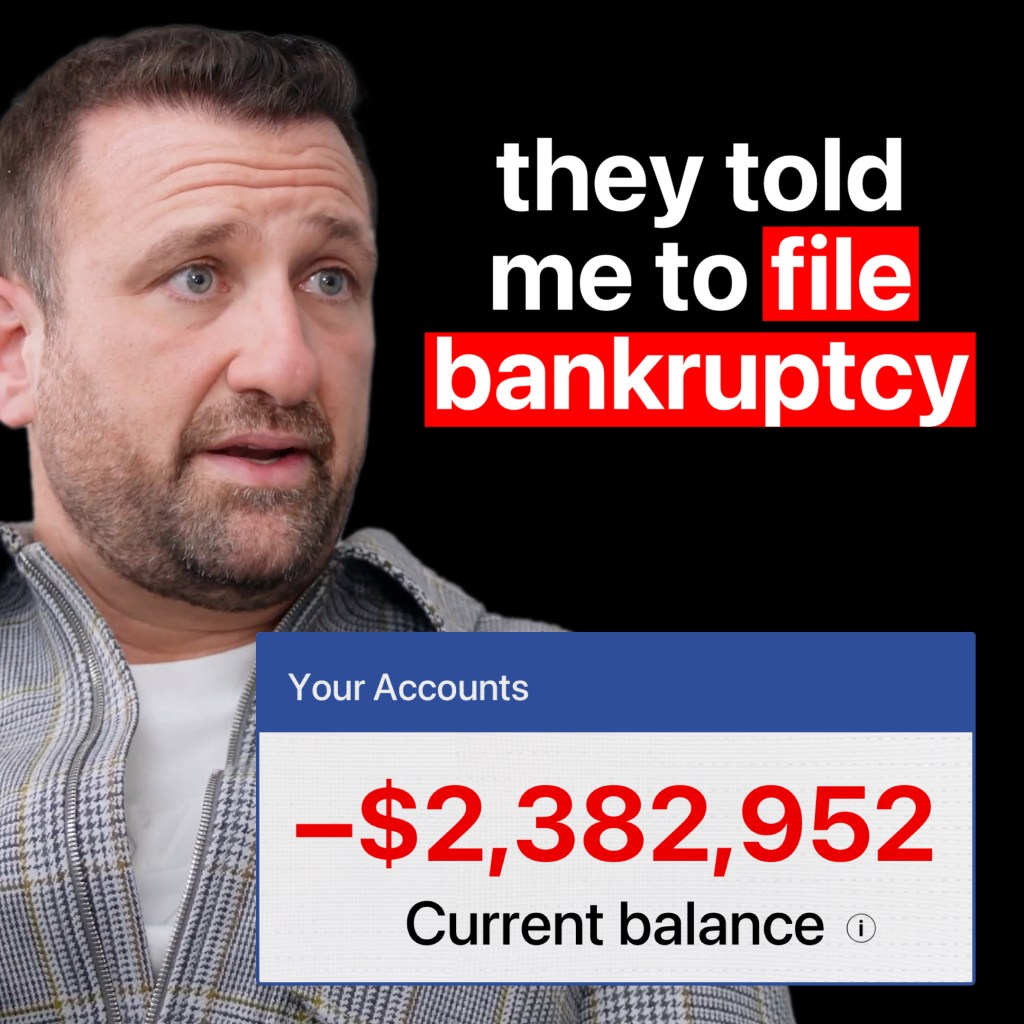
But right now, my focus tended to start out in Young Professionals. I actually almost lost my business. I was basically unemployed for a few months and I said, “You know what? I have a frustration with this community. We don’t have enough financial literacy.” I went to them, I started a financial literacy workshop, and just until this past September, I ended up chairing the board.
About a year and a half ago, I started getting involved in the Sephardic Community Federation. I always had an itch for politics—loved it. Frankly speaking, you can’t make it as a politician in this community and pay the tuition bills, but the next best thing you could do is be the liaison between the community and the politicians. It’s one thing to be the liaison; it’s another thing to be the liaison that knows the inner workings. I love what they do. I just learn from the immense amount of experience that Sam Sutton and Ronnie Tawil give me. Right now I take charge of their digital presence. I engage in the multiple networking events.
It’s a privilege that I think they get too little recognition for. If they walk into City Hall or they walk into a member of Congress’s office, they’re known. Thanks to them, if any board member on the SCF walks into City Hall on their own, when you say “SCF,” they know what you’re talking about and they know that you have sway, you have power. It’s networking on steroids, and things that I love.
Why am I involved in the SCF? Because I had a period in time where I thought this community was no good, where I said to myself, “This community has a lot more bad than good to offer me.” Then I had a different experience where I said to myself, “Everything has its bad and good, but this community is Irreplaceable.” Call it a battle wound, but eventually I came to the realization—my young adolescent self that faced the decision “Do I leave? Do I come back?” was: “You know what? I’m coming back, and I see its beauty and I’m going to fight for it. I want my kids to grow up in it and I want to be a part of it.”
So those are my two main organizations. Something I have a little special place for in my heart and take on an occasional basis is the Center. I think the Center serves an also irreplaceable purpose in this community.
Fourthly: Community Security Service. About 2020 or so, where there were shootings in Jersey City on Jewish institutions, and since October 7th, what happened to Jewish institutions? I said to myself, “The community needs our young men, especially, to step up, learn defensive tactics, learn what it’s like to defend yourself against a potential stabbing attack, potential bomb threat, potential firearm incident, and protect our institutions.”
My CSS involvement consists of taking shifts in shul where I’m the security guard on call—a volunteer. If something happens in the synagogue, people look to the CSS team for guidance. “What do I do now?” We are trained as to how to address if somebody tries to infiltrate the shul. We’re trained how to respond in the event there’s a medical emergency and there’s a crowd of people after Kiddush. Those are the different community organizations that I have a personal stake in. Mainly I’ve been trying to focus on Sephardic Community Federation, CSS, and you always have to remember: work comes first. That’s where I’m at.
Victor M. Braca: I think the focus is key. We’re going to get to that because I’m personally curious on the time management systems you might have to juggle all these things.
So you’re selling Coca-Cola, you’re selling candy, and you’re selling on Amazon in high school. Tell me about high school a little bit. How was it a transformative experience for you? You told me that you got yourself involved in a ton of extracurriculars. What did that teach you?
Charles Chakkalo: In elementary school, Magen David, everybody knows the currency of social approval is level of skill in basketball. That’s the currency of social approval probably beyond Magen David, but I was no superstar. My friends were. I was routinely bullied. My parents saw this, wised me up, and then I realized I had no real friends.
By this time, it’s like 8th grade. I get into high school and, again, I have no real friends. So I said to myself, “You know how I’m going to get real friends? If there’s an extracurricular activity, I’m going to put my name on that sheet.” If there was a signup sheet, my name was on it.
And you’re talking to a guy who already went against the Magen orthodoxy—I went to Flatbush. So I’m a traitor! What did I love about Flatbush? I loved that they had a debate team, they had a Model Congress. I mean, you think any of my old friends knew what Congress was? There was a bunch of secular, worldly activity there that was just missing in my life.
Victor M. Braca: Since 2003, the Hedaya Capital Group has been a trusted partner to entrepreneurs like you and I, helping them unlock the growth potential of their businesses with tailored accounts receivable factoring and working capital solutions. With their innovative 360-degree approach, Hedaya Capital goes beyond just financial support. They take the time to understand every facet of your business, ensuring that all factors are considered in creating the perfect solution for you. At Hedaya Capital, they combine the reliability of time-tested values with the creativity of new-school thinking, offering a powerful mix that helps businesses not only survive but thrive in today’s competitive landscape.
Whether you’re looking to improve cash flow, protect your assets, or scale your business, Hedaya Capital has the expertise and resources to guide you every step of the way. To learn more about how Hedaya Capital can fuel your business’s growth, visit HedayaCapital.com or email info@HedayaCapital.com. Again, that’s HedayaCapital.com or email info@HedayaCapital.com. Thank you again to the Hedaya Capital Group for sponsoring this episode of Momentum.
Let’s get back into it. Take me into the conversation with your immigrant father who is very focused on education. I’m sure that “I’m dropping out of law school” or “I’m not going to pursue law as a degree, I’m going to work”…
Charles Chakkalo: Oh, he didn’t even want it to begin with, really! Being fully transparent here, I took my LSAT once. I scored below the 50th percentile. I remember when I got the score, I was bummed. Mind you, I graduated with a 3.98 GPA in college, so to get below the 50th percentile was such a blow.
I said, “You know what? I’m still going to make it. I’m still going to grind and I’m going to do it.”
My dad said, “You’re either going to be the LeBron of lawyers or you’re not doing law.”
I was going back and forth: “Do I prove Dad wrong? Do I not?” I took an LSAT course, and the person who was running the LSAT course could get a 180 with their eyes closed, which is a perfect score. She worked the dream job, corporate law, made partner, the whole thing. I sat down and had a conversation with her and she goes, “Why do you want to become a lawyer? What do you want to do?”
I said, “Listen, I love public presentation, I love procedure, I love rules, I love trying to outsmart the other side. It’s the adversarial process.”
And then she goes, “What kind of life do you want to live?”
I said, “Well, I want the equivalent of… I want a Magen David, I want a Deal, I want an Aruba.”
She goes, “You don’t want to be a lawyer. You want to be rich. Don’t be the lawyer, be the client.”
So when my brother tapped me on the shoulder at the end of college and he goes, “You want to try this for real?” I still had my application ready. I was going to do law school part-time while running the business. Then I did come to that realization: law school doesn’t need me. If business fails, it’ll still be there.
It’s an itch in the back of my mind. Maybe I win the lotto one day and I don’t have to worry about work, I go back to law school just for the fun of it. Over the past year, my business faced a couple of sizable legal struggles—legal actions—and obviously I took point on it. I’m partners with my brothers now. We got a legal notice—it’s straight to Charles. “We don’t get involved in that; that’s his business.” As recently as last week, we got a legal notice, and I was charged with responding to it. Abraham Lincoln said anybody who self-represents has an idiot for a client, but I took a stab at it and it actually ended pretty amicably. I like to think I know when to consult outside counsel and when to take it in-house, but in the end of the day, I hope I’m the client.
Victor M. Braca: Love it. Tell me a little bit about growing your business. Your brother calls you up: “You want to do this for real?”
Charles Chakkalo: “Let’s do it.” My brothers are really no different. They were raised to also work for their freedom. That’s what they did for the beginning of their high school and college days. We had not a lot of money, but money saved up from working. We’re living at home, we don’t really have expenses.
My dad is willing to stay on board as a consultant. He hears that we’re going to start our own business, he goes, “You know what? I have 30, 40 years of retail experience. You can come to me with any situation, I’ll be more than happy to lend that to you, but I won’t give you a nickel.”
My brother and I would take out capital we put in this business. I remember at the time, I thought I was all smart and I knew what I was doing. I had a Roth IRA at 18 years old. My brother had a few thousand; I had maybe 1,000 in my Roth IRA. I did what you’re never supposed to do and withdrew from the Roth, and we put it in.
At that time I had a car because I had a deal: if you get a semester off college AP credits… I’m paying for gas myself, but I got the car. We’re using that car to go up and down the East Coast. I’m telling you, as far north as Massachusetts. Because the dollar store had light bulbs that they sold for a dollar and sold online for as high as $39 or even $44.99.
We used to go to college twice a week. He was Monday/Wednesday, I was Monday/Thursday. Instead of turning on the heat in the car, we used to pack on extra layers to save on the gas. We used to go up the East Coast, start from the crack of dawn, so by the time we made it to the first dollar store they would open. Clean out the shelf. Go all the way up north. Package the items in the car, drop it off at a FedEx or post office location so we don’t have to carry the items back. Car is empty, so when we come back down we can load the car again with more light bulbs. By the time we get to Brooklyn at 11:00 or so o’clock, we can work on repacking those to ship out the next day.
That was the beginning in a room in a basement. We were already into the ropes of selling online somewhat just because of our childhood experiences. It started out with light bulbs that we simply resold. It then ventured into things like detergents, toothbrushes, and toothpastes. That grew. The way of finding deals just—God blessed us with it. It just came our way. It turned into still running out of that basement, which eventually turned into: “Listen, we know that we can’t run a sustainable business reselling other brands. We’d have to start our own.”
In about 2020 or so, we started our own brand, and that was the name of the game because there’s no person who can cut off your supply. Until today, we’re still in the resale business, but we’re doing a hybrid model. Resale is very high volume, but private label—selling your own brand—is lower volume but a lot higher margin, a lot more control of where your goods are and how much you’re selling. In life, I think a lot of things are in the middle. You have people who say Retail Arbitrage—which is what resale is—is dead, so don’t do it at all, you should only do private label. You have other people that say, “Private label? You think you can manufacture goods better than Colgate-Palmolive? No.” So we actually do a hybrid. We fall somewhere in the middle, which means a lot to my identity.
Victor M. Braca: Before we shift into advice, I want to go into your business a little more. You’re driving up and down the East Coast with your brother from dawn till 11:00 p.m. and then some. Tell me some stories from growing the business. I think that’s what really relates with people.
Charles Chakkalo: I went into how we used to pack on extra layers because it was the dead of winter instead of turning on the heat. There were also the elements of… remember we got to the point where we needed help. We couldn’t sit there and pack the packages on our own. There are only 24 hours in a day.
We used to leave Deal as 21, 22-year-olds on Saturday nights to go to work. Some people may view that as an abuse of human rights, but that’s frankly what we used to do. It got to points where… we didn’t take off on holidays. We didn’t take off on 4th of July because it was the 4th of July. On Memorial Day because it was Memorial Day.
I remember when I was hiring: first we hired one employee and I’m like, “Oh my God, I have to pay this guy and he gets paid whether business does well or not, no matter what.” And then the second guy. I remember the second one: “But now I have to make sure he gets paid by the end of the week too.” I remember those two struggles were one step for me.
Another step was during COVID. We were faced with obviously unprecedented times, and in the e-commerce field that was a field of its own because you were sort of in-person but sort of online. You weren’t shuttered as far as retail locations, but you maybe would have been shuttered as far as opening your shipping facility. We were selling soaps, detergents, home goods. Do you know what it was like to get a bar of soap in 2020?
We were faced with too many orders that we could possibly fulfill. I remember if somebody had a pulse, we would hire them to ship product. We were working—we were sleeping in the warehouse more than we were sleeping at home. It got to a point we needed to ship out a truckload of goods. A truckload is a 53-foot container, 26 to 27 pallets depending on how you pack the truck. We didn’t have a facility that could actually fit 26 or 27 built pallets.
The way we used to send out a truck was we used to line up 26, 27 pallets on the sidewalk—threatened to be ticketed whenever we did that—to not obstruct the sidewalk. Our work is really in “the hood”—it’s not exactly the most friendly neighborhood either. We lined up the 26, 27 pallets on the sidewalk. The truck canceled the appointment. We had built pallets of merchandise that needed to go out. It’s not like we had a facility where we could put the pallets back inside, close the gate, lock it up, and come back tomorrow.
My brother and myself, we took two chairs—one sat over here, one sat over there—and we’re sitting on the sidewalk in the middle of the night in a dangerous neighborhood watching our goods.
Victor M. Braca: That’s crazy.
Charles Chakkalo: And on the phone with shipper support. Truck came 3:00 in the morning from Pennsylvania. Him and myself, just us two, did what four employees of ours would have done. We loaded the trailer on our own, we drove back to Brooklyn, slept till Kingdom Come, woke up the next morning, and we looked at each other and we’re like, “We’re getting a space. This will not happen again.”
We got our first location where we could put the merchandise back inside, close the gate, and come back tomorrow. It’s a miracle! We got a lot better grip on the system. It’s stories like that where you can’t replicate it, you can’t relate that to a different person in their entrepreneurial journey.
At that new location, it was a 25 by 100 storefront that we were using as a shipping location. No problem, but it had a little step to it, so you couldn’t take pallets in and out because of the step. What we used to do: take two or three guys, push a pallet really strong, and it overcomes the step. You know when 5:00 comes around, an employee that works hourly… you could put a brick wall in front of them, they’ll walk through that brick wall because it’s 5:00. The employees left for the day and we weren’t done bringing the pallets inside.
So it was my brother and myself. We tried once, twice, three, four times bringing it inside—the pallet didn’t work. Again, we had a bunch of merchandise on the sidewalk; we had to get it inside. People were stealing from it actively in front of me!
What am I going to do? Leave the three pallets on the sidewalk and try to pursue the guy who stole one thing for $3? I actually called another person on the sidewalk and I go, “You want $5? We’re going to push these inside.” Push them inside, close the gate, lock the door, done for the day. The thought of soliciting some guy on the sidewalk for $5 to help me push something inside instead of trying to figure out some way to deal with the situation… all of it was building experiences of “you’re going to grind, you’re going to build this.”
If somebody says that I didn’t get my hands dirty, I know I did. We were down a partner, and we moved heaven and earth to get a certain truckload out. Again, this whole business is all logistically based; the different trucks you get out and the different ways you pack the trailers reflect your margins almost identically.
I was actually loading a trailer with a forklift myself. The truck was actually heading out; we didn’t give him the all-clear. We put in the last pallet, and right after I closed the door, he started pulling out of the dock. I wasn’t done giving him a seal—it has to be sealed so the merchandise doesn’t get corrupted in any way. It was a cold and rainy day. The driver’s pulling out—this was just a couple months ago—and I see a big, disgusting puddle of rainwater. He’s driving straight into a busy street and he’s turning in, and I’m like, “Uh-uh. That’s a disgusting puddle, but the seal’s got to go.”
I’m running after the truck into a busy road. God help me, he had my safety in mind; he short-stopped, the trailer came backwards, the trailer clicked in, and then I stomped straight into that puddle—full disgusting pants and sock were drenched. But you know what? I came back to my brothers and I’m like, “The next person who says I didn’t give it all to this business, you better know about that puddle.”
Victor M. Braca: That’s crazy.
Charles Chakkalo: All of those formative experiences were: “I’m giving this my all. I’m sleeping here. I have a spot in the warehouse that my head rested on more than the house.”
The grind… you cannot beat the grind. I’m part of a mastermind with other e-commerce owners and founders. One of them, Steve Chu, has a favorite saying: “You don’t decide to fail, but you decide to stop trying.” And it’s true.
Victor M. Braca: Let’s shift over to some lessons that you’ve learned. You’re a super social guy. How do you go about connecting with people, meeting new people, networking? Not the superficial fake networking that we hear about on LinkedIn, but real networking.
Charles Chakkalo: Nowadays it seems to be the fad to be posting on LinkedIn very regularly as if you’re some sort of authority figure. But the content’s got to be useful; the content’s got to be genuine. Don’t waste people’s time.
I was on LinkedIn when I was 18 and change, and someone was trying to rank some article. He said the only line I remember: “The networking that you do happens everywhere but networking events.”
Victor M. Braca: That’s a good one.
Charles Chakkalo: Everywhere else. At networking events, everybody has a number on them. Someone wants something from you; you want something from them. You want a client, you want a lead, you want a paying customer. But when you’re walking down a street, when you’re in a subway car, when you’re in shul, there is networking. Networking is genuine connections between people. When you don’t view them as a number—if I know a person is looking for a job and I know another person has a position open, I can make that connection. I didn’t view the person who needed the job as a number, and I didn’t view the company as a “you owe me one.” Now the person that I just employed sees that I was genuinely interested in their best interest.
You never know what life is going to bring you. When you can tap into that network of genuine connections you made, you helped that person out and they now know you. There’s a point where a friend of mine was leasing a car and he has a great network. I told him, “Call this guy up, he has a great deal on a Volvo.”
He goes, “Oh yeah, that guy! I know that guy. He helped me out with X and Y and Z.” The guy just wanted the same special I got for a car lease, but because of the genuine outreach he did outside of networking events, he got that connection made for him, and the broker went above and beyond to make sure he got the same deal I did. Small example.
When I was chair of SBH Young Professionals… going back to my social challenges in elementary school, there was one other kid who was in sort of the same position as myself who wasn’t as highly regarded because of his basketball skills. Now, he is more successful than any one of those other friends.
When I’m chair of SBH YP, he approaches me. We wanted to run a real estate event. He’s a big-time real estate guy right now. He approached me saying, “I want to sponsor your division,” and that’s a hefty bill. He calls me up and he goes, “Wow, remember when we were in the Shaare Zion basement?”
I go, “Yeah.”
And then he goes, “Now we’re here.”
I’m like, “Now we’re here. Crazy.”
I could have been an annoying kind of guy to this person. I could have joined in with my friends to make him feel bad so that maybe they could include me, but the networking started when I was a kid. It didn’t start when I was 18, 19, 20. Now that kid remembered who was going to sponsor the division of SBH. That kid remembered that we were the only two that were punching bags in the basement of Shaare Zion. When it came to me running this division, he remembered. He goes, “It makes sense that you’re here and I’m here.” I said, “It does. It does.” The networking started from then.
That’s one facet of networking—it happens outside of networking events. The second side is industry-specific conferences. If there’s a conference in New York that’s e-commerce focused, I’m there. Everybody knows me as the guy who goes to conferences. I publish content based on what I see from those conferences because when people throw a conference, it’s either a money grab or they really want to deliver value. I just publish content for the good of other e-commerce owners on my LinkedIn and a lot of people started tuning into it.
When you’re there and you’re known in the industry, people realize that you’re missed. You get to learn the newest tactics, but you also get to get a feel of how the network is evolving. If you have a lot of agencies at one event, let’s say it’s an Amazon-focused event, and there are 50 agencies, you know that the Amazon field is an up-and-coming field. Recently there are a lot fewer agencies because margins are becoming a lot less.
Amazon themselves is pressing the sellers even more from their margin to get into Amazon’s pocket. I remember when Amazon only took 40% of an average seller’s gross revenue; now they take 60%. If you go to their Q1 earnings, you see exactly that. Not to say that Amazon isn’t a viable business, but you get an industry-wide view at these conferences of where the industry is going, how you can mold, and what other connections you can tap into.
Victor M. Braca: What’s the difference between a conference and a networking event?
Charles Chakkalo: A networking event is labeled as such. A conference… networking is a natural byproduct. At a networking event, people are super hyper-focused on “What can you give me? What can I give you?” If you go to a conference, it’s expected that you network. You could just sit on the side and watch lectures or have the free food, but you’re not really expected to network.
Different conferences can lead you to different things. In e-commerce, it led me into a different realm over the past year of buying and acquisition of businesses. I went into a venture with an e-commerce friend that I made at a conference, and it opened me up into a new world of buying and selling businesses. Now: How do you evaluate a business? What is EBITDA? What is SDE? All these cool acronyms. It led me into a different business mindset. I learned something; I’m not an expert in it, but I got to know a fair bit just from expanding from the conference network.
Victor M. Braca: I know from observing you online that you look at every interaction as an opportunity to learn, and that ties into your Centrist perspective. Can you tell me about both of those things?
Charles Chakkalo: My dad always said, “You don’t know what you don’t know until you know.” A much clearer way of saying it… I’ve reformulated that quote: “Act as if you know nothing. Learn as if you’re a beginner.” Routinely I would go to an “E-commerce 101” workshop they’re running and learn the basics. By basics, I mean basics. It’s not like I would learn something new, but I may learn an angle that I didn’t know.
Every other person is going through something of strength and of weakness. Every other person has a different perspective than you do. The only way you can broaden your understanding and broaden your perspective is by interacting with those people in a genuine way.
It extends beyond business. In business, you can be involved in Retail Arbitrage, private label, or maybe both. There are plenty of people who will say one extreme or the other extreme is dead. I decided to do both.
I’ve always been into news and politics. I even dabbled with it online; I started putting out my own content about six months ago. I follow Michael Smerconish—he’s an idol of mine. He barks in this idea of: you have to take it all in and you have to be at least open to understanding a variety of perspectives. Smerconish is a news anchor on CNN and hosts a five-day-a-week program on SiriusXM. He reads Fox, he reads MSNBC, he offers his Centrist point of view. He’s definitely opinionated but not a doctrinaire.
You have some people sitting around your Shabbat or Thanksgiving table saying, “Trump is the be-all-save-all second Mashiah, he’s coming to save us all,” and there’s no talking him out of it. The vast minority of this community thinks to the contrary. It’s very important, at least when you’re out there interacting with the real world, to know that there are people who think that a second Trump presidency is going to be detrimental to the country. The only way you will know what they’re thinking is by interacting with them—still thinking that they’re human. You could disagree civilly, but they have some merit to their argument. No argument is perfect. There’s just that doctrine to my identity of centrism: being well-informed with a variety of perspectives is the best path forward.
Going back to my college days, I majored in philosophy—political philosophy, to be specific. Nothing business-centric. But I loved the deep philosophical thought, and here I am running a business. The intricacies of logic, logical formulations, contrapositives—things like that were super useful to starting a business, actually.
One of the more growth-inducing moments of my college career was Operation Protective Edge in Israel. I think it was just an air operation into Gaza. I had a very virulent, virulent anti-Semitic campus. It’s something I shamelessly plug on my YouTube channel. Hunter College at the time had a protest where they gladly said, “Zionists out of CUNY!” and “Jews should roll in the streets!” There’s a Chancellor of CUNY report that happened as a result, which I was intimately involved in.
It evolved into what happened this year. My wife—who I encouraged to go to Hunter as well—was at a protest where they said, “Jews, Jews, pick a side! You’re committing genocide!” Not Israelis, not Zionists. The facade of “we love Jews, not Zionists” went out the window.
Until now, that campus climate is very hostile to Jews. I will say I’m very appreciative for those experiences. I got to see what that garbage had to say about Jews. I got to see and learn how to react. I got to see and integrate with Arabs on campus because of my background. I would say “Shlomo”—they would think I’m one of them. After they said “Jews should roll on the streets,” when I wear a Sahal the next day to Arabic class, I knew exactly how they worked.
I was privileged and spoiled enough to grow up in the greatest country that’s ever existed in the world, especially the greatest country that’s ever existed to Jews that is not a Jewish state. There’s a variety of perspectives involved here. When I was on campus, I took the approach at first: “Israel’s always right, Israel can do no wrong.”
Jido sat me down and he told me to my face: “Number one, you’re going to school to learn; you’re not going to school to be an advocate. Number two, what makes you think one side is always right and the other side is always wrong? There’s got to be an in-between.”
One caveat where I’ll end off: in the aftermath of October 7th, I was actually solicited by the Smerconish team, who run their own newsletter, to write an article. I felt so emotionally about October 7th—that’s actually when I started my political commentary. I wrote: “Everything has its ‘you’re either always right or always wrong,’ but we’re about to see how the events of October 7th—which are always wrong in my opinion, which is 100% evil, which there is no justification for—we’re about to see for sure how some people will start making that ‘well, they have a point’ argument.”
I go, “No, no, no. This is the one instance where there is no validity to it. This is that one time where there’s only wrong and no right.” When we say 99.999% of the time there’s validity, this is the 0.1. I’m aware that 99.9% is the rest of your life. But when you have something that tragic, I went out into my Centrist platform with my Centrist colleagues and Buddies that we meet up with every morning on a livestream and say, “This was 100% wrong.” For us Centrists who believe there’s validity to a variety of perspectives, there is that 0.1% of the time where that’s just wrong. Killing a CEO in cold blood is just wrong. Whatever grievance you may have about the insurance industry is completely different; it doesn’t justify premeditated murder. That’s where I am on my philosophical ideology of centrism.
Victor M. Braca: You told us about how you led SBH Young Professionals, an amazing organization. I was involved a little bit; that’s how we originally met when I was a little kid hustling making their promotional video.
Charles Chakkalo: Three or four years ago. Not even. When I was on a Zoom call and I heard the Flatbush bell, I’m like, “Whoa!” Takes you back.
Victor M. Braca: For sure. But so YP is an organization that provides mentorship and internship opportunities. They host events really just to get young professionals involved and to put them ahead. You’ve observed a lot of young adults through your work. What are some traits or skills that you’ve observed in standout achievers that young adults like me can adopt?
Charles Chakkalo: An openness to learn. The most jaw-dropping, awe-inspiring youth of our community is that openness. When you have a know-it-all kind of 18, 19, 20-year-old who thinks they know everything and they’re not open to learning… if you’re not open to taking your first job, being quiet, asking questions—smart questions—learning for the first six months before offering your opinion, you’re not fit for the job. You have to get in what you’re doing first. Learn as much as you possibly can.
After you’re done with work, go home and do more research about the work you’re doing. When you’re thinking about what career paths to pursue, be open to learning. “Maybe I’d be interested in that.” Take a random course in college as an elective just because it may open up a different door.
Go back to the basics. Look at the way you present yourself: what you wear, what time you show up to appointments. Be respectful of other people’s time. All of it is openness to learning; all of it is being courteous. It’s a combination of humility. It starts from the ground up: the initiative to do something more, being open to learn, and also it starts with Middot, too. Being courteous of other people’s time, promptness, how you dress, present yourself, regard yourself. All of it centers around from Middot upwards.
Victor M. Braca: Guys, sorry for the quick interruption. I just want to ask you: please, if you’re enjoying this podcast, share with a friend, leave a comment, a like—anything you could do to help grow the podcast would be greatly appreciated. Back to the episode.
What is the first step that an ambitious young person can take? The one thing they can do that would be great for them?
Charles Chakkalo: I would say find a mentor. A mentor doesn’t have to be somebody that’s going to be with you for the next 20 years. Find a mentor that’s in an industry that you think you want to be in, or find someone who’s in the industry and ask them things about it.
Somebody pulled me aside last week knowing that I was a YP involved person, asking, “How do you recommend I map out the next three steps of my life?”
I said, “Well, think of your goal. Do you want the Magen David, Deal, Aruba life? Divide that into three steps. The first step is you have to get involved in something for business.”
The next step for them to take tomorrow: learn about the industry, learn about personal finances. All of that is publicly available. But as far as interaction, the thing they can do tomorrow is walk into the Center, walk into their shul, walk into whatever other community institution they can, and say hello to the next person. “How you doing?”
It’s a combination of all that because that interaction will not just lead to their education in learning about other people, but will unfold natural opportunities that will come their way. If they don’t know what they want to do, you seek out internships. You keep on “trying.” You want to start being ambitious from young? Starting different companies, different ventures? You want to start raising capital from other investors so that you can start a company that you can eventually head and pay that tuition? Go ahead, do it. Solicit advice and feedback from other people who’ve done that—seed raising, A1 rounds, and so on. You should know what those mean. If you don’t, go figure it out. Keep trying. You won’t know what they mean from the beginning, but if you spend an hour on YouTube, you will.
Victor M. Braca: Volunteer work, running your company, raising a family, content creation… okay, that’s a lot. How do you manage it? Time management systems, a mindset? What is it?
Charles Chakkalo: Because I got burnt, in my opinion, badly in high school, and it was so formative to myself, I learned that focus was finite. You have 24 hours in a day and everything has to be systematized. Number one: what’s most important to me is my family, which means also my financial security. Business comes first. Translation into the high school self: school and academics come first. If you’re faced with a decision—”Do I go to basketball practice or study for this test?”—you’re studying for the test.
I learned this when I was in high school. I came back from hanging out with my friends at 2:00 or 3:00 in the morning. wasn’t doing anything bad, just was out late. My dad asked me the next morning, “When did you get home last night?”
I said, “2:00, 3:00,” without shame; I wasn’t doing anything wrong.
He goes, “There’s something called time management. You have to manage your time. There’s a time for this and there’s a time for that.”
My very smart adolescent self told him, “Yeah, all right, fine. All day until 3:00 in the morning was my time management for social activity!” I know my adult self looks back at it now and says, “I get it. I get it.” 2:00 or 3:00 might have been a little excessive. What do you expect high school people to do?
But anyway, the content creation—I always wanted to do it. This kind of stuff—podcasting and content creation—engaging with audiences, especially in the political realm. And listen, it could get dangerous; people can hold certain words against you, which I’m sure will happen here eventually.
I asked my wife about it, she was okay with it, and I said, “You know, it’s a burning passion of mine. It’s a hobby of mine.” For whatever followers I do have, I’m still available with them; I still interact with them. We still speak about different news developments and different Centrist points of view. We still talk about it. It’s still a hobby of mine.
Realize how I’m saying “hobby.” I haven’t put out a piece of content since about September. Imagine you’re a politically inclined content creator and you haven’t put out content since September. We’ve had a presidential election, we’ve had assassination attempts, we’ve had a variety of political developments. This was not exactly a quiet news cycle. But you know what? My family came first. I was moving, and work—we opened up a new warehouse. Between having a new baby and having a new job, basically, my hobby had to take a backseat.
Was it easy? No. Am I haunted every day? Yeah, I want to start this back up. But there’s that responsible “battle wound” telling me, “Charles, if you divide your focus up too much, it’ll all implode. Just remember your priorities: business (which is the same thing as family), hobby, hobby.” I didn’t get to enjoy that much, but hopefully now when things quiet down in my personal life, I’ll be able to come back.
Victor M. Braca: Any favorite books?
Charles Chakkalo: I love Talk by Michael Smerconish. Big fan of his. As far as other books, I would say The Good Life. The longest study on happiness ever done was by Harvard, which consisted of President Kennedy going back almost a hundred years. It’s about what part of life brings the most happiness. What do you think that is?
Victor M. Braca: Economic situation and stability?
Charles Chakkalo: They did research to that, but keep going. It is that to a point…
Victor M. Braca: Health?
Charles Chakkalo: Networking and relationships. Relationships, relationships, relationships. The authors of this study—which is still going on, it’s multigenerational—the one piece of advice: go to that person you didn’t speak to in maybe a year or so that’s in your contacts on your phone, just say hi, how you doing. The deeper those relationships are, the more quality those relationships are, is directly correlated to the level of happiness they have observed over the past 100 years. So The Good Life is a recommendation for you.
Scott Galloway, The Algebra of Wealth. Every young adult, especially in this community, should read that cover to cover and live it. People should be following Scott Galloway; people should be following Jordan Peterson. I don’t say that out of their political leanings—Jordan’s right and Galloway is left—but ultimately when it comes to self-sufficient men and healthy masculinity, these people know what they’re talking about. The Algebra of Wealth definitely is one.
The Coddling of the American Mind is another. Bowling Alone—I forget by who.
Alan Dershowitz, Abraham: The First But Not The Last Jewish Lawyer. It’s about how Abraham and Moses would both tell God and challenge him, saying and answering back to God, “How dare you do that?” when God wanted to destroy Sodom and when God wanted to destroy the Jewish people for worshiping an idol. From that, we learn about the power of questioning authority in the Jewish religion, even when it comes from man questioning God. Alan Dershowitz being the preeminent scholar on constitutional law—it’s pretty cool in a religious context.
Victor M. Braca: To wrap up, I want to ask you… the show is called Momentum. I want to hear your Momentum Moment—the moment where things started to catch on, you were picking up steam, you realized you could do what you do as a business. It could be in business, personal life, or volunteer work.
Charles Chakkalo: I want to start off by saying I’m not some sort of Mark Zuckerberg or Elon Musk kind of guy. It’s not like I’ve only faced success before. I faced failure as recently as last week; our business actually took a hit, a pretty sizable hit over 2024.
But the one thing I keep on coming back to is I’m not going to stop trying. My Momentum Moment—something that was an unlock for me—was something that was developmental in stages. I remember starting the business… in my life I’ve only seen four digits in a bank account. A number, a comma, and another three numbers. Just a thousand. I previously explained to you the awe I had when I held my first $100 bill.
The unlock for me at the first stage was: whoa, it goes above four digits, there’s five digits. When you’re dealing with every extra digit, it’s not like you’re making that money, but you’re seeing that you’re dealing with that money. “Whoa, okay, I can do this. I added a digit.”
Another Momentum Moment was for the first time when we unlocked over a million dollars in gross revenue. We never saw another… forget about another digit, another comma! We got a comma. It was just a self-reinforcement of “we can do it.” I turned to my brothers and we’re like, “We can do it.” For some reason, God blessed us three brothers with very different talents who don’t overlap, and we did it.
To culminate into something as recently as the past year and a half: we invested in a real estate property, which is sort of a passive income thing. We renovated it. We got that renovation experience. We used that renovation experience to open and rebuild a new warehouse. So we had the renovation experience and we had the property experience to acquire a new warehouse property and do the construction to it. We opened it. We walked in. We did it.
It’s all new, it’s all ours, it’s all for the first time. 28-year-old me can say, “So-and-so, how about you come to my office?” It took me till now, but I have a place I can call mine, and I know it all started from light bulbs. When I walk in every day, it’s mine—or at least my brothers’ and mine.
Victor M. Braca: So you’re telling me that you don’t sit on the sidewalk anymore guarding the containers?
Charles Chakkalo: Well, I’m not there sitting and waiting at the mercy of a trucking company to send a driver that’s willing to cooperate. I’ve come a long way. I can close the gate and know if the truck doesn’t come today, I’ll just open up. It’s the little things.
The way we loaded that truck: we took another truck that had a liftgate on it, put it back to back with the trailer, backed into the other, and then dragged it over. Each pallet, each 26 pallets—it’s got to take like two hours. It’s amazing when you see the owners of the company do something because their heart is in it. It’s their heart on the line, versus it’ll take four employees to do it because they get paid by the hour. We don’t sit on the sidewalk anymore, but we do it in different ways.
Victor M. Braca: Before we close, anything else you want to tell young adults or our audience?
Charles Chakkalo: The outside world is something that we live in and have to engage with, and we shouldn’t be afraid of. The community has its pluses and its minuses, but this is where we’re from, this is what we’re for, and this is what we come back to. We’re only as good as we make it. We can’t forget it, and we have to give it what it gave us.
It gave us a loving community where we knew our values, we know where we came from, and we can only give back to what we took from it. I want to give back to this community the security it gave me, the education it gave me, the network it gave me. That’s why I decided to have kids in this community, that’s why I decided to marry in the community.
What I want to say to any young men out there is it’s okay to see what else is there out there, but just know this community is very special, and when you come back to it you’re going to have a different appreciation for it. Is it easy? No. I mean, I’m feeling it now with a two-year-old and a three-week-old. 28-year-old guy. Is it pretty having to go to work on a Saturday night when you’re 20 years old? No. Do other friends look at you like there’s something mentally sick with you? Yes!
I didn’t even touch on the fact that I was a lifeguard and I basically sold all my Sundays from when I was 16 to 18 years old with very little social life. There’s nothing wrong with that hustle. That’s what I want to say.
Victor M. Braca: Amazing, Charles. Thank you so much.
Charles Chakkalo: It’s my pleasure and honor. Thank you for taking the time.
Victor M. Braca: It’s great speaking to you. You know what, are we going on two hours? I love it.
Charles Chakkalo: Thank you so much.
Victor M. Braca: And we all have our eyes on you to see what’s your next move—content, Sephardic Community Federation, or business first?
Charles Chakkalo: Business comes first because business is family.
Victor M. Braca: Beautiful. Thank you.
Wow, great. Thank you for listening until the end. I really hope you enjoyed this episode, my conversation with Charles Chakkalo. I want to share my top three takeaways from this conversation:
Number one: The importance of earning your success. Charles’s upbringing instilled in him a deep understanding that nothing is handed to you. Whether it was working for his grandfather at 10 years old or building his e-commerce business, he learned that true success comes from hard work and perseverance.
Number two: The value of community. Charles’s commitment to organizations like the Sephardic Community Federation, SBH, and the Community Security Service highlights the importance of giving back and supporting your community. He showed us that building a strong network and contributing to something larger than yourself is essential.
Finally, number three: The lesson of knowing when to pivot and adapt. From his early entrepreneurial ventures, Charles demonstrated the ability to learn from setbacks and adjust his strategy. Remember when his father told him “quit while you’re ahead” when he was selling candy in high school, which was against the rules? If there’s one thing we learned from Charles, it’s that adaptability is key.
Charles’s story is an amazing reminder that with hard work, dedication, and a commitment to your community, you can achieve remarkable things. Thank you, Charles, for coming onto the show and inspiring us all.
If you enjoyed this conversation, I encourage you to check out my conversation with Alan Shama, founder of e.l.f. Cosmetics. In that episode, Alan shares his journey from a challenging childhood and a challenging adult life to building a 10-billion-dollar brand. You can find that on all podcast platforms by searching “Momentum Alan Shama” or linked in the show notes below.
With that said, thank you so much for watching this episode. I really hope you enjoyed. Guys, leave a comment! I’m always looking for your feedback—anything that you like about the show, anything that you would like to see me implement in later episodes. Please, anything. I would really, really appreciate it. Share this with a friend who you think would enjoy it. Charles’s story was great, and we have so many episodes across all different career fields—whether it be real estate, marketing, wholesale, retail, interior design—I mean, the list goes on.
Thank you so much for watching. Until next time. Oh, and thank you again to the Hedaya Capital Group for sponsoring this episode.



 Momentum
Leave a comment