




In this episode, I sit down with Isaac Hazan, the entrepreneur behind two successful companies: Isaac Morris, a leading wholesale apparel business, and CultureFly, known for its creative subscription boxes for pop culture fans.
We explore Isaac’s journey from delivering prescriptions as a teenager to learning the ropes of business from his father, and ultimately building two thriving companies. Isaac shares insights on overcoming challenges, adapting to industry changes, and the importance of perseverance.
Throughout our conversation, Isaac also highlights his commitment to community values and giving back, and he offers valuable lessons on resilience, adaptability, and meaningful success.
Transcript
Victor M. Braca: Hi guys, welcome back to Momentum, the show where we sit down with interesting and successful community members in order to have conversations that will inspire and empower the next generation of our community’s leaders. In this episode, I sit down with Isaac Hazan, founder of two successful companies: Isaac Morris, an apparel company with over 35 years in the business, and Culturefly, a brand that creates unique subscription boxes for pop culture fans.
Isaac shares his journey from delivering prescriptions in the snow as a teenager to learning every step of a business from his father and eventually starting his own ventures. Isaac opens up on the hardships that molded him into the businessman he is today.
Isaac Hazan: I woke up, I’m telling you like this, literally like this, sweating. I had a complete meltdown. I go, “My God, what am I doing?” I called my father and said, “Dad, I can’t, I can’t do this. I got to get out of here.”
Victor M. Braca: We close with a discussion on the importance of community service, and Isaac emphasizes how important and beneficial it is to both the volunteer and the community at large. Community service is the rent that you pay for living in this great community. Whether you’re an aspiring entrepreneur or simply looking for inspiration, this episode offers invaluable takeaways on perseverance, leadership, and the importance of giving back. Enjoy.
Isaac Hazan, thank you for coming on Momentum.
Isaac Hazan: Thank you for having me.
Victor M. Braca: You have two companies, Culturefly and Isaac Morris. Tell me about what you do in each of these and how you work.
Isaac Hazan: So Isaac Morris is an apparel company. We started it in January of 1989, which means—my gosh—that’s 35 years in January, going on 36. Holy cow, it flies by. Time really flies.
Culturefly—we started Culturefly seven years ago, I guess. I’m not exact on the date, but that’s much more recent. That company evolved out of Isaac Morris. We had two of our top salesmen, Eddie Irani and Michael Chira, working for Isaac Morris, and we just happened to have—it’s funny because you’re talking about opportunity and grabbing opportunity. That particular company started strictly on grabbing an opportunity.
What happened? Eddie was selling this account, this direct-to-consumer account that wanted to buy a lot, a big quantity of t-shirts. The issue was that they had no credit. They didn’t have enough credit; they didn’t have any credit. And of course, he’s a salesman, he’s pushing, but we’re more on the conservative side. We don’t want to do that.
When we found out how they operate and what they’re doing—they’re putting the t-shirt in the box with other items and selling it—we thought for a minute: “Why can’t we do that? Why can’t we make the box? Why can’t we get a program where we open a company basically where we’re going to supply these same items without the t-shirt and sell it direct to consumer?”
Actually, when we came up with the idea, Eddie was in the hospital with his wife giving birth. So I said, “Michael, where’s Eddie?” He goes, “He’s in the delivery room.” I said, “No, no, get him on the phone.” Got him on the phone. I said, “One second. Why are we suffering? Why don’t we just do this ourselves?” He said, “Okay, good idea, let’s do it.”
And that’s how that company started. That company has evolved in the last seven, eight years. There were rough times, like we have in every business, including Isaac Morris by the way—ups and downs—but now, thank God, it’s stabilized and it’s on its way this way, God willing.
Victor M. Braca: Thank God. So it started as an offshoot, a branch of Isaac Morris, and then it evolved to what it is today.
Isaac Hazan: Yeah.
Victor M. Braca: Nice. I like how you mentioned it came just out of opportunity; not necessarily a strategic play from the beginning.
Isaac Hazan: What I look at it is we turned our frustration into creativity. That’s what we did. We were frustrated that we had this huge order and we couldn’t ship it, and then we came up with a creative idea that ended up, again thank God, blossoming.
Victor M. Braca: For sure. I mean, that’s really the fundamentals of all business: turning frustration into a solution in a creative way. So for example, Amazon even—you’re frustrated you got to wait a week for the product to come, no, now one day, two days. So that’s how you think of a business idea. And I thank you for comparing Culturefly and Isaac Morris to Amazon. Thank you, I appreciate that.
Isaac Hazan: Yeah!
Victor M. Braca: But yeah, okay. So going back to your early days, your beginnings. What was your first job? How did you get into business? Were you always entrepreneurial? Tell me about that.
Isaac Hazan: So my first job—I graduated from Flatbush Yeshiva, then I went to Brooklyn College. I hadn’t worked a day in my life except in a camp as a waiter and stuff until then. But when I got into college, my father said, “Okay, get a job.” You have a full-time schedule, whatever it is. You go to school in the morning, work in the afternoon, or go to school Monday, Wednesday, Friday, work Tuesday, Thursday. But he pushed me to work. God bless him, he should rest in peace.
My first jobs were crazy. I was a delivery boy for a drugstore in January on a bicycle.
Victor M. Braca: Oh wow.
Isaac Hazan: On a bicycle. Charging through. I went to one guy—there was a variety store on Avenue M. “Do you need anybody?” “Yeah, we need a stock boy.” “Yeah, I’ll do stock boy.” Put me in the basement. I’ll never forget it. Put me in the basement; it was maybe 30 degrees down there. He says, “Clean the basement.” I said, “Okay, I’ll clean the basement.” Cleaned the basement, came home, got sick as a dog. I’m home with fever for three days. I go back the following Monday. He goes, “What are you doing here?” I go, “What do you mean?” He says, “No, you’re fired. You didn’t show up Tuesday, Wednesday, Thursday.”
So that was my beginning. But my real first job was with my father, he should rest in peace, Albert Hazan. He had an import-export business, and I worked there one summer. What he made me do was everything. Every task that had to be done, he wanted me to do.
From the beginning, I got the order. I went to the back—he was a wholesaler, but it was all in one place—I went to the back, I picked a dozen of this, a dozen of that. I got a box, I opened the box, I set up the box, put everything in, closed the box, called the truckman, had it ready for the truckman to pick up. Went outside, typed the invoice. It was a typewriter. And I don’t know how to type; still now, I don’t know how to type. I go like this. Type the invoice, ship it, send the invoice to the customer, get the bill of lading signed, put it in the file.
I said, “Dad, what are you making me do this for? I’m never going to type invoices. I’m never going to be a shipping clerk in the back.” He said, “No. If you learn every step of the way of how merchandise gets from here, from my place, into the store, you’ll be able to be a better businessman. You’ll have a full understanding of the processes and procedures that go on.” And he was right. As usual, he was right.
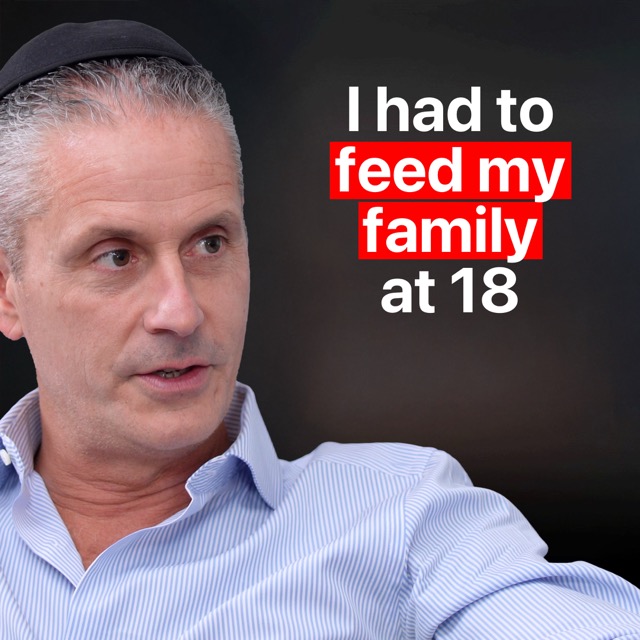
After that—he was partners with my uncle, my Uncle Leon, also should rest in peace—but my father came to me the following year, so I don’t know what I was, 18 or 19. He said, “Look, Isaac, this business that I have here is not for you.” It was a very successful business, thank God, but he said, “No, this is not for you. You need to be more progressive.”
They were brought up in Aleppo; they came over and they worked hard and they did their thing and they were successful. But he had the intuition to realize that for a kid in 1970 or 1980 in New York, this type of business is not going to last. I said, “So what do you want me to do?” He says, “Go work for an American company.”
“Okay, who’s an American company?” He says, “My mother’s brothers—they should rest in peace also, Ralph Tawil and Harry Tawil—had two separate businesses at the time. Pick one.” I said, “Okay, which one should I call?” He said, “Okay, call Uncle Ralph.”
I call Uncle Ralph. “Hi, Uncle Ralph. Yeah, it’s Isaac. You know, I want to…” I told him the truth. I said, “Uncle Ralph, I want to go to an American-type company, a more progressive-type company. I want to learn the business and then I want to go out on my own and do it.”
Victor M. Braca: You told him your whole plan upfront?
Isaac Hazan: Yep, all that, straight. I told him straight. He said, “Okay, I have a job in the warehouse. I have a warehouse in Avenel, New Jersey.” I said, “No, Uncle Ralph, it’s not what I want. I don’t want a job. I want a school to learn how to do business and how I can succeed like you.” He said, “Okay, come to the office Monday and you’ll start as a salesman.”
And that’s how I did it. I started as a salesman. He had just opened up his company. It was him, my cousin Solly, and myself—three people in an office, I don’t know, 500 square feet. And we started. He made children’s wear, and I went out and sold it and I made my mistakes. And I corrected myself; he corrected me, my cousin Solly corrected me. And that position grew into something really unimaginable.
When I started with him, it was a children’s wear importer. So we would design a line, make it in the factory in Taiwan or China—actually there was no China at the time—bring it in and sell it to retailers. At that time, there were 200, 300 accounts that we could sell. Today there’s 10, but at that time there was 300. So if you don’t sell this one, you sell that one. You had an opportunity.
What my Uncle Ralph did was he bought a factory in the Philippines. The reason he did that was because at the time there was a quota, meaning that there was only a certain amount of goods that a factory or a country was allowed to export to the United States. It was very hard finding factories that had enough quota to do us because we were doing budget products. So he said, “Okay, I’m going to go to the Philippines, which didn’t have this quota restriction at the time. I’m going to buy a factory, I’m going to build up my quota, and now the quota itself has value.”
He did it. When he did it at that time, bodysuits were the very popular item. But in a bodysuit, you need to have a special snap machine for the crotch. So he bought the snap machines and we made bodysuits and we sold bodysuits. Lo and behold, after a year and a half or so, bodysuits died. Now what are we going to do? He has a factory, he has all the equipment…
Victor M. Braca: Exactly.
Isaac Hazan: He has all this equipment for bodysuits and no orders. So what he did, which is a lesson that I learned, is you need to pivot. You can’t get stuck in, “Oh my God, what am I going to do?”
He pivoted. What did he do? He said, “One second. I own a factory and I have machinery. There are companies whose main business, their whole business, is bodysuits. Now that I have a factory, I don’t have to sell it to a retailer; I could sell it as a factory to another wholesaler.”
So he went to a major bodysuit manufacturer at the time and was able to offer him an excellent price because imports at that time in the 70s weren’t so well known like they are today by all the retailers. And that’s how he developed his business of completely pushing aside the retail business where it’s very competitive and going after wholesalers that ended up paying a higher price than the retailers we were selling to and getting paid by letter of credit, which means on the spot. It was a genius move, and that’s what propelled him to his success.
Victor M. Braca: That’s great. So you’re working at this sort of like a startup because you started with your uncle and your cousin. I particularly like how he offered you a job in the warehouse and you said, “No, I’m not doing that, I’m going to learn.” That’s cool. So how long were you there for?
Isaac Hazan: I was still in school at the time. Tuesday and Thursday I was in Brooklyn College; Monday, Wednesday, Friday I was a salesman.
And then how I developed—which was lucky that I was there—is that instead of just making bodysuits, now they decided that we can make anything. We can make blouses. Printed blouses were very hot at that time. Started making printed blouses and instead of selling it to retail again, which is competitive, he ended up selling it to wholesalers that sold it to Macy’s and there were a lot of department stores at the time. They’re all gone now, but that was their business.
What happened was when you’re a factory, you end up getting overages and cancellations and stuff. Now what are you going to do with it? If they bought 5,000 dozen, you can’t buy 5,000 dozen fabric; you have to buy 6,000 in case there’s a shortage, in case there’s damage, whatever it might be. Now you have these overages in the blouses. Now what are you going to do with it? I see these blouses—this is a cancellation from somebody—go out and sell it. And that’s what I did. That was very successful, I could say.
Victor M. Braca: Nice. So you’re selling the extra stock, pretty much.
Isaac Hazan: Correct.
Victor M. Braca: And you had to find innovative ways to sell. It’s not as much as the main stock because you have only a certain amount.
Isaac Hazan: Correct. So I’m going back to the retail thing that they pushed aside, but there was enough business in that, that we ended up opening up a whole new company of doing that, of competing with the other companies.
Victor M. Braca: That company was called what?
Isaac Hazan: I was an owner in the company with him, with my uncle and my cousin. That was called What Else Incorporated. It was mostly blouses, and we did well, thank God.
Victor M. Braca: Nice. So it sounds like a theme for you in terms of seeing an opportunity with something that you didn’t see from beforehand and then turning that into a new company and seeing success in that.
Isaac Hazan: Well yeah, I don’t know if it’s me, but yeah, taking it—I give the credit to my uncle.
Victor M. Braca: Nice. Did the relationships you built up with the retail partners and the manufacturers while working with your uncle—did they help you when starting your own company?
Isaac Hazan: Yes. So after a while, I left this What Else company and I started another company with my brother Solly. That company was also ladieswear. We opened up a ladieswear company and we were in business doing okay for a while.
And we were growing slowly, incremental growth, but slowly. I was more impatient at that time. We had an item called PU pants. PU is polyurethane, which is fake leather pants.
Victor M. Braca: Got it.
Isaac Hazan: I saw the item overseas in Taiwan. I said, “Oh, this looks good, let me try it.” I made some samples, we brought it back, we showed it to all our retail customers. Everybody loved it, everybody went crazy, everybody bought it. So now I’m showing it and I’m selling it.
Okay, then I said to myself—that was for Fall, that was back-to-school. The next season after that is Holiday. So I said to myself, “One second. If it’s selling so crazy for back-to-school, nobody said no on the order, whatever I’m showing everybody’s buying… let me dive in and really make a statement for Holiday.”
So I went overseas. I designed a line of distressed leather, distressed PU, and alligator and everything you can imagine, colored—I was going to be the king of PU pants.
Victor M. Braca: Okay. Before the orders for the holiday season?
Isaac Hazan: Exactly. Exactly what happened. So the goods now go back to the Fall goods, the original shipment. The goods came in and I’m looking, and the goods are not selling. And the customers are complaining, and the customers want to cancel. Not only forget those orders, they want to cancel what balance they have on Fall. Now I have shiploads of goods coming in for Holiday. What am I going to do?
It ended up as a problem. It ended up that I had to take the goods because I had bought them and I had put up a letter of credit against them, even though they were not sold. So what happened was my brother and I ended up—instead of thinking about the next season and going forward and designing forward—it was always, “What are we going to do with the inventory? Let’s sell the inventory, let’s get rid of all that.” We took our eye off the ball, and then the company just started to stagnate. We didn’t go bankrupt or anything like that, but the company started stagnating and we closed it.
We said to each other, “Okay, if I find something I’ll go into it, if you find some…” everything friendly and up-and-up. “If you find something you go into it, we’ll see what happens.” It just so happens that my brother-in-law, Morris Bennun, left his father’s company at the same time and we said, “Okay, let’s do it.” And that’s how Isaac Morris was formed from all that.
Victor M. Braca: Got it. So what did you do in the beginning? What was the change in business model from your previous companies to Isaac Morris?
Isaac Hazan: I don’t know if there was such a big change in the business model. It was always a process, right? You be creative in the beginning, you design a line, you make samples, you show them to the customers, you price it properly, you buy it properly, and you ship it. That’s the same for all three of these companies that I was involved in. That’s really the process—the same even till today.
But today it’s a little different in that the customers are dictating more to us what they want, definitely dictating how much they want to pay for it.
Victor M. Braca: So are there fewer customers because of the landscape of retail?
Isaac Hazan: Much fewer customers. A huge consolidation over the last 20 years in retail.
Victor M. Braca: And did you see an increase or a decrease in numbers? Did it not really affect it because it was a consolidation? How did that look for you?
Isaac Hazan: No, so like I said before, if there’s 200 customers and you don’t sell one, you sell the other. Now there’s these whatever handful of customers—whatever it might be: 10, 15, 20—you need to sell them today to be in business. That’s the different scenario that current companies are facing as opposed to the ones that were before. And that’s how they demand the prices.
Victor M. Braca: So they have more influence, more power to say yes, right?
Isaac Hazan: They do. So a company needs to be able to make that work. I really found that whatever it is—say they’re giving you a price—it’s not like something cost five and they’re telling you, “I want it for two.” They’re allowing you to make a small margin. So now the way one is going to succeed today, in the apparel business at least, is to be able to have all the other expenses under control. Your overhead under control, and just try to buy a little bit better, try to sell it a little bit higher. It’s all marginal.
Victor M. Braca: If you’re enjoying this episode so far, please consider subscribing and leaving a like on every podcast platform: Spotify, YouTube, Apple Podcast. Please share this episode with a friend; if you’re feeling generous, share with two friends. Thank you so much. Back to the episode.
What do you think helped you the most from your previous jobs when starting your company? Was it your relationships? Your knowledge of the industry?
Isaac Hazan: Yeah, it’s that. But I think what my father taught me—going back again—what my father taught me was persistence. Because when I left my uncle and my cousin, he said, “Okay.” I go, “What am I going to do now?” He says, “No, you’re going to go into business yourself.”
I said, “I’m 22, I’m 23. What do you mean I’m going into business?” He said, “Don’t worry, I’ll give you the money.” He gave me the money. I went on a plane. I’m a kid. I went to—now, I told you we were making these printed shirts. So I needed to buy the prints.
I went to Paris and I went to Milan and I went to studios and I bought the prints. I took the prints and I went to Japan. In Japan, I wanted to buy the fabric, the printed fabric from Japan, ship the fabric from Japan to Taiwan, Taiwan to make the shirts, ship it to New York and I would sell it. That was the procedure.
But I knew nothing and I was a kid. My father said, “No, do it. You can do it. I’ll help you, don’t worry about it.” I did it. I got on the plane, I went to Europe, I went to Japan, I went to Taiwan.
And one night, I’m in Taiwan. I’m alone. I don’t know what I’m doing. I woke up—I’m telling you like this, literally like this, sweating. I had a complete meltdown. I go, “My God, what am I doing? What if it doesn’t sell? What if it doesn’t come in on time? What if nobody buys it? What if I pay too much for it? What am I going to do?”
I called my father and said, “Dad, I can’t, I can’t do this. I got to get out of here. I don’t want to buy anything.” He said, “Absolutely not. I’ll help you. Do what you’re going to do. We’re going to buy small quantities. Stay with it. Buy it and we’ll work it out. It’ll work out.”
So I did. And I did get it in and it did work out. I’m saying this story to emphasize persistence. My father taught me persistence because 99 out of 100 other kids would be on a plane going back home and saying, “Okay, I’m out. I tried.” He didn’t allow me to stop, to give up. He did not allow it. So that’s a big lesson that I learned from him in my life for sure.
Victor M. Braca: I’m sure that carried over into when you started Isaac Morris. You had that lesson in the back of your mind.
Isaac Hazan: 100%. I mean, in Isaac Morris, every six months: “Okay, we’re going out of business. We didn’t get the order.” I mean, you’re starting with nothing. I started with me, my brother-in-law, and my wife and my sister-in-law in the front getting the coffee, doing whatever has to be done. And you don’t get an order, now you’re out of business. It’s not like… you know what I’m saying?
So yeah, business is definitely cyclical. It’s up and down, and you have to be able to take advantage of the ups, and you have to be able to hold on in the downs.
Victor M. Braca: So tell me a little bit about the growth of the company. You said in the beginning it was up and down, up and down. I’m sure that’s steadied out as of now, but how did the growth look?
Isaac Hazan: The growth of the company—I mean, it’s 35 years, right? So the growth has been—thank God for more times than not—on an upward swing.
The challenges come in when you hit a glitch, and you will hit a glitch. Everybody will hit a glitch. Not one, you’ll hit 10, you’ll hit a 100 glitches. You try to avoid it, but that’s not going to differentiate one company from the next. What’s going to differentiate them is how the glitch is handled and approached and solved.
A company always has to be in a position to maneuver. It has to be in a position to take advantage of whatever opportunity presents itself at the time. Luck—Hashem—is the crossroads between opportunity and preparedness. So always be prepared, because that opportunity will come. I believe it will, sooner or later. If you’re not prepared or if you’re too blinded to see it, it’s going to pass. So you need to be alert, vigilant for that, and prepared.
Victor M. Braca: I like that. My father and I talk about that a lot. When successful people say, “I got really lucky,” I don’t think that’s the right way to articulate it. I think what it is, is they prepare themselves. Like you said, they were in the right place at the right time in a way, but an average person in that place wouldn’t have been able to take advantage of the opportunity. So if you’re prepared, you can take advantage.
Isaac Hazan: Correct. Correct. That’s your part. Your part is being prepared for the opportunity and it will come for sure.
Victor M. Braca: So you work with a lot of big brands and companies like Disney and American Eagle, Macy’s. Maybe tell me a couple stories about that. How is it working with these huge corporations?
Isaac Hazan: You really have to work on your relationships. That’s part of the job—talking to people. First of all, you need to know your competition. You have to find the white space. Then you need to go to a retail—we’re selling to retailers, right? You need to identify for them their white space because they already have suppliers, they’re already doing business. You want to get in. So the only way you’re going to do that is if you come up with something that they don’t have—their white space.
You do that by studying your competition, and you do that by studying your customer. You present to them your vision of what they’re missing and how you can improve their company and forge relationships with the people that you’re doing business with, and hopefully it will work.
Victor M. Braca: When growing Isaac Morris for you, were there some things you did in the early days of the company that put you ahead, looking back?
Isaac Hazan: I think the best thing that we did different was that we were persistent because we had to. I had kids, my brother-in-law had kids, my second brother-in-law came in right after that. We had to put food on the table. So it wasn’t a luxury like, “Okay, we got an order, we didn’t get an order.” No, we needed it. We had to do that.
So it goes back to being in a position again to pivot. You need to be able to pivot if this is not working right, then you need to be able to pivot into something that is and hope that will work. If it doesn’t, you need to try again from a different angle. So it goes back to persistence and need. If you need to get it done, most of the time you’ll get it done.
The question is for the people who might not need to put food on the table this second but are looking to start something: it comes down to motivating yourself to put in the work and acting as if you need it. I think that’s a good thing. But that’s a big advantage if somebody doesn’t need to put the food on the table, just wants to do something. That’s a big head start because then you can take risk.
I’m not afraid of risk. I’m afraid of random risk—willy-nilly risk. That’s silly to me; that’s bad business. But if you take a calculated risk and you really see it and you’re really putting a shot at it, a calculated risk should pan out most of the time. And if this person is lucky enough not to be under the gun, he has more of an opportunity to take calculated risks and I think a bigger chance of success. I wouldn’t be afraid in my opinion of taking a calculated risk, being smart about it.
Victor M. Braca: So tell me about a time where you took a risk and it didn’t pay off for you.
Isaac Hazan: The PU pants. The PU pants definitely did not pay off.
Victor M. Braca: Yeah?
Isaac Hazan: Yeah, I took a risk. It wasn’t really, honestly, that calculated. I just said to myself, “Okay, we’re plotting along, we’re doing a little bit more each year. When is my boat coming in? Here it is.” I was the first to do it. It sold out of the showroom. Let me lace into it.
And it didn’t work. It didn’t work because it wasn’t calculated. What would have been smarter? Let me get it in, take it easy, get the goods in, let’s see if it sells. If it starts selling, then lace into it.
Victor M. Braca: Why didn’t they sell? Was it a problem with the quality?
Isaac Hazan: It wasn’t an item that was acceptable to the customer. The buyer of the stores thought it was great, I thought it was great too, but the ultimate customer didn’t breathe. It’s plastic. PU is plastic. It just looks nice. So it didn’t take off.
Victor M. Braca: Got it. That was a risk—not a good one, not a calculated risk. So now that you’ve been running Isaac Morris for over 30 years…
Isaac Hazan: With my partners, God bless them. I’m blessed to have my two brothers-in-law in Isaac Morris, and I have my two brothers-in-law and Eddie and Michael in Culturefly. That’s the secret to our success—that we’re blessed to be together and everybody participates. And so far—thank God and Shalom Bayit. That’s a whole other thing to what we’re trying to accomplish.
Victor M. Braca: That’s great to hear. It’s a big conversation for young adults nowadays: the intersection of following your passion and making sure there’s money coming in. What do you think about that?
Isaac Hazan: I’m going to go against the grain and I’m going to say that your first priority should be not “follow your passion.” Your first priority should be: where can I make the most money to support my family first? That’s what it should be, in my opinion.
So my passion is to be shortstop for the New York Yankees. That’s what I want to do. Not happening. It’s not happening. So you have to go into something where you’re going to be able to support yourself and your family in a proper fashion.
I love… whatever it might be, I don’t know, an archaeologist. Okay, there’s no money in it. So I disagree with that—follow your passion—I disagree with it. Caveat, of course: you can’t go into something that you hate. If you hate it, don’t do it. But if you don’t love it, but it’s going to give you the parnasa that you need, I would say take that over the job that you love where you’re going to struggle the rest of your life with your family.
And often times, the job that you might not love in the beginning turns into a passion of yours when you’re running the business. When you see the paycheck coming in, now I love it! What a great decision I made! Oh, this was fabulous! That’s when it turns to love. That’s when that becomes your passion.
Victor M. Braca: So what do you say to somebody who just graduated high school or college and is about to get their first job? Do you say go for the most amount of money? Go for the best experience learning-wise? What do you think?
Isaac Hazan: Best experience. Which goes back to my story with my father where I just started from the beginning—picking and packing and invoicing and typing. Go where you’re going to learn the most. After high school, you’re 17 years old, you’re 18 years old… I can say now you have the world in your hand and you have a long future ahead of you. Take that time.
That’s not the time to maximize your money. That’s the time to learn enough to know and to understand that, “Yeah, this is what I want to do.” You have the luxury of investigating and experimenting with different real estate, importing, retail, direct to consumer, whatever it might be. You have that luxury. Don’t burn it, don’t lose it, because you’re going to make a few extra dollars in one or the other and that’s not where your future is going to be.
Victor M. Braca: That’s great advice, especially for young adults who need to make decisions. How important do you think getting involved in community organizations is? And what are some ways that you’ve tried to give back?
Isaac Hazan: The short answer is: very important. Who should do it? Everyone. What should they do? Whatever you can.
I was taught that community service is the rent that you pay for living in this great community. And it’s very important for us who have children and grandchildren to impart to the young adults coming up that you’re extremely fortunate living in this community. I’m very well aware of the negatives… I got it. And yes, that needs to be tamed a little bit.
But the upside of the community—the pluses—outweigh the negatives by a mile. So we need to impart to our children that they are extremely fortunate, lucky, whatever word you want to use, to be living in the community. To take advantage of whatever the community has to offer and, more importantly, to help out or to contribute or to participate in whatever they like.
Whatever it is you like—you like food fun, you like shuls, you like schools, whatever it is you have a passion for. That, I would say: follow your passion! Right now, I would say follow your passion. Don’t not do it. You will get much more back than you ever put in.
Victor M. Braca: Amazing. Fulfillment-wise?
Isaac Hazan: Meaning in fulfillment, that’s what makes you feel… yes, you will do. Don’t spend eight hours a day; that’s not necessary. Whatever it is, whatever you can do. If it’s an hour a month or an hour a week, whatever a person is comfortable with. Do it. Don’t not do it. Do your community service, do your chesed work, do community work. Very important for the development of that person at any age from 15 to 95.
Victor M. Braca: I love that—underscoring the importance of community. Community service is the rent we pay for living, for the right and the privilege of living in our community. I’ll say it again.
Isaac Hazan: That’s a good line.
Victor M. Braca: That’s a good line. We’re going to clip that line and put it all over. Amazing. So I want to ask you, what was your momentum moment? The name of the podcast is Momentum and what we’re trying to do is light the spark for people to get inspired and start something that leads to their eventual success in life. What was your moment where you realized that what you were doing is working?
Isaac Hazan: That’s a good question. That’s a very introspective question. For me, I don’t think I’m going to answer your question the way that you want it, but for me it was a progression of those moments.
If you’re doing whatever volume you’re doing and then you get a huge order, now that’s the momentum at that moment. Two seasons later when you’re this size, that order that was a lifesaver at the time is okay. We got it, I got this order, nobody’s freaking out. And as you grow, what you’re asking—the momentum moment—develops.
The momentum moment is not one stagnant moment. The momentum moment is, for that stage of the company, it was this that happened. That was the moment. And for that stage of the company, it was that momentum moment that happened. So that’s what I think. I don’t think it’s any one thing, I’m sorry about that.
Victor M. Braca: I like that answer, actually, because it shows that it doesn’t have to be one particular thing in your business that caught on. You’re continually evolving. The chart looks like this—up and down, up and down—but eventually there’s an uptrend, and that’s where your growth is.
Isaac Hazan: Yeah. So if we got an order for $100,000 the first day that we opened, we would have a party! Now, okay… it evolves. My momentum moment is evolutional, evolving.
Victor M. Braca: I like that. Isaac, thank you for coming on. It’s been great. Tons of insight and great advice.
Isaac Hazan: Thank you. Thank you for having me. It’s a privilege and pleasure, and I hope whatever it could help, it helps.
Victor M. Braca: Hey guys, thanks so much for tuning in to this episode of Momentum. To give a quick wrap-up, here are a few actionable tips Isaac taught us today.
Number one: learn every aspect of your business. Isaac emphasized this very strongly. Whether it’s working on the floor or handling customer relationships, knowing the ins and outs will give you an edge.
Number two: embrace creativity and trends. Culturefly’s success shows how tapping into pop culture and creating unique, personalized products can set your business apart. Don’t be afraid to think outside the box and bring something fresh to your market.
Number three: adaptability is key. Isaac shared how pivoting strategies and embracing change helped him grow his businesses. Remember, staying flexible in the face of challenges can lead to unexpected opportunities.
Number four: give back to the community. Isaac’s involvement in community service reminded us of the importance of contributing beyond business. Building a supportive network and helping others is not just fulfilling but also impactful. Remember the quote: “Community service is the rent that you pay for living in this great community.”
I hope these lessons inspire you to take action in your own journey. If you enjoyed this episode, you’re going to love my conversation with Alan Shama, the founder of e.l.f. Cosmetics. In my conversation with Alan, he shared stories of working with large companies like Target and he opened up about the many times he had to pivot while growing his $12 billion cosmetics company. If that sounds interesting to you, you can find that episode linked in the description.
With that said, I hope you enjoyed this episode. If you have, please share with a friend. Thank God the podcast has seen amazing growth lately and we’re trying to spread these stories to an even wider audience. I would love to hear your feedback on this episode. Again, the podcast is still growing, still picking up momentum, and if you have any comments, questions, or things you think I could have improved on, please let me know. Comment, DM me, email me anything. I would love to hear from you. With that said, thank you so much for watching, and until next time.



Leave a Reply