


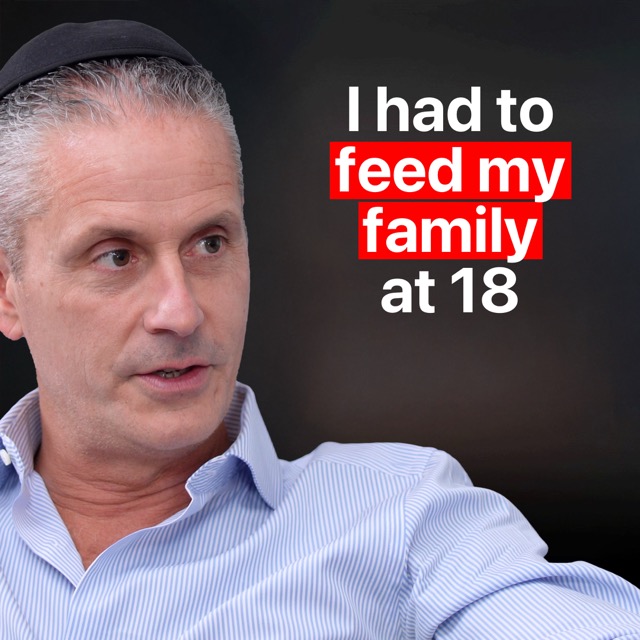
Avi Houllou is President and CEO at iBuy, a global electronics distributor of products from Apple, Sony, Dell, and more.
Avi shares his remarkable business journey, which includes his once-thriving business going to zero overnight, leaving him tens of millions of dollars in debt.
Join us as Avi tells the story of how he soared to new heights what he learned from that harrowing experience, and the #1 most important factor when running a business.
Enjoy!
Transcript
Victor M. Braca: Hi everybody, welcome back to Momentum, the podcast where we sit down with interesting and successful community members in order to have conversations that will inspire and empower the next generation of our community’s leaders. I’m your host, Victor Braca, and in this episode, I sit down with Avi Houllou, the CEO of IBI, a globally leading electronics distributor.
Avi shares his journey from humble beginnings to leading a company that works with major brands like Sony, Apple, and Dell as one of their top distributors. We dive into the resilience required to build everything back from scratch, even from negative, after losing everything in his business.
Avi Houllou: Lost everything, took mortgages on my homes, even put my own personal money back into the business—everything. So I wasn’t even starting from scratch; I was starting from negative tens of millions of dollars.
Victor M. Braca: Joining us today as Avi discusses the importance of persistence, the power of adaptability, and his amazing commitment to our community. This episode is packed with insights into taking risks, overcoming setbacks, and building a legacy of meaningful growth. Enjoy.
Avi, welcome to Momentum.
Avi Houllou: Thank you. Thank you for having me.
Victor M. Braca: It’s great to have you on. There’s a lot to unpack with you in terms of business, community involvement, and I want to hopefully get through all of it. So we’ll see. For those who don’t know you, tell me a little bit about what you do.
Avi Houllou: So I’m a distributor for all the major brands in electronics: Apple, LG, Sony, Samsung, Microsoft, Dell, Lenovo. We distribute for them. So a wholesaler or store that doesn’t buy enough volume—particularly with Apple—they won’t sell you unless you’re buying a really high amount, a really, really nice volume of Apple. And even so, it’s still not easy to get open—almost impossible to get open. So they would send you to a distributor like us.
We’re worldwide distributors for Latin America, USA, Europe, Asia. So a store or wholesaler or someone who’s looking to purchase and the manufacturer is not looking to sell them directly, they send them to us.
Victor M. Braca: Nice. And you started the company yourself?
Avi Houllou: Yeah. We also have a couple of other divisions. We sell direct to consumer on the marketplaces; so we sell on Amazon, eBay, Walmart, Target—all the marketplaces. And then we are the sole distributor for HSN and QVC, the shopping channels, for all Apple and Beats.
We still actually—I started off in photo and cameras, which you wouldn’t think is even a business anymore these days. It used to be huge when I started; everything was about cameras. But there still is a nice amount of business and it’s just that we take a much bigger part of the industry right now. We’re a much bigger percentage, but there’s still a nice business for it. Actually, there’s a lot of people buying professional cameras, and even the kids nowadays.
Victor M. Braca: Still?
Avi Houllou: Yeah, even the kids. They’re buying retro cameras now and it’s very hot. It actually became a very hot item again right now, thank God. So it’s doing well.
Victor M. Braca: So, we talk to a lot of business owners and entrepreneurs who say that their early days, their school life, their first jobs, really influenced their knowledge and their fundamentals in business. I want to hear: was that the case for you?
Avi Houllou: Yeah, most definitely. I mean, I started off—I was actually in college and I started off in a job. I was a salesperson in a place called Photographic. I was working part-time after school. Right after school, I finished school and I was working and doing college. I was a salesperson over there. I was hustling trying to make a living. I was planning on getting married; I was going out seriously and working hard.
The owners of Photographic started to close it down. I actually—it was right after, I think maybe November or October ’99. It was right after I got married. I got married in August, a couple of months before, and they shut down. I decided to reopen with one of the partners and a couple of other people. One of the salespeople there, his stepbrother, and then one of the brothers was also an investor. So we had four partners. We started off together and I said—I was married without any income.
Victor M. Braca: Yeah, no choice.
Avi Houllou: Nothing coming in. I had no choice, right? And you know, it’s easy also when you’re young; you got to take the risks when you’re young and before you have children and responsibilities. So I jumped in and we started with $10,000 and five partners. Over the years the company grew, I bought out all the partners, and now I’m solo.
We adapted and changed a lot over the years, obviously. We started off as a mail-order company. Back in the day—you guys probably don’t even know, most kids probably don’t even know about it—there used to be magazines with cameras and that’s how you used to advertise. We used to advertise in the magazines and customers used to call us and mail order. Then we would sell them over the phone. We’d have salespeople upselling them.
Then we adapted over the years. We became—we started selling online. We did a lot of business on our websites. We then started selling on marketplaces in about 2012, 2013. We started selling on the marketplaces and we started becoming distributors because we were moving a lot of volume. So we opened up with a lot of the manufacturers directly and started focusing on distribution for the manufacturers.
Victor M. Braca: So tell me, you’re working at this company while you’re in college and then they shut it down because they’re not seeing economic growth in order to sustain the company. What gave you the courage to start your own venture?
Avi Houllou: First of all, I had no choice. I had to pay the bills.
Victor M. Braca: Well, I mean you could have gotten another job. Why did you start your own company?
Avi Houllou: I said when I’m young—first of all, I was very ambitious, especially growing up in a wealthy community like we are. Seeing money and people all around me, wealthy, it just made me very driven from a very young age. I said, “I want to really succeed and I have to make it big.”
I said I have to take the chance as a young person without kids and without any major responsibilities. This is the time to do it. If I’m going to do it any time in my life, this is the time to do it. I said I either jump in and do it or I may never have the opportunity. So we did it, and Hashem blessed us.
Victor M. Braca: That’s great. Yeah, to realize at that young age that that’s your prime opportunity to do it is an important thing. I think it’s hard for young adults to notice that. If you’re 17, 18, 25, 30, whatever it is, and you want to keep your steady job and keep getting that salary, save up money, be conservative… but then to take that big risk at a young age, it’s commendable.
So can you tell me a little bit about the early days of the company? Growing the company, building it from the ground up? You said you joined with four other partners.
Avi Houllou: Correct.
Victor M. Braca: How is that? You’re starting a company from scratch. How did you differentiate yourself? How did you set yourself apart?
Avi Houllou: Back in the day, it was really pretty much all about pricing. So you had to make sure you were the lowest price in the magazine. It was done like two or three months in advance, so you were almost guessing what the costs were going to drop to or go up to at that time. It was a different world—literally a different world.
Like I said, the times adapted and we then went online. We started doing our own website. We did about $300 or $400 million in sales on our own websites. Right now, we don’t even do too much business on our own websites; it’s really more marketplaces and then obviously the distribution and the shopping channels.
But the time evolved and changed. When we started, it was just in the magazines, like I said, and you had to really have foresight two or three months in advance. You had to prepare the ads and they would come out literally two or three months afterwards. It was almost like a guessing game. You didn’t even know what the pricing and availability was going to be on the cameras. You advertise and then you were there with more than 10 or 15—about 20 competitors in the magazine. You had to have creative ads to try to get customers in and then always try to have the lowest price. But it was really almost like a guessing game back then because you were doing it like three months in advance.
Victor M. Braca: So how do you reach profitability if you’re having to undercut everybody? It sounds like a race to the bottom.
Avi Houllou: So we started back in the day—like a lot of people in the community—we started off, it was back in the day upselling. We were selling accessories and stuff, and that’s how we made profit. There was no one around doing that back then, but there were a ton of people doing it.
I actually worked at Photographic; there was a big place called Abes. A ton of people from the community used to work there. I went there actually for a few days before I opened because I wanted first to try to see. When I was out of a job, I said, “Let me go as a salesperson, try the places.” When I went there, I felt I had to actually give it a chance, right?
But it was a big thing back in the day, nationwide—Abes, Main—there were a ton of places where the salespeople in the community always worked. Even for me when I started off, I had literally hundreds of kids from the community working for me. The salespeople were there, they worked on commission, so they were very hungry and ambitious. The more profit they made, the more they got paid. So they were very aggressive in upselling and making profits on the customer.
Victor M. Braca: For sure. So tell me about some of the setbacks you faced while growing your company. This was the same company, right? The one that you started just after you ended that first job to where you are now. So tell me about some of the setbacks you experienced along the way. How did you learn from them? How did you have that future-forward mindset to keep moving forward?
Avi Houllou: Well, there were plenty of setbacks, really. I mean, even within the first year, two of my partners at that time—we just started off—and two of my partners decided that they wanted to do real estate. It was too stressful for them and they went to real estate and we had to buy them out. It was a nice sum of money. They put $10,000 each, and we bought them out with a nice sum of money within less than a year, about eight or nine months in.
Obviously, a lot of all the other work fell onto me. There was one other partner and then a silent partner as well. The silent partner wasn’t really too involved. It was me and the other partner. So my other partner was really handling the warehouse and the logistics. I was handling all the sales, advertising, purchasing, customer service. I had my two other partners who were helping me with those divisions, so everything else fell onto me really when they left. So I had to take on all those, but I was hungry and ambitious, like I said, and pushed, and Hashem blessed us.
That’s just starting off within the first year. Then over time, obviously we had to adapt. The magazines went out; people were going online. We started going online so we had to adapt. Times change. Online, we started selling online, doing a nice amount of business on our websites. Like I said, we used to always focus on being the lowest price, and that was the same thing also besides the magazine when we went online as well. That was really how we got consumers: just by being normally the lowest price. I mean, some advertising techniques and different angles that we had, but it was mostly about pricing, really, with consumers.
There used to be something called—it still is a little bit, but people don’t really use it much—price comparison shops. So you literally were able to go to a site, let’s say for example PriceGrabber, https://www.google.com/search?q=Shopping.com, BizRate, Shopzilla—there was a whole bunch besides that. Dealtime was very big back in the day. You search for a product and you were able to sort from lowest price to highest price. I would say 75 to 80% of the customers really—and that was the biggest marketing technique back in the day, the biggest way people marketed—most of the customers would go to the first and the lowest price.
You had to really be on top of the pricing and constantly be the lowest price so customers called you first and you got the first customer. We adapted to that. And then obviously with times, we started growing, doing a lot of volume. We said that we can’t focus just on pricing; we have to focus more on availability and inventory and stuff that we have that other people don’t have, and advertising at different angles.
So in about 2007, I actually purchased out my last active partner. I was then solo. I bought another company back in the day called DBoth. They were a company also—a Syrian guy, Ashley, who I bought it from. He had numerous different companies. They were working to go public and they were doing a nice amount of sales. They weren’t focusing, like I said, on lowest pricing. They were doing nice advertising techniques and stuff, but they were having a hard time going public and it fell apart last minute, and I bought them out. So we started focusing on advertising a different way and not focusing just on the pricing.
That was in 2007 we started. So we adapted a little bit, our marketing techniques and stuff. Started doing some creative stuff also back then with advertising. It was Google; we went on a pilot program which we did very well with right when they started with AdWords, which was basically just advertising. We had a lock-in. They had a pilot program which we had locked in for like two or three years at a crazy rate and anyone who did any searches, we came up number one.
Victor M. Braca: Oh wow, that’s great.
Avi Houllou: Yeah, so it was from Hashem, sent from Hashem. Really, someone I knew at Google who was one of the first employees, he called me for a pilot program which they had, which was just—like I said—really from Hashem. That built us up. We started doing a lot of sales.
I then decided about a year later that you know what, we’re doing so much business and buying so much volume, and there’s so many other Syrians and guys who are mail-order guys and website guys who are doing web business… let me just start wholesaling to them because we have the inventory anyhow. We’re buying the inventory, we’re importing 90 to 95% of it from overseas back then, and we had buying power.
So I said let’s start trying to wholesale to customers. So I opened up a wholesale division. Back in the day it was called AFI Trading. We started doing wholesale and it grew. I opened up a division in Miami which was focusing on Latin America. So I started doing a lot of export also because with the business back then it was a big—it still is even now—it was a big business with currency. Because I imported and exported, you were able to play the currency game in the industry. Where you were making three, four, five points, the currency can swing 10 to 20%. So an importer and exporter can take advantage of it based on the US dollar; if it’s weak or strong, you could either import or export.
So we used that to our advantage. We were exporting a lot to Latin America and buying from other countries where we were able to source. Because a lot of times even sourcing was a problem, but then besides sourcing, a lot of times the price was much cheaper in a different country because of the exchange rate dropping or whatever it is, and the manufacturers not adapting in time. So we used that to our advantage. We were importing and started wholesaling a lot.
Then obviously again the times changed. We had to adapt. We opened up—in 2013 actually, Apple approached us. We were doing at that time really just cameras, just photo stuff. Like I said, cameras used to be a huge business. Still is a nice business, just very few people doing it; it’s much less and much fewer players. So we’re still doing a nice amount of the camera business even today.
But we started—Apple approached us actually. They needed another distributor; it was for Latin America. It started off as they wanted a distributor for Latin America and we had our Miami office which was focusing just on the Latin market. I had a few salespeople from the industry who were there for years, and I guess Apple heard that we were a nice size company and had the ability to buy. So they approached us. They opened us up—it was actually in August 2013—as distributors.
The way it worked with Apple is you had to buy, back then, 5,000 MacBooks in order to hit the highest tier. The higher the tier, they had lower pricing if you bought more. So 5,000 was the highest tier and I think then it was 7% you got off. They call it DN, which is basically like the dealer net, the list price that they have for wholesalers, and you got 7% off of DN.
Just to give you an example, back then it was called the MD101; it was the hottest laptop. We used to sell those like crazy in the thousands. We used to buy on the street for like 770, 780. The dealer net was about 755, 760, but that’s only if you hit the highest tier. So if you didn’t hit the highest tier, your cost was about 815, 820. You’re losing money up front.
And the way they worked, Apple also, is you paid the 815, 820—actually was even higher, much higher because they had other programs and rebates and stuff. You were paying like $1,001. I remember that actually with the DN, you were paying like $1,001 up front. But depending on how much volume you got, you got rebates up to about $250. $250 was the highest amount if you hit 5,000 MacBooks.
At the time we were doing a decent amount of MacBooks but we were buying from other distributors and we were doing about maybe 2,000 or 3,000 MacBooks a quarter. It was really almost all on the MD101 which was the SKU of the time. We were doing a couple of thousand a quarter and I said it’s not worth it to front all this money, take a $250 loss up front… how do we know if we’re even going to hit the 5,000 tier? If we don’t hit it, we’re actually even losing money after the rebate. Plus they’re holding your money for months until you get that $250 back. It doesn’t help your cash flow, obviously, and it just doesn’t make sense to buy from Apple. So we just continued buying through distributors.
They came to us five or six months later, March 2014, Apple came to us like, “Hey, we opened you guys up and you didn’t do anything. You didn’t buy anything from us. Either start buying some stuff, let’s do some business, or we’re going to shut you down and we’re going to open another distributor.”
So we decided at that time, you know, Apple is the biggest company in the world, we have to just give it a shot. Let’s go all in, do 5,000 even though 5,000 at that time was a lot for us to do—5,000 MacBooks in a quarter. We said I don’t want to lose this opportunity and we have to give it a try. Let’s at least give it a shot.
So we started. We bought the 5,000 MacBooks—you know, make 750, 755 with our net cost. Like I said, we were buying them at 770, 780 at the time on the street, so we weren’t even making that much extra and we had to do much more volume.
Victor M. Braca: Not a big margin.
Avi Houllou: Yeah. Since we took the position and we were aggressive—like plenty of times Hashem blesses you when you have it and you take and you do your part—we were aggressive because we had the inventory. We started pushing it and a lot of places we were much more aggressive. We had 5,000 in stock, we said, “Hey, we got to move these laptops.” So we started pushing it and sold great.
Within two or three quarters after that, we did 40,000 MacBooks a quarter. We were doing 40,000 MacBooks. 5,000 was the original tier.
Victor M. Braca: 5,000 original which was way too much for you.
Avi Houllou: Because we were doing 2,000 to 3,000 at most—about 3,000 in a quarter. And we ended up doing within three quarters later, we did 40,000. And then for years we were doing 40,000 to 60,000 MacBooks per quarter. And that’s how it grew. The Apple relationship grew and that really took us to the next level.
Once we started doing Apple, we started also—we started doing other products. Dell, Microsoft, Lenovo, Samsung, a ton of the other big manufacturers approached us. So we approached them to do distribution because we had the Apple and we’d tell them, “Hey, we’re Apple distributors.” So it was pretty easy to get open with a lot of them.
So we started doing distribution for a lot of other companies and we expanded to other categories besides just cameras. So we started focusing and really wholesale and distribution became our biggest part of the business and that really became our focus.
So we adapted once again. We also had, in 2013, websites. Marketplace, Amazon was exploding. 2012, 2013 we started focusing on marketplaces. So we constantly had to adapt and shift with the times and it wasn’t easy. It was a totally new business for us when you’re used to doing something one way and you know everything about one thing, and then all of a sudden you have to change.
Especially the logic you learn when you have a company… when you’re small, nimble and you have one or two people, you and your partner can change directions and adapt quickly. As you start growing, the more people you have and the larger company you have, it’s not that easy to adapt. We had 100 or 150 employees at the time and you’re constantly changing to totally different directions, focusing on something different. So it was very difficult, but we were able to adapt and change and we shifted the business focus and we changed with the times.
That was just as far as adapting and changing with the business and industry. But I had plenty of other times where business was very difficult. Recession in 2008 we had, and then 2010 actually was my biggest challenge maybe in my life financially.
There was a company called 6th Avenue Electronics back then. It was one of the biggest electronics stores in the East Coast area. They had about 20 to 30 stores and they were big stores—25,000 or 30,000 square foot stores. Most of them were New York and New Jersey, and they had one store in Philadelphia and Delaware. I was buying a lot from them on the wholesale end and they were getting crazy prices because the manufacturers—even till today—the manufacturers always want retailers to have because they want their products on display. That’s how they advertise.
Obviously almost everyone buys on Amazon now, but the customer has to see the product. So the manufacturers really support like a Best Buy or a retailer; they give them a lot of programs and very cheap pricing because they need to keep them in business for the consumers to go hands-on to see the product. So they were getting crazy pricing and I was buying a lot from them.
I decided—they were going through a challenging time, financial issues—and I decided to invest in the company and I bought 50% of the company from them. To make a long story short, it was very complicated. My partners, they had a very different mindset also. They were owners of all the buildings; they were their own tenants. So it was very difficult. I kept on telling them, “Let’s close,” because I was doing just online business and I didn’t have any expenses of overhead and carrying these huge stores.
So I told them let’s close the stores but it was a fight and a struggle on each store because they were the tenant. If they shut the store down, then they would lose the real estate property. So it was a fight literally on every single store. Took forever until they finally realized, “Hey, we really have to do it.” We went down to one store, things started working out, but it was too little, too late.
And I lost an immense amount—a lot of money. Everything I had made until that point plus a lot more. I took mortgages on my homes, even put my own personal money back into the business—everything—and lost everything. So I wasn’t even starting from scratch; I was starting from negative tens of millions of dollars.
And not only that, everyone I knew in the industry, it was a known thing. Everyone knew that I invested in 6th Avenue Electronics and I lost. So even the distributors and the wholesalers and people who were selling to me were scared to even give me credit, which made it a hundred times more difficult because they knew that I was in a bad situation. It made it a hundred times more difficult because now I can’t even buy from these guys unless I pay them up front. They don’t want to sell to me, they don’t want to give me credit anymore because the whole industry knew that I’m in bad shape.
So it was a very difficult time, but I didn’t want to give up. The bank even at the time told us, “Just file bankruptcy. It doesn’t make sense; your numbers don’t make sense. File bankruptcy and that’s it, we’re done.”
And I refused to. I owed people money and I didn’t want to screw anyone. I wanted to do the right thing and like my father always told me: you never hurt someone else. I worked, took one day at a time. It was very difficult digging out of a huge hole—huge, huge hole—but I was not going to give up. I pushed, kept on pushing, pushing, pushing one day at a time to just keep alive—literally to keep alive.
Even the employees and everyone, they all felt it. They knew. Everyone knew, obviously, it was so difficult. But I would come in every single day smiling with energy and everything. So many of them even told me later, “I don’t even know how you continued or went on, but you used to come in and just give us this energy and positive and everything and just push forward.” It just kept all of us going. And you know, a few years—one year at a time—we kept on slowly digging out of the hole, digging out of the hole more and more. You don’t give up and you keep on trying and working. You do your part and Hashem blesses you. Really, if you really do your part, the blessing is going to come.
Victor M. Braca: Hi guys, I hate to interrupt the middle of the episode. I’m going to make this quick. If you’re enjoying so far, please leave a like, but most importantly share this with anybody who you think would enjoy it as well. We’re trying to grow the podcast as big as possible, so anything you would be able to do would help a lot. So thank you so much and back to the episode.
Wow, okay. That’s a lot to unpack. You lost everything. What year was that? How old were you?
Avi Houllou: This was 2010, 2011. I was about 32 years old at the time.
Victor M. Braca: And you had children in school yet, or…?
Avi Houllou: Yes. Wow, that’s—I had three or four children at the time.
Victor M. Braca: How did you deal with that? Can you go a little more into detail on how you built back? Right? You not only did you lose your reputation but you had, like you said, a negative reputation. How did you build back from that? Why did you choose to stay in the business? Most people probably would have said, “This is not for me, I’m going to explore different avenues.” What was going through your mind at the time?
Avi Houllou: So a few things. First of all, like I said, I owed people money and I didn’t want to hurt anyone. Also, I wasn’t a quitter. I was not going to give up. I knew I had confidence in myself and I knew that if I don’t give up and I continue at it, Hashem would bless me. And I can’t give up.
My wife also, Naomi, then pushed me also a lot and she helped—you know, she was my backup, my backbone and everything. And I said you just can’t—you don’t give up in life. You have to keep on going. This is what I know and if I do my part of the work, I just know it’s a matter of time where it’s just the numbers game and eventually I’ll become positive again.
But it was very difficult. I mean, we had back then a $200,000 payroll per week, and even just covering payroll we couldn’t even do it. We literally came into a negative account every single day. I was selling goods, even taking a $30,000 or $40,000 loss in a night sometimes, selling goods to Hong Kong or Japan or Asia or Dubai just to get cash the next day to cover payroll.
It was literally a miracle. We would cover payroll like at the last minute; we would get a wire from a customer. Everything was like Hashem miracles after miracle after miracle which just kept the lights open even, and employees able to get them their salary and everything last minute. Like I said, we really took huge hits just in one night even just selling goods, and it was usually the hot goods that you had to sell because no one wanted to touch anything else. We took big hits just to get—we needed the cash in order to stay, to keep the lights open and pay employees their salaries and continue going.
And it was not easy. It was not easy, but I refused to give up and Hashem really blessed me because we kept on working and kept on pushing.
Victor M. Braca: For sure. And Hashem did his part for sure. Tell me looking back now at that experience, you know, losing everything and building back up from negative, like you said, how has that changed your outlook, your perspective, the way you approach business?
Avi Houllou: A lot. First of all, I mean, I felt that much better and stronger that I did it and I was able to reestablish myself. Also, I mean, my vendors who were selling to me, who were giving me credit, you know, and they cut me on the credit because they knew I was going through big, big financial issues… I paid them all every single penny back and won their trust a hundred times over. So they were feeding me even more, giving me much larger credit lines after a few years.
Victor M. Braca: That’s great. It sounds like you really took that horrible experience and you really grew from it, but you also realized why it was necessary for you and your business.
I want to shift a little bit towards community involvement. You’re very involved in Yeshiva Flatbush and it seems like it’s very important to you. Can you tell me why you value the community in terms of the network, but also getting involved in organizations and schools and things like that?
Avi Houllou: Well, first of all, it started from my father. He always preached—like I said we were not doing well at all, but my father always preached. He always saw people donating a lot and he saw in shuls and stuff, and he always said that yeshivas are really our future and the kids, and they’re all struggling—all the yeshivas are struggling—and the monies and donations should really go more towards the yeshivas. So that was the mindset that I had really growing up my whole life from my father.
And then obviously I had three or four kids—actually now I have 10 kids total: six from my first wife; my second wife had three of her own and then we have one together. So I had a whole bunch of kids in the yeshiva and so I was more fully invested.
And my wife, Aleha HaShalom, Naomi… Naomi also was very involved in Yeshiva Flatbush. She was on every board and she was the president of the Ladies Auxiliary at the time when she was niftar, actually. She was very involved. So she pulled me into the yeshiva and I started making some donations, getting involved. Even beforehand, I sponsored some stuff while she was involved. She literally gave up her whole life and she contributed, all for free obviously; she volunteered her time and she was there all day, all night, working and giving to the kids. It was so important to her and it pulled me in.
When she was niftar in 2017, I decided to actually donate and name the Ladies Auxiliary after her. She was the president of the Ladies Auxiliary when she was niftar, and that was the first large donation which I did to Yeshiva Flatbush. Over the years, Hashem blessed me and was doing more and I wanted to help them step up more. I did help them because they’re doing an expansion now; they’re building a new building for the elementary school. It’s going to be huge—a nice extension.
The community is growing at such a large pace which is needed; it’s really, really, really needed. I always believe that you have to give. I think when you give, it comes back ten times fold; it really, really does. And I’ve seen it and was able to step up and help them.
But I’m involved with a lot of other even shuls which I actually went to as a child. I was a “black hat”—my siblings all black hat. I went there as a child throughout all the way through high school and it wasn’t exactly for me but I still love it. I still think it’s very important for the foundation that it gave me and everything. I support them, Magen David even, Magen David yeshiva, SAFE, the Center—so many organizations in the community which are amazing which I’m able to help with.
There’s an organization I made after my wife Naomi’s legacy; it’s called Naomi’s Legacy which we help because it was very dear and close to my heart with the orphans. Obviously my heart hurting so much and experiencing it firsthand with the pain that my kids had and the challenge that they had losing their mother at such a young age. I had kids between 2 to 16 years old—six kids—overnight where I knew nothing, literally knew nothing about raising kids or anything besides for working and making money.
My wife was a tzadeket, she was amazing. She handled anything and everything. She paid all the bills, even raised the kids—we did construction even, she did everything. She took care of everything. I literally just worked, did my part, and she handled everything else. And all of a sudden, literally from one second to the next, my life turned upside down and I’m responsible now for these six kids which I don’t know what to do or how to raise them or anything. I didn’t know really—I didn’t have the skills for it. Hashem showed me just like that.
So it was very close to my heart and I opened up this organization, Naomi’s Legacy, in her memory and we help a lot of orphans and kids from troubled homes and we’re very involved with that. This community, like I said, is really just amazing. So many great organizations. It’s unheard of, especially like a community like ours. You have so many people where any problem, any issue or anything you have, you have something you can lean onto. It really doesn’t exist like that in any other community in the world. Really doesn’t exist like that where you have so many organizations—shuls, schools, SBH, medical stuff, the Center even just for kids to go there to hang out and not assimilate and be on the streets. It really doesn’t exist.
So thank God our community has all these amazing organizations and it’s great to be involved and to try to help them. And Hashem bless us to be able to help them. I want to do my part to be able to help them for my kids and for the future generations—my kids and the whole community.
Victor M. Braca: As I’m sure you noticed, the change in audio quality that happened about a minute ago—one of our microphones cut out mid-show. Thank God we were recording a backup. It doesn’t sound as high quality, but Avi was sharing some great insights here and I wanted to include them. So please bear with us with the rest of the episode. We have just under 10 minutes left. Thank you.
Sure, very nice. I love how it’s a fundamental value to you. So I want to shift towards the advice that you might have for young adults today, nowadays, who are looking obviously with that drive for success and maybe they want to get into a business that they’re passionate about, but they’re worried that it might not bring in enough money. What do you say to people who want to follow their passion but also know that it might not pay the bills?
Avi Houllou: So first of all, you have to understand and always have the big picture in your mind. You have to understand that—especially these days kids see social media, you see these people and they’re making millions of dollars, huge, and you think everything is quick and easy. But you have to know that in life—unless maybe if it’s illegal, then it’s quick and easy—but anything legal or anything that you really want to make money, just like anything else in life, you have to do your part and you have to work and grow and be patient.
It’s not an overnight thing. And you have to—and it’s hard obviously, because like you said, you got to pay the bills. Going through it you have to pay the bills. It’s not just a challenge of “oh don’t give up”; it’s a matter of moving forward and being able to pay your bills. But you have to keep the long-term picture and balance that obviously with being able to live and everything and know don’t give up because it’s a long road.
Also it’s very important: the kids think that everything is just quick and easy and they want to go for home runs or grand slams. Don’t go for—my biggest belief is go single, single, single, single, single. They add up and once in a while you’re going to bloop and hit a home run also when you’re constantly hitting singles. But you have to keep trying and as long as you’re moving forward and making whatever go, keep on going for your singles even though they’re little scores and they don’t excite you at the time. But they add up and when you do them accidentally there’s going to be home runs that hit you.
So just keep on pushing and even if it doesn’t excite you, even if it’s little monies and stuff, everything adds up. Everything adds up. You cannot give up and it’s very important. Obviously your work ethic is so important—extremely important. Things, like I said, it’s not easy. Good things don’t come easy. They don’t come easy and you got to keep the big picture in mind. Also you have to know that it’s so important—your name and your reputation out there. It’s extremely important to building it up long term. Again, that’s also part of looking at the long-term picture because if you don’t care about name and reputation, a lot of times you can make a quick easy buck but it ruins you in the long term. So you have to keep that balance and keep in mind that long term your name and reputation, if you do it and you keep it clean, everything it’s going to pay off and it’s going to pay its dividends.
Victor M. Braca: We have a signature question we try to pinpoint in our guests’ careers, something that we call the momentum moment. It’s basically where you see what you’re doing and you see that it’s picking up steam, you’re gaining that momentum, and that if you continue you will in some form succeed. So I want to know from you: tell me about one or a couple of your momentum moments. How do you try to replicate those?
Avi Houllou: There were a few of them. Like I mentioned, for example, even back when we mail ordered, we had the Google campaign that we had. Then when Apple opened us up and we grew a lot. And when you see something good you have to ride it also. Nothing good lasts forever and it’s true; you have to push it as much as you can and take advantage of it and work hard.
I literally used to work for—I’m talking about almost 20 years, I’m not exaggerating—18 minimum to 20 hours a day because I was working also with all different countries and the time differences. I was working with Hong Kong, Asia, Dubai, Europe, Singapore, Australia, all over the world. I was buying and selling and most of it was me. Even back in the day—now we have 15 or 20 buyers but I’m not too involved in the buying stuff besides for the larger deals—but then I was buying and, like I said, we were importing and exporting so it was all times of the day.
So I was working 20 hours a day. At night I’d be working crazy late because I had to hit Asia and Australia and that time zone. So I just didn’t give up and worked, put in crazy hours for literally 18 or 19 years—18 to 20 hours a day.
But now I’m not working as hard and thank God it’s also so important: I built a team around me. Unfortunately when my wife was [ill], it forced me to really delegate. I had a great team even before but I was so involved and very hands-on on literally almost everything—even day-to-day regular stuff. I didn’t take advantage of all the good people that I had around me. And when she was, unfortunately, it forced me; I was focusing on my kids and just surviving. It forced me to lean on my team and it was a blessing in disguise in that aspect at least. Something good came out of it—that I realized that to keep growing and to go to the next levels, you need to surround yourself with the right people and trust them and keep on building a good team around you.
It’s all about who you build around you. It’s very important because at a certain point, no matter how good, smart, hardworking you are, anything… you’re one person. There’s a certain amount that a person can accomplish. So it’s really all about the people that you surround yourself with. You have to surround yourself with the right people, you have to also enable them and trust them and let them help you grow. I was blessed to have a great team around me and they’re just amazing. Really helped take the business to the next level and keep growing.
Victor M. Braca: Amazing, Avi. Thank you so much for coming on, for sharing your words of inspiration, your insight. I really appreciate it. I’m sure the community will as well.
Avi Houllou: Thank you so much. Thank you for having me and hopefully that will help inspire some of the younger kids.
Victor M. Braca: That’s our goal for sure. Thank you. Thank you for tuning into this episode of Momentum with Avi Houllou. In this episode, we discussed the importance of taking small wins and not trying to go for the home run every time, taking calculated risks, and building up a strong reputation.
Avi’s remarkable story of building up a strong business, losing everything, and building it back up again is a stark reminder that anything can be achieved with enough grit, perseverance, and persistence. Avi also emphasized the importance of building a good strong team and staying true to your reputation.
I hope you found Avi’s insights as inspiring as I did. If you enjoyed this episode, I encourage you to check out my conversation with Allan Levy. Allan is the founder and CEO of Alchemy Worx, a digital marketing consulting company that works with brands like Disney and SiriusXM, helping them manage their customer relationships. Allan, just like Avi, faced many setbacks and was forced to adapt many times throughout his career with new technologies in the digital marketing space.
If Avi’s story of building back from setbacks and adapting in real time spoke to you, you’re going to love my conversation with Allan. You can find it in the description, somewhere on screen, or on our profile on any platform. Again, that’s the episode with Allan Levy, the CEO of Alchemy Worx.
With that said guys, thank you so much for watching this episode. I really hope you enjoyed it. If you did enjoy it, please leave a like, share it with somebody who you think would also enjoy it. Thank you so much for watching, let me know what you thought about this episode, and until next time.


Leave a Reply