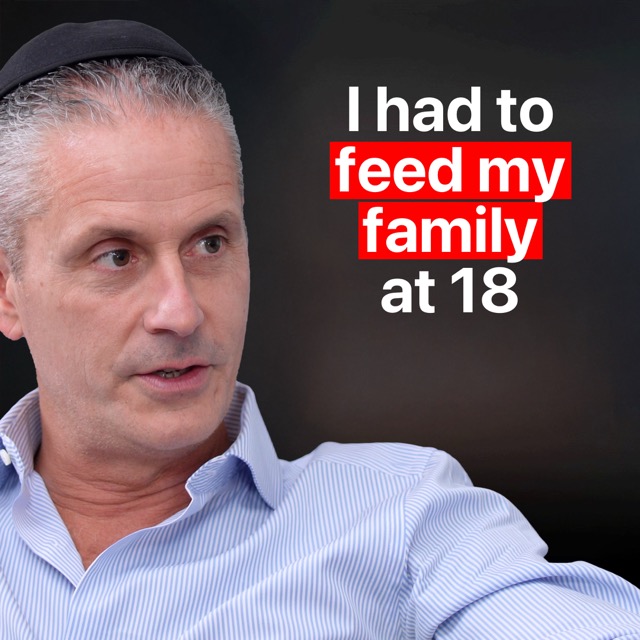


Sophia Cohen is the Founder of Urban Pops, a dairy-free sorbet and gelato pop company. Sophia tells us the whole story–from starting her company out of her tiny Brooklyn apartment to fulfilling hundreds of thousands of orders.
We discuss everything: her story of starting the company when she couldn’t pay the bills, balancing work and running a household, and, most importantly: her favorite pop flavor.
Enjoy!
Transcript
Victor M. Braca: Hi everybody, welcome back to the Momentum podcast. I’m your host, Victor M. Braca, and we have an amazing episode for you today. I sat down with Sophia Cohen, founder of Urban Pops and mother of six, and we spoke about everything from starting a business out of her apartment kitchen to ultimately buying a factory, opening up two locations in Brooklyn and Deal, raising a family, and being a mother while starting a business, and much, much more. It was a great conversation. You guys are really going to enjoy it. Let me know what you think and enjoy. Sophia, great to have you on.
Sophia Cohen: All right, very fun, very excited.
Victor M. Braca: So you told me just now, actually, that you don’t really do these types of things, these podcasts.
Sophia Cohen: No, I usually decline.
Victor M. Braca: Okay, so first of all, honored that you accepted.
Sophia Cohen: Thank you, you’re welcome.
Victor M. Braca: And yeah, no, it’s gonna be great. So I want to jump right into it. Here we go.
Sophia Cohen: Yeah, you could, like, whatever is comfortable for you. You leave, I could see, I understand. Yeah, yeah.
Victor M. Braca: Okay, nice. Okay, that’s good. So I want to jump right in. I want to get into your story, you know, the Urban Pops story, how it started, but before that, I want to hear a little bit about your childhood. So were you always entrepreneurial? Were you looking to start a business, or did the opportunity arise, you know, and then you took it?
Sophia Cohen: I was always working. I was always working. My first real job was in Speedo. Speedo, like the store, the retail store. I was 15. I worked in the city, I commuted from Deal every day. I felt very cool. I know I had… I was the youngest, so the youngest in the family is usually the most personable, that’s my opinion.
Victor M. Braca: I’m the oldest, so that’s what I’ve heard. I don’t know about that. We’ll let that slide.
Sophia Cohen: Yeah, I don’t know, you could take a poll if you want. But I went into the city shopping for bathing suits and I got offered a job, and I was always working. I loved working. I worked in the city, I worked for my father, he had a high-end clothing store. I worked in showrooms, I did sales. In my early 20s, I did wholesale sales. I traveled around the country before I was married, a lot. And I did good. I did millions of dollars in sales. It was very exciting, it was a lot of fun.
Victor M. Braca: That’s awesome.
Sophia Cohen: So I always knew that I wanted to work, and this came naturally. Really, it didn’t start as something that I wanted to do as a job. I was just, by the time I came around to making ices, I was three kids in and one on the way.
Victor M. Braca: Oh wow, so it wasn’t, you know, it wasn’t when you were young before you got married.
Sophia Cohen: No, it wasn’t before I got married. I was a young mother, but I was like your mother, and I was making everything from scratch, right? And I was healthy and I wanted to give my kids whatever they wanted without having to worry about what they were eating.
Victor M. Braca: Love it.
Sophia Cohen: And so I would make things from scratch. I would whip things up in my kitchen, and it was always fun. And then I remember that first year, those first two years, and Instagram blew me up and I started in the community. So basically the way it started was, right, I’m looking for fun things for my kids to have. Posting that, sharing that. “Oh, I’m making this, I’m making that, making ices, making watermelon ices, making strawberry ices.” The kids are lining up at the door on the block, right?
My mother always taught me, like, you want friends for your children, just invite the neighborhood kids. Find the kids on the block, find the built-in friends, you know? And, you know, back before phones that was the thing. Like I’m saying, we had phones when we were a kid, but not cell phones.
Victor M. Braca: I never went outside as a kid, you know? I’m just kidding.
Sophia Cohen: You poor generation, feel so bad for you guys. So the kids were lining up on the block, and I was just making it for fun. I served it… I remember what I served ices in, in little lemons. I made lemon ices and I scooped it into lemons, and my family was like, “What is this? You have more?” My sister walked in the kitchen and she was like, “Oh my gosh, these are incredible, this is incredible. What is this?” And so happens to be my sister was the one.
We went out for dinner one night, me, my sister, my brother, my husband, and my sister’s like, “This has to happen, you have to do this, you have to sell this.” So it first started as like sorbet, scooped, right? And then I felt like, all right, you’re buying a $20 quart of chocolate and you’re a family, but what if not everyone likes chocolate? So I came up with the idea of what if we could offer an assortment? And then like the idea of pops just kind of popped in, and the idea of the bucket. I don’t know if you remember, but we started out as a bucket, it was a bucket of pops.
Victor M. Braca: Yes.
Sophia Cohen: Order your bucket of Urban Pops, order your Urban Pops bucket.
Victor M. Braca: Nice. And it was like a thing. How many came in a bucket?
Sophia Cohen: You could fit a dozen. A dozen. So it started out, the name was Desert, you know, it was a Shabbat dessert, and the name was originally Urban Frost, which my friend Charley Canton came up with the word Urban. So really I have no credit. I came up with Frost, which is where it comes from, and then it automatically just segued into Urban Pops.
Victor M. Braca: Nice. And that name is a great name like that. They’re always parve?
Sophia Cohen: Always parve. Always parve, because it was a Shabbat dessert, right? You can’t forget the beauty of our community and you shouldn’t run away from it, because I believe there’s a lot of inherent blessing in it is that we’re based around Shabbat. No other community in the world is like that. It’s true. And I don’t mean to bring religion into it, but like I think it’s very, very important.
Victor M. Braca: So like every business in the community really is based around Shabbat.
Sophia Cohen: Right. Or based around Shabbat. Without Shabbat, where would it be? You’re buying an apple… And I mean our families are big, so people aren’t buying one, they’re automatically buying a dozen.
Victor M. Braca: I like that. Yeah.
Sophia Cohen: So it’s a beautiful thing. Like when we built the business we were struggling financially. We both were working, I was working, he was working. It was a nighttime gig, kids went to bed, my husband ate dinner, he sat down and I went… I started this thing, “Can you help me? Like I can’t, I need help.” It’s getting, you know…
Victor M. Braca: Sounds like the classic Shark Tank story, you know?
Sophia Cohen: Yeah, it is a classic Shark Tank story. Yeah, we needed the Syrian shark, put it that way.
Victor M. Braca: Okay, we’ll rename the show the Syrian Tank.
Sophia Cohen: Yeah, the Syrian Tank. So it started like that. Once I realized that I wanted to offer an assortment of flavors, right, that first purchase of my molds and my first cookbook… I particularly can remember speaking to my husband about it because it was post-Sukkot, he was taking the sukkah down, and I was like, “Could we, can I buy molds?” And I didn’t even… I asked him, I actually asked him, like would you even ask now? But back then buying something on Amazon, it wasn’t as, you know, it was 13 years ago. Long time ago.
So I bought molds, bought a cookbook, and started to play around with different flavors because we were already making it in scoop. And we had an ice box freezer, tiny top of the fridge freezer, tiny. I was in a tiny apartment, like two bedrooms in the back, one little fake bedroom in the front, and I had one freezer, and as this started to progress someone was giving away a freezer and I was like, “I need a freezer, I’ll take a freezer.” Stuck it in my kitchen and started playing around with figuring out how to actually do this. Because it’s not so simple, the logistics of making any product is not so simple, right?
Victor M. Braca: You had Kraken on, I’m sure he had to figure out exactly.
Sophia Cohen: Temperature, exactly. Formula, the flow, the formula. Exactly. When you’re doing it in the house before you move into a factory, which we are in now of course, but when you’re doing it in the house there’s a formula on how to work and how to do it and how many hours it takes, and when to unmold and wrapping and wrappers and buckets and placement, all of it is… it’s exciting. And I’m sure building a business now it’s the same way, you’re still figuring out your specific formula, right? Of how to run your business, your days, your hours. Right? We used to work till 3:00 in the morning.
Right, so I mean I’m getting ahead of myself there, but we’re very much into quality control. My husband Gary, who works with me, I’m the face, but he’s the everything. Everything moves, everything is moving right now while I’m sitting here spending two hours in this interview because of him, right? Everything.
Victor M. Braca: Okay, I should swap you guys.
Sophia Cohen: I told him that, I told him that. I’m in a podcast, he’s like, “Oh yeah, yeah, okay, go ahead, do a good job, look good, and tell them the story, do a good job telling the story.”
Victor M. Braca: So you mentioned earlier, you know, in the beginning you’re always working, right? You said from when you were 15 you were selling Speedos, you know, at the store. So I want to ask you about this. I’m curious, what was your motivation for that?
Sophia Cohen: My father.
Victor M. Braca: Your father? Yeah.
Sophia Cohen: And my mother, but my father. My father was an everything man. He’s Moroccan, right? So he married my mother, my mother’s Syrian. And my father, he taught me how to sell. My father was a classic salesman, and I remember always over the years hearing the stories of Bloomingdale’s back in the day. He had his company, he had a French underwear company, and it’s just, I was very inspired.
Victor M. Braca: Family underwear. Speedos. Yeah.
Sophia Cohen: My gosh, they were Speedo bathing suits. I mean, I guess, okay, there were a couple.
Victor M. Braca: All right, all right, excuses you make now.
Sophia Cohen: But he really inspired me. And when he had his clothing store he brought me in and he let me do my thing. And when he saw that I had a talent, now I look back, I see that parents can do that. Parents can, when they see a talent in a kid, they can stir the pot a little bit, you know? Push the kid in that direction, encourage it. Sometimes it happened like that, happened naturally for me. My father saw that I was amazing at sales and that I loved it, and that I was personality, and that I could do it, right? And he put me up on the stage for that. And I don’t think I realized till right now, like…
Victor M. Braca: I was going to say, yeah, and I’m sure also you’re conscious of doing that for your kids, you know?
Sophia Cohen: Yeah, yeah, yeah. So I have one of my daughters, they all work for me. My girls work for me, and I love it. I find that the most important thing in raising any worker, I have all teen workers working for me. So I talk a lot, whenever I speak anywhere I speak about work ethic, because what I learned at Speedo and Versace and Alain Mikli and these are… and Mhit, and every job that I held, is work ethic. Yeah. And sometimes I bombed, and sometimes I realized, and then my father would be like, “Bad move, shouldn’t have done that,” or he would give me advice and be like, “That would be a bad move, don’t do that,” right?
And the work ethic to me for your generation is key, every generation. So I try to instill in my own kids and in all the kids that work for me: work ethic. You’re coming, you’re getting paid for a job, you’re not getting paid for a one-handed job while the other hand is on the phone or an airpod half job. You’re getting paid to do a job, put your all into it. I don’t care if it’s Windex the counters, I don’t care if it’s cleaning the case, put everything into the job that you’re doing, whatever job you’re doing.
So what I learned from all of the jobs that I had, if I could look back and I remember it at the time, was that I always, I always put extra. Like, I was a sales assistant in some small company, that was my first wholesale job, I don’t know, I would stay late, I would reorganize the books, I would give myself a project and I would do it, not necessarily it was asked for.
Victor M. Braca: Was this because you wanted to stand out in the job, or was it because you had the inherent motivation?
Sophia Cohen: Both, but it really served me. Like, I remember working at Mhit, and that was my first real wholesale, real wholesale company job. I had a job before that that was “eh, whatever,” right? And then I got interviewed and I got this job offer, and also you always want to work for good people, so they were great people to work for. And I remember pushing the limit a little bit and my boss noticing. And then all of a sudden he’s like, “You know you could start calling, I’m going to let you start calling. Why don’t you start calling accounts?” And I started like cold calling accounts. I mean, I don’t know if they do that nowadays, but probably…
Victor M. Braca: Yeah, yeah.
Sophia Cohen: You know, it’s nice person to person. Some people are like, hedge from email, right? And I really pushed through, and my bosses were so impressed with me that all of a sudden I was being given accounts and I was traveling, and I felt like, wow, I could put my mind into this, you know? Like it didn’t become, it wasn’t secondary. It wasn’t like my social life was primary and my job was secondary. I decided to make my job primary.
And I learned a lot, a lot in those days about work ethic and putting your all into the job and showing up and bringing out… like my boss knew that I was great at finessing, right? I wasn’t great at paperwork, but I was great at finessing. So fabulous. Oh, what did I get? I got a carte blanche pass to take my clients out for dinner. He was like, “Go, you’re good at, go, that’s great, go.” Oh go, oh you spent $1,000 last night entertaining? Okay, but like, you know what, that’s a great… three months later, I mean listen, I worked for a great company that saw potential. Three months later I got a $3 million order, right? And I broke the account. And he let me do that because he saw that I was good at finessing.
Victor M. Braca: That’s cool.
Sophia Cohen: Was I great at paperwork? No. Did it matter? Yeah, it did. It did. I had to do it. I had to figure it out. You know, I had to…
Victor M. Braca: But you did. But you figured…
Sophia Cohen: But I did it, I figured it out. But I also excelled at where I was amazing at, right? And that, you know, I don’t know, that’s what got me where I am today. So I just think I just really, those are the things I do stress. Like they asked me to come speak in a high school, I stress work ethics. I’ve had, I had a… there’s one girl that worked for me, she worked for me for a while and she worked for me from when she was very young. So she called me up recently and she’s older, she’s married now, and she goes, “You know what, working for you fully, fully put me on track. It was the best work experience because you expected a lot. Expected a lot out of me at a young age,” right?
So my daughter Isabella, she works for me, Beverly, Isabella, and Ruby, they work for me. And they’re awesome. I have an 18-year-old, a 17, a 16-year-old, and a 14-year-old. They’re all amazing. So Isabella, she somehow managed to take over the store in Deal in some ways, like the schedule and… and I like to hone her abilities. I think she’s great. I think they’re all great. Yep. And like Ruby, like they all have hen right? By the way, we’re very blessed to be born in this community because there’s also an inherent hen in the community. I know I don’t know, you could add that in, you can not add that in, but everybody should capitalize on their… you’re good with people, you should definitely use that. Use your smile, use your eye contact. Like I interview kids, the first thing I look for, I look for eye contact. Make eye contact, you know. That’s an important skill.
Victor M. Braca: Yep.
Sophia Cohen: You don’t realize it, don’t be shy, don’t be hesitant, don’t be “uh,” make eye contact, look, smile, show your teeth, right? We pay a lot of money for those teeth, those braces really come in handy when they come off. So to me, work ethic is key to starting a business.
Victor M. Braca: So, you know, I’m sure your work ethic, company-wise, got you to where you are today. I want to hear more about the journey back then.
Sophia Cohen: Saturday nights would start with me and my husband opening, I don’t know, 24, 48, 120 cans of coconut milk on a Saturday night. Making the solution on the stove in my tiny kitchen, getting things ready, writing the menu, planning the week. Once we realized it was really something and we went from no freezers to a house full of freezers. There were more freezers than people in the house, we had about eight freezers. Wow. Used every possible area. I was pregnant that year, so I have distinct memories of like an apron over a pregnant stomach working till 3:00 in the morning.
Victor M. Braca: Wow.
Sophia Cohen: You know, also dealing with like the dynamics in the household between me and my husband, getting my kids to bed, my kids waking up listening to blenders blending because their room is right there. And the day worker walking in in the morning to piles and piles of buckets, and I remember hearing her go like, “Oh my gosh,” like raspberry solution all over the bucket, coconut, it was crazy. Like, because really the truth was once the clock hit 4:00 a.m. I became like… Gary couldn’t even, I was, I was aware, like I turned into another person. I was exhausted, right? But I also learned to push through because there was no way I wasn’t going to, I wasn’t going to continue going for sure. You know, I wasn’t going to let my kids laugh at me, they’re like, “Oh, ride the wave,” what are you saying, it’s such a tale… as I once said, and they’re like, “What is that?” But really that’s what it is, you catch a good wave, you got to ride that, you got to go. You have to go. You can’t slow down when it’s hot.
Victor M. Braca: You can’t slow down, yeah. So you guys have now two locations, Brooklyn and Deal, right? Um, but that started…
Sophia Cohen: Our first location was, we started out of our house, we started taking weekly orders. Every week rotate weekly orders. People would… we tried doing delivery in the beginning, we couldn’t figure it out. People would come and pick up. I was living on East 8th Street, so even your mother, any mother listening to this would remember coming down my block. And we had a system, we would label the freezers, we’d bring the orders out. I would be half dead, chat with the person for two minutes. This was me doing this, my husband was at work on Fridays, right?
And in the beginning I remember calling him up and being like, in the early, early, early, I’m talking way beginning, I was like, “Honey, we made $600 today.” And he was like… and we needed it. You know, you’re a young couple, sometimes you need help, you have to figure out. Also in life as you grow and you get married it’s not so easy, you know, especially now it’s much harder it has to be than then. We were short some months and I was like, wow, I made $600. He would be on his way home from work I remember, and someone in the car made fun of him. They were like, “Oh wow, yeah, maybe I’ll start a pop business.” He goes, “Yeah, my wife made $600 today.”
Victor M. Braca: That’s amazing.
Sophia Cohen: He goes, “Oh yeah, maybe I’ll start a pop business.” Someone made fun of him, right? Meanwhile I guess we did make a… start a pop business. Thank God, it just, it kept growing, it was amazing. So by the time the second summer rolled around, we got an offer to open up as a pop-up inside Brooklyn Diamond. They were on Main Street in Allenhurst. She called us up and she’s like, “I have a spot,” and I was on the fence, how are we going to do it? How are we going to do it? I had major anxiety. So between my father and my husband they’re like, “We’re doing it, we’re doing it, we’re doing it, figure it out.” We pulled it together and that first summer, that was nothing like it, really. I was so busy in Brooklyn.
Victor M. Braca: What was it, was it just a freezer?
Sophia Cohen: It was a case. So what did we do? My husband and I didn’t even know how we were going to do it, right? I was researching ideas, I was online, I was looking, I was on Pinterest back then, right? I was looking, I was researching. We went, we found the spot. We came into the spot, looked at the spot, said okay, we didn’t know how. We went to a restaurant resale in Asbury. We found the case, we bought our first case.
Victor M. Braca: A case is what?
Sophia Cohen: A case is like an ice cream case, like…
Victor M. Braca: Like the freezer. Like a freezer.
Sophia Cohen: Like, you know, you go in and you get scooped.
Victor M. Braca: Yeah, yeah, yeah.
Sophia Cohen: And then we had to figure out how to fit, what were we putting the pops in? Right? Every single thing. Went to Home Depot bought this, went to Restaurant Depot bought the containers, bought the dividers.
Victor M. Braca: I never even heard of Restaurant Depot.
Sophia Cohen: Restaurant Depot, whatever, it’s a restaurant… they sell everything restaurant. And we had to figure out how to lay it out, how to present it. Every single thing was a thing. Let me tell you something, you open up a store, you want to sell coffee, you have to figure everything out. You have to figure out your cups, your lids, your coffee, your recipes, your pricing, the way your line is going to go, everything is something. It doesn’t just… you know, like this bottle of water, you know how much they had to put into thinking about the cap and the this and the that. You think about that as a consumer of products, services, whatever it is.
Victor M. Braca: You don’t think about these things, you know, very interesting. Look how you set everything up, look, you put this here, you do the…
Sophia Cohen: Every single thing has a lot of steps behind it, right? And your brain has to be ready to do it. You have to be clear and ready and thinking and on your game, and so at that time we were, you know, I don’t know how we were doing it, we had young kids. So whatever, there’s never right. We, you and I spoke before about balance.
Victor M. Braca: Yeah, um, you know, how I told you we’re going to get into that.
Sophia Cohen: But so we did that and we put out, we bought the case and we did the freezer and we had a freezer on the side and we were like, okay, how are we going to restock pops? Where are we going to hold the pops? How are we going to store…
Victor M. Braca: Did you live in Deal yet at that point or no?
Sophia Cohen: No, so Gary was back and forth. I was in Brooklyn overseeing production, right, and kids.
Victor M. Braca: So production is what, at that point are you still doing it on your own?
Sophia Cohen: I’m doing it with a little bit of help. I think I at that time had hired day girls, girls working for me blending, doing, but I still didn’t… you know, that’s a whole another story.
Victor M. Braca: Out of your house in Brooklyn?
Sophia Cohen: Still out of my little tiny apartment in Brooklyn. Tiny, right? Tiny. Um, and so Gary’s back and forth and there were even days in the beginning where we would have to close. “Hi, closed for siesta, closed Monday, closed Tuesday, oh wow, reopen Wednesday.” Reopened Tuesday night at 5:00, the doors are open, the people are there. That’s what was amazing with Instagram. This is 2014, 20… let’s see, Albert was born 2013, that was my first summer delivery, so summer of 2014. Got it.
And it was amazing, and then so we came back from Deal and then the Center called us and they’re like, “Why don’t you open up something?” Yes, “Why don’t you put a cart?” We had bought, when we bought our case, we bought a cart. We bought our first cart. I miss that cart, that was a steal, it was a great cart and I really need another one of those carts.
Victor M. Braca: You got rid of it?
Sophia Cohen: It died, it was used like nonstop. It was like we worked that cart to the ground. It was a fabulous cart. We still, we have another cart, but that first cart was, I remember the Center after Sunday program, you know? “Yeah, can I get an Urban Pop?” Like, best. We had a cart first and then they turned around and said, “Okay, why don’t you put a freezer?” So we said okay, we have the case. It was in storage. At that time we were still making pops out of molds, right? So there was a transition within those years of going from making pops out of a mold that you actually had to unmold, unmold, unmold, right?
I hired a girl, she came to my house and at 7:00 a.m., before my kids even got up, she was already unmolding pops. And I had pictures, I would wake up extra just to get the pictures of her unmolding them, lining them up, huh.
Victor M. Braca: For an Instagram post?
Sophia Cohen: Yeah, yeah, it was great content. I said those were great pictures, gorgeous pictures. And unmold, unmold, you’d even like, you’d get a sore here from holding the stick, you know what I mean? But so those were great years. The store, then we opened up in the Center, and then the following summer we took our own spot in Allenhurst.
Victor M. Braca: Nice.
Sophia Cohen: And we were in Allenhurst for quite a few years.
Victor M. Braca: Yes, I remember.
Sophia Cohen: Unfortunately we kind of got pushed out of our spot, right, but we made do because we also were starting with outside customers, the Ashkenazi community, delivering to Five Towns, delivering to Monsey. Deliveries are a main source for us. They’re a main hub for us, of our business. We deliver everywhere, and we figured out how to deliver on dry ice, and that also was a very big deal for us. That whole progression, and then once we moved into our factory everything changed. Shipping across the country, we streamlined all of our deliveries. Holidays, I mean holidays are amazing.
Victor M. Braca: Yeah, amazing. Big season.
Sophia Cohen: Holidays are… I’m going to go back to it again, we’re very blessed, you have to look, you know it’s easy to just brush it off, to not even think about it, you know? I remember at one point I really, like I kept getting offers to open up in places where I would need to be open on Shabbat, and my husband was like, “No way, I’m not opening up on Shabbat.” Right. There’s some people in the community, “Let’s figure it out, we’ll do a star this, I don’t know, contract, there are kosher ways.” Gary, God bless him, my husband, he’s solid in that way. And I remember in the beginning kind of pushing, I was like, “But what do you mean the community is full of freelancers, what are you telling me?” Then I remember he goes, “Call the Rabbi.”
So I called my Rabbi, and very, very amazing Rabbi, and he said it’s much more complicated than you think, and it’s not that, it’s also in your head, you have to think about what’s going on, right? Over the years I realized my mind is 24 hours on work. I wake up in the morning, I mean now it’s a little more streamlined, but wake up in the morning, think about posting, think about production, think about the kitchen. Go to bed at night, the store’s closing it’s midnight, I still am thinking about work. Shabbat hits and my mind is shut. Business closed, there’s a beauty to it.
Victor M. Braca: Love it.
Sophia Cohen: Our community, being Jewish, being observant, we’re Orthodox, we know where it all comes from. You know how lucky we are? Like do you know how lucky you are that you get to put your phone down for 25 hours?
Victor M. Braca: It’s a blessing, yeah, yeah, yeah.
Sophia Cohen: It’s a blessing. You’re with your family, you don’t feel like you have to connect. All right, Shabbat ends, where all the minute it’s over we’re like we start, but Hashem gives us like a real reprieve. And I don’t mean to turn it into Rabbi, but like no, I really am constantly grateful and thankful that like, okay, my business is closed on Shabbat, I have complete rest, it’s like menuha, that’s great. My business is closed. I, I holidays, Shabbat, it’s like pillars, you have to think about what might be happening, you know?
No, you know what, whenever we cater to the world world, and look, there’s definitely a place for us in Costco, and there’s a place for us in the real in the American world, but our Jewish community, and I’m talking the entire thing, Upstate, Monsey, Five Towns, Queens, Great Neck.
Victor M. Braca: Yeah.
Sophia Cohen: I’m talking the at-large is a humongous family-oriented, food-driven community that really supports amazing, so I’m so grateful for like these pillars that pop up through the year, right? Every week you get Shabbat, and then a bunch of times a year, Rosh Hashanah pillar, Sukkot mountain, Passover mountain, Hanukkah became a mountain, Purim became a mountain. I remember sitting down with Gary after our first Passover, and totaling, right, right, Pesach ended, kids are asleep, we’re sitting down in the kitchen in our little tiny kitchen, and we’re totaling, and like I said, we needed the money.
Victor M. Braca: What are you feeling? Like I’m sure…
Sophia Cohen: I was like… and the number wasn’t that huge. It really wasn’t that huge at all. I do more on a Monday, right, way more. You know, thank God. But I remembered sitting down and going, “Oh my gosh,” and that was the moment we realized after that first Passover that it could be a real business. And I remember that first Passover, Passover 2013, and we were like, wow, I think we have something here. And Gary didn’t fully join the business until the end of that first summer.
Victor M. Braca: Got it, okay, so pretty relatively early.
Sophia Cohen: It was a year, but already we were struggling with it. I was like, “I need you here,” but “You can’t leave your business,” it was like a back and forth, it was a struggle.
Victor M. Braca: And then you ultimately decided…
Sophia Cohen: All of a sudden he came home and he’s like, “I’m done, right? I’m done.” And I went, it was a Sunday morning, I go, “Aren’t you going to work?” He goes, “I’m finished, right.” And I went, “Okay, let’s do this.” And that was it. Monday morning he started to get books in order and ordering in order and streamline and you know…
Victor M. Braca: Nice, nice.
Sophia Cohen: I was, you know, trying to do it on my own, and at that point it was, that was when the partnership started. You know, there’s something to be said about working with your husband, right?
Victor M. Braca: For sure, no, you can’t, you can’t…
Sophia Cohen: There’s a lot to be said about working with your spouse, for sure.
Victor M. Braca: Okay, so listen, I want to hear about this, um, for the people watching, you know, the ideal audience for the podcast is community members around my age, a little younger, a little older.
Sophia Cohen: Right. The youth.
Victor M. Braca: That’s it, right? And I don’t know how to phrase the question so well, but you’re a woman, you have three kids, four kids, six…
Sophia Cohen: Six kids.
Victor M. Braca: Oh wow, so I had three kids through the process, you have six. You have six kids.
Sophia Cohen: Six kids, I started with three and then one on the way, and then two more. No, I started, yes, one on the way when I started, and then another two.
Victor M. Braca: Yeah, right, okay, um, you’re married?
Sophia Cohen: Yeah.
Victor M. Braca: Okay, married almost…
Sophia Cohen: Around hitting 20 years right now.
Victor M. Braca: Wow, okay, awesome. And just give me your thoughts on the whole, you know, on the whole situation.
Sophia Cohen: When I started, it was very difficult to have the balance. We worked till 3:00 every night. 3:00 every night, 3:00, 3:30. Like I said, if the clock was close to 4:00…
Victor M. Braca: You woke up what time to put your kids in house?
Sophia Cohen: I had to wake up at 7:15. I woke up, I crawled out of bed, and they didn’t get 100% mom by any means. And then as the year went on, and the years went on, they would come home from school, it would be 4:00, 4:30. There would be blenders and ice and coolers and freezers and pop molds and workers. They didn’t walk into, “Hi honey, the table is set, here’s dinner,” never, right? Never.
And I would let them watch TV, I’d let them play outside, I’d feed them something quick, but it was… the idea of multitasking, it’s fake. Like, it’s not real, right? We think we’re multitasking. We are such multitaskers now with technology, it’s a killer. Open all at once. Hello, you have four things you’re… I find myself watching a movie on my phone, and on another tab doing work. Yeah. And I’m multitasking, but I’m not all in, right? When I want to focus now, I have to shut everything out and I just have to like, okay, focus. And it’s much harder now to focus. I definitely think I can’t be the only person that’s saying that, the generation is now plagued with learning how to focus when you’re forced to multitask, right?
And not only that, but what technology also did was, we used to have a work day that ended. Not anymore. You don’t have a work day that ended. You’re going to go and you’re going to edit this whole thing at 1:00 in the morning.
Victor M. Braca: Yeah.
Sophia Cohen: You’re going to be working all night, you’re going to wake up in the morning, there’s no workday. Customers are going to call me at any time of day, I’m answering emails all the time, I’m posting all the time. So as it is on your own, is there balance? There’s not really balance. Balance used to be, I go to work and I go home, and I see my parents when you’re single, I see my friends, I see my husband, I see my children. Now it’s a big mix. As a woman, it’s… I find it to be very difficult. I find that the woman’s place in the house is totally jumbled. I crave, I love when I’m just focused on my kids and that’s it, it’s their time.
The struggle is real, the struggle between having to work. There were years there was no balance, like there were years there was no balance, and I’m not going to lie about it. Like I get asked this question on women’s panels, there is a place where a woman can be at home. So you want to find the balance and you want to run a business, you should do it, but you really have to be self-disciplined, which is not an easy thing to find now. Like, you know what would be an amazing business? What would be an amazing business would be someone to help people become self-disciplined. That would be an amazing business right now. Because there is a niche, because a woman needs to come home and she needs to focus, she needs to give them attention, the kids are… so you see it, you see the flip side of it in the kids, right?
I’m raising six children and there’s a lot, there’s a lot to raising children. I used to think a stay-at-home, because I never was a stay-at-home mother, right? I never really had that opportunity. Nowadays I’d like to say, okay, I could be staying home, I work from home, but do you know how busy a mother is with schools, therapists, tutors, house, shopping, dinner? A home runs around the mother. So I actually want to say, if you’re a mother and you’re a stay-at-home mother… my very best friend has the same exact amount of kids as me, same ages. She doesn’t work, she’s always busy with her kids. She’s not lunching, she’s not out playing cards, she’s busy raising her kids. I think there’s such a beauty to that. I don’t mean to be like old-fashioned, but we all look back and go, “Wow, there’s such a beauty to that.” So I think that there is a balance, but I think that your generation really should bring back old values, there’s a beauty to that.
Victor M. Braca: But you run a business. How does that… like is there no balance? Is there…
Sophia Cohen: Um, it’s rough. I, in the summer believe it or not, it’s easier for me because everything is a little bit more relaxed, right? I don’t have to deal with school and homework and this and that, the kids, it’s easier. But in the wintertime, Passover, my kids don’t see me for the month before Passover, for the month before Passover they’re like… Thank God I have certain therapists that come, or I have tutors, I have to deal with mother’s helpers. So you have to balance like that, you have to hire out. So you’re finding the balance, you’re really basically giving the responsibility to somebody else, right?
So I feel bad because I feel like there’s a different answer that people want to hear, but I don’t really think it’s real. After 13 years I can tell you they, and they’re all all right. So if you want to look at the end product, let’s look at the end product, you know what I mean? All right, how are my children doing, right? They’re managing, they’re great. But I do feel like there’s a certain element that I wish I could give them that was lost. And I just think that if a woman is… we’re talking women like you said to me before, “Oh I don’t know, I don’t know women,” you know, you’re going to want to come home, the husband comes home, and there’s an element to marriage and shalom bayit and running a home and calm in the house.
But my business is also very different from other businesses, 24/7. And would you really think Urban Pops would be 24/7? It’s pops, like what is it? But there’s a demand and there’s workers and there’s staff and there’s a store and there’s… so now what’s the next question? So where does the balance, where has the balance come now, now that we’re a little bit more settled? So now we’ve hired people to do a lot of that.
Victor M. Braca: But on the familial side or on the work side?
Sophia Cohen: On the work side. So that’s where the balance comes in. But between starting your business and getting to the point where you can hire management, kitchen manager, store manager, assistant, this and that, that costs a lot of money. Yeah, so between the years of when you’re starting and when you have the money to pay for that, the balance suffers. Like now, my dinner’s, I’m going to go home, like even my kids laugh at me. Summers forget it, I’m not always making dinner in the summer because it’s also, it’s calmer. Like I don’t know, summer believe it or not, even though we’re the busiest, it’s the calmest. Interesting.
But during the year, holiday, right? I’m not going to… my business is amazing because I’m also… any customer will call me and they’ll be like, “Oh I’m so sorry for calling you,” and I’m like, “This is my business, this is what I do. I make sure everything is running smoothly down to the manager, down to the dishwasher.” I mean, not really down to the dishwasher, but we do have dishwashers, but I don’t know.
Victor M. Braca: So, so you know, like looking back at the 13 years that you’ve been running Urban Pops, do you wish you set up… do you think it would have been possible even to set up a system from the beginning where a greater balance could have been achieved? Do you think it was inevitable?
Sophia Cohen: Imagine probably, you know, my husband and I didn’t have parents put us in business, right? I didn’t have that. I didn’t have the influx of capital that just dove into my business. And I didn’t go to business school. Gary didn’t go to business school either, so there’s also the art of learning business on the job. I believe in it. I think that it’s… I would love if I could go back, I wish I went to business school, because I have, I do have a good mind for it, right? I think I have a good mind for it. And maybe I’m not mathematically inclined, but I definitely have a mind for the dynamics, for management, for business. I would love to have learned a little bit more. I would suggest taking business courses, reading, listening to podcasts, taking advice. Oh right, sorry, by the way I forgot we’re even on a podcast, that’s how easygoing…
Victor M. Braca: Beautiful, love it. That’s what you want.
Sophia Cohen: Yeah, but I definitely think getting guidance from people that are already doing it and soaking that up when you have the time, I think that… do it before you start a business. If you think that you’d be interested in starting a business, but you don’t know what kind of business you want to start, doesn’t matter. Doesn’t matter. Start taking classes, start listening to podcasts, go out of your comfort zone, do something someone isn’t doing. Read a book, read a book. Who reads books? The only day that people read books now is Shabbat, honestly.
Victor M. Braca: Yeah, it’s true, sad, yeah, sad.
Sophia Cohen: It’s sad, but there’s plenty of great podcasts out there. And I think that’s what I wish younger me did to set us up.
Victor M. Braca: Little head start, right. You would have gotten that head start.
Sophia Cohen: So maybe that’s the solution. Like I’m sitting here hashing it out with you, like, oh what would have been the solution, how could I have done it better? Definitely I think that those things could have helped, because you know, learning about how to balance a business, how to run a business without the business running you, right? A lot of podcasts, a lot of business advisors talk about that. Learn how to run a business, or does the business own you, or do you own a job? That’s also another way of putting it.
Victor M. Braca: Yeah, right, right. You don’t even own a business, the business owns you.
Sophia Cohen: Yeah, you just have a… it’s a 24/7 job. You better figure out how to do that where it doesn’t suck you dry and make you unhealthy, right? Because the world’s 24/7, it’s a lot.
Victor M. Braca: Yeah. Or for us 24/6, right?
Sophia Cohen: Thank you. Thank you. Thank God. Thank God for Shabbat. So yeah, it’s a lot to take in. You know, I know I guess you… I didn’t even think we, I didn’t know what we were going to talk about today.
Victor M. Braca: And so um, I’m sure that you’re encouraging your kids with this information. Like everything you’re telling…
Sophia Cohen: Definitely, definitely. I encourage them. Like I feel like they… I tell them, I’m like, “You know guys, I’m at this point, old generation, your new generation, like you can use this business, you can work, you can build this business, you can do things I can’t do, right? You can be creative.” I want them to take business courses. I want them to be inside the business. I want them to clean the toilets, I don’t care, I want them to clean the bathroom, I want them to sweep and mop, I want them to learn how to run the business from bottom. Work ethic, work ethic. So it’s a lot, it’s a lot. I’m sorry, I don’t know if you want to go in that direction because I mean it’s… I get deep, I get deep.
Victor M. Braca: Take away the podcast for a second, it’s something for me to think about also, you know? It’s a, it’s just like things that you have to have in your mind. You definitely need to as a community member…
Sophia Cohen: As a community member, as an example. Yeah, you know how you want to build a family. Actually, I had one question, random question, you know, getting out of the deep stuff. I’m sorry, no, no, I don’t even know if you’re going to use it, it’s going in really, don’t apologize because like this is what, this is what it’s for.
Victor M. Braca: We started the podcast, my father had the idea, “Um, you should start a podcast interviewing community members who have seen success, you know, in whatever they did.” And the whole point is, you know, because I like this, you know, I’m enjoying this conversation, and as a viewer I would enjoy this conversation too, you know? And my friends would and people my age would too, you know? That’s the whole point.
Sophia Cohen: Right, you just got to keep their attention because everyone’s so ADHD.
Victor M. Braca: Yeah. So maybe we’ll make a clip, you know, we’ll clip this and a 30-second item. The real question: what’s your favorite flavor?
Sophia Cohen: Oh, um, right now my favorite flavor is Dragon Fruit Lemonade.
Victor M. Braca: Haven’t had that one.
Sophia Cohen: Oh, it’s so pretty, Dragon Fruit Lemonade. So refreshing. I don’t go for the fruit one so much, I go for the ice cream one. I know, what’s your favorite flavor? I think, okay, over the years, take me through the years. No, you’re going to call me basic. Strawberry Shortcake.
Victor M. Braca: Oh, okay. It’s not so basic.
Sophia Cohen: Um, it’s, I feel like it’s a basic one, but it’s so good. It’s so good. Um, Chocolate Caramel Pretzel, that’s what you brought up.
Victor M. Braca: That one was good. I used to be a Chocolate Caramel Pretzel guy, you know. Right, um, s’mores is always like…
Sophia Cohen: Depending on if I’m in the mood for it, but that’s always, right, that’s always great. Right. Ferrero Rocher is a 10.
Victor M. Braca: I want to um, I want to ask, you know, one, we have a sort of signature question. You know, the name of the podcast is called Momentum, like I said, it’s for the youth. We want to allow young adults, teens to hear little bits of inspiration that’ll get them, get their journey to success going. Build up some momentum from a young age, right? Kind of like what you did, how you were working from age 15, right? What was in the business your momentum moment, right? The moment where you see everything starting to come together, you realize this is working, and they have to continue?
Sophia Cohen: If you find that there are people that are excited by something that you’re doing, don’t be embarrassed to keep going. Don’t feel like, hesitate, don’t second-guess yourself, don’t talk yourself down. Just do it. Just be exhausted. It’s okay to be a dish rag once in a while. All right, you missed out on the trend, you have no idea what’s going on, right? But you’re fully immersed in what you’re doing. So if you do something and you feel like people are like, “Wow, that’s so cool,” but then you realize that like you’re going to miss parties and you’re going to miss this… you know, you get that like, that like second-guess backtalk, just shut it up because that’s where the magic happens.
And I really, I missed a lot. I missed a million weddings. I missed… I missed everything. I missed, listen, balance or no balance, I pushed through. My kids missed out on me a little bit. I mean, I have a fantastic relationship with them and I develop it. I always used Shabbat as my time. In the early years I used Shabbat to sleep, and then I… because we would, God bless my parents, we would fall, Gary and I would be asleep at the Shabbat table. I’d be on the couch, he’d be at the head of the table. You know, the man asleep… they fall asleep. My parents would put the kids to bed and push us into our beds. And then I started to find the Shabbat balance where I realized, okay, I’m going to sleep and now I’m going to spend time with my kids. So I really use that time. But don’t hesitate. Don’t tell yourself… don’t use that talk on yourself. There’s a lot of that now.
People think, “Oh it’s already out there. Oh, like look at you, you’re doing a podcast, other people do podcasts.” But look, I heard about you from my daughters, like when I told them who you were. Right. And I thought that was very cool.
Victor M. Braca: Yeah, that’s pretty cool, that’s pretty cool.
Sophia Cohen: And they’re cool, thank God they’re cool. I need their cool, I use their cool. Right. Um, but I just… that’s the momentum. Don’t second-guess yourself if you’re excited about an idea. Explore it, do it. That’s my momentum. Don’t let yourself… I don’t know if that’s good. Is that good? Is that what you want to hear?
Victor M. Braca: Um, I’m not asking you for what I want to hear, because I’m asking you for what you want to say. But um…
Sophia Cohen: I don’t know if that’s a good enough answer.
Victor M. Braca: It’s a great answer, I love it actually. It’s like sort of also just get started, you know? Like you might not be fully ready, but you have to get started. And you learn on the job. You mentioned learn on the job.
Sophia Cohen: Definitely learn on the job. We learned on the job for… we’re still learning on the job, and it’s all right to learn on the job.
Victor M. Braca: So am I, it’s all right, you know, right here, like it’s all right to learn on the job.
Sophia Cohen: Yep, for sure, and ask for help. Definitely ask for help, for sure. Don’t be embarrassed, you should always reach out and ask and not be afraid to ask, for sure. That’s why I said yes.
Victor M. Braca: Love it, yeah, it’s great. So we’ll follow Urban Pops on Instagram?
Sophia Cohen: Yeah, follow Urban Pops on Instagram. If you haven’t had one in a while, get one. Whatever, thank God. All right. Okay.
Victor M. Braca: All right, this was so much fun. This is great, very insightful, great conversation.
Sophia Cohen: I hope you got, I hope I didn’t over… I don’t know.
Victor M. Braca: Not possible.
Sophia Cohen: I didn’t, what, this was fully everything I said was off the cuff.
Victor M. Braca: And that’s what, that’s the whole point of the show, you know?
Sophia Cohen: Yeah, yeah, that’s what I do off the cuff.
Victor M. Braca: All right, love it. It was nice to meet you and uh, I hope everyone… great to have you, um, and yeah, thank you for coming. I think you’re going to do great.
Sophia Cohen: Thank you, I have no doubt.