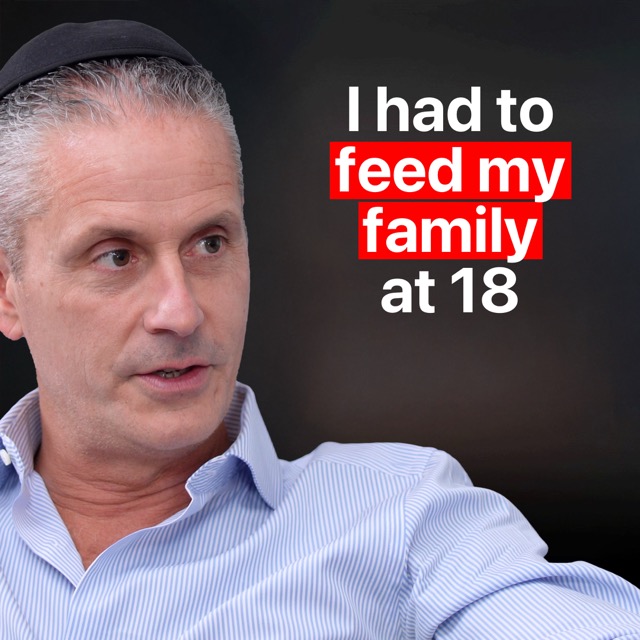


Welcome to the 1st episode of the Momentum Podcast! Today, we welcome Michael Harary,
whose snack company, Crack N’ Up Crackers, is taking the community by storm.
We discuss some insights on business, branding, and growing a company from the ground up.
Michael also tells us about Enough is Enough, an organization he founded to help educate,
empower, and unite college students in the fight against campus antisemitism.
Enjoy!
Transcript
Victor M. Braca: Welcome to the first episode of the Momentum Podcast, where we sit down with interesting and successful community members in order to inspire and empower the next generation on their journey to success. I’m your host, Victor Braca, and today I’m so excited to be joined by Michael Harary, the marketing genius behind Crack N’ Up Crackers and the founder of Enough is Enough, an organization dedicated to educating our college students on how to combat anti-Semitism on college campuses. Join our conversation to discuss how Michael’s innovative approach and dedication are making an impact on our community, both by transforming everyday crackers into a community phenomenon and by standing up for our nation. Let’s get into it. Hey Mike, how are we doing?. Great to have you on this. This is the first podcast, first episode, very excited. We’re looking forward. So let’s jump right into it. Tell me, what do you do?. Crack N’ Up, Enough is Enough—give me a one-second summary of what you’re involved in, what your mission is, what your goal is. Tell me about it.
Michael Harary: Okay, so we’ll start with Enough is Enough. I think it’s a more important task and project I’m working on. Enough is Enough is an organization to combat anti-Semitism, specifically through young adults, through education, uniting and empowering young adults within our community and outside our community to really educate them on the history and the truth about Israel and modern anti-Semitism. We unite Jewish communities and empower them to stand up against anti-Semitism in any shape or form. I said this the other day on a panel, that it’s to be educated on the topic to be able to respond to people. So if a kid comes to you on a college campus and he doesn’t know about the war in Israel, and you don’t know the answers—you don’t know about the 1967 war—then what’s going to make him not believe the media or other students in their class?. So that’s the first thing in terms of education.
Michael Harary: And the second thing is when you’re educated on your history and you’re educated about the State of Israel and where you came from, you’re stronger within yourself. You have a stronger Jewish identity, you’re more connected to Am Yisrael, you’re more connected to your nation-state, you’re more connected to God and Torah. So that’s the first thing. In terms of Crack N’ Up Crackers, people always ask me what my goal is. It’s really to just build a brand and have a bunch of different divisions under one empire. So we started with crackers because it was an addicting product and people love it. Why not sell something that’s addicting that people love?. And then also, in terms of the marketing and the social media and all those different aspects, it’s really just about building a community around Crack N’ Up and then expanding outwards from there and starting different divisions. Like you called me the other day and you asked me what we’re doing—selling merchandise and selling crackers, obviously, and then who knows what else we could jump into, a bunch of different projects within that brand.
Victor M. Braca: I love the theme of building a brand, that community, because you see that in both the things you do. Like Enough is Enough, what are you doing?. You’re bringing people together through events, you’re teaching, you’re writing curriculum, and you’re teaching at these panels that you spoke about. And the same thing with Crack N’ Up. I noticed in your Instagram bio, “join the community,” right?. You don’t really see that in a food company.
Michael Harary: But it’s all about building community. And that’s what I really—whenever I started, actually this wasn’t my first startup. I started a clothing brand called the Hour System Society when I was much younger, and it didn’t really go anywhere. But what I always imagined whenever building a brand was—and it goes for Crack N’ Up and EIE—that you want to build a community. People want to feel involved in something, and when people feel connected and involved in something, that’s when you’re expanding on one project. So like Crack N’ Up and EIE, you build a community around it, people feel connected, people feel involved, they feel like they’re your friends, they feel like they’re your family. It becomes such a more powerful and more connected brand, right?.
Victor M. Braca: So I would say, for somebody with that entrepreneurial spirit, that inherent drive—I don’t know if most people realize that. At least for myself, I’ve always been business-centric: what can I invent to solve that problem that I have?. What can I make?. What product or service can I provide?. When most people think about business, entrepreneurship, starting a business, they think, “Okay, I’ll sell a product, I’ll deliver a service, and that’s it”. How did you come to the realization that you just mentioned, that you have to make people feel involved in a community, feel useful and bigger than themselves?. How did you come to that realization?.
Michael Harary: Right, so first you mentioned starting. I want to jump onto that a bit. When I first started this, I was knocking door-to-door trying to get a bunch of sales. We can go through the story later, but I had these little clamshell boxes and I had a little label on it. And then I’m like, I want to go into stores, but I want it to be perfect. I want to have the nutrition facts, I want to have the perfect packaging, I want to have every little detail on it to a T. I wanted it to be the perfect type of box for the crackers. And my friend Abram Hanon came to me and he said, “Mike, how do you think any company starts? You think they just have everything perfect and they put it into stores?”. And I was really hesitating for maybe two months and I didn’t start. I was really pushing; I’m like, “No, I don’t want to start. I don’t want to put it in yet”. And you realize that things grow and you learn and you just have to throw yourself into it anyway. Yeah, throw yourself into it anyway and just start.
Michael Harary: Put it in there, put it in the stores, and that’s what I did. I ended up putting it with a label. I didn’t have the nutrition facts, I didn’t have all the details. And throughout time, we changed the label, we changed the packaging, and you grow. And that’s really… I see that with EIE, look at Crack N’ Up, and it just becomes its own thing throughout time. So that’s a starting point. And by the way, you continuously have to start. It’s like, okay, you start in the beginning, but also at the same time, I actually had an issue. I went to a store and I proposed the crackers. I said, “Can we sell this in your store?”. And he said, “Yes, no problem”. I go, “You know what, I want to have the right certification, the right this, the right that before I come in”. I ended up—this was already when I was in business selling to a few different stores—and I’m like, “I want to have the right thing to put on the packaging, I’ll come back to you”. I came back to him and he goes, “I don’t want to see it till after Passover”. And then I went back after Passover—”We’re not selling now”—and then I lost my opportunity. It’s get yourself in there, figure it out after. That’s the type of mentality a lot of entrepreneurs have. So many entrepreneurs I speak to—I was on a panel the other day and they all said, “We really didn’t know what we were doing, we just started”. And it all comes about. So remind me, what did you ask?. Because I jumped on the starting point, I forgot what I asked.
Victor M. Braca: But it doesn’t matter because I want to ask a follow-up question. You mentioned you’re continually starting. I could say even for the podcast that we’re doing right now, it’s the first episode, right?. And what was the course of action?. Me and my father had an idea to start a podcast. I text him on Thursday an Amazon link, “Order this microphone right now within 14 minutes so it ships tomorrow,” you know?. And we got to get started ASAP. I was thinking about it for a little while. I’m like, “Okay, I want to start a podcast, I have to line up all the guests first to see who I want”. And I said no. I made an Instagram account, I announced “first episode dropping Friday,” which is today when it’s released, and I reached out to you. I’m like, “Come on as the first guest”. And it was just like you, I realized after procrastinating it for long enough that you got to start, you know?.
Michael Harary: Yeah, yeah. And I also… people ask me to be on a podcast, and sometimes I ask myself, like, I don’t really want to show my face that much. But then I realized, if it’s helping build a brand or it’s helping build something greater, show your face. Who cares?. Like, I’m not going to hide myself. Some people, I understand them and I respect them for it, but for my branding, my face is a part of it. And I think if we’re talking about my business, it’s just going to promote my business. If we’re going to talk about EIE and what we’re doing, it’s going to promote it more and people are going to jump on top of it more. And I think that’s my value in all this. My value is talking about it, speaking about it, public speaking, whatever it be, just really putting yourself out there in a way to promote what you want to promote.
Victor M. Braca: And also connecting back to the community aspect, you know?. Because if there’s a sort of community leader—let’s say you’re the leader of the brand, your face is on it—it’s humanizing it even further. It’s called Crack N’ Up, your smiley face, right?. But even further, you attach your face to it, and while you may be opposed to that in the beginning, that’s how you connect with people, you know?.
Michael Harary: Exactly. People are 100%—they connect, they want to see the backend story. I always say this whenever we’re doing marketing: I always want behind-the-scenes footage because I think that’s better than the actual footage. All right, let’s get behind the scenes, great, legit. Because people see the genuineness of it, they see what’s really happening. They want to feel… they feel more involved, like I said in the beginning.
Victor M. Braca: I love it. Okay, so going into the origin story. You mentioned you started three projects that I know of—that first startup, the clothing brand, EIE, Crack N’ Up, and then maybe more, which I’m not sure. Were you always entrepreneurial growing up?. Did the opportunity arise and you took the opportunity for these organizations, or were you always looking for something to make?. Or was it in the middle?.
Michael Harary: So my father always instilled in me to always get involved in community projects and always pushed me to start and sell. When I was little, I was always selling winter gloves in school, and I was selling candies, and sometimes in camp I would do things. And then I was part of a beautiful organization, ECF (E-Core Bar Mitzvah Foundation), which helps support people who can’t afford a bar mitzvah. So I was always somewhat involved. And I always liked starting something. I want to feel like I could control and grab the bull by the horns in a way. And I said this to students when I spoke in Flatbush: I said, even if you’re working a job, you could still apply that entrepreneurial spirit. You could take control of what you’re in. So like if you’re working in real estate and you’re part of a certain division, take a lead on that, be creative in that aspect, and try to find ways where you could be a little bit entrepreneurial in what you do. I worked in RJT Capital and that’s what I did. I was really trying to just lead and find my own leads.
Michael Harary: You have to really just take things by the horns and find what you love within a business too, because a lot of people, you know, they’re getting married, they’re having a kid, they need to get paid through a business, they can’t just start something because it’s a huge risk. So it’s just really finding what you enjoy within that business. It’s so important to find what you enjoy, and we could talk about lifestyle and the enjoyment of life. I think it’s crucial because if you’re working every single day and you’re not happy with what you do, then what are you really working for?. When I started this—and we’re going to get to the story like you said—I was working terrible hours in the beginning. I was working 4:00 p.m. to 12:00 a.m. twice a week with my cousin Ronnie Jamal in the kitchen, and then I was delivering the next day. Last summer, I was not enjoying it. People were asking me, “Oh, how’s Crack N’ Up?” because it was the hype then, it was debuting. I was like, “Yeah, it was good, thank God”. Like, I really didn’t see so much money in the bank account coming in and I was just not happy. I was working my ass off and I’m not happy.
Michael Harary: And I wrote down a whole thing of notes and I said—I could even pull it up on my phone—”Why am I working this hard?”. And I just kept writing through it. I go: one, I believe in the brand; two, I could do a lot of good with it in the future, if I make money I could put it into the right places; but I really believed in the brand. I said, okay, we’re going to work our asses off now, but we’ll see what comes in the long run.
Victor M. Braca: I love it. Yeah, to be able to be in that sort of situation where you’re working that hard, those hours, 4:00 p.m. to 12:00 a.m. every day….
Michael Harary: And started at 9:00, but 4:00 p.m. was the baking time. So it was like 9:00 a.m. to 12:00 a.m., right.
Victor M. Braca: And to be able to have that future-forward, looking-forward mindset of “this is what’s coming and this is why I’m doing this,” and know you’re very goal-oriented… it’s admirable. So going into the beginning, tell us more about how it started up. You said you’re working these long hours, I think if I’m not mistaken you started in your mom’s kitchen. Tell us about it because you’re in 40 stores now, congrats.
Michael Harary: Thank you, thank you. Yeah, so basically my mom was baking these crackers and every Saturday we would eat them. I’m like, “These are so addicting.” I asked my mom in the beginning, I go, “Ma, does this have cheese on it? Like, what’s so good?”. And then we were just sitting down—I was selling bonfire bricks at the time, and I was going to people’s houses during COVID and I was putting the bonfire bricks, setting it up, breaking my mom’s car, breaking my back also. And we’re sitting on a Saturday night with my friends and there was a box—Abraham Surya and MIT Surya actually, you know, shout out to them—where there was a box of crackers right in front of us. We were just eating it in the nighttime and we couldn’t stop eating it. And then they’re like, “Mike, you should sell these”. And I’m like, “You know, maybe I should sell these. They’re addicting”. They sell addicting things, iPhone’s addicting, people buy it’s addicting, why would people buy it?. So I went to my mom the next day, I go, “Ma, let’s sell these things. Screw the bonfire bricks, I’m done with that”. She was like, flattered, right?. I got a label that said original and Za’atar and I would check it off and I just made an Instagram account and people would start ordering.
Victor M. Braca: Was it originally called Crack N’ Up?.
Michael Harary: Yes, so my mom’s friend Linda Beta, she goes, “Call it Crack N’ Up Crackers”. Like, I don’t know if I love that name. And then I kept thinking about it, I’m like, “I don’t really have any names, let’s do Crack N’ Up Crackers”.
Victor M. Braca: You just started pretty much, you didn’t wait till you found the perfect name.
Michael Harary: Yeah, I literally took an emoji from Apple, this laughing emoji, I put it on the thing. It was so childish but I’m like, who cares, we’ll make 200 bucks a week, why not?. And then people were ordering and I was delivering it myself because I said you have to eliminate the hassle. And I said, “You know, we’ll deliver in the beginning, we’ll see how it goes”. People started coming to the house or ordering, they would get six boxes, 10 boxes, they would come begging for crackers. It was like, right out of the oven I’d put it in and I just sell it. And I remember when we first started, I was like, “Okay, let’s make like a huge batch one day.” We spent like six hours and we were baking and we made like nothing. And that’s when I realized our biggest struggle is going to be labor. And people think, “Oh, these crackers, oh, the 40 cents this guy’s making”—the labor, it’s the most labor-intensive project I ever worked on. The amount of labor they put into this, into packing each box, into baking it, into panning it, it’s ridiculous. So that’s when we realized our first struggle.
Michael Harary: But anyway, we kept going and I checked off the box which flavor you wanted, and then I’m like, “Okay, let’s enhance the labels a little bit”. And then I’m like, “All right, people are buying this like crazy, there’s a huge demand for it, let’s go from store to store and just start selling it”. So I went from each store—people asked me, “How’d you get in?” I go, “I just went to the manager. ‘Hi, can you taste this product?’ Oh, they liked it, okay, let’s sell it”. Went to each store and from there we just kept expanding, and it’s funny because the clamshells we were putting it in, the product lasted about two weeks. And the product was moving so quick that I didn’t need to worry about it expiring. Yeah, it was a crazy concept, it was moving so quick and I didn’t need to worry about the two-week shelf life until later on. So we started to mass-produce and we ordered different packaging and so on, and we always have quality control issues, we’re always trying to be on top of those. Quality control is one of the most important things, you want to have people enjoy their product, right?. So we went from store to store and we just started expanding from there.
Michael Harary: And then the ambassadors came in. We took a funny—I was cracking up—so I said, “Let’s continue to just put funny content on the page and see what comes from it”. And I was avoiding my face on Instagram, and then in a way I realized to myself, if I’m not showing that Michael Harary is selling these crackers, if I’m afraid to sell it, then how is it ever going to really expand and become something?. Like, you got to really be proud of what you’re selling and love what you’re selling. And I think that’s when I said, “Okay Mike, go all into it, show your face, who cares, just go with it”. And it also built my confidence also throughout time.
Victor M. Braca: Love it.
Michael Harary: So we were putting funny pictures on the Instagram. Put a picture of my friend Mars Oral and then we kept zooming up to his face, and it was just like my friends are laughing because they’re like, “Putting this kid’s face on Instagram is blackmail,” and all these things about me. He kept getting followers and followers, then I announced vanilla on a big screen. I said, “We’re announcing vanilla, new flavor,” and it was funny. People said, “Oh, this is great content,” and funny content really goes a long way, obviously, everyone’s trying to look for funny content. Everyone’s trying to laugh. I love laughing, I love cracking up, pun intended, but we really just kept pushing. And then I said, we saw my friend’s face, someone said, “Put his face on the box,” or they were joking, we were talking, “Oh, put his face on the box”. I’m like, “It’s a great idea, I want to put his face on the actual box”.
Victor M. Braca: That’s awesome, you know, whoever did something, ambassadors were born, yeah.
Michael Harary: Ambassador born, Mario Cal’s face is on the box and everyone’s talking about it because it’s like, “Who is this?”. David Levy has to think, “All right, Mario Cal was our first Ambassador”. And we decided, I go, “Let’s just put his face in the box, it’s so different. I love being different because when you’re different it puts a spark to it”. So he put his face on the box, everyone’s talking about it. I go, “Let’s put other people’s faces on the box, make videos, we called them an ambassador this and that”. And we created this whole talk of the town, everyone’s like, “Oh, your friend’s face, your cousin’s face, your nephew,” everyone’s talking about everyone’s face on the box and it caused so much commotion, so much talk around the town. And that’s what really expanded and brought so much hype to it. And continuing that hype is one of the biggest struggles because people see something but you want to continue the hype and continue the excitement of it. But that’s really how it came about, we’re trying to always continuously come up with new things.
Victor M. Braca: Okay, so just on the topic of marketing, you know, like Ambassador, I think it’s genius. Whatever about it is so smart, I don’t know, it’s working you know, people are talking about it, “Buy my flavor,” you know, it’s amazing. So I was looking through your Instagram and I thought it would be funny to name some of the things over the years, over the months that you posted. Okay, we have David Levy eating Crack N’ Up Crackers at a wedding.
Michael Harary: Never seen David—that was David’s idea.
Victor M. Braca: A music video in or featuring Linda Levy dancing with the crackers. Okay, that’s new. A flight attendant serving some to airline passengers, I think they got like a million views, 1.2 million views, that’s wild.
Michael Harary: We even got orders from it, wow, like nationwide, yeah online orders. I mean, when you’re getting a million, so many people. I saw I was in the city doing like a taste testing at one of these stores and some random comes up to me, they’re like, “Yeah, I saw a video on Delta Airlines.” I’m like, “Who are you?”.
Victor M. Braca: That’s awesome, that’s great by the way, that’s amazing. There’s Dr. Casy diagnosing David Levy with cinnamon-itis from eating too many crackers. The list goes on. Okay, I want to hear about this, how do you come up with this first of all?.
Michael Harary: So like I said, a community brand, so many of our followers come up with the content. So of course we’re working tirelessly, me, my videographer, we have a team. We continuously get a foundation idea and then we just jump and throw all of our ideas into it. And I always say this with the organization as well, whenever someone has an idea, tell it to us because it sparks another idea always. I love brainstorming and just bouncing off different ideas because it sparks another idea. So a lot of our ideas come from our following. The Dr. Casy video, I was sitting in his office for an appointment and he goes, “Let’s do a video or something.” I’m like, “Oh my God, what a better video to do in a doctor’s office”. And then David Levy came up with the cinnamon, I came up with him shaking his leg so he feels like a little kid. Zika Sab came up with a lot of different ideas in it and all these little ideas make it what it is.
Michael Harary: So like Linda Levy, she does a Linda Gram, she’s always basically—what she does is they have a birthday for someone. I’m not sure if she started in COVID or not, but she started making songs that have to do with these people. So let’s say it’s your birthday and you love skateboarding and you love drinking Diet Coke, she’ll make a whole song about that. I called her up, I know she’s hilarious, and she’s like, “We’ll do a Linda Gram, we’ll do it in yours and we’ll make a whole rap song.” And she came up with a rap song, and then I brought all props and we came up with more different ideas. And then we planned so much. We planned the other day for the story of Crack N’ Up, I just did a video. When you’re there, that’s when all the ideas come. So you plan so much but when you’re there, “Oh do this, do that, come up with this.” Improv, a lot of improv. Oh my God, the amount of improv. Me and David Levy did 90% of our videos—all improv, I’m not even joking, it’s all improv. We come on, “Oh let’s just do this, oh let’s do that.” David Levy dancing with Dr. Casy, all of a sudden he started dancing, Dr. Casy started dancing with him. I go, “Continue dancing,” they kept dancing and dancing and that was legit the entire video, everyone was dying from the dancing part.
Victor M. Braca: That’s awesome, that’s great.
Michael Harary: So it’s a lot of improv. I remember there was a rabbi picking up the crackers mid-Linda Levy dancing video and he picked it up. I go, “Get in man,” you know, like we just—it’s really just about continuous improv and just like I said before, genuineness about the brand. And then of course there’s so much planning into the marketing, we sit down beforehand, we come up with the whole script, and within that script there’s a lot of different details that we come out with and that really makes it all come together.
Victor M. Braca: That’s so cool, that’s great.
Michael Harary: I asked this to Eddie Shabot who started Sprayground, he’s a genius marketer. I asked him one time, I said I have a struggle in terms of marketing: I want to look so professional, but at the same time I really want to look like a startup, because if you look like a startup people connect with it more. But if you look professional it’s like, “Oh you’re a legitimate brand.” So it’s really about balancing both, and I think that’s where the behind-the-scenes things come in. It’s a tricky marketing. I really think the biggest thing about marketing in my own head what I believe is like you said before, is building that community and that genuineness. I think it’s so important.
Victor M. Braca: I want to build off the thing that you said just now, which is you would obviously go into the shoot prepared, you would have a script written up, you would know how the video was going to be shot, which angle you’re going to point at what time. But when you’re there, you mention things build off of each other, you know. And like my father just pointed out, it’s the theme of the podcast right, momentum, right?. What’s it all about? It’s about getting started. So you have a business idea, you want to start a nonprofit, you want to start a startup, whatever it is, get started. Obviously do your due diligence and do enough planning to get started, but don’t get bogged down in the details, right, which is exactly what you didn’t do. You didn’t get bogged down in details, you got ready for it, you went in and then it was all uphill from there.
Michael Harary: Right, yeah. The other day we did a video, this is also about showing how the brand started, people feel connected seeing the story of how Crack N’ Up started. And we put my mom’s tray there with a bunch of crackers, and I’m sitting with Tony Hanon and Joe Shabot. Joe Shabot, props to Joe Shabot, this is one of my best friends, this kid literally is like my partner in business. I call him every single day, we speak maybe 17 times a day, he’s helping me in every way possible. I have to give him the shout out because my brand wouldn’t be my brand without him. His mindset, the way he approaches things, the way he gives me advice, and he’s starting his own brand, and it’s just so important to have people to bounce off with. Like it’s true, when you’re starting it yourself you’re so deep in that you don’t see the outside of it, and you need partners in a way. But maybe you don’t need partners where they’re taking equity, maybe you need a friend that you could help him and they could help you. But the reason why I brought that up was because we were sitting down, we said, “Okay, have the crackers there, a story of Crack N’ Up, we’re going to make a whole story of how Crack N’ Up started, and we have the tray with the crackers.” And we made Joe Shabot and Tony Hanon be Abraham Surya and MIT Surya, and they were having the crackers with me. And all of a sudden I see bubbles, I’m like, “Oh let’s get bubbles, let’s blow bubbles mid-item.” Then we’re like, “Oh, just wear this item, oh put sunglasses,” like all these little details just came about, and that’s what makes it so funny. Oh you were blowing bubbles, like it sounds so stupid but it really, those little things put all together comes about.
Victor M. Braca: Awesome, awesome. So ending off the discussion about Crack N’ Up, I want to get into EIE. It’s amazing the impact you’ve had, it is amazing. But ending off the discussion about Crack N’ Up, what would you advise to people who are entrepreneurial-minded, young people, my age, younger, little older, whatever it is, high school, college age, who or even younger who want to get involved in creating their own business, they don’t know where to start. What’s the first step you would advise someone to take?.
Michael Harary: Right, so first off, humble to be on a podcast where it’s like “Oh we started this whole thing”. I believe that I’m not even there yet. So for me to give advice, of course it’s nice to give advice because I’m in it, but at the same time I’m nowhere near there yet. My business, God forbid, could fail any minute. I hope it doesn’t, I don’t think it will with God’s help, but I’m just like, I’m in 40 stores, I have one product, I have four different flavors, we have a cool marketing thing going on, but I’ve seen so many businesses fail. Like just everyone sees businesses fail, but I’m not there yet, and that’s why in the beginning Hillel, they said, “Oh come speak in our school to the students,” and I said, “Like, I’m not there yet where I’m this guy that can start speaking”. But then I realized really the important part of it is that I’m in it, I’m doing it, and I do have advice to give to these students, so let me go and actually give advice and hopefully I do expand and hopefully I do get there. So I always hesitate before doing podcasts like these because it’s like I’m not there yet and I don’t want to feel like I’m all there. So it’s very important to just know that for myself, and it also pushes me to keep striving and keep going. But we spoke about it a lot this podcast, the number one advice I would say is just start, just start. Throw yourself in, figure it out after, if it doesn’t work, not everything has to be perfect like we said, just start, keep pushing, keep doing, be creative as much as possible, get advice from people, but just start, jump, throw yourself into the pool and just start.
Victor M. Braca: Love it, okay, yeah.
Michael Harary: When I was telling these students in Hillel, I started off the presentation, I said, “I want to ask everyone a question: How do you start? If you were in my position, how would you start Crack N’ Up?”. And one kid goes “social media,” one kid goes “bake the crackers,” one kid goes “source packaging”. And all these kids were giving these different answers, and what I said was I go, “Every single answer was correct”. It’s just about picking your spot how to start. It’s not about—you could start by putting an Instagram page, you could start by sourcing the dough or whatever it may be, but it’s really just about starting and finding that way to start. I think in the beginning it’s easy. I think getting started, throwing it out there, start an Instagram page, source this, source that, in the beginning it’s easy, but then it gets hard throughout time and it’s about building that commitment and just starting like I said, just start and I’ll go and I’ll grow. In the beginning it’s going to be a little easy and then it’s going to be hard, but you’re really just figuring it out on the way, you’re already in it so you have to figure it out, right.
Victor M. Braca: You know, and building off of that point of just starting so you know, shifting focus towards EIE now, Enough is Enough. Building off of that point of just starting, what was that—was there one specific moment for you that you had a realization, “I need to start an organization to combat anti-Semitism on campus,” or was it more so….
Michael Harary: At first I went to Israel for the year and I built a connection with Israel and so on, and then I went to AIPAC. But when I went to Poland my year in Israel, everyone was like—they said, “Oh, give a speech at certain parts.” And I think I forgot, we were in one of the worst concentration camps there, Majdanek, it might have been, with all the ashes in one place. Oh, Belzec maybe, I went there, I think that’s what it was.
Victor M. Braca: Okay, so you spoke there, it’s huge, right, huge.
Michael Harary: And I said, they go, “What’s one thing you want to say, give a speech.” I go, “It’s really… it’s so terrible with these people.” I was so angry at what these Nazis did to the Jewish people, and then I’m like, “There’s still anti-Semitism.”. And I’m like, we have to, in a way, like I—we don’t just owe them, but we’re standing here, you see all the ashes, see all these people that died, our brothers and sisters, literally like our family, and there’s still anti-Semitism going around. And I stood there, I’m like, “We have to do whatever we can to stand up now”. And all the concentration camps were behind me and all the ashes were in front of me and I felt the fire, like you mentioned fire, and I’m like, all the turmoil that I just saw and all the destruction, I’m like, “And there’s still anti-Semitism, what are we doing? We have to fight, do whatever we can.”. And I said this the other day, people need food or money, you give them food and money. People need a home, you give them a home. When it comes to anti-Semitism, it’s so broad on how to approach it, it’s not like any other charity, it’s like what do you do?. So throughout time, I realized that, and connecting with StandWithUs and speaking to Elan Carr, Special Envoy for Monitoring and Combating anti-Semitism under the Trump Administration, he goes, “Call it Enough is Enough,” and just learning all these aspects, spoke with StandWithUs, they go, “Education is crucial in combating anti-Semitism.”. And the reason why for that, and I mentioned it before, is one which is a small reason, is if someone on campus comes to you and they don’t know, someone comes to you and they go, “What’s happening in Israel with this war?” and they’re not—they didn’t choose a side yet, and I have friends abroad that I went abroad with and they ask me all the time, they go, “I don’t know, how do I… what’s going on?” And you don’t know how to respond, you don’t even know what happened in the history of Israel, then what’s going to make them not believe the pro-Palestinian protester or what’s going on in the media?. Or if you yourself as a Jew don’t know about your own history, what’s going to make them believe you?. Which I think is a small part to it, but I think what’s most important is when you know your history, you know where you came from, you know when you got destroyed and you know when you fought back, it builds a stronger Jewish identity within yourself. You become stronger, you become more connected to Am Yisrael and you become more connected to your Jewish identity. I think that’s the most important part. So that’s like I said before, it’s educate, unite, empower, those are our three goals. So educate people on the truth and the history about Israel, unite Jewish communities we want to come together, and then empower people to stand up, fight for our rights, be strong and connected. And I wouldn’t be able to do it, it’s really not me, it’s our team. Yeah, you have Freda Cohen. Enough is Enough organization would not be around today if it wasn’t for Freda Cohen. She works tirelessly day in and day out, sweat, tears for this organization. And our entire team, we have a bunch of board members, Team Michael Chad, Nathan Bon, Yarama, a bunch of people, Ry Cassen, and all these David Mahi. It’s a lot about teamwork, it’s really about teamwork and coming together and just working towards one goal.
Victor M. Braca: So I love what you said about education, because like you said there’s a clear way to combat or to solve specific issues, housing, money, food, whatever it is. But you know, exactly like you said, you said it, I’m not even going to repeat it because you said it so well. Following October 7th, right, we saw a bunch of campus protests. All of a sudden, we thought that we were doing pretty well, I think before then, yeah. And then October 8th comes along and they’re marching in the streets, you know, what’s happening?. How did that affect the organization?.
Michael Harary: Right, so we always say anti-Semitism is the worst it’s ever been, but at the same time the 20th century is the best time, Ben Shapiro says it is the best time for Jews living today. So pre-20th century, I think it was terrible from there, but we’ll start off with this, Rabbi Jonathan Sacks has an amazing quote, he says, “In the Middle Ages we were hated for our religion, in the 19th century we were hated for our race, and today we’re hated for our nation-state Israel.”. So anti-Semitism just shifts, it shifts over time like a virus, and it’s really just about realizing the form of anti-Semitism and approaching in that manner. And in the beginning when we first started we wanted to take Israel and separate it with anti-Semitism, we said, “Oh, it’s two different things,” and then we realized like Rabbi Sacks said that it’s a new form of hatred, that Zionism and anti-Semitism works hand-in-hand with each other. And that’s where we realized that our support for Israel and our strength and connection with Israel is what really is going to help us reach our goal. And what we did after October 7th—we started in 2020 during COVID and October 7th we got hit like a rock. So many students came out to us reaching out to us, we helped over 300 students. They really didn’t know what to do, they said they felt so hostile, the professor giving them extra credit if they go to the protest. So we’re emailing deans, we’re emailing presidents, and we actually set up this platform where you could press three links, you could pick your college, and it’ll write a whole email for you, we already wrote it out for you. Press three buttons, pick your college and you press send, and it emails a dean and it says “I don’t feel safe on campus,” and it gives a whole reason why with the whole dialogue and everything.
Victor M. Braca: Wow, and every campus got it?.
Michael Harary: And we got 5,000 emails sent to Brooklyn College, we canceled six anti-Israel protests.
Victor M. Braca: Yeah, that’s amazing.
Michael Harary: And we’ve done a lot, but it’s really about keeping the momentum and keep going. Right now like I said, it’s about building, and it’s really just about building that education to build. Like we’re doing this now, but what about the young adults in high school and elementary school?. Are they going to go and want to fight?. Are they going to want to send those emails?. Are they going to want to stand up?. And I think that’s really a huge part to it, is that they need to feel empowered, and that’s why I said educate them to feel connected, and then unite, and then empower them to actually go and stand up and use that education and use that value that they got.
Victor M. Braca: I just wanted to go over some statistics about the organization, like you mentioned some of these. Enough is Enough has facilitated over 75,000 messages through that program that you guys set up to school administrators, individuals, and elected officials. 75,000, that’s huge. You’ve connected over a thousand people at in-person events. You’ve, as you said, you’ve canceled six anti-Israel protests, connected five students with lawyers, and supported over 350, also as you mentioned, individual cases. This impact is huge, yeah, within the community and I’m sure outside of the community.
Michael Harary: Outside of the Syrian community and just Jews as a whole, like we sat down with our team and we said, “How do we combat anti-Semitism and what is it, like what do we do?”. And we saw education was a huge part, so we took that education aspect and we said, “Okay, how do we educate people?”. And then we had our first event where we had someone that was pro-Palestinian, he was actually somewhat similar to a case of like Mosab Hassan Yousef, where he flipped sides and he came and it was a zoom because it was during COVID, and he spoke about all the reasons why he switched to being pro-Israel.
Victor M. Braca: That’s—and like that was a part of your goal, yeah.
Michael Harary: It was exactly what we were trying to achieve. We said, “Okay, we want to educate, this is how we’ll educate,” and we just ran towards one goal. So like I said it’s starting, but you also want to set goals. My brother Joe, when I was telling him I said, “I want to do X, Y, and Z before this happens,” and then he showed me in the Chumash it said smart leaders what they do is they choose their goal before they start, because you want to see, you want to have the vision, you want to be a visionary to see what you want to grab and see where you’re running towards. Because that will help you with all the detailed steps of getting to there. So of course it’s starting, but it’s also about seeing where you want to get to. So it’s starting and then seeing the finish line.
Victor M. Braca: You keep mentioning the theme of education, right, educating. That’s the whole really the purpose of the organization, to educate, so the youth so you could build future leaders, yeah, you know that’s really the goal. It’s like, “Oh you’re going to combat anti-Semitism,” education.
Michael Harary: First of all we’ll never combat anti-Semitism, unfortunately it’ll never be defeated, but we have to do whatever we can to stand up and connect to our Jewish identity, and that’s the part of education, instilling the education so you have future leaders that are more connected.
Victor M. Braca: Curious what you think about this: Do you think that this education should be taught in our schools? Do you think that it works being taught by community organizations? What is that for?.
Michael Harary: So people always say, the famous line, “don’t reinvent the wheel,” and it’s true. So we have the platform where students are going to school and they’re being educated already. So if you could implement the curriculum into high schools and into elementary schools, then you already have the platform, students are going to sit in the classroom and learn. Beautiful. So what we’re doing at EIE, we already met with Barkai, Hillel, Magen David, and Flatbush to speak with them about a curriculum that we’re working on. We realized that a lot of kids are coming out of high schools and they’re not so educated on the history of Israel or the topic about modern anti-Semitism. So we’re building this curriculum where it’s exciting, it’s engaging, and we’re trying to implement it into plenty of high schools so that these kids come out and they’re stronger and more educated and more connected. And it’s really just working hand in hand with the schools, so I think yeah for sure. We shouldn’t be doing it outside. Well, why am I having an event? No one wants to come to an event after to sit down and listen to get educational history about Israel, you know?. It’s also like within our organization and within Crack N’ Up, it’s really about finding yourself, you know, like you’re finding where your goal is, you have to just throw a ton of things at the wall and see what sticks, see what works. So we realized in order to sustain, we got to start building a curriculum and implementing in the school so it could be a long-term effect. So it’s really just about throwing a lot of things that day one figuring out later.
Victor M. Braca: I love it. Okay, so for somebody who’s watching, inspired by EIE’s mission, how do they get involved?.
Michael Harary: Okay, so first off reach out to us, there’s plenty of volunteer opportunities for you to get involved in. And if you have an issue on campus or you’re not educated enough, reach out to us. I remember a kid reached out to me, he goes, “I want to be more educated because I have a lot of people coming,” he’s like an influencer, he goes, “A lot of people coming to me and I don’t know what to respond.”. I sat down with him for 30 minutes, we went through everything, what to respond, how to respond, I gave him two pamphlets, you know, and it really helps these students be educated. And when after October 7th so many people were coming to us asking us, and we said you know what, we can’t just keep answering everyone one by one. We made a student packet about the history of Israel, quick facts and important facts you should know, videos and Instagram links that you could look at and watch and be educated from, and we ended up reaching out to Chabad to distribute these pamphlets so everyone could, so every Jew could get it. And it ended up going all the way to Australia.
Victor M. Braca: That’s great, wow.
Michael Harary: And these students are really learning from these pamphlets and it’s just a great way to really have the students be connected with us. So if you have an issue on campus or if you want to get involved and help out and feel more connected, reach out to us, get involved, there’s so many opportunities, so many ways for you to get involved.
Victor M. Braca: Love it. Okay, so sort of wrapping up here, continuing with the theme of the podcast, momentum, right, for both of your projects, for Crack N’ Up and for Enough is Enough, what was your momentum moment?. We’ll call it that, right?. What was that moment where you had the realization that you got started, what you’re doing seems to be working, you have to keep throwing stuff at the wall to see what sticks, and to sort of just continue doing what you were doing, you started building up momentum?. Did you realize that?.
Michael Harary: I’ll start with EIE because I know the answer strongly for EIE. When so many students came up to us and said, “You don’t know what you did for us, I got through college campus because of Freda Cohen, you know I couldn’t have done it without you guys”. “You helped me tremendously with this professor, thank you for dealing with this and X and Y and Z with us,” it was amazing the amount of people that came up to us that were impacted from our organization.
Victor M. Braca: Awesome, that’s got to be so meaningful.
Michael Harary: Yeah, so meaningful. Like we had the Israeli Day Parade and there were all parents on the side and there were all high schools, where were the young adults?. We filled that need, the students came up there, they go, “I wouldn’t have been here if it wasn’t for you guys,” and that was the empowerment part, connecting with Israel. We live in New York, Israeli Day Parade in New York, we got the young adults to get involved and it was so special that we all got involved. We’re singing, we’re dancing. I always say, you want to be trendy and cool, that’s why a lot of these Palestinian protesters, they’re standing there and they have keffiyehs around their head and they’re shouting and chanting, they have awesome chants, they’re in it, a lot of them are in it because it’s trendy, it’s cool and it’s fun. So we have to really try to jump into that and be creative with that, bring an Israeli flag, loud music, dancing, be fun with it, be proud to be a Jew, be proud to be connected to Israel. So that student came to us and that’s really kept the momentum going. In terms of Crack N’ Up Crackers, what keeps the momentum going, of course is money. I mean making money definitely pushes momentum, you want to… definitely pushes the momentum, I’m not going to lie. What else pushes momentum is building a brand and just… there’s so many struggles to it, but it’s also like, I remember dancing in the David Casy video with Dr. Casy and David Levy and I was like, this is, I just love what I’m doing and I love finding ways and I’m just being so creative and I’m expanding, I’m touching different things I never knew my mind could touch and grab, because it’s just everything is an exploration, everything is just another idea, another task, and I have so many different issues that we deal with. And it’s like when you have an issue you jump, it’s like Whack-A-Mole, you take care of it and you grab onto it and you accomplish that task, it’s like wow it’s so accomplishing, you just jumped onto something and you grabbed it and you handled it next. And it’s like a mix of just taking care of issues and at the same time just jumping on so many different ideas and creating, jumping on so many different creative ideas and things where you could just continue exploring what your mind could create and just building this whole universal brand, it’s awesome.
Victor M. Braca: Love it, okay, wow.
Michael Harary: It’s fun, it’s fun. That’s amazing yeah, so listen it’s fun but it’s tough honestly, it’s fun but it’s tough but it’s fulfilling.
Victor M. Braca: I can tell definitely fulfilling the way you speak about it, you know.
Michael Harary: Thank you, yeah.
Victor M. Braca: So okay, let’s do some plugs, I don’t know what should they follow, tell us your Instagram, okay whatever it is.
Michael Harary: Yeah, so follow Crack N’ Up Crackers, follow Momentum Podcast and Top-Notch Visuals. Are you doing it separately? Is it like a….
Victor M. Braca: Separately I mean, like the way I have the skills to produce the video right, because I run a company.
Michael Harary: But you know aside, let’s throw back onto you, what’s your goal with this whole thing, I’m curious.
Victor M. Braca: Um, okay this is actually good because the first episode you know of the podcast and really it’s twofold. So I just heard your entire story right, um I personally think it was super interesting, a lot to learn from it about getting started and all the lessons we just spoke about. And if I think that’s interesting, how many other kids, adolescent, young adults in the community, even adults, will also resonate with this type of content?. So that’s one of the reasons. Second reason I’m going to be honest, to meet cool people like you, that’s it right. So I met you, we had a conversation you know, for the rest of the episodes now I’m going with God’s help we’re going to interview a lot of amazing people and just to meet these people, to learn personally from them and then to allow the whole community to learn from them you know, I think it’s a great thing. And trying to build like a brand out of it, a bunch of different like divisions or just strictly like possibly you know you’ll see where it goes just like starting. Exactly, we started and we’re going to build up.
Michael Harary: I’ll tell you why it’s going to work, I think it’s going to work and I hope it works, good luck to you. I think when you have people and you have faces, yeah people want to see people, people know people. It’s personal you know, now that I’m on this podcast my mom’s going to go and follow your Instagram, my friends are going to watch it and they’re going to see another thing that interested them and they’re going to follow it right. So that so many people are going to be connected, it’s going to be so personable, that’s why podcasts are awesome because people connect with them and it all comes back to building that big community that I’m sure you’re going to hopefully build. Good luck.
Victor M. Braca: Thank you, okay, thank you very much for coming on.
Michael Harary: Of course, thank you.
Victor M. Braca: A lot to learn and yeah it was great having you.
Michael Harary: Awesome, thank you.