




Avi Houllou is the founder of iBuy, a multi-billion dollar global electronics distribution powerhouse with offices in NJ and Miami.
In this episode, Avi and I sit back down for a follow-up conversation over dinner. Avi gets real about losing tens of millions of dollars, refusing to file for bankruptcy, rebuilding from zero, and the mindset that’s carried him through loss, leadership, and life’s hardest moments.
Enjoy!
Sponsors:
- Yazdi Entertainment: New York’s Premiere Event Production Company. yazdientertainment@gmail.com or (646) 765-5643
- The Hedaya Capital Group: Your Trusted Financial Services Partner. Visit HedayaCapital.com or info@hedayacapital.com
- Jeff Sitt Consulting: Book Your Free Pivot and Prosper Strategy Call Today! Visit JeffSitt.com
- Real Property Captive: Own Your Insurance. Recapture Your Premiums. Visit RealPropertyCaptive.com
Transcript:
Avi Houllou: If you want to really excel at what you do, you have to really… That’s really the recipe to success. We did not have a lot of money growing up at all. I am the hardest worker I know. Actually, we had $10,000 we started the company with. We’re a multi-billion dollar global company now. It wasn’t from one second to the next. Everyone thinks, “Oh, I do $100 million sale. I do a billion dollars.” It means nothing at the end of the day. Sales put us out of business. Profits keep us in business.
Victor M. Braca: How much money did you lose?
Avi Houllou: I had days I would come in with negative in the bank account and have to cover payroll and checks for $2 million. Even when I was a kid, my mother used to give me snacks and I used to take the snacks to school and sell it instead of eating it.
Victor M. Braca: And take me into the moments and into those difficult years when your wife passed away.
Avi Houllou: Nothing anyone could ever explain. No one ever should. There were days that I would go crazy. I couldn’t even sit in the office for a minute. I couldn’t do anything for like… I would wait for each minute to pass by the minute. Literally, my kids just lost their mother and they can’t lose their father. And if I just sit back or give up or put my hands up or, you know, stay in bed crying, they’re just going to lose more.
Victor M. Braca: I’m going to be honest with you, this conversation, it was intense. I sat down with Avi Houllou for one of the most real, wide ranging conversations I’ve ever had on Momentum. If you don’t know Avi, he’s built iBuy into a global electronics distribution powerhouse, working directly with brands like Apple, Dell, Samsung, LG, Sony, Lenovo, moving tens of thousands of goods at a time, and operating out of massive distribution centers in New Jersey and Miami. But that’s just the tip of the iceberg.
We talk about the moment Avi lost tens of millions of dollars on a single deal and why he now calls that one of the biggest blessings of his life. We get into how he refused to file for bankruptcy even when his banker told him to, and how he rebuilt everything by taking it one day at a time. He shares what it was like to just recently, in the past couple months, get hacked by a Russian cyber crime group right before Black Friday, lose tens of millions of dollars in sales overnight, and somehow come out more profitable on the other side.
We also talk about leadership at scale. Why Avi sits on the trading floor with 80 employees every day, he doesn’t have his own office. Why he hates excuses more than mistakes, and why he believes sales don’t matter nearly as much as profit. I’m Victor M. Braca and this is Momentum at the Table, where I bring back my most popular guests for a follow-up conversation. This time at the table, letting loose and getting into the conversations you don’t get in the studio.
And later in the episode, guys, Avi opens up about the hardest chapter of his life, losing his wife suddenly, raising six kids on his own, and how faith and perseverance carried him through a period of many years where he wasn’t himself. This was an incredible episode. You’re going to love it. And with that, let’s feast. I want to thank the sponsors of this series, Yazi Entertainment, Hedaya Capital Group, Jeff Sitt Consulting, and Real Property Captive. You’ll hear more about them later.
Victor M. Braca: Avi Houllou, welcome to the table.
Avi Houllou: Thank you. Thanks for having me back.
Victor M. Braca: So excited to have you back. For anybody who didn’t watch our first episode together, I think it was almost a year and a half ago, I would say, right? Last summer and the summer before.
Avi Houllou: Yeah.
Victor M. Braca: So, we covered a lot. We really did. And I was trying to think of ways that we could really develop a new angle for this follow-up conversation because the people want you back. They requested Avi. I got to give them Avi, you know. And so to sum up your career a little bit, I mean you built IBY, which was formerly Ephan Trading, into a global powerhouse in distribution for electronics and you work with so many brands very closely. You have a 100,000 square foot distribution center, you work out of New Jersey and Miami and it’s unbelievable. You know, we even talked about, you know, one time during the episode you guys were doing 40,000 MacBooks a quarter or however many years ago. I wonder how many it is now. But I want to ask you, let’s go back to your childhood a little bit. Did you grow up with money?
Avi Houllou: No, I did not. Grew up in… I went to Yeshiva. My father is a very hard worker. Always worked hard and struggled to give us everything he can, and he always provided as much as he can, but we did not have a lot of money growing up at all. Definitely.
Victor M. Braca: What motivated you as a young guy? Or was it people you saw? Was it having to restrict your purchases or going out or whatever it is?
Avi Houllou: Well, growing up first of all in this community, because we were not wealthy, and growing up in this community and seeing all the wealth around you, first of all, that alone is a big push and drove me a lot. And I saw how hard my father worked, and how honest, and how much he struggled, and that really gave me extra drive really to, you know… I wanted to really provide as much as I can and excel and provide as much as I can for my kids and future generations.
Victor M. Braca: Beautiful. Beautiful. By the way, I kind of forgot about the food, honestly. We should partake. By the way, I don’t know.
Avi Houllou: So, I think we’re ready to eat. I didn’t eat all day waiting for this.
Victor M. Braca: By the way, I saved my appetite. I saved my appetite. Okay. What do we have here? So, we have a lot of stuff on the menu. I’m going to go to the flat. Do you have one or… I’m in some salt wrong. So, I’ll talk. Well, I tell you, Avi, one of the fan favorite parts of our first episode together, you got really real. You talked about a deal you did with Sixth Avenue Electronics. You lost what was it? Tens of millions of dollars.
Avi Houllou: Yes.
Victor M. Braca: How did you… We talked about how you built back from that, but can you just for anybody who’s not familiar, briefly summarize that? What happened? How’d you get to that point and then we’ll go from there.
Avi Houllou: So, it was an investment actually at the time. They were one of my vendors. They were one of the largest in the tri-state. They were very large, they were direct to all the brands. And I was buying tens of millions of dollars actually of goods from them. And they had these huge stores back in the day, 25, 30,000 square feet. 25 to 50,000 feet even, some of them. And they had about 30, 31 stores I believe at the peak. And they hit some financial crisis, some financial difficult times, and I ended up investing into the company to help them out because based on the numbers… the amount I was buying from them, the amount they were making from us, from on me. The numbers just made sense.
And I knew that they can also fix up a lot because they were very antiquated like retail, they were not good with the online part of the business, and my strength was really the online business, e-commerce. So I knew if we could fix that up, and buy at the prices that they were buying, and get a lot more volume at their prices because they couldn’t get enough because of the financial problems that they had, it would make sense. But to make a long story short, they were owners of the real estate as well. And they didn’t want to shut down any of the locations even though day one I told them, let’s shut down to one location because they were getting crazy prices. They were getting manufacturers’ promotions and crazy funding from all the manufacturers.
Victor M. Braca: How much did you invest in the company? You bought a majority stake.
Avi Houllou: Uh, I bought a 50% stake in the company. 51% stake in the company. But they were getting crazy funding because, like now these days for example, everyone buys everything on Amazon. Best Buy is considered Amazon’s showcase. So the manufacturers give a lot of extra funding to the retail stores because they need and want consumers to see and feel their products before they buy. A lot of customers, especially spending a few thousand on equipment, you want to see it before you actually purchase it.
So, they were getting crazy programs and stuff from the manufacturers, but when I went in, I told them day one, like all you need the store for is really for the pricing and to get the goods and extra programs from manufacturers. Keep one store, shut them all down and let’s do the online and pump online. But it was not in their best interest, because I was not partners with them in the real estate.
Victor M. Braca: Got it. And when they if they every day they shut they would lose a tenant and then they would hence lose the property. So they owned the real estate. They were benefiting from the stores staying open even though it was really hurting the bottom line of the business.
Avi Houllou: Correct. So they kept on, you know, slowly but surely they shut another store, another store, another store, till they pretty much were down to three stores. They shut another two and at that point I said it was too little, too late. And I just got up and literally went back overnight. Went back, told my guys, “Guys, we’re packing up tomorrow morning. We’re going back to our old location in Sunset and just take your stuff and we’ll be there tomorrow morning back in business regular.”
Victor M. Braca: We’re here with our sponsor Yazi Entertainment. Ellie, I was trying to commit to memory everything that you guys offer in the party space, but I just couldn’t do it. It was too much to memorize. Tell me what you guys offer.
Other: DJs, lighting, staging, audio, photo booth, MCs, musicians, that’s a lot of stuff. CO2, the list goes on. Custom projections, monograms, female DJs, and all types of music. Every single kind. I’ve done music for Syrian background, Moroccan background, Russian background, Persian background, even Indian.
Victor M. Braca: A Syrian Jewish kid DJed an Indian wedding. Yeah. How does that work? How do you even learn all the music?
Other: For about a month, I did a ton of research. I went to Indian bars, Spotify playlists, and SoundCloud, and we pulled through.
Victor M. Braca: That’s crazy. That’s crazy. Wow, guys. Yazi Entertainment really pulls through for a month for every event. That’s awesome. That’s a great story. yazyentertainment@gmail.com. Right.
Other: Correct.
Victor M. Braca: We’re going to put that on the screen. Your one-stop shop for all your party and entertainment needs. I’m looking forward to partying with you guys. Did you buy Sixth Avenue as an alternative investment? Did you buy it as like a merger of your current distribution company? Like what was the arrangement?
Avi Houllou: So, it was to partner up and to really build up the online part because we were doing online as well. Like I said, we were buying a lot from them. We sell all the major brands, which they had every single one. Canon, Nikon, Sony, Panasonic, Samsung, LG, Dell. And they were direct with all the brands, which is very difficult to get. Extremely difficult to get. Especially to get the right pricing on programs. And when you’re starting up with the manufacturers, if you don’t get them out of the gate, they don’t share the pricing that they’re going to give someone who’s, you know, grandfathered in with history and stories and stuff.
So the plan was to build it up online, to get the merchandise from them and build up the online presence. And if they would have gotten the merchandise and not had the stores, right.
Victor M. Braca: Yeah.
Avi Houllou: It started working. Towards the end, I cut down like even day one I cut down, they had 32 people sitting there. Within week one, not day one, but within week one, within two days basically they had 32 people sitting there pricing on Amazon all their products and constantly just going over all the products. We just put in an automatic pricer, and the computer was repricing every single item.
Victor M. Braca: So like week one, it looks like a great investment, right? Like week one I mean, like you’re overhauling the systems. They’re antiquated and you’re modernizing the technology. It looks like you’re rolling.
Avi Houllou: Well, numbers weren’t great at that point even in week one. Yeah, we cut a lot of the fat but we still had a lot of fat from the retail locations. So the stores were bleeding. Each store was bleeding and like I said the main goal of the stores was just to have one to get the merchandise. It’s very difficult to make profit in a retail brick and mortar store these days, especially when you have 25,000, 50,000 square feet. Your overhead is immense, it’s big overhead for that, even just employees you got to fill it up. The bigger it is, the more employees you have to have. So we were losing, we were bleeding a lot of money from the stores daily. So, take it back too, I guess you may as well, you know.
Victor M. Braca: Yeah. If you had to, you know, tally up, I mean, you were taking on mortgages on your home and you were negative cash flow. You were paying a couple hundred grand a week in payroll. And I remember, in the first episode we did, how much money did you lose?
Avi Houllou: A lot. It was a lot. It was a lot of money. Tens of millions of dollars.
Victor M. Braca: Wow. Wow. And you were a young guy. Early 30s, right?
Avi Houllou: Yeah. 2010. Yeah. 15 years ago. Early 30s. Had kids.
Victor M. Braca: Young. Bills to pay.
Avi Houllou: Bills to pay. Yes.
Victor M. Braca: Take me into that moment. I mean like into that time period of your life. It’s something that you probably try to suppress nowadays because who wants to go back to that? But no, tell me.
Avi Houllou: No, obviously I think it’s a blessing that happened. Even when it happened, a lot of guys who live in the community work for me. I was never nervous. I mean, I was very stressed. I wasn’t nervous. I just knew, you know, work hard one day at a time and dig out of the hole one day at a time. It was extremely stressful. But I look back now actually, I have to say it’s one of the biggest blessings. Actually, yeah.
Victor M. Braca: First of all, losing tens of millions of dollars is one of the biggest blessings.
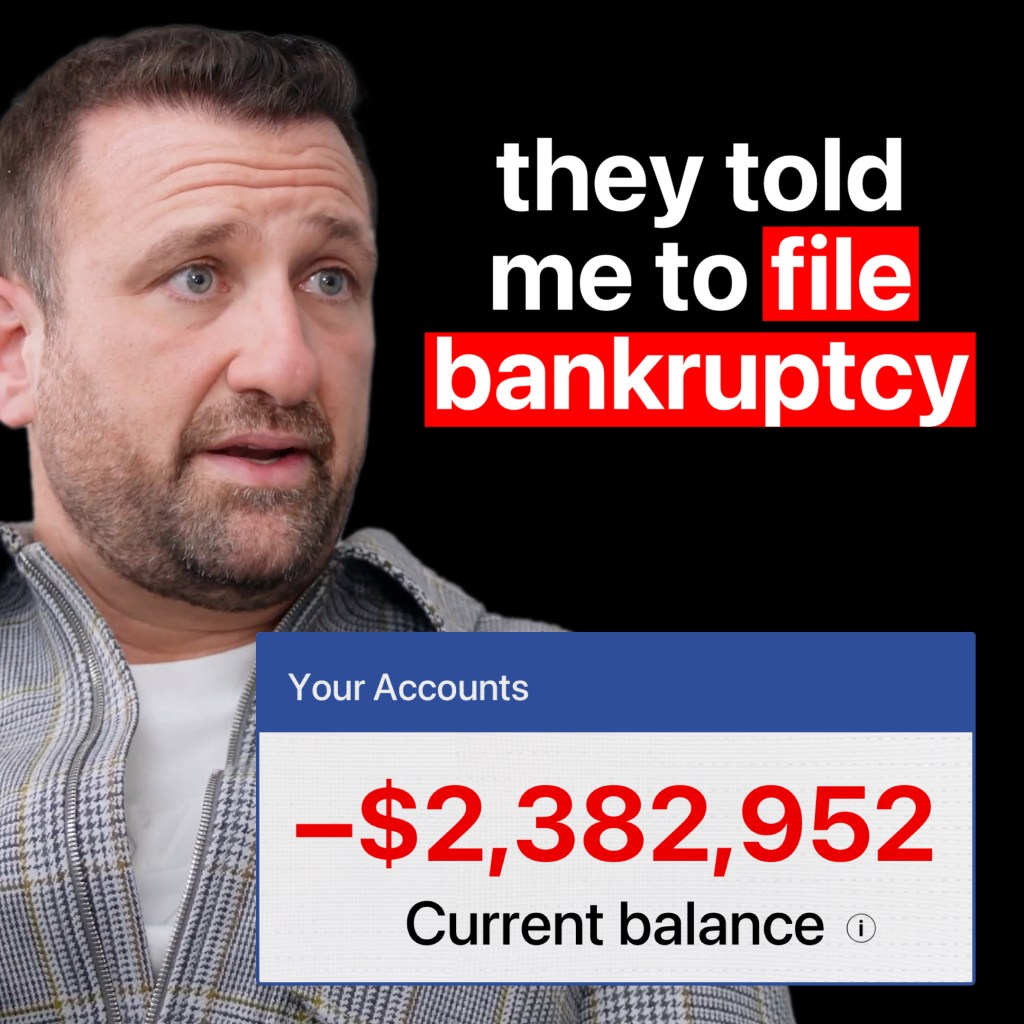
Avi Houllou: Definitely one of the biggest blessings that I had. Well, first of all, it’s funny. I actually had a story with my banker at the time. He was the president of the bank, I was very close with him. And we had a small bank. It was Herald Bank at the time. I think United took them over. And he came over after I invested in Sixth Avenue and I said, “Okay, what do you want to do? You want to pull the credit line?” He actually told me to file bankruptcy and everything. I said, “It’s not happening. I’m not filing bankruptcy. People trust me. Give me credit. I owe people money. I’m not going to hurt anyone anymore. No, I’m not filing bankruptcy.” So I said, “What do you want to do? You want to pull the line? Whatever you want to do.”
He said, “I have a great story to tell here.” I said, “All right, let me hear it.” He said, “There was this businessman, and one of his employees made a huge mistake and lost him a ton of money. The boss called up the employee. The boss is in the office sitting, and the employee is sitting outside on the couch waiting for him to be called in to be fired. And here’s the boss on the phone talking constantly. The employee is sitting there anxiously to be called in, expecting to be fired. The boss calls him in and the employee says, ‘I know. I’m so sorry. I totally understand. You have to fire me and I really apologize. It was a bad mistake. I messed up and I got it. You have to fire me.’ The boss said, ‘Fire you? I just spent X amount on your education.’”
So he actually told me that story. He’s like, “I just spent so much money on your education. I’m sticking with you. I believe in you.” And he stuck with me and thank God paid him down, all the banks, every vendor down, every penny. So it actually ended up being, first of all, it gave me great experience and experience is everything. Also tested me. Like when you go through difficult times is when you get tested, and that’s when people, you know, see if you pull through and you don’t give up.
First of all, the people I paid back also said, you know, they couldn’t believe that I paid them back everything. I’m still doing business with a lot of them today. And when I paid them back, they actually trusted me even more, gave me more of a credit line. The most difficult thing actually when it happened was people who I was dealing with, even regular suppliers and vendors I was dealing with or customers, whatever it is, they were scared to either prepay me or to give me terms because they knew it was public information. It was public information that I paid down the bank, GE whatever, and we paid them down and it was public information. So everyone knew that we were bleeding and lost a lot of money over there. So even the people who were giving me credit tightened the leash on me because they were very nervous. If no one even knew, it would have still been very difficult but I would have been able to continue business as is. But it was all public information so even my vendors, everyone, they pulled back on credit and everything. That’s what made it extremely difficult. But it made it a challenge. I love challenges and every setback, the best education is mistakes.
Victor M. Braca: Take me into some of the things that you learned or maybe some of the mistakes that you did make at that time. I mean, first of all, to be able to look back at an experience like that and be happy that it happened is unbelievable. Like I guess the faith is crazy, you know.
Avi Houllou: So I say it’s actually like, it’s funny because I say all the time I had a funny story. My siblings are all rabbis. Got the best siblings. My brother is a rabbi and we were doing construction actually in our house over here. We moved into our house on Avenue N and my wife Claudia, we were doing construction and it was right before COVID started. We’re having a bunch of issues even before COVID started. Wrong fixtures, everything was coming in wrong. And my wife called my brother, Rabbi Ton Houllou, and she said, “Rabbi could you please come to the house? Like it’s been two years we’re living in the house, the rooms are zipped up, dust everywhere, and we’re sitting there for like a year and a half with the construction. Like please come and give a blessing. Something’s wrong, everything is going wrong. Like please just come and give a blessing.”
So my brother didn’t hesitate. Most people would say, “It’s your problems, whatever it is.” He didn’t even hesitate or anything. He just said, “That is your blessing. Hashem’s giving you that instead of real problems and that’s actually a blessing that that’s your problem.”
Victor M. Braca: What an outlook. That’s a great outlook.
Avi Houllou: So yeah, not only is it like, Hashem, that should be our problem, as long as it’s not health and family, which is really all that matters. Money could come and go and if you work hard and you do your part, Hashem will always, you know, he’ll do his part as well.
Victor M. Braca: What a way to think, you know, what a way to look at life.
Avi Houllou: I live it. I believe it and I feel it and I believe it. And I’ve gone through so much that I could tell it from here till tomorrow. It’s funny actually, we just had recently, October 30th exactly. October 30th night. So it was literally right before our season, Black Friday, Cyber Monday, which is our busiest time of the year by far. We got hacked. Actually, a bunch of people in the community got hacked by the same group, a group called Nitrogen out of Russia. And I’m freaking out like every minute, like everyone. And everyone I spoke to, a bunch of other people in the community that it happened to, like it’s the worst. Like every minute feels like years, you know, and especially right before the season. I was freaking out.
Victor M. Braca: What got hacked? Your bank accounts, your client accounts?
Avi Houllou: Our entire server. They took over our whole network.
Victor M. Braca: Wow. Like your internal software, your communications. Wow.
Avi Houllou: Yeah. So they logged in. Hackers from Russia. FBI, well-known group, Nitrogen they call it, out of Russia, and FBI is well aware of the group. Like I said, numerous people in the community got hacked by the same group. And I was freaking out. You know, it’s right before the season, and we get up, we’re totally down. Literally our systems, everything’s down. The whole network, everything. Freaking out. And you know, as it happens, you think it’s like the worst thing, and how are we going to get back up in time for the season? You know, it takes time. It’s not just one second to get back up from one second to the next. We have a huge global network, a whole bunch of different locations and everything.
And it pushed me actually to work extra hard, pushed the team and everyone to work extra hard. But it ended up being… which I didn’t even realize till afterwards, because Black Friday, Cyber Monday came. We lost tens of millions of dollars of sales in that week and a half, two weeks almost. We were fully down for about a week. And we ended up having a season, and there were so much goods that Amazon, everyone was short. We ended up selling all the goods we would have sold before for a lot cheaper. Probably made an extra 15 to 20 points on the merchandise because I didn’t have it.
Victor M. Braca: Yeah. Because you got hacked. Wow.
Avi Houllou: Yeah. And we sold literally…
Victor M. Braca: Yeah. But I’m saying, but that shows you in life like sometimes you don’t always see it, you know. Sometimes you’ll never see it, but we don’t see the bigger picture.
Avi Houllou: Like a rabbi once told me actually, when I was sitting Shiva actually for my late wife, and he came over and he told me, he’s like, “Life is like a big picture. You’re standing by a wall and the closer you are, the less you see. The more you move back, the more of the picture you see.” So you don’t see the bigger picture. Sometimes you think it’s the worst thing in the world, and that ends up being a blessing you realize afterwards. And vice versa too. There’s been plenty of deals where I’ve closed and I thought this is going to be awesome, and ended up being a disaster, and vice versa. So we don’t see the bigger picture and as long as you don’t give up and you persevere and you do your part, Hashem will do his part always.
Victor M. Braca: Avi, you mentioned motivating your team and mobilizing them during a hack, which is a detrimental threat to your business. How do you look at motivating team members in general? And I think when you look at a startup, it’s easier because people connect around a mission of maybe changing the world with a new technology or whatever it is. But for a more traditional merchant business, how do you mobilize or how do you motivate your employees?
Avi Houllou: So the best way to always lead is by example. So first of all, I myself sit 90% of the day in what we call the pit.
Victor M. Braca: Right. I was actually surprised to see you with everybody else. You would think, you know, the owner, CEO, right?
Avi Houllou: Right. So we have our main location in Somerset, New Jersey, our headquarters, and we have the pit over there. Besides for accounting out of New Jersey, almost all the office, 70, 80 people, in the pit is there. And I sit on the stage with them. Yeah, I sit on the stage with them. And I like it. You know, screaming across the room, the action, getting involved constantly. And the best way is always leading by example always. You know, when they see it and they see you work hard and working hard pays off, the more they see it, the more it can affect them and hopefully get them headed in the right direction.
Victor M. Braca: What’s the most difficult part of leadership?
Avi Houllou: First of all, I mean, you’re working with a lot of different types of personalities. And I’m a very… like I seem like a calm, quiet guy, but when I’m in work and I’m in my zone, I’m extremely intense. So, I can get intense and loud or, you know, you have to make sure not to insult people, whatever. But really, what drives me the craziest is laziness. And I hate excuses. Like, I tell my guys, I don’t need an answer. I don’t need excuses. I make mistakes. Everyone makes mistakes. I made much bigger mistakes than you. More mistakes than you. Bigger mistakes than you. Let’s just fix it. You know, a goal is just one thing over here, to excel as a company. And forget the politics or anything. Doesn’t matter mistakes. I don’t need excuses. Like I hate it when I hear answers even. Like don’t give me excuses or anything. It doesn’t matter. It’s not relevant. My goal is just to push you to excel for the company to excel. And the excuses don’t matter. You’ve messed up. Even if you messed up, it doesn’t matter. I mess up also. I mess up worse. So, let’s just fix it and fix it together. And not cut out all the BS.
Victor M. Braca: Right. Right. Right. I mean, does money still motivate you?
Avi Houllou: Um, it does just because it definitely makes it easier, but really honestly, it’s more about the challenge. Building and leaving a legacy for my kids is really the most important thing for me. But yes, the money definitely helps. I’m not going to say no. Like if you’re not making money or you’re losing money, then it’s harder to keep it going. But I love the challenge more than anything. And I love what I do also. Like if you love what you do, you’re not working a day in your life. I always tell my kids and everyone, try to find something that you enjoy doing. Like if you love what you do, you’re never working. And by default, you’re going to have much higher chances of being successful because now you can put much more hours into it. You’re going to really drive to excel at it and your odds of being successful are that much greater. So if you can find something that you love to do, that’s a big help always. That’s a huge, huge help.
Other: Do me a favor. Think about your daily business for a minute. No matter what industry, your business thrives on cash. You need working capital to meet payroll, to purchase inventory, to pay vendors, ship products, on and on it goes. But when your customers pay on 30, 60, or even 90-day terms, you fall into a cash flow gap. Your business starts to look something like this. Ups and downs. You grow a little bit, but then you flatten, plateau, or worse, your business begins to deteriorate because your cash is tied up in receivables. But this is what your business could look like after partnering with Hedaya Capital Group. Hedaya Capital Group is a financing partner that can help explode the growth of your business. They provide accounts receivable factoring, purchase order financing, and they lend against inventory, providing you capital so you don’t have to wait to get paid. They also handle collections and help ensure receivables, reducing both risk and administrative time so you can focus on what you do best. Hedaya Capital is a family-owned specialty finance company, and you work directly with the owners, not committees or junior sales representatives, so they can respond quickly. Whether you’re experiencing rapid growth or going through a transition, the Hedayas are at the top of their game. Plus, they’re entrepreneurs with long histories in the wholesale and consumer products industries, so they understand the pressures of running a cash constrained business. Go to hedayacapital.com or email info@hedayacapital.com to see if it’s a fit. Even a short conversation with David, Alfred, Ezra, or Jack Hedaya can help you bridge your cash flow gap. With that, let’s get back to the episode.
Victor M. Braca: I want to go into that a little bit because loving what you do is something that a lot of people talk about. I want to understand that because for me, I love hosting a podcast and I love editing and making this set and designing this and talking to people like you, and I really, really enjoy it, and it keeps me up at night and I love it, right? What if I think of a less creative business, at least for me, let’s say the merchant business, distribution or wholesale or whatever it might be. How do you love a business that a lot of people would look at as boring, and what do you love about it?
Avi Houllou: Well, it’s not the business. First of all, I say I happen to be selling electronics. For me, it’s not… it happens to be electronics. I have a lot of other businesses which I’m involved with in different industries. But just for me, it’s really numbers. It’s about a challenge. It’s building something. It’s selling and constantly growing. And it’s really all numbers. Like, it doesn’t matter what you’re selling or what you’re doing exactly, especially in business when you’re dealing with merchandise. It’s how fast are you going to turn over the goods? How much are you making? What does it cost you? What are your margins? How much does the money cost you? How much inventory are you going to have to write off? What do you lose on? It’s really all numbers. So I consider… I tell my guys always, we don’t sell electronics. We’re day traders and we play. And also for us, the biggest thing is we use technology, AI and alerts and spiders and stuff. We have tons of things. So we’re constantly seeing the market. Is the product shortening up? Is it opening up? Is the price dropping? It’s constant maximizing. Just because, at the end of the day, I tell my guys always, people, especially these days, get so caught up with how much business they’re doing, how much revenue. I hate it. Like, it means nothing. I tell my guys… they actually bought me a plaque, it’s on my desk. Next time you come to the office I’ll show it to you. “Sales put us out of business, profits keep us in business.”
Victor M. Braca: Nice.
Avi Houllou: I constantly tell the guys, don’t get caught up. Everyone thinks, “Oh, I do $100 million in sales, I do $10 million, I do a billion dollars.” It means nothing at the end of the day. The more sales you do actually, the more problems you have. The more you get spread thin, you lose focus and priorities. And the 80/20 rule applies to almost everything in life. Also when you lose focus, priorities… 80% of your profits usually come from your top 20 items or your top 20 things that you’re strong at. And the more business you’re doing actually, the more you’re losing focus. The more issues come up, the more you’re exposed to legal things, the more employees you have to deal with, problems that are constantly coming up. So it’s very difficult because also people literally, especially this day and age, get so caught up. “I do X amount of sales, I do $100 million.” It really means nothing. I tell… actually, literally one of the biggest things I do all day is I have alerts and stuff in spiders, things that I think the profitability, the margin, is not good enough, and I just cut it. Like, either cut the SKU totally out, or take much less quantity and sit where you’re comfortable sitting on it, and the margins are enough to continue selling this. Otherwise, don’t even sell it. It does you no good. Sales do no good. Like, it does not help you. Yeah, sometimes you want to buy in volume so you can negotiate a deal, but at the end of the day, the more sales you do, the more expenses you have, the more issues you have, and that’s not what keeps the lights on. The profit is all that matters at the end of the day.
Victor M. Braca: Well, then obviously the hard work is the most important part. The consistency, hard work, and…
Avi Houllou: Like I said, for a long time, not a short time. Takes a long time to build something real up. I always say like if it’s something that easy to make money, the whole world would be doing it, right? It’s either illegal, so you could either sell drugs or money laundering or do something, that’s the only easy way to make money. That’s the only way to make easy money. If it’s not illegal, there’s no easy way to make money. Otherwise, the whole world would be doing it.
Victor M. Braca: No one’s looking for easy money.
Avi Houllou: Yeah. And there’s no… I’m not smarter than the next person. It’s not… the biggest thing. And trust me, like you always, the saying goes, “The harder I work, the luckier I get.” You know, the lucky people, the wealthy people always seem to be lucky. It’s they work so hard. I see it also, even I deal with people all the way up at Apple and at other companies. These guys wake up 3:00, 4:00. Like you think they’re on top of the world and they just sit back and relax. No, there’s no such thing. Michael Jordan, Kobe, LeBron, these guys, it doesn’t matter what you do. If you want to really excel at what you do, you have to really be consistent and work and give it your all. And that’s really the recipe to success, is hard work and dedication. Consistency for long. Because these kids these days especially, and I don’t blame them, it’s very difficult. You get distracted. Especially, like I said, you see social media, a person posts one thing and he becomes viral and makes millions of dollars. It’s very hard. Like, they don’t have the work ethic and it’s hard to see when you see that, to go and work years and years and years to build something up where I make a deal with Sony or Canon or Dell or Apple. I say all the time also, it takes a lifetime to build up trust and one second to lose it. If I lied to them one time and they didn’t have confidence and they gave me these deals, I could mess up markets for them. Like they gave me a product at a great price and now I sell it cheaper than Best Buy or I sell it somewhere where they don’t want me to sell it one time. I lose their trust for life.
Victor M. Braca: You work with some of the biggest brands in the world, Apple and Lenovo and Dell, Microsoft, every single Samsung, LG, every major electronics manufacturer.
Avi Houllou: I’m doing this now, it’s 26 years later. I opened the company and I’m working now just as hard as I did 26 years ago when I started up, and I love it. I actually love it. I haven’t worked this… I actually happens to be, October, November, like after the hack, was another reason why it really kicked me to next gear and I started working so hard where I haven’t worked in so many years. I took a step back also when my wife passed away eight years ago. Spent some time with the kids and family and shift my focus obviously, and I never went into full mode, full 100% back into work as much as I did really this past November, December. I was just in the tunnel and literally like, it was great. I felt like it was before anyone knew me or anything, before anyone knew Avi Houllou or anything. I was just focused. Because I didn’t even answer text, phone calls or anything. Just work. I was working 20, 21 hours a day.
Victor M. Braca: Wow.
Avi Houllou: Yeah. For like two months. And I just… and I love it. I love this.
Victor M. Braca: November, December.
Avi Houllou: Yeah. Because I was so… it got me. The hack woke me up because like, season’s here, two and a half weeks away. Two, three weeks. We got to get everyone up. So I was pushing and it really woke me up to get back to Avi of 8, 9 years ago.
Victor M. Braca: That’s crazy. The fact that just a couple months ago, 30 days ago, you were working 20-hour days.
Avi Houllou: Yeah. 20, 21 hours a day. Yeah.
Victor M. Braca: Wow.
Avi Houllou: Yeah. So, but I love it. It’s not work to me. It’s really, I love what I do and yeah, the money is beautiful. It’s great. It helps of course, but it’s really about the challenges and building something, building something for my kids, for my legacy. And I love even seeing the young kids who work by me and seeing them grow, is so fruitful and feels great for me. That’s really why I’ve did this. Even, you know, I wasn’t… even the first time we debated doing this and definitely coming back a second time, but I said, “You know what, I want to pay it forward.” And if I inspire even one person… look like you said before when I met you, you first came, that inspired you to do this. You never know. And after I did the last Momentum podcast with you also, I had a bunch of guys who you never even think in the community reach out to me going through difficult times. So one thing you say or do can inspire a kid and literally change his life, really.
Victor M. Braca: It’s amazing.
Avi Houllou: So that’s really the only reason why I decided to come back, and only reason why I came the first time, because you want to pay it forward to… I made so many mistakes and if I could teach one person not to make the mistakes I made or inspire one person, that alone is really worth it.
Victor M. Braca: Well, very happy to have you. Very happy to have you here. If I was sitting down with 10-year-old Avi Houllou and I asked him what he wanted to be when he grows up, what would he tell me?
Avi Houllou: Um, just that he wanted to make money. Just be successful. Really just driven. Even when I was a kid, my mother used to give me snacks and I used to take the snacks to school and sell it instead of eating it. I was eight, nine years old.
Victor M. Braca: That’s great. Day one.
Avi Houllou: Yeah. Like at 10 years old, I remember I found a place on Coney Island. Wolf Candy it was called. It’s Coney Island. Was it K&L? I think it is K&L. And I found that they wholesale. I just went… I started buying bulk and started selling it in school.
Victor M. Braca: You’re 10 years old buying wholesale snacks.
Avi Houllou: I would ask my mother to take me there and I would buy bulk.
Victor M. Braca: That’s great.
Avi Houllou: From a few snacks that I sold and saved up, and started buying more cheaper and started selling in school. So I just, I was driven. And like I said, you grow up in a community like this and you see so much money and wealth around you, and so much opportunity also, especially in America, that you have so much opportunity that if you really work hard, it’s there. Like, you just have to work hard and you got to believe that it’ll come. But it’s not going to come fast or easy. It’s not going to come easy. Definitely not easy, and definitely not fast either. It needs consistency, and it takes years to build something up. Literally years to build something up. So kids got to balance that. It’s very difficult these days, like I said, but you have to balance the long game and long-term versus, you know, day-to-day putting food on the table, which is not easy.
Victor M. Braca: At nine years old, you were selling candy to your friends in school. How do parents instill that desire, that drive into their kids?
Avi Houllou: It’s very difficult because you’ll see it even in the same house. Like, it amazes me constantly always, like even my own kids, me and my siblings, like you grow up in the same house and every single child is very different. The best thing is really always just leading by example. I used to wake up… my father, you know, he came in from Colombia and he had a degree, and his father passed away very young. He was the oldest boy and he had to support the whole family, and he left… I think he was 13 years old to work. At 13, he worked full-time. Then he got a college degree as an accountant, and he came to us. He didn’t want to stay in Colombia because he was scared of his kids assimilating, and he wanted to make sure they know about… in Colombia, there wasn’t a big Jewish community there. Syrians all moved out and he was scared. He saw the future and he said, “If I stay here, my kids are going to end up assimilating,” and he decided to come to America. He left everything. Lost his degree. He worked as a bookkeeper, struggling. But he did it all for his kids, and for his kids’ future to be in a community and to marry Jewish people and have the right morals and everything. And I would see him waking up working so hard. I would wake up 4:00, 5:00, he’d be working, sitting, you know, doing everything he can just to provide for us. So, I saw the hard work and ethic, and he was the most honest person I ever met in my life. And I remember one time I was on a public bus with him. I was actually eating watermelon seeds, and I spit out one of the watermelon seeds, and he’s just like, “How do you do that?” He’s screaming like… and at the time it hit me like, “I’m like, you’re too straight. You’re too good.” And now I respect him so much. Like, growing up, he had the right ethics, right work ethic, and right morals, and it sticks with you. So if kids see that by example, that’s the best way. There’s no guarantees in life. Like, there are no guarantees. But the best chances that you have is leading by example, and your kids seeing it. Talk is cheap. You know, action. If they see you actually living it and breathing it, they’re going to usually follow in that direction and in your footsteps.
Victor M. Braca: Avi, you’ve done something…
Avi Houllou: Eat. Really?
Victor M. Braca: What?
Avi Houllou: The food looks too good.
Victor M. Braca: It’s so… by the way, it looks great. No, I don’t know. Like, I actually buy it.
Avi Houllou: I just got a refill. I just went for seconds because that’s the best item.
Victor M. Braca: Which one? This… the steak. That’s the best item. I don’t know what this is. Look at this. Zoom in on that. Awesome. The winner.
Avi Houllou: I mean, David really set us up well, you know, David from Salt. Awesome.
Victor M. Braca: You’ve done something and you’ve succeeded at something which a lot of other people don’t, which is sort of diversifying, expanding into other businesses, and you’ve built up a portfolio of hundreds of properties. How do you segment your attention? Do you have a separate team for real estate? Is that something you manage on your own? And how do you choose what to focus on day-to-day because you have to grow the business, right? And I guess real estate is good because it’s not, you know, if you’re not developing, you don’t have any major overhead and you don’t have to have such a 24/7 team around it. But, how do you segment your attention?
Avi Houllou: So, I’m very blessed also to have my brother that manages my real estate. And we have a team of course underneath him in our office, also a team, but he really oversees all the day-to-day. And we’re very blessed to have someone that you trust 100%.
Victor M. Braca: Is he a rabbi too?
Avi Houllou: He is a rabbi too. Wow. I actually pulled him out for years and years, convincing him because he was a rebbe full-time in the morning, and then he was managing. I’m like, “Moshe, you can’t do this anymore. It’s full-time. Hundreds of properties. We can’t do this.” But thank God, he’s focusing on it full-time and he helps me with a lot of other things. And there really is nothing at the end of the day like family. At the end of the day, when you have family, you can trust them true and true, that’s huge.
Victor M. Braca: Do you ever consider becoming a rabbi?
Avi Houllou: Well, that’s where I grew up always. I used to read Torah every single Shabbat. My father used to make me read. I read the whole every single Shabbat.
Victor M. Braca: Wow.
Avi Houllou: And I grew up, I went to Beit Midrash. I went all the way through, went to Mirrer Yeshiva for 2 or 3 years, and I learned, and everyone has their path that they go through. And I respect it and I love it a lot, and I think it’s great, and it made me who I am today also. And also I think learning even sharpens a person’s brain so much. Especially learning Gemara and this and that, and I support it, you know, whether it’s black hat or white hat or anything in the community, try to support it. And I love it. Even though black hat may not be for me, I admire it and I love Rabbi Raful from Ateret Torah. I love, love, love him and look up to him. It’s amazing what he did for the whole community. And you have so many other rabbis now, which I don’t want to start getting into names because there’s so many, and what they do is really amazing for the community. And it’s so important, especially these days because the world out there is crazy. Especially before they go out to college or anything, if you don’t have a good foundation to start off, and a good foundation, your odds of surviving out there is a lot less. It’s difficult out there and you go to colleges and these colleges are brainwashing these kids, and it’s so important to have a good foundation, and I can firsthand attest to that.
Victor M. Braca: Colleges are brainwashing kids.
Avi Houllou: They literally… they are brainwashing these kids, and the stronger the foundation they have, the better chance they have of surviving out there in the world. And it’s not an easy world out there right now.
Other: All right, guys. The best performers in the world from Michael Jordan to Warren Buffett have coaches. So, if something in your business or life isn’t working, Jeff Sitt starts with the simple question. What’s actually going on beneath the surface? Jeff is a business and life strategist and former chief people officer. He works with founders, executives, and entire companies to understand the people behind the performance. Guys, a company by definition is just a group of people. When the people improve, the business follows. I think what I love most about Jeff is that he’s direct. He’ll tell it like it is. If he can’t help you, he’ll say so. He also doesn’t bill by the hour, guys. Sessions last as long as they need to, and he’ll hold you accountable. If you’re ready to supercharge your business and your life, book your free discovery call at jeffsitt.com. That’s jeffsitt.com. Tell Jeff I sent you. And back to the episode.
Victor M. Braca: Avi, what advice would you give to a young person who maybe like you is struggling a bit with their identity? Should I go into the rabbinate? Should I go into business? Should I go into something different? You know, maybe like straying from the family path a little bit, or deviating from cultural or communal norms. What would you say to somebody who’s maybe in their teen years, low 20s in that position?
Avi Houllou: Well, first of all, I mean, it’s the basic stuff. First of all, try to find something that you love, because like I said before, a lifestyle that you love or something that you love doing. When you love what you do, like I said, it’s not work, and your odds of succeeding are that much greater if you love what you do. Like, I’d rather be in the office working than on the beach or St. Barts or anywhere in the world. When I’m on vacation, I’m on two, three calls at the same time constantly, and I love that. On the beach, and going with my wife, and I still got to go. But I love working. I enjoy that more than anything. I enjoy that more than going anywhere in the world. Like, to me, thank God I’m blessed that, you know, I don’t even consider it work, because when you love what you do, you’re not working. But you try to find if you find what you love, your odds are that much greater. And it doesn’t have to… you also when you’re young, that’s a time to take risks. It’s very difficult once you… especially in this community, a lot of kids, and I don’t blame them, it’s very scary. Like, when you sit down and think, what are my expenses like kids, and it’s a big problem. Kids these days are so scared to get married because you sit down, you do the numbers. Like, just yeshiva is 30, 40 grand a kid. I have five kids. Taxes takes away half your money. Like, you make $400,000, it’s even difficult to survive, especially in the middle…
Victor M. Braca: Yeah.
Avi Houllou: …and kids are very scared. And that’s why, and the older they get, the smarter they get, the more they see it, the more they start thinking, “Oh, what could go wrong, and how am I going to pay for it?” And that’s why I almost kind of like in a way like, you know, you can’t… you got to balance it also, not young and dumb, but sometimes when they’re too smart or too old, they see too much and now they’re very scared to get married.
Victor M. Braca: So, where do you stand on the spectrum of doing business maybe when you’re young and getting married later, or getting married early, building a family early? Obviously, I mean, it depends on like your familial circumstances, if your family could support you, whatever it might be. But for maybe a young adult in the community who wants to get married, but also wants to build up a career in a business that they love, that they don’t want to get trapped into something that they’re stuck in for the rest of their life, like what do you say to maybe a 23, 24, 25-year-old in that position?
Avi Houllou: I say every person is different. And I say, don’t be scared to get married. Because if you think of it on paper… think literally like I just said just now, how many people in the community, mashallah, God bless, there’s 80,000, 100,000 people. Do you know anyone who’s homeless or doesn’t have food to put on the table? You jump in, and Hashem… everyone figures it out. Everyone’s eating. Thank God. Every kid has school, has a roof over their head, and you jump in. You work hard. Yeah. When you’re younger, you could take more risks. And especially if you’re not married or if you don’t have kids. So try to go for it and try to do something on your own if you can, or the older you get, and the more expenses you have, and you know, the more kids you have, the more difficult it is in life to change your paths, or to try something new, or to take a risk because you have bills coming every second. You got to pay those bills. So when you’re young is a chance to take it. But don’t be scared to get married. It always works out. It works out. Yeah, like it’s funny. I always say like, what was it, the 90s, I forgot which Lakers team was, but you had Shaquille O’Neal, Kobe Bryant, Karl Malone, Gary Payton… I forgot who else was, maybe like on paper it was the best team maybe ever, and they didn’t win. Why? Like, things on paper doesn’t mean it translates like that. So if you sit down and figure, “Oh, I have four kids, five kids, and how am I going to pay off? If I make… I have to make X amount of money just for Yeshiva is for four kids is 150, 160 grand. That’s pre-taxes of 300.” No one will get married. But somehow it just works out, right? It’s not… it’s from Hashem. It all… it does all work out. It’s because Hashem is there, and you jump in. Like, whatever it is. You jump in to get married. I’m not saying just be reckless. Of course, don’t be reckless, but if you feel the time is right, and you have the right person, you know, don’t be scared to do it.
Victor M. Braca: Listen, as a young guy, I mean, I could relate to this. There’s so many thoughts like people are trying to plan because you have to try to plan, but then again, also to have the faith it’s going to work out if you get married. Don’t push off getting married.
Avi Houllou: It’s so hard for people. And like, I’ve met people who… extremely difficult. “I’m not going to get married until X age. Not going to have a kid until X age,” you know, extremely difficult. I have a lot of kids, and I don’t pressure. Even though I happen to think it’s great for kids to get married young. I happen to think it’s great. But first of all, I don’t pressure my kids, you know, they have to feel ready, and they have to feel the right time. I try to pressure a little, not too much because I happen to think it’s great. But some people also, it’s better to go through life and experience more things before you get married. Some people want more stability or need more stability or need more structure or plan. But at the end of the day, we have to remember that you can think of every single possible scenario, man plans, God laughs, whatever you can think of, something can come and throw you a curveball that you totally didn’t expect. And if you stay on path, and you follow, and you get married, and you do your part and work, everything works out. Always. It always works out for everyone. Literally, like I said, do you know anyone? 80, 100,000 people in the community. Everyone has a roof over their head and food. And on paper, it doesn’t make sense.
Victor M. Braca: I never thought of it that way, by the way. Like, I’ve heard of this exercise when you’re trying to maybe chase your dream or whatever, or take a big leap in terms of your career. What’s the worst that could happen? Tim Ferriss, who’s a big author, and what’s the worst that could happen? And sort of do this thought experiment. Okay, am I going to be homeless? No. And do I have to sleep on someone’s couch? No, you can move in with my parents.
Avi Houllou: I had a therapist who told me that once. Who told me, like, I was having anxiety or stress. Like, just take… most of the things that you worry about, almost all the things that a person has anxiety or stresses or worries about, never end up happening. So his perspective was, and his philosophies was, think worst case scenario and take that, and now… okay, now let’s say that happened, that’s your worst case scenario. Now face that, and it’s not that bad. You always figure it out. You always figure it out. So anxiety, that’s life. I mean, and it’s easier said than done because everyone, you know, everyone has that. And everyone, you know, you got to balance it obviously, but that’s really the best way. I try to live with that also always. I try to think, and I tell that to people, especially my kids all the time, try to think worst case scenario and deal with that. Even like, you’re worrying so much of what could happen. What is… you’re worrying like so much of your worries, they never materialize. Even 90%, more than 90% of it never materializes. You’re just wasting your time and stressing your whole life over things that are never even going to happen. Think of your worst case scenario and deal with that. And it’s still 100 times better. The unknown, people, you know… it’s always the worst.
Victor M. Braca: It really is a great thought experiment. Avi, if you think about, like, look at your life now, your business. If, God forbid, everything went to zero. I mean, like, if you lost the business and the relationships and the customers and the team and the homes and the real estate and everything like that, what business would you start, or what would be your first step?
Avi Houllou: I would do exactly what I did all over again. I lost everything, I had more. It’s true. And I was not… you could, like I said, I have tons of Syrian kids work by me and were there. I was not worried.
Victor M. Braca: Yes.
Avi Houllou: Was I stressed? Very stressed. I was not worried.
Victor M. Braca: What does it mean to be stressed but not worried? You’re going through a difficult time.
Avi Houllou: It’s very stressful. I had days I would come in with negative in the bank account or zero in the bank account, and have to cover payroll and checks for $2 million for that day, and I had to literally come up with that money. So, yeah. Is it very stressful? Yeah. But I know I’m thinking long term. Okay. A day at a time. If I make money today, if I make money tomorrow, it just eventually gets out of that hole. And the most important thing, my biggest line that I probably tell kids, especially these days, like I was saying before, is go for singles. Singles, singles, singles, singles, singles. Go for walks, even bloops. Like, if you go for singles, you know, you’re going to bloop home runs. Even when you’re constantly going for home runs, you’re going to strike out. Go for singles, put food on the table. What puts food on the table? What makes me money right now? Don’t go for the huge win. They all add up. And trust me, the more singles you hit, the home runs and the grand slams, the bloops are going to come, more of them, even more than even swinging for the grand slams and the home runs, they’re going to come more because you’re swinging that many times more. It’s like they say, you know, you can’t hit any shot that you didn’t take, right? The more you swing it, just constantly like… like I told before, even Apple, like every penny, it’s a business. Like for me, it’s very hard. I see people, like they don’t even get excited by money anymore because like, “Oh, whatever. I’ve seen millions, tens of millions, hundreds of millions, whatever it is.” They don’t even get excited. For me, it’s not just about the money. It’s about, yeah, am I growing forward? Am I making money? Even if it’s a penny, we’re growing. We’re, you know, we’re advancing. Every day the company’s growing. We’re advancing. We’re going a step forward and taking a step, instead of taking a step back. So it’s very hard, and yeah, people don’t get excited by small amounts or whatever it is, but those small amounts add up to so big. Like if it’s constantly, it adds up, adds up, adds up. And it’s like, you know, it’s like that… what would you rather, a million dollars or a penny each day doubled for 30 days? It adds up and it becomes exponential, and now you make that money. Now you make your money on that money, and on that money, and then before you know it, when you’re doing it for years and years and years, it grows exponentially. So, yeah, you’re not making a million dollars right now possibly, but that’s going to keep growing and it’s going to be exponential. So, you got to keep going at it and work on it for years. Again, it’s not short term. I’m working just as hard like I said now as I did 26 years ago. Yeah. When I started the company, I started the company with $10,000. I had four partners and bought them all out. We had $10,000 we started the company with. We’re a multi-billion dollar company, global company now, and it wasn’t from one second to the next. It was years and years and years of sweat and hard work. I could literally say, like, even when I consider myself semi-retired, I probably work harder than almost anyone I know. I’m just a workaholic. I’m not smarter or more talented than someone else. I have a lot of experience.
Victor M. Braca: You consider yourself semi-retired, but also work 20-hour days.
Avi Houllou: I am the hardest worker I know. Actually, I don’t think I’ve ever met anyone… maybe a few people that I know that are workaholics, but anyone you ask about me who knows me in work now, I’m a workaholic. I love it. And yeah, I was… I had, like I said, I wasn’t on my game for 8 years. I had to shift when my wife passed away and shift my focus to my kids, which is obviously my priority. That’s all I… the only reason why I do it is for my kids and for the next generation. But now I feel like I’m fully back and 100% at it, and I love it. And I love it. Like back and better than ever. Back. Yeah. And, like I said, I’d rather be in the office working than on the beach in St. Barts or anywhere else in the world.
Other: Do you own a real estate portfolio, rarely file claims, yet see your premiums go up every single year? That’s just how the commercial insurance market works, and honestly, it’s broken. What most midsize owners don’t realize is that the largest real estate companies in the world and 90% of the Fortune 500 have owned captive insurance programs for decades to keep that profit for themselves. Real Property Captive was founded by a real estate investor who got tired of this and decided to do something about it. Real Property Captive allows owners to come together in the first ever captive insurance company designed for midsize owners and get access to captive insurance at wholesale pricing just like the big boys. If you’re a real estate owner spending 350K or more on property insurance per year, check them out at rpcaptive.com. And if you’re a business owner in another industry, their sister company, Captive Insurance Partners, has access to over 100 group captive programs at captiv.com. They’re also hiring. So, younger listeners, please feel free to reach out and I can connect you with their team. Thank you, Real Property Captive, for sponsoring this episode. And back to the episode.
Victor M. Braca: Avi, I mean, you went through something that hardly anyone goes through, and it was an incredibly difficult period of your life, I’m sure. Can you take me into the moments and into those difficult years when your wife passed away, and what was it like, and how did you cope, and tell me about that?
Avi Houllou: Nothing anyone could ever explain, and no one ever should. My wife Naomi, she was also president of Ladies Auxiliary of Yeshivah of Flatbush. And I literally knew nothing about anything, about raising kids. I didn’t even know… when she passed away, I didn’t even know where the checkbook was. She took care of everything. We did construction, houses, she handled everything. And from one second to the next, she went septic, and within a couple hours from when I even knew anything, my whole world turned upside down, and I knew nothing. Now I have these six kids, between 2 years old and 15 years old, under trauma, which I don’t even know how to raise regular kids. Now I have six kids and I have to raise them, and all I know is work. Like, she handled every single thing. It was just a total curveball. Like I said, you could plan for everything in life, and Hashem could throw you one curveball. “Man plans, God laughs.” Means nothing. I had to just really… for a year, two years, I mean, I wasn’t myself for years. Years and years, obviously, from the depression and the trauma and everything. And extremely difficult, also, because as a parent, the most difficult thing is, you know, they say you can only be as happy as your unhappiest child. I have six kids now under trauma, and one of them is bound to have a rough day. So that takes the biggest toll on a parent. Especially, I live for family. For me, it’s all about family. And it was just… that was the biggest challenge obviously I had in my life by far. Plenty of business challenges. I also lost my mother in 2013, very difficult. But when I lost my wife, it was literally from one minute to the next, and I knew nothing about raising kids or anything other than work. That’s all I did all day was I plugged in my head away and I worked, worked, worked. And it was literally, there was no warning or anything. It was one minute to the next, and my life turned upside down. So yeah, I put everything on hold. And you know, I tried to hold, and thank God, blessed with a great team around me also at work. They held the fort. I barely… even when I was physically there, I wasn’t mentally there for years, and I didn’t even realize how bad it was until afterwards. Like, you’re not yourself. And no one should ever know. And these challenges that Hashem gives you in life, you never understand them sometimes, but you can’t plan for anything. And you just got to push forward. Take one day at a time when you have these challenges or any challenge. You just got to constantly keep pushing forward and remember that it’s one day at a time. One day at a time, and eventually Hashem has a bigger plan, and things somehow work out. Things somehow work out at the end. It’s crazy. It really, really is. And yeah, she really handled every single thing. I knew nothing but work, and it was one minute to the next. So people… and it’s so hard when someone’s going through something. But you got to constantly always try to remember, and you take one day at a time, and Hashem makes everything work out somehow. He knows the bigger plan. He has a bigger plan and he sees the bigger picture. We don’t. Sometimes we’ll never see the bigger picture on certain things. Sometimes we will, like I said, when we got hacked or Sixth Avenue. I look back and I say there’s a blessing… ends up being such a great thing. But some things in life you won’t see that. And but you have to have the faith and believe. And, you know, I hate excuses. I could have made more excuses than anyone in life. Forget in business. On a business level, on a personal level, and on hardships I went through. Losing… there’s nothing like losing, especially parenting six kids from one minute to the next. I could have made every excuse in the book. Literally, I could have wrote books. That’s why I said, like I said before, I hate excuses, you know? Don’t make any mistakes. Don’t look, don’t make excuses. Like, excuses are just a waste of time. Literally is a waste of time. It does no good. Zero good. You’re just losing your focus. Instead of making excuses, just keep plowing, working, and somehow the problems all disappear at a certain time.
Victor M. Braca: Were you able to implement this mindset of moving forward into your life in the days, the weeks, the months after your wife passed away, or did it take a little longer?
Avi Houllou: Um, it’s very different. Also, I didn’t even realize, like I said, I didn’t realize how much I wasn’t myself. Like, I didn’t even realize the trauma and the depression. And when a person goes through depression and difficult times… no one should know, but you’re just not yourself. I can’t even explain it. Like, I didn’t even realize it until after I started coming out of it and realizing, “Wow, like, I wouldn’t even remember things. I couldn’t think straight about basic things.” Like, you’re just not… no one should ever know. But unfortunately, it’s a real issue, and a lot of people suffer with depression and stress and anxiety. And a person’s not himself when they go through that. So yeah, it’s very difficult. It’s extremely difficult. You got to try to constantly fight it. Try to be proactive. Again, it’s not easy at all, but try to always remember, always have the same perspective you have in business. To try to think long term, and have faith that Hashem gave this to you because he knows that you can handle this, and he knows that you’re capable of getting through this, and everything works out at the end somehow. Take a day, or sometimes an hour, or a minute, or a second at a time. There were days that I would go crazy. I couldn’t even sit in the office for a minute. I couldn’t do anything. Like, I would wait for each minute to pass by the minute, literally. And especially when you’re going through something like that, you’re not yourself. So it’s that much more difficult. And I can’t explain it. No one should understand ever, but when a person has that sort of anxiety or stress or depression, it’s that much more difficult because they’re not themselves and not in their right heads.
Victor M. Braca: In the days, weeks, and even years following the passing of your wife, how do you cope with something like that?
Avi Houllou: Like I said, really it’s one day, one minute at a time sometimes, or a second at a time even. You take that minute and just push forward. And what helped me obviously is I knew my kids just lost their mother, and they can’t lose their father, and everything he has, and the lifestyle that I built for them and that they got used to. And if I just sit back or give up or put my hands up, or you know, stay in bed crying, they’re just going to lose more. So that pushed me. Because like I said, I live for my kids. Everything’s about family for me. Hashem also. But Hashem, thank God, sent my wife Cody now, who she came, and Hashem, like I said, sees a bigger plan. We don’t see the bigger plan. She came with such energy, and she was such a big help with the kids, bringing energy and happiness in the home. She carried me for years through my depression even, and through the kids. And it was extremely difficult. Like I said, I didn’t even realize for years how bad I was. Like, every year or two I thought I snapped out of it, and I got better. And then I looked back, I said, “Wow, I really wasn’t myself.” Like, yeah, obviously. Like, you don’t even realize how out of it and how bad you were. And you don’t, because like I said before, you’re not yourself. And no one should ever know, or go through tragedy or major stress or anything that anyone has, but when someone goes through a trauma or major stress or depression, they’re not themselves. They’re not that hard. But Hashem has a plan for everything. And Hashem, I got married. And yet, there’s still… it’s 8 years later now, and it’s still extremely difficult. But, you know, Hashem, thank God, blessed me also with another child with my new wife, Jack, a great bundle of joy, and brought everyone together. Because, you know, I had my six kids. Cody had her three kids, and we had one together, and I felt like it really brought everyone together. And Abraham has two grandkids. And Hashem sees a bigger picture. Somehow life goes on, and you move on, and Hashem has a plan. He has a plan, and it’s difficult to see or understand or accept sometimes. And it’s so difficult also because when it comes to money, it’s one thing. “Okay, everything’s for the best,” whatever, and it is. And I saw it even with money. When I lost my money a few times, or small things, like I told you when I got hacked, I saw later, like, it was actually a blessing that I lost my money, or it was a blessing that I lost $25 million sales in that week and a half, whatever it is. It was, and I was able to see it. But when it comes to life and death, it’s that much more difficult. Or challenges that a child has, or people have health issues with their kids, or any issue that a person may be dealing with with a family or child or anything, it’s that much more difficult. Because money is money. Yeah, money could come and go. But at the end of the day, when a person goes through a challenge like that, they realize that money is really nothing. Yeah, it’s a beautiful thing. It’s a great thing. First of all, money doesn’t buy you happiness. Like they say, it really does not at all. Trust me, it does not buy you happiness. And at the end of the day, all that matters is family. And when a person loses someone, or has someone who’s sick, or goes through a very difficult time, they realize then, like, this is all that really matters at the end of the day, you know?
Victor M. Braca: Yeah. It’s crazy. It’s really an outlook to have on life. It’s an amazing outlook.
Avi Houllou: Yeah. It’s… like I said, it’s difficult to live without it sometimes, especially when you go through challenging times. So religion is a great thing, and it’s so important. Really number one.
Victor M. Braca: Yeah, number one. It really is. Avi, why do you give away tens of millions of dollars to charity? I mean, you could easily get by with, you know, your ma’aser, your 10%, and call it a day, right? And yet you go so above and beyond. Not only giving money but donating your time and your resources, and opening up your home to events and to people to stay by your home. It’s unbelievable. And you really don’t need to do that. Why do you do that?
Avi Houllou: Well, first of all, honestly, I truly believe that what you give, it comes back tenfold. And funny because Hashem said… first of all, they say that charity can save someone from death, even. And charity, even, by the way, is the only thing that you’re allowed to test Hashem with. Even, you’re allowed to even give charity on condition. And I truly believe and I’ve seen it, that when you give, it comes back tenfold. It really does. It comes back tenfold. I wish I could give more time. For me, it’s easier, thank God, to give money than it is for time. But I’d rather spend my time trying to make the money. And God bless people in this community like Itzhak and Harry and these rabbis, and some of these people give so much time. I wish I had more time, but I don’t have the time to give more. I wish I was able to. Hopefully, maybe in 20 years, when I don’t have to work as hard, I can slow down. I have more kids in the business, and you know, maybe one day I’ll be able to give them more time as well. But charity pays off, and it comes back, and it comes back tenfold. And I believe it and I’ve seen it. It does. So you’ve interviewed and met so many people, successful people in the community. What has inspired you the most? What do you see? First of all, I love it. Again, one of the reasons also I came is I love seeing young kids who are driven. And I love also, first of all, at your age, it’s amazing. Just even I watched some of the episodes, the questions that you ask, people, understanding. And it’s amazing. And I love that. And like I said, I told you a few times, I told you also when you came to my office, if you continue… I tried recruiting you to come work for me, because I believe, I tell my guys all the time, we invest in people. You know, if you have the right person, a winner, someone’s driven and hungry enough, they’re going to pay off. Just hire them, even if you don’t have a position for them to do. But what inspires you, or what are some of the things that inspired you the most meeting some of these people and hearing their stories?
Victor M. Braca: I think that the main thing that inspires me is that it’s possible to love what you do. Because there’s a large belief among, I would say probably the majority of people, that you can’t love what you do and make a living, right? And make a healthy living, especially in a Jewish Orthodox community, in a Syrian Sephardic community. It’s so difficult, and it’s looked at as so difficult. At least the way I grew up, the people that I was surrounded with, I didn’t know the possible career paths, you know? So like, being able to talk to people like you in totally different businesses, and real estate, and marketing, and wholesale, and from A to Z really, quite literally. And I think, you know, wanting to love what I do. I love what I do now. And I know that, while I’m young, I’m able to take risks because I don’t have to support a family or anything like that. Which, like, that’s something I actually got from you. You know, I remember very specifically when we first sat down together, I asked you, why did you start your own business? You were working for a company. The company went to zero, right? And you tell me the story, and they shut down.
Avi Houllou: Actually, working at a company they shut down. Again, it was… I got married. It was August of ’99. Yes. No, sorry. Started working at this place. I got married August 26th, 1999. And I started working at this place maybe less than a year before I got married. I was doing… I was in college also full-time, Brooklyn College. And I was working at full-time school, full-time work. I was actually the top performing salesperson at the place, and I was working only part-time. Again, not because I’m more talented or anything than anyone else. Just I was more hungry than anyone else. I wouldn’t even get up to go to the bathroom until I would have three, four calls on my phone at the time. I wouldn’t go out to get something to eat. I wouldn’t go to the bathroom unless I literally couldn’t sit at my desk anymore. I was so hungry and I wanted it so badly. And got married August ’99. Literally less than a month later after I got married, they shut down. And my boss at the time, he took me and another salesperson who was there… it was his stepbrother. His brother and his stepbrother also, that my boss’s brother, his older brother put him in business, wanted him to go back into business. He took the stepbrother, and it was me and another salesman. So, I had four partners. We had five of us. And like I said, we started off with $10,000 we’re each supposed to put in. I think me and only one other person ended up putting it in, and I got thrown into it. And shut down, and like, you know, I have to provide now. I’m married and this is the time to take a chance and let’s go for it, before I have any kids and real expenses.
Victor M. Braca: And I got that from you. Like, you know, before you have kids, before you have family expenses, whatever it is, take the risk, take the jump, take much bigger risks while you can, you know what I mean? Because there is going to be a point where you can’t. That’s the reality, you know exactly.
Avi Houllou: It’s not that easy to “Oh, let me just try a new career.” You can’t just pick up and go that easily, you know. You have real responsibilities and bills and stuff coming at you.
Victor M. Braca: And kids.
Avi Houllou: Yes. And tuition and expenses. And in this community, God bless, it’s so much. It’s not easy to just stop. “Okay, let me try something new.” And what if you’re not successful at it also, right? So, you just lost another year. It’s very scary. So, yeah, the younger you are, the better the time is to take the risks.
Victor M. Braca: Yeah. Yeah. And I learned that from you, and I think that is really what motivates me nowadays and I’m thinking about it.
Avi Houllou: You know, the truth is, you could really be successful at anything you do if you really… first of all, when you start being successful at what you do, and money comes in also, it helps a lot too. But even when most people, even just building something makes them feel great. So that can make you start loving it also, building something. But you can do it in anything a person chooses. Tomorrow if I wasn’t selling electronics, I could be selling something else as well. Or I could be doing real estate. Or you have doctors. And again, all the people, the most successful are the ones who sweat the most. 99 out of 100 times are the guys who are the successful ones. So you could pick any career. Doesn’t have to be a specific career. And trust me, whatever career you have, you’re going to pivot. My business changed within my business, we changed a hundred times over. We started off in the magazines. Then we went online. Then in the Amazon market. Then wholesale distribution. We pivoted a million times. We started off just selling cameras even. So we pivoted a million times, and you’re always going to have to change and adapt with times anyhow. And when you’re successful also, that alone helps you a lot of times love what you do. But you could pick anything, any career or anything, and excel at it if you’re dedicated to it and give it enough consistency and hard work and time and effort. It’s not, again, it’s not an overnight… and that’s a problem these days. These kids think that you could just make a million dollars one second to the next. It’s not, unless it’s illegal. Yeah, one in a million people can post something viral and make a lot of money very quickly, but that’s like playing the lotto. So, if there was easy money, like I said before, everyone would be doing it. There’s no easy money. There’s no quick… there’s no shortcuts in life. There’s no shortcuts in business or anything else in life. So, you got to stick at it, be consistent, and consistent at it for a long time.
Victor M. Braca: Amazing. Amazing. Avi, thanks so much for coming back on, for sharing your knowledge and your experience with the community. It helped. It was immensely gratifying, I’m sure for me and I’m sure for you, you know, how much it helped you. The first episode that we did together helped so many people, and I’m confident and I hope that we’ll see the same this time around. Hope so.
Avi Houllou: All right. Thank you very much for having me. It’s awesome.
Victor M. Braca: All right, that’s a wrap on this conversation with Avi Houllou. Guys, drop the word faith in the comments below if you made it this far. And as with every Momentum episode, I want to leave you with three key takeaways from this conversation. First, forget sales. Profit is the name of the game. You could be doing hundreds of millions in sales and have tiny margins, but if you focus on the bottom line, you’ll go to great places, guys. Profit is the name of the game.
Second, replace excuses with solutions. You heard it from the CEO himself. Avi hates excuses. Don’t make excuses. Just propose solutions, guys. It’s that simple.
And third, hold on to your faith. Avi has gone through some insanely tough times. And the thing that’s gotten him through it is his belief in God. If you believe that everything happens for a reason and realize that you very often can’t see the bigger picture, life gets a whole lot easier.
If you enjoyed this episode, you’re going to love my conversation with Joey Shami. Joey is the co-president of Delta Children, the largest manufacturer of children’s furniture in the world. In that episode, Joey shares how Delta became the leader in the industry with partners like Jeep, Walmart, Home Depot, and the strategies behind building a global brand. We also talked about his approach to leadership and how he balances running a massive company with his amazing philanthropic efforts. So check that out. Click the link in the description.
And with that said, thank you so much for watching. I would love some of your feedback in the comments below. What do you like? What could I improve? I’m all ears. And if you enjoyed and want to help out the show, share this episode with a friend. I’d be remiss if I didn’t thank Salt Steakhouse for the amazing meal. I mean, look at this. We have amazing stuff over here. To get this incredible food shipped right to your doorstep, go to saltgourmetmarket.com, link in description. And I want to thank our amazing sponsor, Yazdi Entertainment. Every day is a party with Eli and his team. Email yazdientertainment@gmail.com to start the party. With that said, thank you for watching. Be sure you’re subscribed with notifications turned on so you never miss an upload. And until next time…



 Momentum
Leave a comment